
Old Testament: 2 Samuel 15
Poetry: Proverbs 3
New Testament: Ephesians 1
We have had a particularly rough week with our four year old son. He has been pushing hard on the boundaries of our well-established routines. One more episode. One more toy. One more minute. One more game. One more snack. One more destination. Seemingly an infinite amount of times my wife and I have offered correction in punitive, redirective, and rehabilitative forms. In particular, these insistences led to an implosion at bedtime a few days ago. In that moment, his unrelenting barrage was a challenge to my authority as a parent, and down swung the hammer. I know this is only the beginning. Each of the remaining years of my life as his father, both his will and his physical strength will increase, and it will be well within his power to usurp me when there is more at stake than a night of rest.
This is where David finds himself with his son, Absalom. This prince wanted just one more thing, the kingship for himself. He was skipped in favor of Solomon, leading him down a path of familial betrayal, worthy of a primetime drama. Furthermore, this act of mutiny runs even deeper. Absalom was pitting himself against God’s anointed. This leads to deep emotional turmoil for David. A king who wishes to remain in power should squash any hint of rebellion; however, David submits to his role as a father and more importantly, trusting God to provide him with an answer and response which can be found in 2 Samuel 15:25: “Carry the ark of God back into the city. If I find favor in the eyes of the Lord, He will bring me back and let me see both it and His dwelling place. But if he says, ‘I have no pleasure in you,’ behold, here I am, let Him do to me what seems good to Him.’”
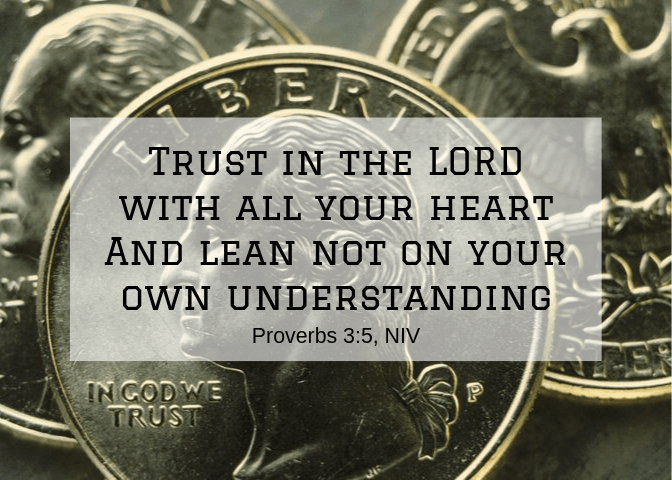
When faced with betrayal David did not respond with bitterness nor retaliation. He tested his methods in the fires of the Heavenly Father, trusting in the sovereignty of God over the product of pride. Did this put David in a strategically weak position? Absolutely, but David’s goal was not to snuff out an insurrection, but to ultimately realign himself with Absalom and restore him back into his presence. When I see David in this moment, I see a father I want to be, but I also see the actions of someone who mimics the attributes of God. Proverbs 3:5-6 beckons our battle with betrayal with this well-known wisdom “Trust in the Lord with all your heart, and do not lean on your own understanding. In all your ways acknowledge Him, and He will make straight your paths.” While we cannot test with the presence of God existing in an ark, we do have the Holy Spirit living in us. We don’t bring the hammer first, but are merciful, gracious, compassionate, faithful, slow to anger, and abounding in love and forgiveness (Psa. 86:15)
Let us never forget that we are, first, the ones that have trespassed against God and have spilled the blood of Christ. Yet those in Ephesus in the first century and those across the world today who put their trust in Jesus have the same greeting:“[God] has blessed us in Christ with every spiritual blessing in the heavenly places, even as He chose us in Him before the foundation of the world, that we should be holy and blameless before Him.” (Eph. 1:3b-4) In our betrayal there is a sovereign and loving plan that brings restoration, so that none might perish but all may have everlasting life (John 3:17). Stephen, whose stoning is attributed to the action of Ephesians’s author, might tell you to trust the process, taking action and direction from God and choosing his goodness over vengeance.
From time to time, a good Father will bring down the hammer, and in fact, Our Sovereign God’s final attribute is not leaving the guilty unpunished. Nevertheless, when feeling there is a knife in our back or heart, our first and foremost reaction should be to lean on the Heavenly Father not on our hubris. In this way, we go beyond obedience and restoration to an earthly parent or monarch. We become an example of our Creator, bringing obedience and restoration to Him that provides an eternal answer to utter betrayal, restoring us to His family line and an enduring rest.
-Aaron Winner
Reflection Questions
- What is your experience with betrayal? Were you the betrayer or the betrayed? Was bitterness and/or retaliation involved? What can you learn from David in 2 Samuel 15?
- If you are a parent or you know a parent, how can parents mirror God’s mercy, grace, compassion, faithfulness, slowness to anger, and abounding in love and forgiveness ? Why are those attributes important to establish? What role does the hammer, justice and judgment play?
- When did you trust in God by not following what human nature says is right? How can this be helpful in a situation that you face today?
 Seek Grow Love