“You do you!” This phrase is ubiquitous… I’ve seen it on social media, heard it on commercials, and tween shows my daughter enjoys watching. I’ve even heard actual people say it directly to actual people.
On the face of it, it’s a pretty positive and encouraging phrase. Don’t let others define you. Do what you enjoy. Do what makes you happy! And that’s all great and wonderful…to a point. That point is the Holy Bible. You can totally do You if the You that you do is aligned with God’s word. The problem comes when your You goes with whatever you FEEL is right, rather than what you KNOW is scriptural.
Here in Proverbs 14 (especially in verse 12) we are reminded that so many of the things, thoughts, and actions we think are right, actually lead to destruction.
Proverbs 14:1 really hit me hard in this area. Unlike the wise woman building her house, I was letting my struggle with anger threaten mine. For a season, my anger was quick, hot, and in my mind, justified. I was right to be angry. I was being taken for granted, no one understood what I was going through, why was everything up to me??? I often felt the anger from my stomach up to my jaw. Proverbs 14 repeatedly warns of the folly of anger (16, 17, 29) but I was choosing to follow my feelings over wisdom.
I thought I was right…but only because of the grace of God and a forgiving family, my “rightness” did not lead to destruction.
Everyone should evaluate their You. If doing You involves sin (Galatians 5:19-21), you must let that go. Christ goes even further to say that if we are to be his disciples, we must DENY ourselves, take up our crosses, and follow him (Matthew 16:24).
When looking to Godly wisdom, such as found in Proverbs 14, You will start to look less like you and more like Christ. That is true wisdom.
So this song came out when I was 14 (1986). Having it tucked in my head has often helped me make choices to please God.
So many choices come from those who think they know
There’s a way that seems right to a man
But it only brings him death
I want to go the way that leads to life
Till I draw my dying breath
Don’t want to be a man pleaser – I want to be a God pleaser
I just want to have the wisdom to discern the two apart
Don’t want to be a man pleaser – I want to be a God pleaser
I just want to do the things that please the Father’s heart
Some make a sacrifice and never let it show
Some make a point of letting everybody know
Some will live their lives as unto men
And they have their reward
I just want to do everything I do
With all my heart unto the Lord
I just want my life to glorify His Son
To make my Father proud that I’m His child before I’m done
No need to pat me on the back or stop to shake my hand
I just want to hear my Father say “Well done, well done”
I just want to hear my Father say “Well done”
devotion by Maria Knowlton (IN) – originally posted for SeekGrowLove on Oct 14, 2019
Reflection Questions
Proverbs 14:12 is a classic “Think Again” verse. Who are some examples from the Bible of men and women who were on the way they thought was right but it was actually leading to destruction/death? Who discovered their mistake, thought again and corrected their path before destruction/death? Who did not?
When have you found you were on the wrong way, even though at one time it appeared right. Did you correct your way before you hit a bit of destruction? In what other ways can a closer evaluation of “You”/your way save you from more destruction/death?
Do you spend the most time and effort trying to please yourself, others or God? How can you focus more on pleasing God first?
Prayer
Dear Father, You are the One with all wisdom. Thank you for sharing it with us through Your Words. We pray for Your Spirit to guide us in discernment so we will see clearly the way we are on and know where to Think Again and alter our course. Help us build our house with Your wisdom that we might look more and more like Your pleasing Son. In his name we pray, Amen
The Sermon on the Mount continues in Matthew 6 with so much wisdom. At the end of the devotion yesterday, the last question suggested we look for anything useful in this chapter for Thinking Again – a challenge to consider how we can rethink our opinions and thoughts to be more inline with God’s. I found a few…
I should “think again” about my motives in giving, praying and fasting. (Do these – for all the right reasons.)
I should “think again” about the importance of forgiving others. (Do it, or my Heavenly Father will not forgive me of my sins!)
I should “think again” about what I truly value and prioritize. (My worldly stuff – ALL I own or wish I owned – is worthless. How can I focus instead on building up what really matters to God and has eternal value?)
I should “think again” about who or what I am actually serving. (Does my love, loyalty and life – both thoughts and actions- prove that I have made God the Master of my life?)
That thought leads perfectly into the next big “Think Again” – I should “think again” and see that I do not need to waste my life in worry. I love this passage! I need this passage, and just maybe you do, too – at least from time to time.
“Look at the birds of the sky” and “Consider the lilies of the field…” This is such wise advice from Jesus, for anytime, but especially when we are stuck in our worry. Stop looking at yourself and your little world of trouble. Look up. Look out. Watch nature. There are interesting studies on the benefits of being in nature (or even seeing a tree through the window) to lower cortisol (a stress regulating hormone) and depression. Yes, psychologists and scientists are right, nature is good and helpful. But, even better, is knowing and trusting the God who created it. He not only created it, but He continues to care for His creation – including creating and caring for you. That is what God’s Son is telling us in Matthew 6:25-34. Look up. Look out. See God.
What do you see when you see God?
If my God is wimpy, I will have a lot to worry about.
If my God is cold or heartless, I will have a lot to worry about.
If my God is clueless, I will have a lot to worry about.
But that is NOT my God!
My Father knows what I need. My Father cares for me. He values me. He sees me. He is able. He alone can take care of everything I truly need and so much more.
How do you see God? Are you allowing your worry to replace your faith in God?
See Him for who He really is! Seek Him first and replace all those worried thoughts. Think Again – do not worry!
Reflection Questions
If you are battling with worry take a little time and write out Jesus’ words from Matthew 6:25-34. For each sentence also try putting the same thought into your own words. What is Jesus saying to you?
What thoughts does God want you to be thinking? Is your worry replacing your trust in God. What does God want you to replace your worry with? (See Philippians 4:4-9) How can you help yourself more consistently think again?
Tell me about your God. Is He wimpy, cold or clueless? Is He your Master, really and truly? What do you know about Him? Do you trust Him? How will I know what you think about God by watching what you do and think and say?
What will it look like this week for you to “Seek first His Kingdom and His righteousness” (Matthew 6:33)
PRAYER
Dear God, I praise You for You are God alone. You are the Creator and Sustainer. You are indeed strong and mighty, all-knowing and all-powerful. Yet, You still see and care for me. I thank you for your love and our history together, the way you have cared for me, and my loved ones, and those who came before me over and over – throughout time. Help me to see You clearly, Father, so I do not waste time worrying. May my focus be on You, Your Kingdom, and Your Righteousness. Help me live these words of wisdom from Your Son. In his name I pray to You. Amen.
Yesterday we discussed the wisdom found in the idea of “Think Again” – to be willing to question your opinions, thoughts and even feelings in order to bring them more and more inline with God’s way of thinking. We are wise to realize we are not always right and neither are our opinions, thoughts and feelings always right. When our thinking is not lined up with God, our feelings, attitudes and actions will also swerve away from what is pleasing to God.
Sometimes we can adjust our thinking on our own. Sometimes it might take a little help from outside ourselves. Sometimes, we don’t take too kindly to those helpers. Too often, we take offense at hearing we might be wrong. We prefer staying in our comfortable me-ness rather than do the work of honestly and humbly evaluating incoming feedback and doing the work of courageously thinking again. Today in our Proverbs reading there are a couple excellent verses about correction. Proverbs 12:1 starts right out with a powerful punch:
“One who loves discipline loves knowledge, But one who hates rebuke is stupid.”
When our kids were growing up we did not allow them to use the word ‘stupid’ because it’s just not nice. But, I won’t tell God He can’t use the word. These Proverbs can be hard. Loving discipline is hard. Not hating rebuke is hard.
But they are a tad easier when I remember and accept that I am not right all the time, nor do I do right all the time. And it’s really not a secret or surprise to anyone that I am an imperfect human being. I know that. God knows that. My husband knows that. My kids know that. My church family knows that. My neighbors know that. Even my little daycare friends know that. Marcia messes up. So, do I prefer to stay in my messiness, or do I accept a little help, a little discipline, a little rebuke, knowing I can be better and cleaner for it.
While we are at it, Proverbs 12:15 is another great one.
The way of a fool is right in his own eyes, But a person who listens to advice is wise.
It makes me think of an adorable little one with a very messy face, though they often don’t know it, or care. When I take the warm wet washcloth to the lunch left on their face there can be some loud protest and struggle. They would much prefer I just leave them alone and they would happily smear that goo all over me and my clothes and the couch and on one another. Our messiness never stays on ourself, which is another good reason to attack it, and not the hand with the washcloth.
These verses from Proverbs are great ones to keep in mind and memory and heart, even before someone comes to us with a warm wet washcloth. Correction, advice, rebuke, discipline isn’t to be avoided. It is for our good, even when it rubs a little. It doesn’t have to feel good in order for it to be good. It is to help clean us up. It is to jump-start our Think Again process. No reason to be a stupid fool (God’s words not mine) – just let them help you wash your face. 🙂
Reflection Questions
Sometimes we neglect looking in the mirror to see our messiness and what needs to be cleaned up. Take some time to humbly and honestly prayerfully consider what a look in the mirror will reveal. What do you see in yourself that is worthy of a washcloth?
When have you grown from an experience when you accepted correction well and adjusted accordingly? Can you also think of a time you protested and struggled against the wet warm washcloth?
There are probably times when you will see the opportunity to help someone else with some words of correction or advice. Knowing that there can be some resistance , especially when done harshly, what are some things to keep in mind as the warm wet washcloth holder?
Today is the first of 3 days reading Matthew 6. What do you find in this chapter that could be useful for thinking again?
PRAYER
Dear Father, Thank you for your wisdom passed on to us through the words of Proverbs. Help me listen well and put them into practice in my life. I do not want to be a stupid fool who is blind to my own messiness and fights against correction. I want to let go of pride so that I can humbly learn from the wisdom and helpful insight of others, even when it hurts a bit, so I can think again, clean up, and grow closer and closer to You and what You want to see in me. In your Son’s name I pray. Amen.
I always ask my family for gift list ideas because I have learned I don’t always do a very good job of reading their minds and choosing that gift that is indeed just what they wanted. Our son came up with a nice gift list this year, including several books he was interested in reading. One particular title really caught my attention: Think Again: The Power of Knowing What You Don’t Know by Adam Grant. I have not read the book so I am not recommending it as much as the idea that there is value in “learning to question your opinions”. Sometimes our ideas, thoughts, opinions, and I would add feelings are indeed not based on God’s full truth (which is not mentioned in the book synopsis). We would be wise to be willing to do the hard work of relearning (which in my opinion, not necessarily Mr Grant’s) involves bringing our every opinion, thought, conviction, and feeling more and more into alignment with God’s. This can certainly be a difficult thing to do! I know I often fail at reading the minds of my own human offspring, how much more will I miss the mark in trying to know and imitate the perfect mind and heart of the Almighty Creator and Sustainer?
Knowing that I do miss the mark is perhaps half of the battle. Then I am more willing to humbly accept that I can benefit from looking at it again to see what I missed, what I can learn, what opinion needs to be changed, what feeling softened, what feeling strengthened, what thoughts, opinions and feelings completely thrown out. As it says in our Proverb of the day: “When pride comes, then comes dishonor; But with the humble there is wisdom.” (Proverbs 11:2 NASB)
Last year about this time I wrote a devotion titled Family Isn’t Everything on the testing of Abraham from Genesis 22. If I were rewriting it today it would be a little different. I think I did not stress enough the trust that Abraham had in God that made all the difference in his willingness to do the unthinkable that God told him to do. I think Abraham was learning and demonstrating that what he personally thought wasn’t always right but he humbly acted on his trust in God and his belief that he was listening to and obeying the All-knowing, completely wise and loving God of miracles who could show His power and plan in any way He desired. And that, along with his wise desire to put God first, even before his precious, long awaited and much loved son, gave him the ability to rise early in the morning and take the three day journey and travel up the mountain for a sacrifice to God with fire, a knife, wood and no animal, only his son. Don’t you love how re-reading God’s Word leads to seeing new layers and thinking again to grow in our knowledge and understanding of our Great Big God and what pleases Him.
This time around in reading Genesis 20-22 I was also struck by the interchange between God and Abraham when Sarah wants to send away Hagar and Ishmael after Isaac is weaned (one chapter before the almost sacrifice of Isaac). Depending on the version, Abraham is distressed, displeased, upset, worried, troubled, full of sorrow, or grieved at the thought of sending his first son Ishmael away. And most of us would probably say, that makes sense, I would be distressed, too. But I love the part that comes next. God says, “Do not let it be displeasing in your sight…” (Genesis 21:12 NKJV). It is almost like God is telling Abraham – Think Again – I have got this. Don’t worry. Don’t be troubled. You concentrate on what I want you to concentrate on (following Me). You do the most important thing and I will take care of the rest. “Do not let it be displeasing in your sight.” Isn’t that freeing that we get to decide – with God’s wisdom and guidance – what is or isn’t going to be displeasing in our sight. It does indeed take a lot of Thinking Again to adjust not only our opinions but also our attitudes and feelings. When we find ourselves distressed, displeased, upset, worried, troubled, full of sorrow, or grieved perhaps it would be wise of us to ask God if this is a feeling we should hang on to, or if it is best to let go of it.
Speaking of Think Again, I think that is what Jesus was saying over and over again in Matthew 5 in the Sermon on the Mount when he said, “You have heard it said…but I tell you” (5:21, 27, 30, 33, 38, 43). Think Again. You might not know quite as much as you thought you did. Think Again. You do not yet see the whole picture, the full truth, God’s entire plan. Think Again. Your opinion, thoughts and feelings can line up more closely with God’s. Think Again. There is a better way of thinking and doing and feeling than you have done before. Think Again. With humility not pride. Think Again.
Reflection Questions
What percentage of the time do you think you are right? What percentage of the time do you think you are actually right? 🙂 Can you think of a time you “thought again” and became wiser for it?
When do you need to most remember that you do not have the mind of God? How can you remember to be humble?
Why was Jesus saying to not continue doing life/righteousness the old way? Why was it time to think again?
What might God want you to unlearn and relearn? What old thoughts, opinions and even feelings are you holding onto that are not currently helpful and leading you closer and closer to God’s wisdom and heart?
Prayer
Dear God Almighty, We praise you for knowing all things. Help me remember there is so much I do not know, sometimes including what is pleasing to You. May I humble myself, continually seek You and Your way and be willing to do the work of Thinking Again so I come closer and closer to what You want me to be. Direct me in what feelings, what worries, what opinions are good for me to let go of, knowing that You can take care of what I can not, so that I may be focused on doing Your will. Thank you for working with me, one step at a time, and helping me grow.
Devotion by Steve Mattison (IN) – originally posted for SeekGrowLove on July 18, 2022
In Proverbs 10, we see several contrasts between a person with Godly wisdom who lives a Godly life versus someone who doesn’t. I thought it might be nice to summarize those contrasts here.
A person with Godly wisdom and who lives a Godly life:
Brings joy to their father (v1)
God doesn’t let this person go hungry (v3)
Hard-working (v4, 5)
The memory of this person will be a blessing (v7)
Accepts commands (v8)
Their mouth is a fountain of life (v11)
Love covers wrongs (v12)
Wise and discerning (v13)
Receives life (v16)
Holds their tongue (v19)
Delights in wisdom (v23)
Desires will be granted (v24)
Stand firm forever (v25)
Adds length of life (v27)
Has joy (v28)
Will not be uprooted (v30)
Mouth brings forth wisdom (v31)
Knows what is fitting (v32)
A person who doesn’t:
Brings grief to their mother (v1)
God thwarts this person’s cravings (v3)
Lazy (v4, 5)
Violent (v6, 11)
Name will be cursed (v7)
Fool comes to ruin (v8)
Hatred stirs up dissension (v12)
Punished (v13, 16)
Conceals hatred (v18)
Spreads slander (v18)
Their heart is of little value (v20)
Finds pleasure in evil conduct (v23)
What they dread will overtake them (v24)
Swept away (v25)
Their life is cut short (v27)
Hopes come to nothing (v28)
Will not remain in the land (v30)
Only knows what is perverse (v32)
Which list would you like to describe you? If you see some attributes in the second list that may be used to describe you, you can change.
Hebrews 3:8 says, “Today if you hear his voice, do not harden your hearts”. If something here got your attention, take action. Don’t let this moment pass.
2 Corinthians 6:2 says, “I tell you, now is the time of God’s favor, now is the day of salvation.” Now is the time to act.
James 4:4-10 says, “You adulterous people, don’t you know that friendship with the world means enmity against God? Therefore, anyone who chooses to be a friend of the world becomes an enemy of God. … That is why Scripture says: ‘God opposes the proud but shows favor to the humble.’
Submit yourselves, then, to God. Resist the devil, and he will flee from you. Come near to God and he will come near to you. … purify your hearts, you double-minded. Grieve, mourn and wail. Change your laughter to mourning and your joy to gloom. Humble yourselves before the Lord, and he will lift you up.”
You can be a friend of the world, and fall into the second list, or be a friend of God and fall into the first list. But in order to be a friend of God, you first must submit to God, resist the devil, and draw near to God. You must humble yourself before God, only then He will lift you up. Only then will the first list fully describe you.
Application Questions
What 2-3 points do you find most appealing from the first list for the Godly life?
What 2-3 points do you find most distasteful or disturbing from the second list?
Both lists include some actions/attitudes as well as consequences. How do your choices now determine your future? How often do you remember this?
If you choose to humble yourself before God and submit to Him, what will that look like for you today? How will you work to remove something from the second list and then also replace it with something from the first?
Prayer
Dear God, We praise you for your wisdom and thank you for the book of Proverbs. I confess the times that I have not applied your wisdom to my life but have chosen instead the foolish friendship with the world path. Help me be fully committed to You and living the life You want for me in all the little daily decisions I make as well as the big ones. Help me see these two lists clearly in the decisions that I make today and every day and give me the discernment and discipline to choose what is wise and right. Lord, I want to humble myself, resist the devil and submit to You more and more, over and over again. In Jesus’ name I pray, Amen.
As we read through the Sermon on the Mount, the first of 5 segments of Jesus’ teaching in the book of Matthew, we will spend three days not two on each of the chapters 5-7. Today’s devotion will focus on the first section of chapter 5 – the Beatitudes. Whether this is your first time reading them, or you can quote them all, sometimes it is helpful reading a variety of versions to get a better understanding of Jesus’ words and how to put them into practice. Take special note of some variations of “Blessed”.
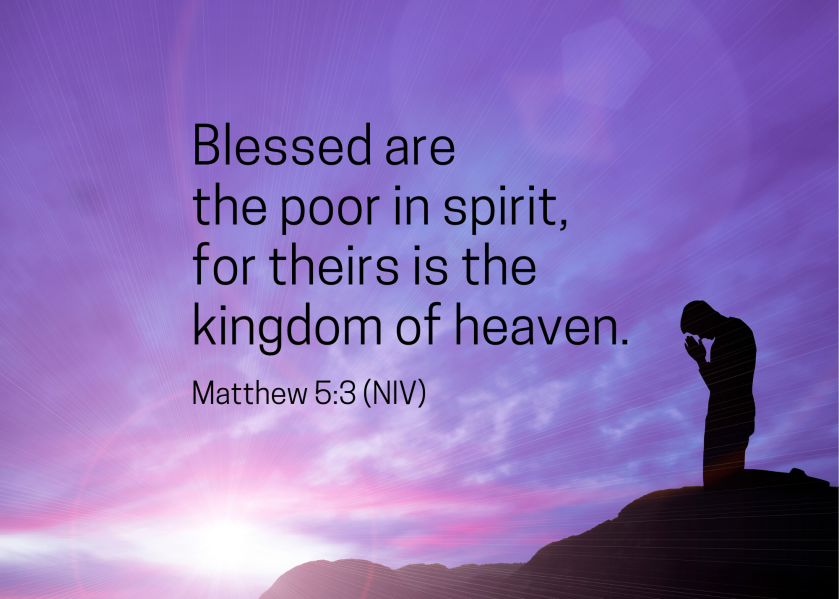
Poor in Spirit – Verse 3 – “Blessed are the poor in spirit, for theirs is the kingdom of heaven.” (NASB), “Great blessings belong to those who know they are spiritually in need.” (ERV), “the humble, who rate themselves insignificant” (AMPC), “those devoid of spiritual arrogance” (AMP), “those people who depend only on him” (CEV), “Those people who know they have great spiritual needs are happy. (ICB), “’Humble men are very fortunate’ he told them, ‘for the Kingdom of Heaven is given to them.'” (TLB)
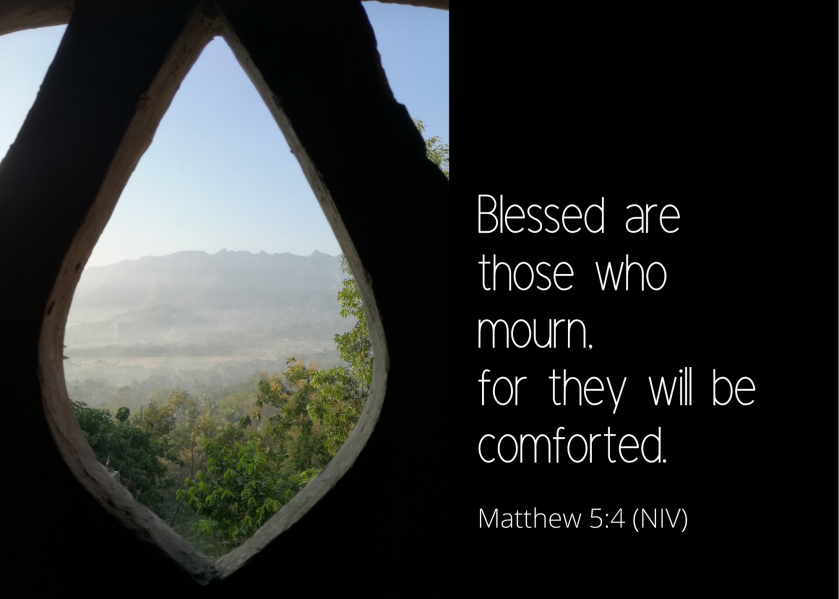
Those Who Mourn – Verse 4 – “Blessed are those who mourn, for they will be comforted.” (NASB), “God makes happy those who are sad. They will have comfort.” (WE), “They are blessed who grieve, for God will comfort them.” (NCV), “Those who mourn are fortunate! for they shall be comforted.” (TLB)
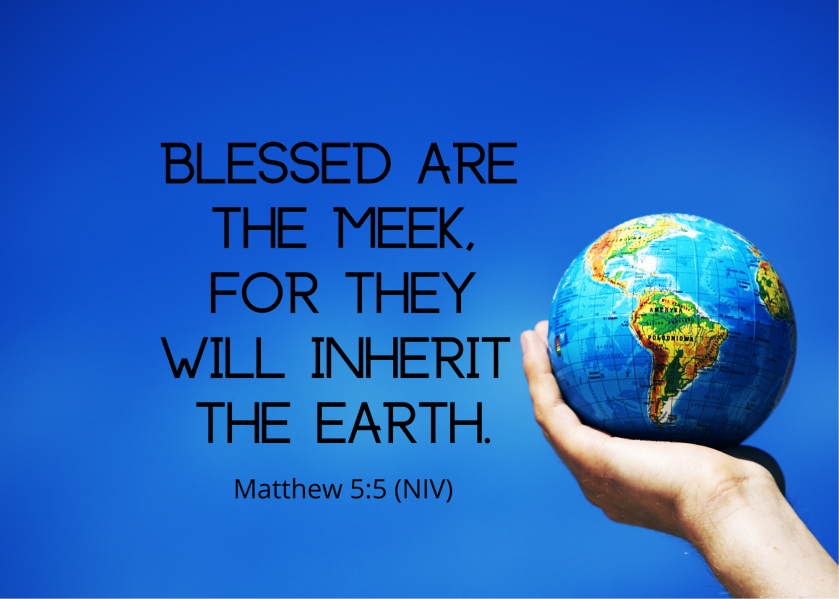
The Meek – Verse 5 – “Blessed (happy, blithesome, joyous, spiritually prosperous—with life-joy and satisfaction in God’s favor and salvation, regardless of their outward conditions) are the meek (the mild, patient, long-suffering), for they shall inherit the earth!” (AMPC), “Blessed [inwardly peaceful, spiritually secure, worthy of respect] are the gentle [the kind-hearted, the sweet-spirited, the self-controlled], for they will inherit the earth.” (AMP), “God blesses those who are humble, for they will inherit the whole earth.” (NLT), “God makes happy those who quietly trust him and do not try to get their own way. The world will belong to them.” (WE), meek also replaced with “gentle” (NASB).
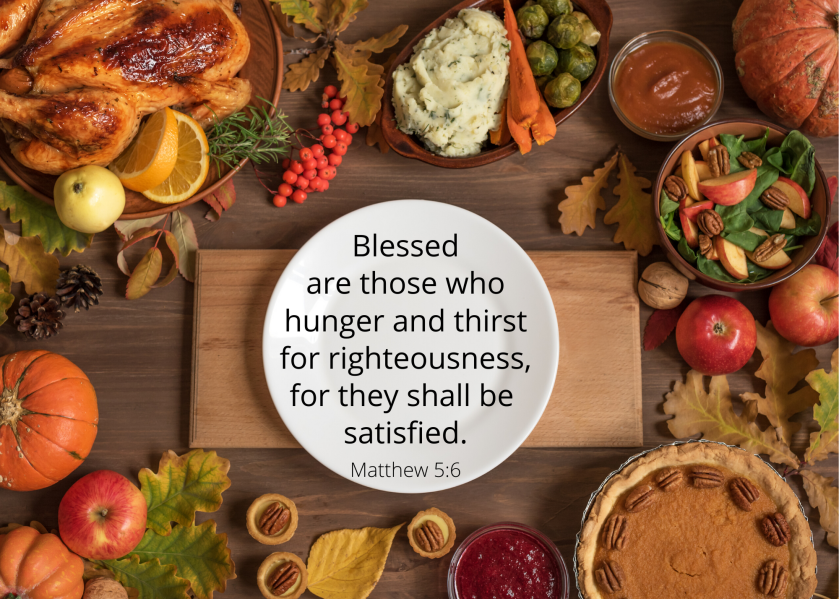
Hunger & Thirst for Righteousness – Verse 6 – “Blessed are those who hunger and thirst for righteousness, for they will be satisfied.” (NASB), “God blesses those people who want to obey him more than to eat or drink. They will be given what they want!” (CEV), “Great blessings belong to those who want to do right more than anything else. God will fully satisfy them.” (ERV), “Blessed are those who hunger and thirst for God’s approval. They will be satisfied.” (NOG)
The Merciful – Verse 7 – “Blessed are the merciful, for they shall receive mercy.” (ESV), “Great blessings belong to those who show mercy to others. Mercy will be given to them.” (ERV), “Those who show loving-kindness are happy, because they will have loving-kindness shown to them.” (NLV), “God makes happy those who are kind. He will be kind to them.” (WE)
Pure in Heart – Verse 8 – “Blessed are the pure in heart, For they shall see God.” (NKJV), “Those who are pure in their thinking are happy. They will be with God.” (ICB), “Happy are the utterly sincere, for they will see God!” (PHILLIPS), “They are blessed whose thoughts are pure, for they will see God.” (NCV)
Peacemakers – Verse 9 – “Blessed are the peacemakers, for they will be called children of God.” (NABRE), ““Happy are those who work for peace; God will call them his children!” (GNT), “Great blessings belong to those who work to bring peace. God will call them his sons and daughters.” (ERV), “Blessed (enjoying enviable happiness, spiritually prosperous—with life-joy and satisfaction in God’s favor and salvation, regardless of their outward conditions) are the makers and maintainers of peace, for they shall be called the sons of God! (AMPC)
Persecuted for Righteousness – Verse 10 – “Blessed are those who are persecuted for righteousness’ sake, for theirs is the kingdom of heaven.” (ESV), “Blessed are those who suffer for doing what is right. The kingdom of heaven belongs to them.” (NIRV), “Blessed are those who are persecuted for doing what God approves of. The kingdom of heaven belongs to them.” (NOG),
You may have noticed that this list of Beatitudes does not look like the Ten Commandments. It does not tell us what to avoid doing. It does not even specifically tell us what to do. It does not list for us the ten things to make sure we do so that we can check them off the list for each day. It does not say: Blessed are those who read their Bible every day. Blessed are those who spend at least 15 minutes in prayer each day. Blessed are those who tithe 10%, (but 11% is better). Blessed are those who have perfect attendance at every church function.
I am a natural born rule follower who wants to please God. So my first instinct is to want that daily checklist. Can you tell me God, exactly how many minutes of distraction is allowed when I should be focused on You and the job I said I would do for You? Where is the line where human nature crosses over into disobedience? If there was a big red line I might not cross it – too many times – maybe – until I saw how easy it was to cross over to please myself instead of God. Who am I kidding, I might like rules. But I don’t always like following them. Maybe it would be better if I had a checklist, a big red line to not cross and an electric zapper for when I do, which will obviously have to grow in intensity. Or, maybe just an easy 3 warning zaps and then immediate death. Guess what – I wouldn’t make a very good God at all! Thankfully, God is a very good God. And He has designed a very good way for His children – telling us what to do (and not do), and also, here His Son lays out the list of how we are to do what He wants us to do. What does our heart look like when we follow Him?
Having this list of attitudes in no way means that we no longer have to concern ourselves with doing what God wants as well as avoiding the things He doesn’t want. In fact we ought to be doing the things that please God so much that we are getting into trouble, persecuted by the world, for doing the things that God wants us to do. Jesus says, “whoever does them and teaches them will be called great in the kingdom of heaven. 20 For I tell you, unless your righteousness exceeds that of the scribes and Pharisees, you will never enter the kingdom of heaven.” (Matthew 5:19b-20 ESV). The Pharisees were the checklist experts! Even tithing on their herbs and not lifting a finger on the Sabbath. They had all God’s laws down pat! They were so diligent – making new laws to protect God’s law, watching others carefully to point out any time they slip, puffed up with pride over how well they checked the boxes, always focused on their checklist, instead of their heart. Jesus said – Do better. Watch your heart. Catch your motives. Strike your pride. Use wisdom.
Realize you are spiritually in need. Get rid of your spiritual arrogance. Be poor in spirit.
Grieve and mourn – not just for your losses, but for what grieves God.
Be meek, humble, gentle. It’s not weakness – it’s being like Jesus.
More than anything else, desire in your own life what God says is right.
Be full and overflowing with mercy and loving-kindness for others.
Make your heart clean with pure, God-honoring thoughts and decisions.
Strive for peace and help others do likewise.
WHILE also being willing to stand up and do right even when the world persecutes you for it.
Do what God wants, in the way that God wants.
Have a humble heart that truly wants to please God.
Watch your attitudes as much as your actions – and you will be blessed.
Reflection Questions
How would you describe the term “blessed”? Is it more than “happy”?
What do you notice about the consequences or rewards for those with these attitudes? Are some for now? Are some for the future? Are some for both? What do you know about God’s promises?
Have you experienced any persecution from the world for doing what is right? If so, was it worth it? What did you learn? If not, why not?
Which of these Beatitudes would you like to focus on increasing in your life this week? What changes will it require?
Prayer
Dear Heavenly Father, I thank you for being a good God who still loves and longs for relationship with your very human and imperfect creation. Thank you for your Son who shows us how to be pleasing to You. Help me to see Jesus’ heart and his desires, his attitudes and actions, so I can better seek to reflect that in myself. Help me to diligently work at cleaning out all impurity, pride, and wrong motives and attitudes to be what you want to see in me. Help me to do what you want, in the way that you want. Thank you for your promises for today and for the future. Help me be ready, and prepare others to be ready, for your Son’s Coming Return. In Jesus’ name I pray, Amen.
Smooth, delicious chocolate, sometimes with crunchy nuts or gooey caramel (instead of the nutritious salad fixings abandoned in my fridge). Or really sugar in just about any form.
A “well-deserved” social media break, just for a few minutes, that turns into much longer.
On-line shopping to find just the right pair of shoes for a trip, or maybe I need pants, or what about that sweater, would that color look good on me?
Those were three temptations I caved in to just last night when I was supposed to be writing this devotion! Yikes! When my sleepy husband asked why I was so late in getting to bed, I said something like I had been busy falling into temptation. No, I hadn’t spent the late night hours murdering my neighbor, stealing from the bank on the corner, or bowing down to carved idols. But, I had said ‘Yes’ to my own selfish, meaningless, unhealthy pursuits instead of being and doing what God most desired for me – what was best for me.
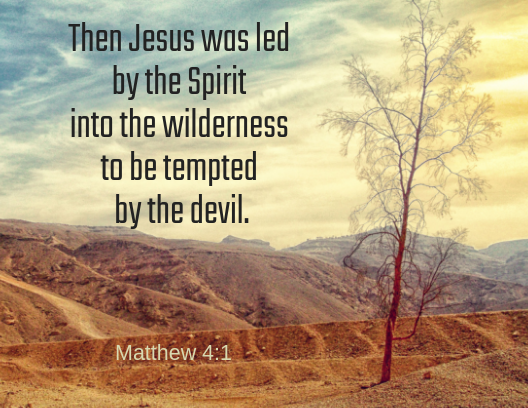
Perhaps, I should not be the one writing the devotion today. I am obviously not a specialist in standing up to temptation. I need an example to follow, I need to learn from a master – Ah, yes, thank God, He DID indeed provide the perfect example who longs to be my master. He gave us His human Son Jesus. And right after the baptism of Jesus, and right before Jesus begins his years of ministry, God’s Holy Spirit led Jesus, God’s own beloved, pleasing Son, into the wilderness where he fasted for 40 days and 40 nights.
As we are looking for clues on how Jesus faced temptation so successfully, there’s a couple great ones right there. Jesus was already open to and actively being led by the Spirit. What did God’s spirit want for him? That’s what He wanted too, even when it meant willingly going into a difficult, sometimes even dangerous space.
Compare Jesus’ location and circumstance with Adam and Eve’s when they were also confronted with choices to make. The first son of God was surrounded with God’s bounty and beauty and provision in the spectacular garden. Good, healthy, God-honoring fruit literally surrounded them when they instead listened to the deception of the serpent and chose to eat of the tree that God had already clearly said “No” to. Jesus didn’t use his harsh surroundings or difficult circumstances as an excuse to be weak. Instead, he found strength in using that time to fast and pray and draw closer to God which indeed made him even stronger and better prepared to face his adversary. Don’t get so comfortable in your pleasant surroundings that you become weak and don’t recognize temptation for what it is. Don’t fear the time spent in the harsh wilderness, but use the opportunity to cling closer and closer to what really matters – the God who is always there.
After the 40 days of fasting Jesus gives us the next big answer of how he faced each one of Satan’s three temptations in the wilderness – with the very words of God His Father, each and every time. In fact, the first Scripture Jesus quotes to Satan are strong words about the sustaining power from the words of God, and our need for God’s word, from the book of Deuteronomy: “‘Man shall not live by bread alone, but by every word that comes from the mouth of God.’” (Matthew 4:4) If we try to face temptation without the power of God’s word we will be weak. Matthew 4:4 is a great verse for me to remember today when I sit down to work on tomorrow’s devotion! Here’s a few more:
For the word of God is alive and active. Sharper than any double-edged sword, it penetrates even to dividing soul and spirit, joints and marrow; it judges the thoughts and attitudes of the heart. – Hebrews 4:12
Stand firm then, with the belt of truth buckled around your waist, with the breastplate of righteousness in place, 15 and with your feet fitted with the readiness that comes from the gospel of peace. 16 In addition to all this, take up the shield of faith, with which you can extinguish all the flaming arrows of the evil one. 17 Take the helmet of salvation and the sword of the Spirit, which is the word of God. – Ephesians 6:14-17
God’s word: read it, learn it, use it – and live (better and stronger today and also for eternity).
God’s word: neglect it, forget it, try to do life your own way – and die (but first, you will likely waste a lot of time, have a lot of self-made sorrow, and miss out on doing God’s will).
His Words are not just for gaining knowledge, they are for fighting temptation, finding truth, for making strong and giving life. Don’t miss out!
Let’s review what we have seen from Jesus about successfully facing temptation: Jesus was willing to be led by the Spirit. He used his time in the wilderness well. He fasted and drew closer to God. He recognized Satan for who he was. He discerned the lies and empty promises of the deceiver and actively chose what God said and promised instead. He wanted God’s will, not his own. He knew God’s Word. He used God’s Word as a sword to do battle against untruth, temptations and the tempter. He said, “Away with you Satan!” And he was victorious!
What about you? Do you know what temptations you face regularly? What do you crave? What do you covet? What are you jealous of? What leads you astray? What do you feel guilty about? Where do you lose self-control? What good do you neglect and why? How do you waste time? What do you say ‘Yes’ to that God wanted you to say ‘No” to? And, what do you say ‘No’ to that God wanted you to say ‘Yes’ to? What is Satan whispering in your ear or in your heart? What do you worship (with your time, money, devotion, or decisions)?
Realize you have choices, decisions to make. Big ones and little ones. It’s not just about not murdering your neighbor and not bowing down to carved idols. It’s also about how you treat the gift of the miraculous body God gave you. It’s about how you choose to spend the gift of the time God gives you. It’s about how you treat the people God surrounds you with. It’s about if you choose what you want, or what God wants.
And Satan (as well as the world and marketers today) can make the bad choice, or the selfish one, or the unhealthy one, look pretty good, that’s what makes it tempting. If it looked like the garbage it is, we would gladly turn from it. Don’t be fooled by the stone that looks like bread, the impressive view, and Satan’s promises.
God gives the perfect example of His Son. Follow that example – not mine.
God gives His Word, the Scriptures – the sword to do battle with the tempter. It worked for Jesus. I need to use it better!
God gives knowledge, wisdom and discernment – ask for it and use it.
God gives the spirit of self-control – that’s the one I want.
God gives forgiveness and new beginnings.
Prayer
Dear God – I am sorry. Please forgive me of the many times I fall to temptation. Help me do better, Lord God. Help me follow the example of your Son when I am in the wilderness and also when I am in the garden. Help me go where Your Spirit is leading. Help me forsake what I want and choose instead what You want, which is indeed the best for me. Help me see garbage for what it is, and turn from it to you and your gifts, again and again. I ask for wisdom and discernment to see what is from You and what are deceptions from the deceiver. Help me use your Word well to be strong against temptation. Thank you for your Word, your forgiveness, love and mercy and a new day to work at doing Your will better. Help me use all that you give me to stand strong against temptation. Thank you for the example and sacrifice of your Son Jesus. In his name we pray to You the Almighty. Amen.
Reflection Questions
Compare and contrast when Satan came to the garden and when he came to the wilderness? What similarities do you see? What differences? Is Satan still making visits? What does it look like?
Consider the paragraph of questions regarding what are temptations for you. What do you see about your own temptations? What temptations do you sometimes fall to?
Eating chocolate isn’t always a sin or temptation is it? But is it sometimes? When? Why? What makes the difference?
What scriptures can you find (and put in your home and in your heart) to help you face your temptations better armed with the Sword of the Spirit?
Have you ever tried fasting when facing a particularly difficult time of temptation?
I am pleased today to share words from Jeffrey Fletcher, a pastor, chaplain, husband, father and regular writer for SeekGrowLove and Church of God publications. We mourn the death of Pastor Jeff, we look forward to celebrating with him at the resurrection, and we are thankful that his Godly words of wisdom and his example of faith live on for us today. The following is part of an article titled True Abrahamic Faith which was published in the July-Sept 2025 edition of The Restitution Herald (Vol 114 No 3).
If we say we have the faith of Abraham, shouldn’t we understand what that really means? The fact of the matter is … when we study the life of Abraham, we find very little spoken about what he actually believed in a structured, systematic way. Abraham left behind no creed or statement of belief about God. So to understand what faith meant to Abraham, we have to look at what he did by way of response to God.
First, we see in Genesis 12 that Abraham took his wife, his nephew, and his servants, left Haran, and went down to the land of Canaan, where he pitched his tent and built an altar to the LORD who had appeared to him. From this, we discover three things about the faith of Abraham:
1. He had a personal relationship with God – Abraham believed that God was a personal God.
Abraham was not an atheist, who doesn’t believe in God.
He wasn’t an agnostic, who won’t say one way or another if there’s a God.
He wasn’t a deist, who believes that God is a kind of higher power who simply wound up the universe at the beginning and then pretty much left us on our own to do as we please.
He wasn’t an animist, who believes that an immaterial force called nature — Mother nature, Gaia, etc. — inhabits the universe and occupies all living things (had he believed that, he never would have killed an animal and offered up a sacrifice at the altar). If you want to know more about animism, just watch the Disney film Pocahontas, which reflects a prevalent 90s animistic belief that things like trees have spirits.
He was not a pantheist, who believes in and worships all gods. This popular belief holds that all religious truth is equally valid. All gods are equally valid and can justly be worshipped – whether they be called Buddha, Lord Krishna, or YHWH.
Abraham believed in God and God alone as the true God. Not a higher power, which is a kind of politically correct term for God among many 12-step groups. Yes, God is a higher power, but He is more than pure power, energy, or even impersonal spirit. God is a personal being with whom we can enter into a real, personal relationship.
We know these things about Abraham not because of what he said to others about God, but because of the way he responded to God.
2. He made worship a priority – notice that wherever Abraham settled, he built an altar. He came to Shechem; he built an altar to worship God. He went to Bethel; he built an altar to worship God. Later, he moved to Hebron; again he built an altar to God. Everywhere he settled, he built an altar to God. Worship was a priority to him. And remember too – this was not because of some religious law or empty ritual Abraham was following. The laws of Moses, which prescribed the type and frequency of offerings to God, were not given until over 400 years after the time of Abraham. Abraham selected animals from his flocks as a way of recognizing that everything he had was from God and really belonged to God. Abraham was willing to offer up his best as an act of worship to God.
This priority of worship was demonstrated when Abraham, after being victorious in battle against the confederacy of kings from Sodom and Gomorrah, as an act of worship, brought to Melchizedek, a priest of God, a tenth of the spoils of war. The very first tithe in the Bible does not come as a result of an ecclesiastical law, but as an offering of worship and display of faith on the part of Abraham. Abrahamic faith makes worship a priority and demonstrates it through sacrificial giving and tithing.
3. He believed God – he packed up his tents and moved based on a promise that God had given him. He believed God and demonstrated that belief by his actions. Had Abraham stayed in Haran, would he have had true faith? What if he had said to everyone in Haran, “Listen, I believe in God, I believe God keeps His promises, I believe that God will give me the land of Canaan and make a great nation out of me” and then never packed up his tents, never loaded up his camels and donkeys, never tightened his sandals, never pulled out his walking stick and never journeyed south to Canaan? Would that have been true faith?
You see, so much of what passes for “faith” these days isn’t really faith at all. Part of the problem is that faith in the English language is a noun.
Listen to the Dictionary – faith (fEth) n.
1. Confident belief in the truth, value, or trustworthiness of a person, an idea, or a thing.
2. Belief that does not rest on logical proof or ma-terial evidence.
3. Loyalty to a person or thing; allegiance.
4. The theological virtue is defined as secure belief in God and a trusting acceptance of God’s will.
5. The body of dogma of a religion.
6. A set of principles or beliefs.
A noun is a person, place, or thing, whereas a verb is an action. English is one of the only languages that has the word “faith” as a noun. In other languages, it is a verb. Why is that significant? Because Abrahamic Faith is a verb. Abrahamic Faith requires action. There’s no room for couch potatoes in Abrahamic Faith. Abrahamic Faith is not a spectator sport.
One of the problems with American religion today is illustrated by the weekly football game, where we have 22 exhausted men who desperately need some rest being observed by thousands of spectators sitting around eating junk food and drinking beer, who desperately need some exercise.
Abraham set down his beer, put down the remote control, packed up his stuff, and began a journey that would last for the rest of his life. He didn’t know how many stops, how many detours, how many frustrations, how many dis-appointments, how many battles, how much pain there would be on the journey. But then again, none of us on this journey of faith knows what we will encounter along the way. We travel out on faith, trusting that the God who has called us to the promised land will never abandon us on that journey, and that the land that awaits us is truly a good land.
The complete article can be found here, starting on page 7. THE RESTITUTION HERALD is owned and published by the Church of God General Conference, a nonprofit Christian corporation located at 2020 Avalon Parkway, Suite 400, McDonough, GA 30253, which is also the site of Atlanta Bible College.
Reflection Questions:
What is involved in having a personal relationship with God? How is that the same or different from what you have seen in religion today? Do you have a personal relationship with God? It is healthy to continually look for ways to improve relationships. How can you improve your relationship with God?
How do you worship? How might God want to see you worship, in addition to what you typically do now? What happens when we don’t make worship a priority? Would God say that you make worship a priority?
Do you generally think of faith as a noun or a verb? Who have you seen live out their faith? What have done or currently do to demonstrate your faith? What might God be asking you to do next?
Prayer
Dear Heavenly Father, we praise you because you are a real, personal God who desires a relationship with your creation. We thank you for the examples of faithful fathers, for the men and women recorded in your Word, as well as the ones who have lived since then, who though not perfect, go beyond talking about faith to demonstrate a living, breathing, moving, active faith in you. Help me to have a faith that gets me off the couch and even beyond my comfort zone. Show me, Father, how you want me to live out my faith next. May my worship of you be pleasing to you and a priority in my life. I pray these things in Your Son’s name. Amen.
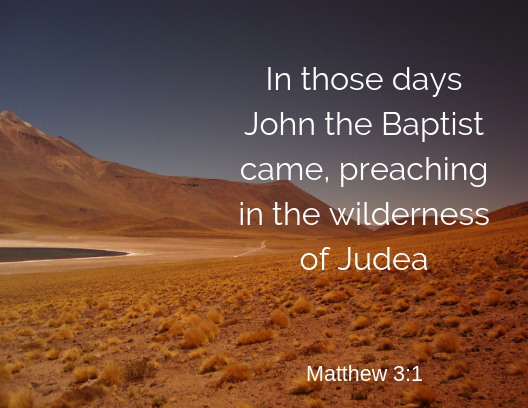
You might not expect a man who works in the wilderness and eats locusts and wild honey to talk much about fruit. But here in Matthew 3 we hear from just such a man, one who is often referred to as John the Baptist, speaking twice of fruit.
Perhaps his most famous line is, “Repent, for the kingdom of heaven has come near!” (Matthew 3:2 NASB). It is such an effective charge and accurate description of the ministry given by God, that Jesus will also say the exact same thing when he begins his preaching in the next chapter (Matthew 4:17). The kingdom of heaven is a term used only by Matthew, and he, a Jew who was very careful about his use of “God”, spoke often of the kingdom of heaven. The other gospel and New Testament writers did not use the term kingdom of heaven but rather called it the kingdom of God. In the Old Testament neither phrase was used, but the people of God were definitely looking for the promised Messiah, the Chosen and Anointed One of God who would save them, and they too were looking forward to a kingdom set up by the God of heaven, an everlasting kingdom (such as Daniel 2:44). As the Messiah, Jesus Christ, was now ready to begin his preaching ministry on earth the kingdom was closer than it had ever been before! The time to repent had certainly come!
As John addresses some of his audience, the Pharisees and Sadducees (who in their pride and self-righteousness will reject the Messiah), John calls them a “brood of vipers” (or offspring of vipers), referring to being poisonous, spiritually speaking. Perhaps this sounds familiar to us because on more than one occasion Jesus will use the same term for them as well (Matthew 12:34 and again in 23:33).
So with the “pleasantries” aside, John gets right to the meat, or perhaps in this case, the fruit of his preaching saying: “Therefore produce fruit consistent with repentance; 9 and do not assume that you can say to yourselves, ‘We have Abraham as our father’; for I tell you that God is able, from these stones, to raise up children for Abraham. 10 And the axe is already laid at the root of the trees; therefore, every tree that does not bear good fruit is being cut down and thrown into the fire” (Matthew 3:8-10 NASB). Having told his listeners to repent he now tells them to bear fruit consistent with repentance. In other words, don’t tell me that you repent – show me that you repent. To repent is much more than recognizing or even saying that you have been and done wrong. To truly repent requires a change, a movement, an actual TURN from sin. A visible, tangible, positive, nourishing, healthy “fruit” that is evidence of the inner heart change.
The Jewish Pharisees and Sadducees were relying on their genealogy, their fancy titles, their turned up noses, their faithful fathers, their long lists of human made rules, their strict checkmarks. God wasn’t impressed. John was sent to prepare the people for Jesus. He said, repent, it’s time to change. Jesus would also repeat John’s words: “Every tree that does not bear good fruit is cut down and thrown into the fire” (Matthew 7:19). It is important. Eternal life and death important. Are you bearing good fruit consistent with repentance?
Reflection Questions
What have you repented of? What do you need to repent of? Beyond saying you are sorry, what will it look like to change and turn from sin? What will the fruit in keeping with repentance look like in your life?
John the Baptizer was known for his message of repentance and the act of baptizing, and in fact Jesus’ baptism by John also happens in this chapter, when the voice from heaven (that would be God) acknowledges that Jesus is His beloved and pleasing Son (I love that part!). How does John’s message of repentance and the act of baptism go hand and hand? Why do you think the perfect Son of God was baptized?
Jesus continues the fruit theme a few chapters later saying, “You will know them by their fruit” (Matthew 7:19). What fruit are you known by: good fruit or bad? Give an example of each (good and bad) that you have grown in the past? What type of good fruit do you want to grow today and in the future? What is required to grow this good fruit?
Prayer
Dear God, we thank you for your beloved and pleasing Son, your chosen Messiah, and the example and teaching he brought and the kingdom that is closer today than it was yesterday. Thank you for John who prepared the way for Jesus. Help us also prepare others to meet Jesus. Thank you for the opportunity you give us to repent and turn from sin towards You and Your better way. Help me not be like a Pharisee who proudly thought they had it all together. Show me, Lord, where I need to change, what I need to repent of, and what good fruit you want me to bear. Help be honestly see and get rid of bad fruit in my life so I am prepared for Your Son’s return. In his name we pray, Amen.
I have always been fascinated by the account of the man who built the magnificent boat to save the animals and his family from the floodwaters that covered the earth. When it was time to choose a nursery theme for our first born – it didn’t take long to land upon the man with the full white beard surrounded by every animal imaginable as they made their way into the safety of the big gopher wood boat. What a great story to rock any infant to sleep.
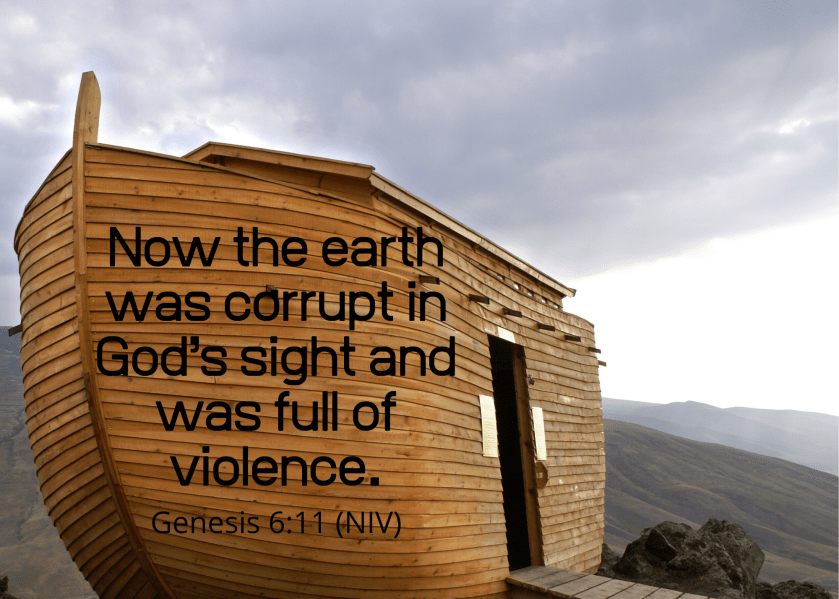
Who is the main character in this classic Bible story found in Genesis 6-9? The boat builder extraordinaire, the floating zoo animal wrangler, the father of 3, a “preacher of righteousness” amongst unbelieving, corrupt and violent neighbors (2 Peter 2:5 and Genesis 6:11), the man who “found grace in the eyes of the Lord” (Genesis 6:8). Yes, Noah is the man. “Noah was a just man, perfect in his generations. Noah walked with God.” (Genesis 6:9) So, God chose Noah.
And because of the way Noah responded to God’s choosing and instruction, he earns himself a spot in the Faith Chapter of faithful witnesses. Hebrews 11:7 (ESV) says, “By faith Noah, being warned by God concerning events as yet unseen, in reverent fear constructed an ark for the saving of his household. By this he condemned the world and became an heir of the righteousness that comes by faith.” You can find this verse in many English translations here – to see some potentially helpful variations on the wording such as: “motivated by godly fear” (CSB), and “By his faith, Noah showed that the world was wrong. And he became one of those who are made right with God through faith.” (ICB)
There is so much we can learn from this man of faith! As a wife and mom I am also very curious about his unnamed wife! What role did she play? What did she think of this all? How did she help, assuming she did? What might their conversations have sounded like as they lay in bed at the end of a hard work day, or on the 150th day of life on the rocking, animal-filled boat, or as they gazed at the very first rainbow in the sky (coming in chapter 9)?
And what about the wives of Noah’s 3 sons? Can you imagine marrying into the ONLY family that will be saved from the floodwaters? I am hoping for a chance to talk to Noah and his wife and their family during the Kingdom of God on the earth after it will be cleansed again – this time not by water but by fire.
As instrumental as Noah was in his role of man of faith and boat building, and as intrigued as I am by his family, there is actually one more character I will suggest as the MAIN character of the account of Noah and the Ark – and that is the One who saw, chose, directed, provided for and remembered Noah. While seeing the corruption, wickedness and violence of the world, God also saw the one faithful.
The Lord Almighty is the ark architect. God gave Noah all the details needed for him to successfully build a boat that would hold all the occupants (perhaps about 96,000 square feet of floor space). The boat would also weather the torrential flood and then the winds that would dry the earth while remaining water tight for over a year. Professional marine engineers today still marvel at the accurate dimensions and plans given so long ago by the ALL-Knowing God that would indeed be necessary to create such a floating vessel. Here’s one article written by one such engineer and architect. Can you imagine what sort of ark Noah might have tried creating if he hadn’t been given God’s accurate details? The joy of being God’s servant is that He provides what is needed to do the job He asks you to do, if you will listen and obey.
Once the ark was built and waterproofed (on the inside and out – what a task!) it was time to add the animals. I am sure God had a large hand in orchestrating or ordering this task as well, in one way or another. Even knowing all of the species to collect, and getting the correct number of each of the two genders, and tending to their needs and the food! No doubt Noah and his family had work to do, but Genesis 6:20 also indicates they would not be acting on their own: “two of every sort shall come in to you to keep them alive”.
God is also the one who shut the door of the ark, both saving those inside, and keeping the unrighteous out. He sent the rain to cleanse the earth of the corruption and then the wind to dry the land to prepare it once again for Noah, the animals and the generations to follow, including you and I and your favorite furry, scaly, or winged creatures that move along or over the earth.
Our God provides what we need to live righteous lives doing the jobs He has for us to do. Our God sees and saves. He alone is the creator of the master plan of salvation for the human race. In Genesis he saves through the work and faith of righteous Noah. He saves again many times throughout Scripture. As we read through the Bible this year watch for how He saves. In your own life, take note of how He sees and saves and provides over and over again. And, perhaps most importantly, keep watch, for He is saving again, through the promised return of His Son Jesus. Will you be ready? Don’t be one of the unbelievers when that door shuts!
Reflection Questions
What do you admire about the characters of Genesis 6-8? What questions would you like to ask Noah, his family, and the Almighty Ark Architect (amongst His MANY other titles and jobs)?
Reread Hebrews 11:7. What might God want to see you do, motivated by godly fear? Where do you see the world as being wrong? In what ways can you help show that the world is wrong? And how can you help show that there is a God who not only can save, but wants to save all those who come to Him through Jesus Christ.
Consider the plans of God to save the world. Compare and contrast His plans to save through Noah and His plans to save through His Son Jesus. Thank Him!
Dear Almighty God, we thank You for your plan of salvation and how You save over and over again. Thank you for this account of Noah that shows Your love and provision for those who walk with You, even when surrounded by the wrong world who will face judgment and final death. We praise You for being All-knowing! There is nothing You don’t know – and You graciously let us know what we need to know to do Your will well. We marvel at Your knowledge, wisdom, goodness, faithfulness, love and just judgments. Help us walk with You all our days. Help us see the evil of the world for what it is and not be a part of it. Help us follow Your directions to complete the tasks You have for us. Help us with reverent fear be preachers of righteousness. Prepare us and our families, including those we can invite in, for Your perfect plan of salvation. In the precious name of Your Son Jesus we pray.




 Seek Grow Love