
Exodus 33-34
Psalm 6
Matthew 20
Devotion by Jennifer Hall (IN)
In terms of emotions, today’s readings take us from one extreme to the other. In Exodus we see hope of a promised land, covenants renewed, broken things repaired, and the brightness of God’s glory radiating. I can almost feel the summer on my skin reading these chapters, and I hear the message of God’s mercy and hope. In Matthew, we read of the coming kingdom available for everyone (regardless of when in life one joined the kingdom work!), we see miraculous healing, humility, and service to others. And then there is Psalm 6.
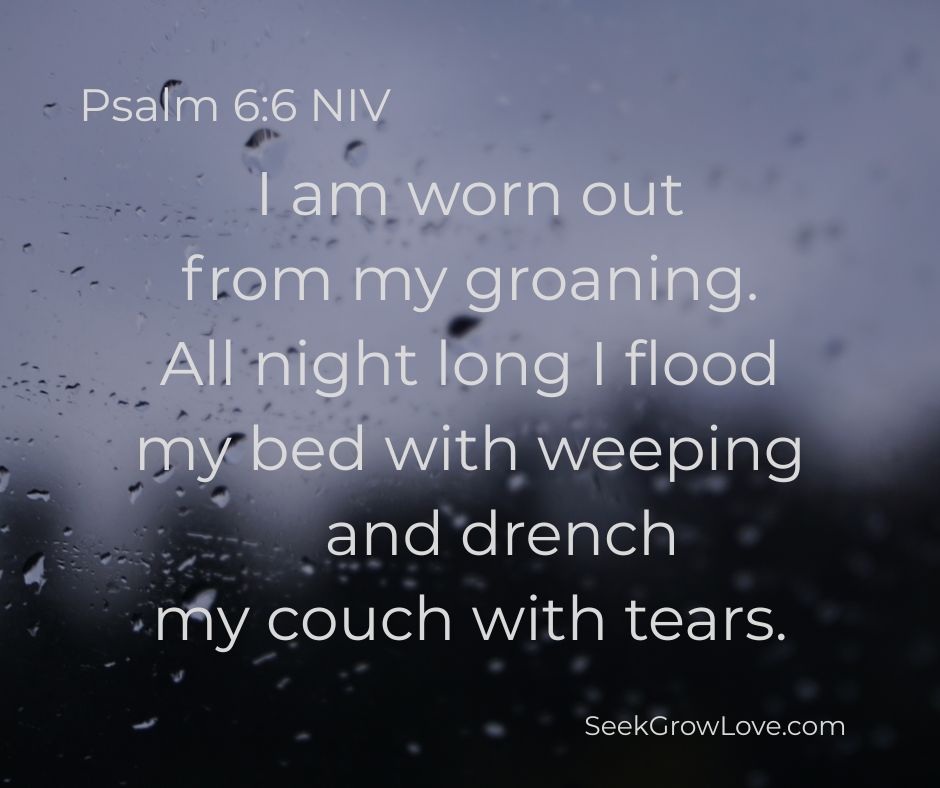
I distinctly remember as a child on the way to church noticing a few verses of Psalm 6 while I was looking at my Bible in the back seat of the our family’s monstrous (and memorable!) Oldsmobile. I also remember that my seat was duct taped at the corner for practical reasons that only duct tape can fix, and because of this, sometimes tape got stuck to my tights on the way to church. Tights. Ick. The thing that surprised me as a kid still catches me by surprise as an adult. David drenched his couch with crying! I’m not surprised David cried. Who doesn’t? I was actually more surprised he had a couch! But, it is clear reading Psalm 6, men-after-God’s-own-heart also sometimes feel troubled, anguished, full of grief, guilty, broken, sick, wasted, and all the rest. Having a relationship with God does not mean we are protected from heartache and distress. But, it does mean that no matter where we are, who we are, what we’ve done, or what has happened to us, we have someone hearing our tears who sees the big picture, who knows His eternal tomorrow, and who is merciful and constant.
Psalm 6 is the first of what are considered the “psalms of penitence”, and we see David starting this psalm with reference to rebuke and discipline indicating he knew that some of his pain and sufferings were connected to sin. Guilt is a powerful emotion and many of our other emotional challenges can build upon it when we haven’t released it to God. David is a stellar example in so many ways, and I am grateful that one of those ways is demonstrating what to do after making mistakes. Big mistakes. I love that we know more of David’s thoughts and not just his historical story. The psalms are very relatable because of their expression of emotion, and there are reasons that words from them are swarming in worship songs, requested at funerals, hospital rooms, and times of emotional need.
At work, I get to talk about emotions a lot with my patients. “Spot the Emotion” is a cute little guy I like for all ages, and he hangs out in various ways in our clinic in books, art work, worksheets, and my most recent favorite is a stuffed Spot! “Emotional regulation” has become one of the most highly requested goals of parents who bring kids to see us in OT, and the pediatric world is buzzing with the reality that we are in a “mental health crisis” in this country, youth for sure. The idea of emotional regulation is a bit of a buzzword and means different things to different people, but what stood out to me in this psalm is that David, through God, had emotional regulation skills. It doesn’t mean he was cool, calm, and collected all the time. He had meltdowns. It is okay and normal to have feelings that are troubled in this world. But, in those moments David believed God was there. I loved that in verse eight he tells us that the LORD has heard the sound of his weeping. In verse nine he confidently tells us that he believes his crying was heard, his prayers were accepted, and the LORD was there. Before we sob it out, while we are drenching the couch, and after we have taken a deep breath and are starting to get up again, the LORD is with us. We are never alone. We are always understood by Him. And if there is one emotional regulation tool I would give to any person in this world, it would be what David had. A relationship with the one true God, a knowledge of His words, and the forgiveness and healing that brings. If I could give a second thing to everyone in this world, it would be a support system of those who love and know God. It is okay to ask for help, and it is okay to be a helper who asks for help.
There is a day coming where the need for emotional regulation tools will be as absent as the sun. A day with no tears, no pain, no sin. Until then, the LORD hears us, knows us, and wants us to cry to Him, laugh with Him, and talk to Him.
Reflection Questions:
How do you feel about being able to cry to God anywhere or anytime about anything?
How did you relate to David’s psalm?
As we wait for the kingdom to come, we need each other. Who can help hold you up in Godly wisdom as you deal with big emotions? Who in your life might need some encouragement and help right now?
Prayer:
Dear One True God – Thank you for being near, hearing prayers, and seeing tears. Thank you for David’s example and heart. Help me to seek You and find You, even in the midst of my toughest days, and also never forget You on the easier days when my couch is dry.
 Seek Grow Love