Scripture: Our Corrective Lens – Proverbs 12

reading-glasses-in-use

Today brings our weeks study of Proverbs 6-12 to a close.  Chapter 12 is a continuation of the antithetical Proverbs and there are some real beauties in here and they range through quite a spectrum of wise and unwise behaviors.

It leads off with a really good set of contrasts: “Whoever loves discipline loves knowledge, but whoever hates correction is stupid.”  It doesn’t get much plainer than this:  A wise person willingly accepts discipline, but if you hate to be corrected by another you are stupid.

ted williams

Everybody makes mistakes.  I’m a big baseball fan.  I’ve always enjoyed playing and watching baseball.  The amazing thing about baseball is that the BEST baseball players fail between 60 and 70% of the time.  That’s right!  The best hitters usually have batting averages around .300, sometimes .350 and very rarely (like Ted Williams was the last one who did it and that was more than 70 years ago) someone will bat .400.  But even if you’re the greatest hitter of all time, you still FAIL to hit the ball 6 out of 10 times.  What is it that sets great hitters apart from the rest of us?  They learn from their mistakes.  They study film of their mistakes.  And they listen to their coaches who help them to correct what would appear to us to be very minor mistakes.  You get to be a great hitter by accepting correction, from learning from your mistakes.  That requires a lot of humility.

The same is true in the rest of our lives.  We all make mistakes.  Often we catch our own mistakes and take steps to correct them.  But sometimes we don’t even see our own mistakes.  Sometimes someone else sees our mistake and offers a word of correction.  A wise person willingly listens to correction and attempts to change their behavior… a foolish person refuses to receive or learn from the correction of others and so they fail to improve their actions.

The whole foundation of the gospel message in the Bible is a openness to correction and a willingness to change.  Jesus himself began his ministry by calling people to “repent, and believe the good news.”  To repent means to change your direction.

As you read through the Bible, God will use His word to bring to your mind and heart his corrective word.  You will see areas where you need to change.  You’ll see a passage like “Diligent hands will rule but laziness ends in forced labor.”  You might read that passage and realize, deep down, that this is an issue in your life.  You might blame other people for some of your problems, you might make excuses for why you do or don’t do certain things, but the fact is, you might actually be lazy.  I’m not saying you are lazy because, well, I don’t even know you.  You might be a diligent, hard working person and that’s great.  But then again, you might be lazy.  Your laziness may cause you to procrastinate and put off doing things that you need to do but don’t enjoy.  Your laziness may be costing you good grades in school, or a promotion at work.  Your laziness may because causing conflict in your marriage as your spouse resents that they have to work harder to make up for your laziness.  Your laziness might be keeping you from going to Church on Sundays or serving in a ministry at your Church where you might be very gifted and very helpful.  I don’t know if you’re lazy or not, but you need to at least take a hard look and ask yourself “does this Proverb apply to me?”  If you’re not sure, ask someone important in your life who really knows you and isn’t afraid to speak truth into your life and ask them “Do you every observe laziness in me?”  And if they say, yes, then you might want to consider that you may be lazy and you might want to become more aware of ways that laziness manifests itself in your daily life.  And you might begin asking God to help you change, understanding that it won’t happen overnight.

all scripture is God-breathed

But know this, no positive change can happen in any area of your life until you are ready to receive correction.  God’s Word, the Bible is powerful.  In one place the Bible refers to itself as a double-edged sword.  It’s able to dig deep inside of you.  It is able to help you change if you allow it to do it’s work in your life.  II Timothy 3:16 says it very well: “All Scripture is inspired by God and is useful to teach us what is true and to make us realize what is wrong in our lives. It corrects us when we are wrong and teaches us to do what is right.” (New Living Translation).

Almost exactly a year ago I had surgery to remove cancer from my body.  I let a surgeon cut through my skin and muscle to get to where the cancer was and very carefully cut it out.  Why?  Because I don’t want to die from cancer any sooner than necessary.  As I think about it today,  I gave that surgeon an awesome responsibility.  And to be honest, before the surgery I was afraid.  Who is this man with a knife that I’m entrusting with my body, my life?  I’m glad I did it, because here I am a year later and I’m still alive and I have a whole lot less cancer in my body then I did then and I’ve got a whole lot better chance of living longer now because I trusted him to perform surgery on my life.

“The fear of the LORD is the beginning of Wisdom, and knowledge of the Holy One is understanding”. (Proverbs 9:10).  I trust my awesome God to use His word to go to work removing all the bad stuff in my life and bringing me to wholeness and salvation.  God does this through his word and through Jesus Christ, who was pierced for our transgressions.  It takes some cutting and some bleeding to bring us life, and to bring us eternal life.  I trust God my awesome God, do you?

~ Jeff Fletcher
Don’t give in to Temptation! – Prov. 5

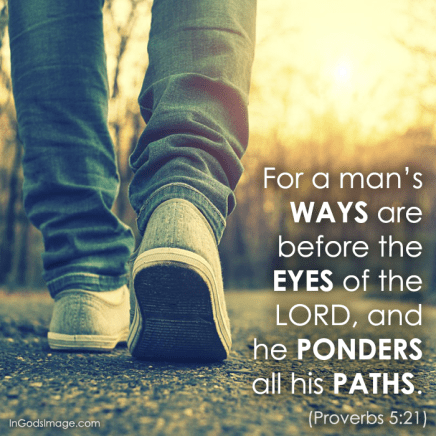
Proverbs-5.21.png

Hello, Everyone! I hope your week has gone well; can you believe it is Friday already?!

Today’s passage is Proverbs, chapter 5. This chapter is about one topic, and this topic is a piece of wisdom in itself. Again, thank you for joining us today, and I encourage you to go ahead a read this chapter on your own as well.

Proverbs 5, is full of warnings; warnings against disobeying, warnings about temptation, warnings about not realizing the good of what you have already been given.

The beginning of chapter five, tells us to listen and heed the wisdom being given. Verses 1-3 “My son, pay attention to my wisdom, turn your ear to my words of insight, that you may maintain discretion and your lips may preserve knowledge. For the lips of the adulterous woman drip honey, and her speech is smoother than oil.” This specific example speaks about giving in to adultery, however, it can be applied to any temptation we have. At any point in your life, someone might not have your best interest in mind, and they are only seeking to please themselves, and they might drag them down with you if you let them. This is later depicted in verses 11-14: “At the end of your life, you will groan, when your flesh and body are spent. You will say, ‘How I hated discipline! How my heart spurned correction! I would not obey my teachers or turn my ear to my instructors. And I was soon in serious trouble in the assembly of God’s people.” The person who gave in to their temptation later realize their mistake, and they regret that they did not listen to what many were trying to tell them.

The end of this chapter reads, “Why, my son be intoxicated with another man’s wife? Why embrace the bosom of a wayward woman? For your ways are in full view of the LORD, and he examines all your paths. The evil deeds of the wicked ensnare them; the cords of their sins hold them fast. For lack of discipline, they will die, led astray by their own great folly.” Proverbs 5:20-23

While these verses specifically talk about adultery, it can be applied to many other temptations in our lives. Why would we envy something someone else has when we have our own house, or our own life, our own family, our own job? God gives us what we need, and sometimes what we want, especially if both align with his will for us. Our God is an awesome God, who loves us so much, that he sent his only son to die for us, that we might live with him, forever. He knows our every need, he knows our every desire, and he likes to give gifts to those who are faithful.

We should not give in to temptations set in front of us because God can and does give us so much more. We should listen to the wisdom our elders, parents, friends, and peers give us because so often God has placed them in our lives to be a part of our journey.

Thank you for reading today, and I hope you have a great rest of your day and a great weekend. Don’t forget to memorize the verse this week, Proverbs 3:5-6. & Check in with us tomorrow for the last post this week.

~ Jana Swanson

The Way of Wisdom: Love and Trust – Prov. 3

Proverbs-33

Good Morning!

Yesterday I talked a little bit more about what wisdom is and what it can do for us. I also talked somewhat about how it is important for the Christian life.

Today we are reading Proverbs chapter 3, and this happens to have the memory verse in it this week. As a reminder the memory verse this week is Proverbs 3:5-6.

Chapter 3 has a lot of different little pieces of advice for us to keep, and to remember as we walk through our lives. I strongly encourage you to read through all of Proverbs 3 and to really take to heart all the things that it says.

Today, I just want to talk about a couple of my favorite ones from the chapter. Proverbs 3:3 “Let love and faithfulness never leave you; bind them around your neck, write them on the tablet of your heart.” I love this because part of the Christian faith is that we are called to Love. “Love the LORD your God with all your heart, all your soul, and all your mind, and love your neighbor as yourself.” This is our calling as Christians! Let love and faithfulness never leave you. That is just beautiful and very important to remember, especially when we live in a world that is full of injustice and turmoil.

Another that I think is very important for each of us to remember is this; verses 25-26, “Have no fear of sudden disaster or of the ruin that overtakes the wicked, for the Lord will be at your side and will keep your foot from being snared.”  God is telling us not to fear, especially natural disasters or anything else that is truly outside of our control, because God will be with us, and take care of us. We may find hardship and difficulty, but God will protect us, and take care of us. This also may not be in the ways that we expect or desire, but it will be in the ways that God sees fit, or that is in God’s will.

Finally, verse 30,” Do not accuse anyone for no reason- when they have done you no harm.” This is something I need to work on too. I have three younger sisters, and sometimes I will automatically blame one of them if something of mine “goes missing”. Sometimes they really did use or take whatever it was, but sometimes, I just misplace them. Here’s the thing, when I accuse them of something they didn’t do, it hurts their feelings and it makes them more upset with me, and defensive. We need to be more careful with the words that we say, and the tones in which we say them because our words can cause a lot of harm.

Prov3.5-6

I want to close with three more verses. First I want you to read verses 5-6 again, “Trust in the LORD with all your heart and lean not on your own understanding; in all your ways submit to him and he will make your paths straight.” & verse 35, “The wise inherit honor, but fools get only shame.” Again, wisdom takes care of us. We will inherit honor. Take this to heart, and pay attention to the rest of Proverbs 3.

Thank you for joining us today! Have a great day, and I hope you check in with us tomorrow!

God Bless,

– Jana Swanson

Trust in God! – Prov. 3:5-6

Thanks so much to Jana Swanson for writing this upcoming week’s devotions. Check out the video below to learn more about our next devotional writer:


I hope you join us throughout the week as we learn more about what godly wisdom is. Like we talked about last week, memorization is so important! Let’s tuck this week’s memory verse in our hearts:

Trust in the Lord with all your heart
    and lean not on your own understanding;
in all your ways submit to him,
    and he will make your paths straight.     

~Proverbs 3:5-6

Make a Choice! – 2 Chron. 34


scrolls
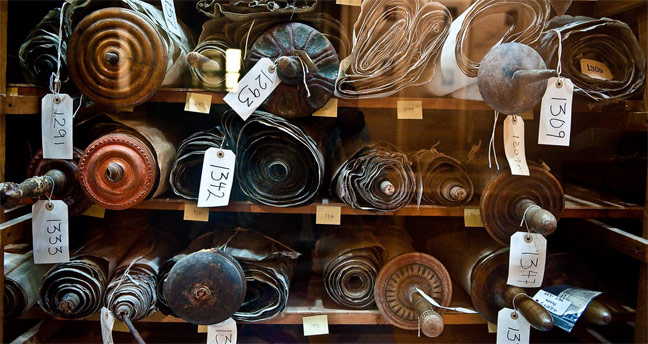
This picture is from the Memorial Scrolls Trust (http://www.memorialscrollstrust.org/), a collection of 1600 Czech Torah scrolls saved from the destruction of the Holocaust.


Wow! This week has been such a great reminder for me about the importance of scripture! We began this week by looking at our memory verse from Deut. 30:19-20:

 This day I call the heavens and the earth as witnesses against you that I have set before you life and death, blessings and curses. Now choose life, so that you and your children may live and that you may love the Lord your God, listen to his voice, and hold fast to him. For the Lord is your life, and he will give you many years in the land he swore to give to your fathers, Abraham, Isaac and Jacob.”

We’ve learned how we can choose life through desiring and studying God’s word this week. What does choosing life look like?

Let’s pause for a moment this Saturday morning and turn to 2 Chronicles 34, our key text. The Israelites in the Old Testament always seem to be getting into trouble and turning away from God’s paths. At this point in 2 Chronicles, the kingdom of Israel that Saul and David had established had been divided in two, with the ten tribes in the north making up Israel and the two in the south, Judah. The nation of Israel had become so wicked that God had sent them into exile. The kingdom of Judah had not gotten that bad, yet. But still, the people, under the king’s directions, had begun to worship other gods and neglected the one true God. In 2 Chronicles 33, we find the temple in disrepair and the law of God lost. The nation of Judah was choosing death.

But, in 2 Chronicles 34, we find hope in the form of a boy named Josiah, anointed king at only 8 years old. The Bible said that “he did what was right in the LORD’s sight and walked in the ways of his ancestor David; he did not turn aside to the right or the left” (v. 2). Josiah according to this verse was obviously choosing the path of life. But, what does that actually mean? What did he do that was so righteous?

The rest of this chapter goes on to say that he tore down the false gods that his people were worshiping and cleansed the land. Then, he began to restore God’s temple to how it should be. While the priests were looking through the temple and cleaning it out, they found something pretty important. In verse 14, it says that “Hilkiah the priest found the book of the law of the LORD written by the hand of Moses.” The people of Judah had walked so far down the path of unrighteousness that they totally neglected the law of God and lost it. Later on, it says that the court secretary, Shapan, just told King Josiah, “Hilkiah the priest gave me a book.” The law to him was nothing more than an old book!

Shapan read the law aloud to Josiah and when Josiah heard this, he got so upset that he tore his clothes! He realized that his people hadn’t been choosing the way of life; they hadn’t been keeping “the word of the LORD in order to do everything written in [it]” (v. 21).

choose life

This week, we’ve been meditating on the importance of scripture. We have a wonderful gift already because we have such easy access to the word of God! But, just like the people of Judah, we may neglect it to chase after other things. This year, we have another opportunity to commit ourselves to learning how to choose life from God’s word, both through these devotions and more simply through dedicating ourselves to God. Beginning tomorrow, we will learn more Godly wisdom from the book of Proverbs. Make a choice now to dedicate yourself like Josiah did to the daily reading of God’s word so that we can follow the paths of righteousness that lead to life.

Bible Study Crash Course: Part 2 – Psalm 1

bible

This week, we’ve been focusing on the importance of God’s word for our lives. Yesterday, we focused on the nitty gritty aspects of Bible Study. Today, we’re going to look at the bigger picture as we wrap up the week!

So, when we think about Bible Study, we should have four phrases in the back of our minds:

Read it

Meditate on it

Memorize it

Live it

Yesterday, we talked about our daily quiet time that normally involves reading the scripture. It’s important to remember that we can study the Bible in different ways! Last year, we looked at the Big Picture of the Bible. We read through it quickly and tried to see how each part of the Bible related to God’s epic plan. We can also study the Bible by studying specific books of the Bible, which we will do beginning this Sunday as we study the book of Proverbs. Another type of study that we can do is a topical study, where we look at specific topics like love or marriage and study what the Bible says about it whenever that topic comes up. Each of these ways of studying the Bible really helps us to have a complete picture of what we’re studying, and so we should try to do them at some point in our study of the Bible.

Once we read the Bible, we should meditate on it. If we look at verse 1-3 of Psalm 1, our key passage for today, we see that the man who meditates on the law of the LORD day and night is blessed! What is the law of the LORD? The Bible! But, what does meditating mean? Generally, it means to “think deeply or carefully about something” or to “consider.” It can be tempting to treat our daily reading of God’s word as a chore that we have to check off our to-do lists. We skim through a chapter or two a day and then close our Bibles without ever thinking about it again. The danger in this is that we never let God’s word sink into our hearts! That’s why it’s so important to meditate on it, to think carefully and deeply about what the Bible says. Yesterday, I mentioned that you could journal after reading to help you think. This is a great option! Prayer also helps us to do this. If you’re artsy, Bible Journaling Art can be a great way to meditate on scripture as you make artwork that relates to what you’ve read.

Another aspect of Bible study that’s important and can help us to meditate on the scripture is memorization. Growing up, I never really saw the value in memorizing scripture. My family is Christian so we had about 15 Bibles to choose from if I really wanted to look up a verse. On top of this, my brothers and I got a laptop to share when I was about 7 or 8 years old. By the time I really cared to look up verses, I always had Google or Bible Gateway at my fingertips. This is even truer now when I constantly carry around my phone. All this being said, even when I know that I have the capability of looking up scripture to help me work through a situation or strengthen my faith, I, unfortunately, don’t choose to do this first thing. A worrier by nature, I immediately start analyzing my situation from my viewpoint, and if it’s a problem that stresses me out too much, I’ll enlist the help up my friends to sort it out. If I don’t have scripture ready at the forefront of my mind that I’ve thought about and hidden in my heart (Ps. 119:11), I’m afraid I won’t turn to it until I’ve already done something that I probably shouldn’t have.

For instance, if I am worried about a situation that’s making me anxious and keeping me up at night, I can (1) journal about it, maybe cry about it, and maybe even call a friend if I’m real upset. OR I can remember Philippians 4:6, which says, “Do not be anxious about anything, but in every situation, by prayer and petition, with thanksgiving, present your requests to God.” That’s a pretty profound truth that totally changes the way that I think about how to handle the problems that I face!

Memorization is important. It can help you in situations like this. (Because we both know that even if you have a smartphone AND a Bible sitting at your bedside table if scripture isn’t the first thing on your mind, you’ll probably be picking option one in the scenario above.) And, it can help you as you defend your faith (1 Peter 3:15). Look at Jesus’ temptation in the desert in Matthew 4 if you need some more evidence for the importance and benefits of memorizing scripture. This year, you’ll have some great verses picked out for you to help you memorize Scripture each week with these devotions!

Lastly, we should remember our fundamental purpose for why we study the Bible. We want it to change our hearts. We want to know and live for God. If you do the first three phrases consistently in your life, this, in addition to the power of the Holy Spirit, will really begin to make a big change in your life. And, if we check ourselves with this purpose each day, it will be harder to fall into the trap of viewing the reading of God’s word as a stale chore to be tackled each day.

Let’s dedicate ourselves to reading, meditating on, memorizing, and living out the truths we find in God’s word!

Bible Study Crash Course: Part 1


Bible-Reading-2-3-John
Shar’s Bible Journal from http://www.womenlivingwell.org 


This week, we’ve been talking a lot about the Bible and its importance in our lives. Even if we know how big a difference daily reading the Bible can make in our lives and we desire to know God’s word more, it can seem a bit overwhelming to actually dive into reading the Bible daily. Luckily, these devotions, regardless of whether you have spent the past year with us, have helped to give you some direction as to how to study the Bible. Still, it can be daunting to really dive in to creating this habit that can literally change your life. So, today, we’re going to be talking a little bit about how to study the Bible. For some of you, this will be old stuff that you already know. For others, some of this might be a little new. But, that’s okay! Wherever you are at in your walk with Christ, it’s always important to be intentional about your time with God. So, let’s dive in!


Today, we will talk about one aspect of studying the Bible: What should our daily time with God look like? Before we begin studying the Bible each day, it’s a great idea to pray. Why? During this time, we want to make sure we are coming to our studies with the right attitude to get the most out of it, and we should be sensitive to the Holy Spirit while we are studying. Prayer helps us to keep those things in mind.

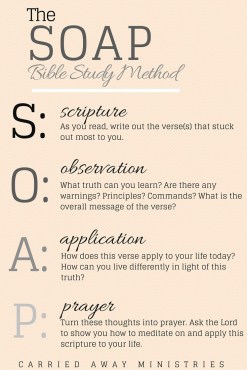
SOAP-Method-of-Bible-study-1

Then, we dive into our actual studies. If this is your first time reading the Bible, it may be helpful to you to just mark some interesting passages with a pen or highlighter as you read. If you’ve been doing this for a while, you may ‘code’ your Bible, marking topics that are similar across texts. Even if you don’t do this every time you read the Bible, once you begin reading regularly, you’ll start to see the ways that the different books of the Bible interact with one another. If you see something, it’s a great idea to write it down in your Bible! This is called cross-referencing and can be a great way to go deeper in your Bible study. Plus, think of all the notes and ideas that your Bible can hold if you keep doing this over a long amount of time! Another way to go deeper in your study is to look up the meaning of words using a dictionary. If you are unsure why an author used a certain word, look it up! You may find something really cool about the original Hebrew or Greek words.

After this, it’s a great idea to write down some of what you found in your study in a journal. Writing things down (1) helps you to work through problems in your mind and (2) will help you remember it later on. If you skim through something, it will be hard for you to really write about it. Or if you read something, but are confused with what the author is trying to say, you may be able to work it out in a journal. Then, like you did in the beginning of your study, it’s great to pray again. Remember, you don’t read your Bible just to know more of what it says. That’s important. But, the main reason why we do it is to get closer to God! Bible study without real heart-changing conversations with God can lead us down the same road as the Pharisees.

Whew! That sounds like a lot, doesn’t it? Once you’ve done all this, it’s awesome if you can find a group of friends or a mentor to help you work through what you are studying. Have questions? You can ask them about it! Sometimes, it may be hard to find times to sit down and read for 30 minutes, or you may be thinking that you would never journal your insights and prayers. That’s okay too! Listening to your Bible in the car or online can be a great way to learn more about what God is trying to say even if you don’t enjoy reading.


Tomorrow, we are going to look at another aspect of studying the Bible. In the mean time, take a moment to put some of these Bible study tips into practice as we read the context around a verse (2 Tim. 3:16) I mentioned yesterday in 2 Timothy. Read through 2 Timothy 2-4. While you do this, think about the importance of learning what God’s word has to say. Like 2 Tim. 3:15 says, the Bible is “able to give you wisdom for salvation through faith in Christ Jesus.” Let’s get in the Word! And, if you still feel a little overwhelmed, you can be reminded of what Richard J. Foster writes in his book Celebration of Discipline:

“Study produces joy. Like any novice, we will find it hard work in the beginning. But the greater our proficiency, the greater our joy. Study [of the Bible] is well worth our most serious effort.”


Does your Bible study look different than this? Do you have any other Bible study tips you would like to share? You can share them in the comments below!


(Check out more about Shar’s Bible Journal at http://womenlivingwell.org/2014/09/good-morning-girls-bible-study-journal-amazing/)

Choose Life!

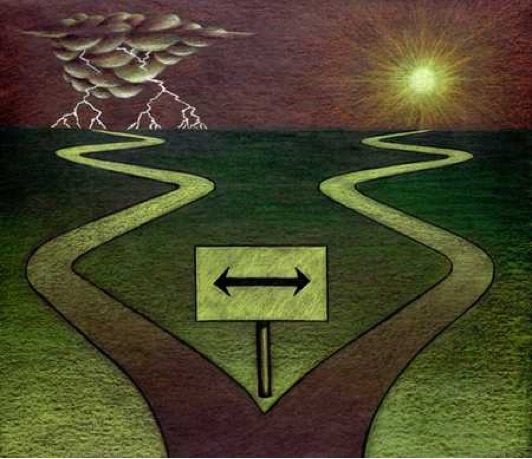
two paths

This year at Fuel, we have talked about honor. We know now that we should honor God first with our lives and honor other areas of our lives like our parents, the Bible, Christ, relationships, others, and our internal and external selves. As we move into the upcoming year at Fuel, our Grow Devotions will look a little different. We want to keep growing in our understanding of who God is and in our relationship with him. To do this, we have to make it a daily task to get into God’s word. And, we shouldn’t only get into it! We have to write it on our hearts. We have to make it something that is our reflex reaction to turn to in hard situations. Each week, we are going to begin the week with a video, audio clip, or blog introduction of our devotional writer for the next week. Then, we will dive into our scripture reading which we will read daily throughout the week, followed by a recap on Saturday about some of the highlights of the previous week. We encourage you to memorize the weekly scriptures and write them on your heart so that you can have them be the truths that you go to for encouragement and wisdom, instead of turning to the lies of the world.

View the video clip above to learn about our memory verse this week and what we will be talking about this week!

Our Memory Verse:

I call heaven and earth as witnesses against you today that I have set befoore you life and eath, blessing and curse. Choose life so that you and your descendants may live, love the LORD your God, obey Him, and remain faithful to Him. For He is your life, and He will prolong your life in the land the LORD swore to give to your fathers Abraham, Isaac, and Jacob.                                            ~ Deuteronomy 30:19-20