

*THEME WEEK: Death & the Kingdom – Ecclesiastes 9
Old Testament: 1 Kings 11-12
Poetry: Psalm 121
One artist recently crooned the words “I’m not important and neither are you, so let’s do whatever we wanna do. Bask in our cosmic insignificance, soak up this blip we’re livin’ in, ‘cause nothing matters anyway. Isn’t that great?” He goes on to say “I don’t mean to be a downer. I don’t even think it’s sad.” The idea behind the song is that because nothing we do really matters, we can do whatever we want and know that in the end we haven’t really changed the course of the universe or the planet. It’s a prime example of Generation Z’s gleeful, enthusiastic nihilism. (“Nothing matters, let’s party!”)
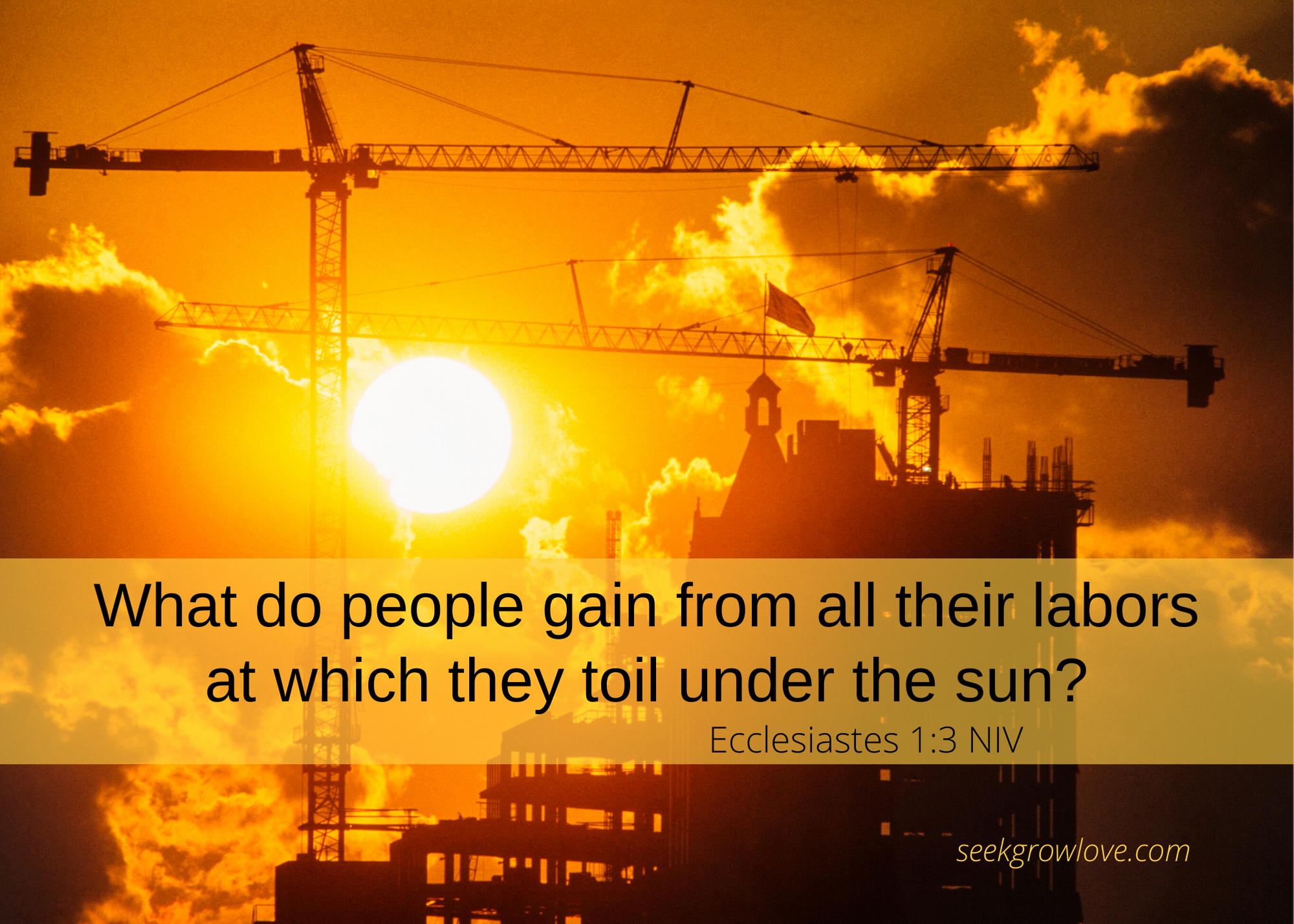
Sometimes, we mistakenly read some of the words of the Teacher of Ecclesiastes in the same light. The Teacher’s point in Ecclesiastes is not that everything is meaningless. (Eccl. 1:2) Instead, we should translate the word meaningless differently. If you read Eccl. 1:2, you might read “meaningless”, “pointless”, “vanity”, or “futility”. The Hebrew word behind these translations is “havel/hevel”, which means smoke or vapor; something like the mist of the morning that disappears. It is not necessarily pointless, but transitory, fleeting, impermanent. The real point of Ecclesiastes is in chapter 1, verse 3 : “What does a person gain from all of his labors under the sun?” What lasts? What’s eternal? What is not “hevel”?
In chapter 9, the author makes the sobering and realistic comment that humans, the entire person is “hevel”. Both righteous and wicked, good and evil, all will experience the same life (9:2), a life of a bunch of crazy events, and then death (9:3). The author says it’s better to be alive than dead, and we should eat and drink (9:7), dress in white and take care of our bodies (9:8), and enjoy the people we love (9:9) in response to our view of death. Is the Teacher just as Nihilistic as our Gen. Z artist? Does nothing matter anyway, everything is meaningless, so let’s party as we wring some joy out of it?
NO! “The righteous and the wise and their deeds are in the hand of God.”(9:1) Go, eat, drink “for God has already approved what you do.” (9:7) The author of Ecclesiastes gives a spiritual but real view of this world. Spiritual, because God is at the center of the lives of the good, but real because death is the end of the ride here. The dead “know nothing”.(9:5) There is “no work or thought or knowledge or wisdom in Sheol [that is, the realm of the dead] (9:10). The author is serious about life. It is important to live it well, but also to enjoy it, because whatever death is, it is NOT life. The author of Ecclesiastes doesn’t give us reincarnation, nor does he tell us that we will live in a new world, nor is there any mention of heaven or hell. Death is the end.
Until it isn’t. Because if the point of Ecclesiastes is “what lasts?” The answer is found in chapter 12. Verses 13-14, “The end of the matter; all has been heard. Fear God and keep his commandments, for this is the whole duty of man. For God will bring every deed into judgment, with every secret thing, whether good or evil.” Fearing God, keeping God’s commandments, that is what lasts. And then humans are judged. That every deed is brought into judgement is one of the strongest implications of the future resurrection in the Old Testament. Our lives now, every choice we make, sets us on a path to joy or despair, life or death, seeing the face of God or God turning his face from us. For those who have placed God at the center of their lives, God will approve of what they do.
Humans are hevel, but humans are also the only things that will last. Humans are fleeting and temporary but some, those who follow Jesus the Messiah, the one sent from God, and keep his commandments, will one day be eternal, be those which last.
“I’m not important and neither are you.” Yes, we are both hevel and made eternal by grace.
“So let’s do whatever” God wants us to do.
“Bask in” love of the Father and the Son. “Soak up” the grace and blessings of the world that we are living in.
Because, we matter. Infinitely.
Isn’t that great?
-Jake Ballard
Reflection Questions:
- How does one’s view of death contribute to their philosophy of and actions in life?
- What is the Teacher of Ecclesiastes’ view of death? How is it similar and/or different from yours?
 Seek Grow Love