
Nehemiah 7-8
Nehemiah’s vision is complete. The wall of Jerusalem has been repaired and the Jews reestablished their home, yet there is much to contemplate. It would be easy to focus on what isn’t present at this moment. Generations have passed away in captivity and exile, to close their eyes in death as slaves. The present state of a skeletal city is a reminder that there is still so much work left to do to bring Israel to its former glory. There are fears of the future and the foes taking camp around a city that is trying to put itself back on the map. Instead of being driven by doubt, regret, or worry, Nehemiah and the priest of Israel establish the completion of the wall as a time to celebrate the return of God’s people.
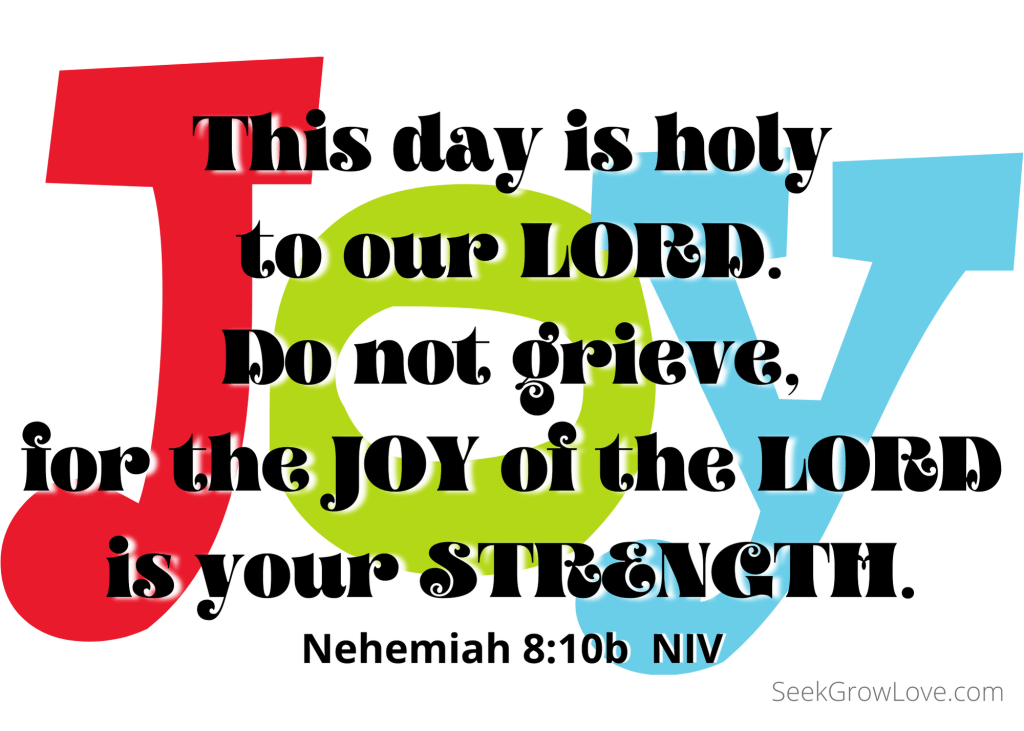
Nehemiah said, “Go and enjoy choice food and sweet drinks, and send some to those who have nothing prepared. This day is holy to our Lord. Do not grieve, for the joy of the Lord is your strength.” – Nehemiah 8:10
As God’s timing would have it, the completion of the wall shared a seam with the Festival of Tabernacles of the Feast of Booths and the words shared from the Laws of Moses. You may be familiar with this week-long celebration from your earlier reading this year, but this might be a good time to summarize the origin and purpose of this festival. God had redeemed his people, the Hebrews, out of enslavement in Egypt. He did this through sending a series of plagues to Egypt, parting the Red Sea, and giving his commandments. There were a few bumps in the road. The Jews spent a great deal of time wandering in the desert because of their lack of faith and disobedience, yet he remained with them wherever they were, and he still blessed them with receiving the Promised Land, the very place where Nehemiah and those who followed him out of exile had returned.
We don’t serve a God who is solely responsible for the harvest. We don’t serve a God who is solely responsible for the rain. We serve a God who works in the harvest, and works in the rain, but also works on the days that are in between. We may endure a great deal of prosperity or adversity, but ultimately, we take count of the blessings and realize that compared to eternity and the Kingdom of God, we are just living in booths, moving, temporary structures built from our feeble attempts to gather a few sticks or a few bricks. After a long journey, we may seek to call it home, but it won’t be, right? It is only a place to eat a few meals and get some rest until we no longer want it, it is destroyed by the elements, or someone else is enjoying it because we are pushing up daisies.
The whole company that had returned from exile built temporary shelters and lived in them. From the days of Joshua son of Nun until that day, the Israelites had not celebrated it like this. And their joy was very great. Day after day, from the first day to the last, Ezra read from the Book of the Law of God. – Nehemiah 8:17,18a
Therefore our home as we wait is not established in a certain location, but is rooted in the Word of God – in our Savior Christ Jesus, The Word and Cornerstone. Additionally, His Word, is the saving knowledge of the Gospel testified to by the Living Word, that is meant to be shared with all, especially those who have not prepared (v.10). The harvest has not yet come, so we could be freshly stepping out of captivity, like the Hebrew or those returning from Babylon. If this be the case, there is a lot to do to ensure our initial success – like create some solid boundaries. Maybe we feel as though we are in exile, we are a far cry from the person who was once called Christian. Listen to God’s calling. Recognize his blessings. There is a promised land, even for those who wander (and truly, only for those who wander). No matter the season, God is there, and the greatest of harvest is coming soon. Enjoy this spectacular vista from the shack of your (but really, God’s) choice.
-Aaron Winner
Today’s Bible reading passages can be read or listened to at BibleGateway here – Nehemiah 7-8 and 1 Corinthians 10

 Seek Grow Love