
Old Testament: 2 Chronicles 25-26
Poetry: Psalm 103 (day 4)
New Testament: 2 Timothy 4
Welcome to the 4th day of questions on Psalm 103. Yesterday we focused our questions on verses 11-14, looking at God’s love, forgiveness, and compassion as well as the incredible facts that, “he knows how we are formed, he remembers that we are dust.” (Psalm 103:14). This verse says so much about God – and about man. The next couple verses continue on the topic of mankind.
VERSE 15 – Why do you think David compared man’s days to grass – what are the similarities? If you compared yourself to a flower of the field which kind of flower in what field would you be most like? Why? What might make the flower flourish? What else could have David compared man to? What ideas about mankind was David using poetry to explain? How might a scientist or a psychologist have explained these same ideas?
VERSE 16 – What happens to the flourishing flower of verse 15 in verse 16? What does David say caused this to happen? What do you think the wind symbolizes? What do you think of when you think of a flourishing flower suddenly gone? What emotions come with these thoughts? What do you feel when you read the second line of verse 16? What truths are David expressing in a poetic form?
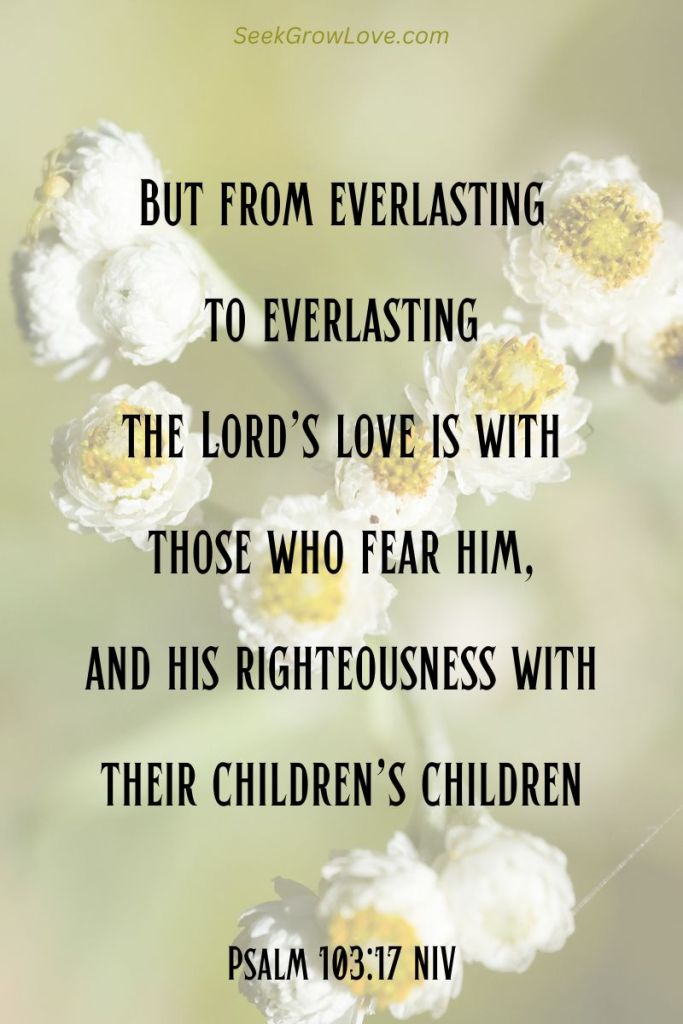
VERSE 17 – What do the words, “But from everlasting to everlasting…” mean? What changes as we go from verse 16 to 17? How is God different from mankind? Is the Lord’s love for one generation more so than another? In what other verses in Psalm 103 have we seen a similar thought as we see in the first half of verse 17? What would it look like for God’s righteousness to be with your grandchildren? Will His righteousness be with ALL grandchildren? If not, then with whose? Do you fear the Lord? (Interestingly, this concept of fearing the Lord – and instructing others to do the same – came up in our Old Testament reading for the day as well. Did you find it in 2 Chronicles 26? How were similar ideas shared in the New Testament reading of 2 Timothy 4?) Do people just automatically know how to fear the Lord? What happens if it is not taught? If you do fear the Lord, who do you know that you want to see also fearing the Lord?
VERSE 18 – Who is verse 18 referring to? Who do you picture as part of this group? Are you included? What do they do? What will they receive (see verse 17)? What is a covenant? Do you have a covenant with the Lord God? If so, what does it say you will do? What does it say God will do? What are precepts? How is your memory? Do you remember to obey his precepts? When did you recently forget to obey and which precept did it involve? How can you work on further developing your memory so as not to forget God’s laws? What else is needed to stand firm against temptation?
What did you take away from these 4 verses? How will you live today because of them? Who will you share these truths with?
-Marcia Railton
 Seek Grow Love