
Old Testament: 1 Samuel 23 & 24
*Poetry: Proverbs 13
New Testament: Acts 7
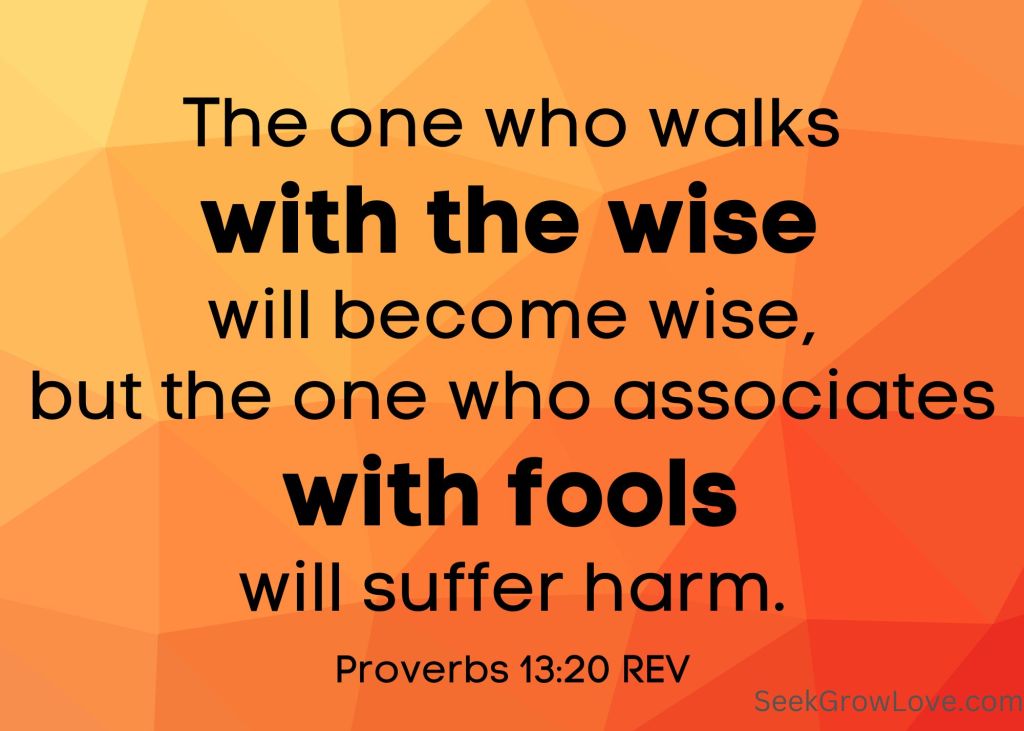
Proverbs 13:20 says, “The one who walks with the wise will become wise, but the one who associates with fools will suffer harm.”
Out of all the proverbs in this chapter, let’s ruminate on this one for a few minutes. The meaning of the proverb is simple enough on the surface: you become wise if you hang out with people who are “wise,” but you will suffer harm or get in trouble if you hang out with “fools.” Nevertheless, the depth of the meaning comes in understanding why the proverb is true, and also the difficulty it poses for actually applying it in our lives. What do I mean? I am saying that the proverb is simple in what it is stating, but the concept behind why what it says is true is very deep and rich.
This proverb touches on a reality of our lives that is so often overlooked or minimized, and that is, how other people can influence and change our behavior. One of the most powerful forces in the formation of human psychology and sociology is peers. The people our age that we spend the most time with are some of the most influential people in our lives. We tend to subconsciously adjust our ways of speaking, acting, and even preferences to align with what others around us are doing and think is “cool.”
The phrase “the one who walks with the wise” is an idiom that describes spending significant time with and to be in close association with a wise person. “Walking” together is a way of saying doing life together. And friends are definitely people that you “do” life with. But it is not just friends that the proverb has in mind, it is specifically a person who is “wise.” Wisdom comes with age, and so if you are relatively young, then a “wise” person is probably much older than you. And while older people might not rank high on the “cool” factor in the eyes of young people, they possess a vast amount of wisdom to young people in comparison.
If your friends exhibit godly speech and conduct in their lives, then that is part of wisdom, and they are exerting a positive influence on you, whether you consciously realize it or not. But if your friends talk behind peoples backs, rebel against authority, use vicious words to tear others down, steal, lie, or any other number of wicked patterns of behavior, then they are a “fool,” and they will likely either rub off on you or pressure you to be more like them (because they will ridicule you if you don’t or just stop hanging out with you because they think you are “lame”).
The apostle Paul mentions this principle in 1 Corinthians 15:33 when he writes, “Do not be deceived: ‘Bad company corrupts good morals.’” His warning expresses the same wisdom as the second line of the proverb. If you associate yourself with “fools” you are bound to get corrupted and become like them. It only takes one bad apple to spoil the whole bunch.
Take a moment to think about if you are spending time with a “bad apple,” and if so, whether you notice how that relationship is negatively affecting you. Because one way or another, it is. If you find yourself thinking that you need more positive influences in your life, then maybe it is time to start walking with someone who is “wise” so that you too can become “wise.”
-Jerry Wierwille
Reflection Questions
- How would you honestly describe the people you spend the most time with? Take a moment to think about if you are spending time with someone who is negatively affecting you. What are your options? Which is the best one?
- Who do you know who is wiser than yourself? What can you do this week/month to spend more time with that person? Set it up.
- How can you be a wise friend to others rather than being a bad influence that leads them (and yourself) to harm?

 Seek Grow Love