
Zephaniah 1-3
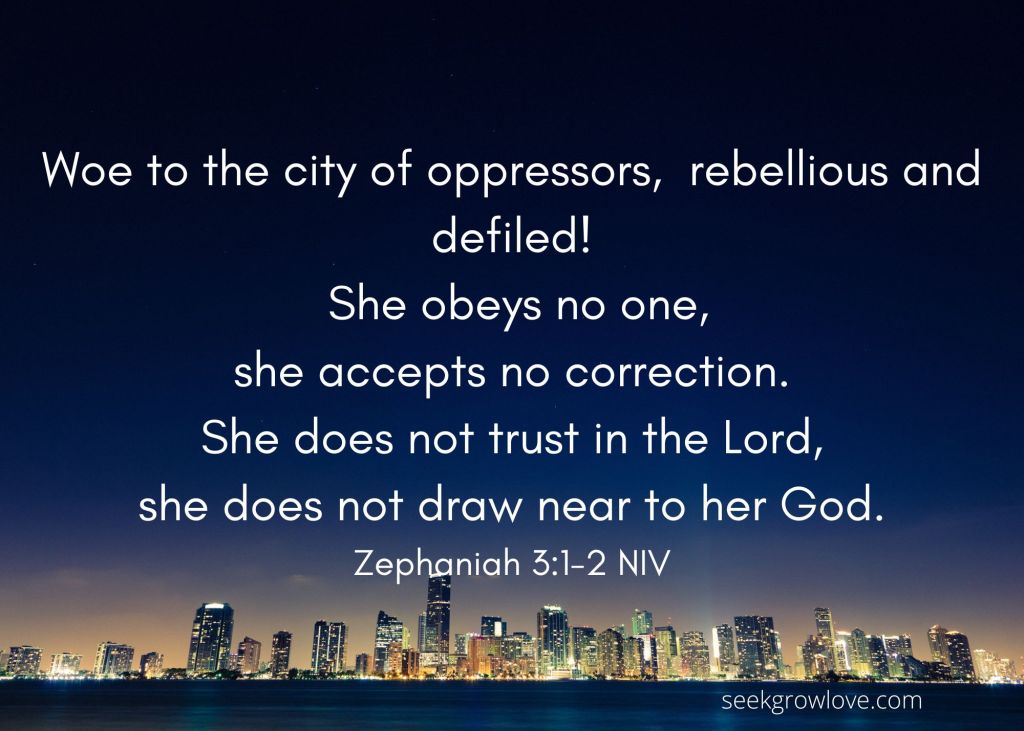
Do not be like the rest of society, not obeying, not trusting, and not drawing near to the Lord (3:2) Instead, seek out the Lord, do what He commands, and seek righteousness and humility (2:3)
“Those who cannot remember the past are condemned to repeat it.” This quote by philosopher George Santayana has famously been reiterated by Winston Churchill and probably every history teacher you’ve ever had. It just makes sense, right? We can avoid so many problems if we learn from the mistakes of others, whether it’s personally or corporately. Unfortunately, as Santayana noted, even those who DO learn history repeat it.
Sadly, as a society, we’re not doing any better than the people of Israel in the book of Zephaniah.
In the very short book of Zephaniah (we’re going to call him Zeph for short), Zeph is giving a warning to the people of Judah to turn from idols, stop their violence and evil, and most importantly, TRUST the LORD! In my short amount of google research, it seems most Biblical scholars believe Zeph was a cousin and possibly a friend of King Josiah. Zeph was most likely preparing the people for the coming revival of faith and obedience brought by King Josiah.
Not to spoil it, but Judah does turn from their wicked ways and turn to the Lord! Yay!
But, not remembering the warnings and history, they forget and are later captured by Babylon. Sigh.
But are we any better? Zeph prophesies to the people way back in 640 BC. One of the major problems Zeph preached against were those who knew God exists but that He “will not do good, nor will He do evil.” (1:12) This is ambivalence.

This ambivalence continued into the Roman Empire. In 1776, Edwin Gibbon wrote in his book, “The Decline and Fall of the Roman Empire” about the religious attitudes in the last day of the Roman Empire around 476 AD.
-The people regarded all religions as equally true.
-The philosophers regarded all religions as equally false.
-The politicians regarded all religions as equally useful.
(Enduringword.com)
These were the attitudes of the people of Judah some 1100 years before. And they are exactly the same attitudes of our society 1550 years later! We do not learn. Even with history laid out before us.
However, as Zeph wrote in his book, there were those in Judah who did not go along with everyone else and they will be rewarded. We need to be like that “remnant of Judah” (2:7).
We may not live in a society that learns from its history, but we certainly can be individuals and a church that does.
Prayer:
Dear Lord, please open our minds to allow us to not only learn history, but to avoid actions we have seen that lead to destruction. Please let us be a light to those who know you exist but deny your goodness in their lives. Thank you for allowing us to come before you to seek righteousness and humility.
In Christ’s name, Amen
-Maria Knowlton
Reflection Questions
- What similarities do you see between the people of Judah in Zephaniah’s day and the people of your world today? Any differences?
- What is the problem with being ambivalent toward God? What could/would/will you say to someone who is ambivalent toward God?
- If you were to write a letter of warning to the people today what do you think God would want you to say?
 Seek Grow Love