Who Do You Follow? (Leviticus 18-20)

Friday, August 26

I-Am-The-Lord-700

Today’s reading (and perhaps all of Leviticus) are well summed up by the first 5 verses of Chapter 18.  “The Lord said to Moses, ‘Speak to the Israelites and say to them, “I am the Lord your God.  You must not do as they do in Egypt, where you used to live, and you must not do as they do in the land of Canaan, where I am bringing you.  Do not follow their practices.  You must obey my laws and be careful to follow my decrees.  I am the Lord your God.  Keep my decrees and laws, for the man who obeys them will live by them.  I am the Lord.”

Did you notice that in these 5 verses one phrase is repeated three times.  In fact, it will be repeated about 22 times in Chapters 18 and 19, and will be scattered throughout the rest of Leviticus.  “I am the Lord – your God.”  Did God really think the Israelites needed that many reminders about who is God?

Might it be that we today need just as many reminders?  Do I get caught up following the practices of others, rather than the laws of God?  Too often do I merely go along with what my neighbors, classmates, co-workers, countrymen, social media friends around me are doing, rather than being careful to follow the Lord’s commands?  Do I question the Lord’s laws, choices and actions?  Do I think I have a better way?  Do I forget that it is the Lord who is God?  How would you fill in the blank:  “You must not do as they do in ________.  Do not follow their practices.  You must obey my laws and be careful to follow my decrees.”  God warned the Israelites that they must not do what they did in Egypt (where they had come from) and they must not do what they do in Canaan (where they were going).  Rather, they were to be a separate, called-out people devoted to him.  Where and when do you need to be extra cautious and aware of the influences around you that are pulling you in directions away from God’s leading?

The lists of laws with “I am the Lord your God” interspersed regularly reminded me of a parent answering a child’s questions about why they need to follow their parent’s rules.  “Because I said so, and I am your parent.”  So true, so true.  God doesn’t even wait for his children to start asking the questions.  Right along with the rules comes the explanation, over and over again.  We would be wise to remember – “He is the Lord our God.”   And he knows best.

Who Will You Follow Today?  What will it look like?
Marcia Railton
Gross – and Great – in 3 Chapters (Leviticus 15-17)

Thursday, August 25
shedding of blood
When my kids go off to school, I have a home daycare and preschoolers invade the house.  Recently I was babysitting four preschoolers – three of whom were potty-training at the same time.  So, I do have some experience with bodily discharges (the topic of Chapter 15).   I found myself saying all sorts of things I never imagined I would need to say about not touching this or that or sitting here or there.  It was for very good reason that we removed the bathroom rug for several months.   And, there was no limit to the amount of times I made them wash their cute little hands – hands which didn’t even look dirty to them.  As naïve children, my preschoolers failed to see the dangers of unclean habits and the reasons and ways for cleaning themselves.   The Israelites had similar issues.  And, might we, too – at least when it comes to spiritual cleanliness?

Perhaps it is said best in Leviticus 15:31: “You must keep the Israelites separate from things that make them unclean, so they will not die in their uncleanness for defiling my dwelling place, which is among them.”  Our God is STILL a holy, CLEAN God who dwells among us and requires us to be clean to come into His presence.  Strive for purity (In your thoughts, words, attitudes, motives and actions).  When you “mess yourself” – realize the danger and harm of your sin.  Instead of making excuses – take the needed steps for cleansing.  Jesus Christ offers the best spiritual sanitizer possible.

Chapter 16 gives detailed directions for the yearly Day of Atonement – when “atonement (reconciliation) is to be made once a year for all the sins of the Israelites.” (16:34).  This will be the sacred time when the High Priest enters the Most Holy Place, and in addition to sin offerings and burnt offerings (which were also done regularly throughout the year) – a scapegoat will be released into the desert.  Wikipedia defines scapegoating as, “the practice of singling out any party for unmerited negative treatment or blame”.  Sure sounds just like what would be awaiting the Son of God so many years later.

In Chapter 17 – where the eating of blood is forbidden – we see yet another foreshadowing of Jesus’ purpose (atonement) and means to the end (death).  Verse 11 says, “For the life of a creature is in the blood, and I have given it to you to make atonement for yourselves on the alter; it is the blood that makes atonement for one’s life.”

We are dirty, sinful people – just as God’s people have been all through history.  Realize the danger of your unclean habits (sins).  Be sanitized.  Thank God He has made a way for us to be purified and reconciled to Him.   Thank you, Jesus, for being the scapegoat and the perfect sacrifice so we can come before The Almighty!

Marcia Railton

More Hats for the Priests (Leviticus 12-14)

Wednesday, August 24

Not Another One!


Great job hanging in there – after today we are more than half way done with Leviticus.  It hasn’t been too painful, has it?

Leviticus 12 is a short chapter dealing with purification after childbirth.  I wonder if this was a step towards creating “maternity leave” for mothers who had just given birth.

We see a few more job descriptions added for our busy priests in Leviticus 13 & 14.  First, the priest adds the hats of dermatologist and health inspector.  Anyone with a skin irregularity (swelling, rash, spot, sore, raw flesh, boil, burn, itch) was required to be inspected by the priest.  At first it seemed odd that the only ailments listed were skin related.  However, with the absence of internal medicine (no heart surgeons in the ancient days), I suppose that makes a lot of sense.  And, as webMD says, “Your skin can be a window to your underlying health.”  Since they didn’t have google to consult, what a relief that the priest could answer any question about that irritating itch or red rash you or your family member or neighbor developed.  If it was found to be an infectious disease (or needed time to tell), the patient was sent to live in isolation – for the sake of the health of the whole community.  As I was typing this  . . . my husband actually asked me about a small bump on his finger.  So, straight to the good book I went.  I don’t think he will have to live in isolation just yet . . . but we will keep an eye on it for sure!

The priest also acted as clothing and housing inspector.  He would examine mildew and test it to determine if it could be washed away or if it was more of a destructive mildew.  If it was a destructive mildew growing on a piece of clothing or leather or walls of a home – the item would be destroyed.

Some thoughts to ponder for today . . .
Is there a connection between physical health and spiritual health?
Do you find it easier to discuss your physical health or your spiritual health?  Where do you feel more fit right now?  What needs some adjustments?
What roles/hats do we expect a pastor to perform/wear for us today?

 
Back with more Leviticus tomorrow,
Marcia Railton

Do what the Lord requires! (Leviticus 8-11)

Tuesday, August 23

Nadab_w_Abihu_C-230
We begin our day’s reading with 2 chapters which provide a detailed depiction of the ordination ceremony for Aaron and his sons.  They were chosen by God to act as the priests for the people.  It was a huge honor and responsibility.  Their ordination and the start of their ministry was an 8 day affair with Moses giving directions from God, and Aaron and his sons carefully following each of the instructions.

In 8:35 Moses tells Aaron and sons, “You must stay at the entrance to the Tent of Meeting day and night for seven days and do what the Lord requires, so you will not die”  (perhaps a bit of foreshadowing there?).   And in 9:6, “Then Moses said, ‘This is what the Lord has commanded you to do, so that the glory of the Lord may appear to you.”  Both of these verses give different reasons for obeying God’s instructions – so you will not die, and so God’s glory may appear to you.

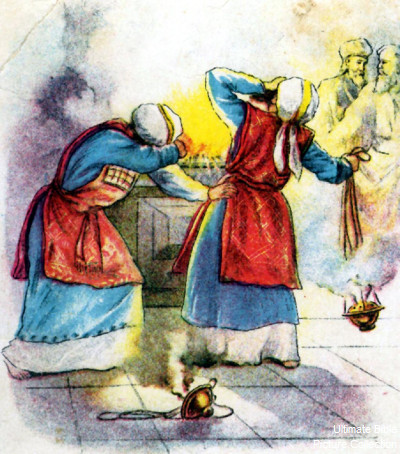
In Chapter 10 two of Aaron’s sons, the newly appointed priests (Nadab and Abihu) receive the penalty of death by fire from the Lord for offering,  “unauthorized fire before the Lord, contrary to his command.” (10:1)   Perhaps their pride had already led them astray (“Hey, look at us, God made us priests, we are HOT stuff”).  Perhaps they were mixing clean and unclean,  holy and common (trying to call holy something that wasn’t).  Or perhaps they just thought they had a better way of doing things . . . but . . . they didn’t.  God is God and we are not.  And perhaps it was this very idea that God was teaching his children when Aaron and remaining sons were told to not mourn but to carry on with their priestly duties while the rest of Israel did the mourning.

I know it all seems harsh to us, but it also reminds me of a teacher at the start of a new school year.  The teacher sets the rules (and knows why they are good rules, even when the students sometimes don’t).  The wise teacher will enforce the rules with the set consequences early on in the school year.  If the students see the teacher means business, order and learning are much more likely to occur throughout the rest of the year.  God had given the rules and set the consequences and clearly stated the reasons to obey.  Nadab and Abihu were either intentionally pushing the limits (deliberate sin), or blisslessly ignorant (unintentional sin), or just thought they had a better way.  Whatever the case, they (and the Israelites) saw that God means business.

Following the death, the Lord speaks to Aaron and says, “You MUST distinguish between the holy and the common, between the unclean and the clean, and you MUST teach the Israelites all the decrees the Lord has given them.” (10:10).  Thankfully, our merciful God does not always strike with fire . . . but we know he is right when he does, he can, he has and he most definitely will again.

 
What has God been commanding you to do lately?  How are you doing in following his directions?  What reasons do you have for obeying God?   Any excuses for disobeying – or doing it your own way?   Are you perhaps missing out on seeing his glory because you are not being fully obedient? Any unholy things in your life that you are keeping around when they ought to be tossed?   Are there any areas of your life where you have tried to tell God you have a “better way”?   Any danger areas that need to be resolved – NOW?

– Marcia Railton


UNintentional Sin – is STILL Sin (Leviticus 5-7)

Monday, August 22

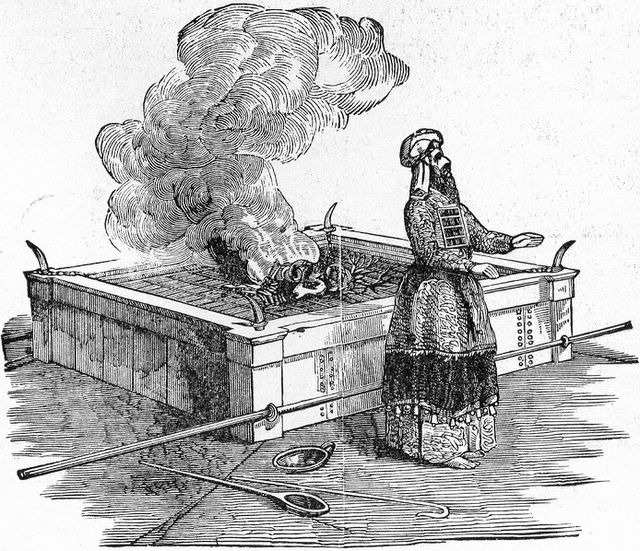
High_Priest_Offering_Sacrifice_of_a_Goat
One of the first phrases that caught my attention today was “ceremonially unclean”.  God gave the Israelites examples of what would be ceremonially unclean (in this case touching dead unclean animals or human uncleanness – from Leviticus 5:2-3).  These rules obviously weren’t given to spoil all their fun, but to help keep them safe and healthy.   Today we are well aware of some of the various illnesses that go ‘hand and hand’ with touching dead animals and not washing properly.  His rules are for our benefit.

I wonder what might be included if God were to give his people an updated 2016 version of his “ceremonially unclean” list.  Would processed foods or refined sugar make the list?   What about pornography and violent video games?  Are there habits and choices you are making that need to be changed because they are harmful and spreading illnesses through your body and brain?  Would other generations before or after ours be shocked at how we are allowing filth and hazardous materials (as dangerous as unclean carcasses) into our homes, mind and bodies?

The other phrase that stood out for me was “unintentional sin.”  I remember Rick McClain speaking at FUEL of the huge danger in “deliberate sin”.  Hebrews 10:26 says, “If we deliberately keep on sinning after we have received the knowledge of the truth, NO sacrifice for sins is left”.   And, yes, this was written WELL after Jesus died for “all” sins!   This deliberate sin sounds like some serious business.  But, what about a “sin” that I don’t deliberately commit – that can’t be so bad, right?  I became a bit more curious about these “unintentional sins”.   Leviticus 5:17 says, “If a person sins and does what is forbidden in any of the Lord’s commands, even though he does not know it, he IS guilty and WILL be held responsible.”   So, it appears both deliberate and unintentional sins are SCARY stuff!   How can I strive to do a better job of avoiding deliberate and unintentional sins?

I am reminded of verses such as “Watch your life and doctrine closely” (I Tim 4:16).   I need to do a better job of studying myself, checking my motives, actions, attitudes, thoughts and speech.   I can search myself for unintentional sins that I didn’t even know were there (perhaps jealousy, selfishness or greed) as well as quickly exposing and dealing with deliberate sins.  Then I can ask for forgiveness (accepting Christ’s perfect sacrifice without defect) and make the needed corrections.  Also, it can be very helpful if I am open to receiving correction and sound advice from wise brothers and sisters in Christ.  In this way, the body of Christ acts as a royal priesthood – urging God’s people to live holy lives.

Be set apart this week!  Keep Reading Leviticus!
–Marcia Railton


Leaping into Leviticus (Chapters 1-4)

Sunday, August 21, 2016

leviticus     (page of Leviticus from an early German Bible)

Well, here we are . . . ready to delve into the third of the five books of the Law – Leviticus.
Leviticus is not known for being fun or light reading.  Most of the book is a listing of laws, consequences, sacrifices and priestly roles – and some of it can seem as foreign to us today as a totally new – or ancient – language.  But, don’t give up!  Forge on and let’s see what we can glean from its pages for us today.  In yesterday’s devotional thoughts we mentioned the importance of living holy lives – particularly for the priesthood which represents the Almighty.  In the book of Leviticus Moses instructs the Israelites on what holiness would look like.

As I read the directions for the burnt, grain, fellowship and sin offerings I was reminded of a saying I heard many times from my Grandpa Clair Alcumbrack.  Grandpa was a master craftsman who took great pains to get a job done right and generously gave most pieces away.  When his work was being admired by the lucky recipient Grandpa would jokingly say it was,  “Good enough for who it’s for.”   We always knew it was just his humble way of accepting praise for a job well done.   But it got me to thinking . . . how often do I forget who I am serving and working for – and the quality He desires from me.  Would I ever be able to come anywhere close to saying that my offerings for God were “Good enough for who it’s for”?

Eight times the phrase “Without defect” is used in the first 4 chapters of Leviticus to describe the sacrifices the Israelites were to bring before God.  These animal and grain offerings are no longer required since Jesus was the ultimate sacrifice.  But, can we learn something about what God expects from His children?

Let’s all check the quality of our offerings this week.   Is it obvious – to ourselves, others, and to the Master Craftsman, by the quality of our offerings and sacrifices, that we desire to be His chosen people, a royal priesthood and a holy nation (I Peter 2:9)?  Our Almighty Father deserves the very best we have to give –  offerings “without defect”.  What are we giving Him?   What defects need to be removed from our offering in order for it to be pleasing to Him?  A bad attitude?  A timing issue?  Poor quality control?  A long list of excuses?  How will you work to come closer to giving a sacrifice that is without blemish?


— Marcia Railton
( Marcia is the wife of Jason Railton and mom to 3, all of whom were at FUEL.  Marcia is thankful for her Christian parents, Ray & Susan Hall, youth leaders and teachers, Bible College staff and church family who have taught the importance of loving God’s Word.  She enjoys working with Family Bible Church, Basic Youth Group and Family Camp.  Besides long walks on the beach… she enjoys crafting, quilting, camping, and caring for preschoolers in her home.)


This Sounds Vaguely Familiar (Exodus 38-40)

Saturday, August 20

20-holiness-to-the-lord

We have made it to the end of the book of Exodus!  Even if this is your first time reading through the book of Exodus (and CONGRATULATIONS to you, if it is!), several parts of these final chapters should sound quite familiar – because we have read nearly the SAME thing just a few chapters back?  What is the difference?  Why the repetition?

In Exodus 27 & 28 God is giving explicit directions to Moses on how the priestly garments, the altar and the tabernacle courtyard are to be made – materials to be used, precise dimensions, and the exact designs God desires for His Holy Place and His Holy People.  And, in Exodus 38 & 39 we read that it WAS done exactly the SAME way – including once again all the materials, dimensions and exact designs.  In chapter 39 it says at least 8 times that the work was done “-as the Lord commanded Moses”.  At the end of the chapter (vs. 43-43) is says, “The Israelites had done all the work just as the Lord commanded Moses.  Moses inspected the work and saw that they had done it just as the Lord had commanded.  So Moses blessed them.”  It seems that details are pretty important to God.  He didn’t just want it done.  He wanted it done correctly.  He wanted it done HIS way.  Sometimes I think we are quick to pat ourselves on the back if we can just cross a job off the list.  But, have we done it correctly?  Have we done it God’s Way?  Is there a job that needs some more of your attention to do it correctly?  To get it done God’s Way?

Another related phrase that caught my attention was a saying that was to be engraved on a gold plate and attached to the priest’s clothing with a blue cord:  “HOLY TO THE LORD”.   Holiness – to be set apart – total devotion  – unlike any other.   As a member of the royal priesthood (as explained in 1 Peter 2), how is your holiness quotient looking today?  Are you set apart – or blending in?  Are you totally devoted – or only when convenient?  Is there a visual reminder (like the priest’s gold engraved plate on their clothes) that will help you remember to be HOLY TO THE LORD?

    “But you are a chosen people, a royal priesthood, a holy nation, a people belonging to God, that you may declare the praises of him who called you out of darkness into his wonderful light.  Once you were not a people, but now you are the people of God; once you had not received mercy , but now you have received mercy.  Dear friends, I urge you, as strangers and aliens in the world, to abstain from sinful desires, which war against your soul.  Live such good lives among the pagans that, thought they accuse you of doing wrong, they may see your good deeds and glorify God on the day he visits us.”         I Peter 2:9-12

  Live Today

HOLY TO THE LORD!

And All Your Tomorrows Too!

(Thank you to Josiah Cain who wrote this week.  Since he was working so hard serving in Louisiana the devotion for today (Saturday) was written by Marcia Railton.  Keep praying for Louisiana – and let’s jump into Leviticus next!)


Coming Soon!

louisiana

Pictured above are the Louisiana Representatives at FUEL 2016!

Our writer for the week, Josiah Cain, was able to take advantage of the opportunity to travel to Louisiana to help victims of the flooding there.  Many people, including several of our FUEL and COG friends, are facing the tremendous task of sorting through their destroyed belongings and putting pieces of their lives back together.  Be praying for Louisiana – and Saturday’s Bible reading devotion will be coming soon.

Thank you!

It’s Time to Build …Finally (Exodus 35-37)

By Josiah Cain

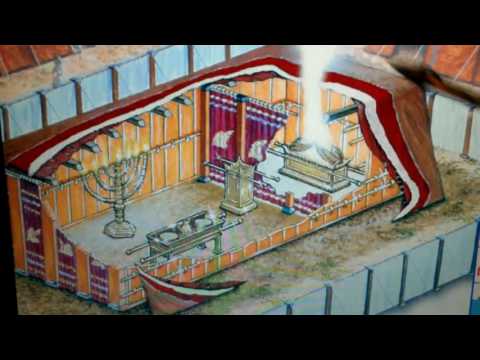
holy of holies

After many chapters of instructions it is finally time for the people to craft these objects and put the tabernacle together. Not just any old person built things for God; only the ones filled with His spirit were builders. It says that these people were filled with craftsmanship and intelligence this way they could accurately build all that God commanded them.

I also liked how God provided for his tabernacle by having the people give but only if they wanted to give. God didn’t force people to give like He did with the flat tax rather He only wanted those who really cared to give. So many people were moved that Moses had to command the people to stop bringing stuff because they had more than enough to finish the project.

I always enjoy seeing God interact with His people and how He provides for what needs to be done. If we trust God with everything we won’t be disappointed by Him, I promise.

The Israelites Mess Up Again, Shocker! (Exodus 31-34)

By Josiah Cain

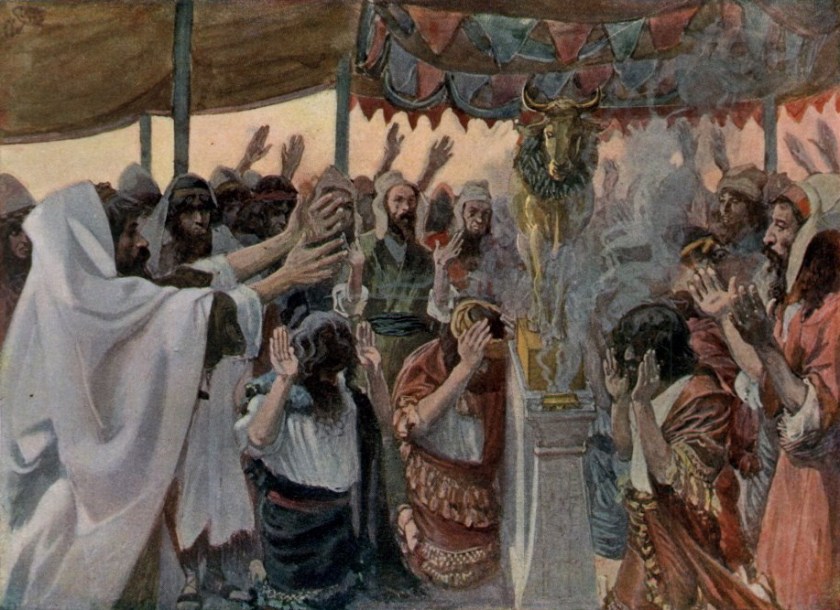
Tissot_The_Golden_Calf

There is a lot to cover in these chapters and a lot of cool and terrible stories take place. Of course, in normal Israelite fashion, we find the people of God disobeying orders. They make a golden calf statue to worship while Moses is away on Mt. Sinai. God tells Moses that the people are messing up and Moses then pleads with God not to destroy them; if it wasn’t for Moses the Israelites would not have made it very far. So Moses goes down to see what is happening and ends up destroying the tablets that God made and the golden calf the people made. Moses then orders the Levites to kill the people who disobeyed God and this is the same event that made the Levites the priestly tribe for the rest of Jewish history. In total 3,000 people ended up dying that day at the hands of the Levites but that wasn’t enough for God; God later in the evening sent a plague to kill some of the Israelites and finally all the punishment was over. The Jews really can’t seem to keep themselves out of trouble.

There are many things that I don’t envy about Moses, like the time he killed that Egyptian, but if there is one thing I am jealous of, it would be the way he talks to God. It says in chapter 33 that God talked to Moses face to face. What? How cool is that! Can you imagine talking to God face to face?!? It is incredible to think that Moses literally heard the voice of God and sat in the same place as God dwelt. I would give anything to commune with God in this way. Reading the way that God and Moses communicate just builds my anticipation for the coming kingdom even more.

Moses actually spent so much time with God that his face started to glow. I can’t imagine what this would have looked like but it was enough to scare some of the Israelites apparently. I wonder if we will have glowing faces when we spend a bunch of time with God? It did stink for Moses though that he had to hand carve the Ten Commandments again. I would still trade 40 days of no eating and stone carving for that much time with God.

Thanks for reading again and please take to heart the lessons that we can learn from the Israelites. If we follow God’s rules then everything works out for us in the end. I also think that we can learn patience from this story. The only reason they made the statue in the first place was because they were worried that Moses wasn’t coming back. We need to wait because God always has things under control.