
Devotion by Jeremy Martin (TN)
In today’s reading, we find our heroes the Israelites 3 months out from escaping horribly oppressive slavery in Egypt and after being led through the harsh desert miraculously arriving safely at Mt Sinai. This is the first time in recorded history that anything like this had ever happened: God has redeemed His chosen people en masse and brought them to Him. This is a direct act of intercession from the hand of a loving God, because He had made promises and covenants with Abraham, and God always keeps His promises. Always, every time, and forever, God keeps His promises. If you remember nothing else from this devotion, remember that.
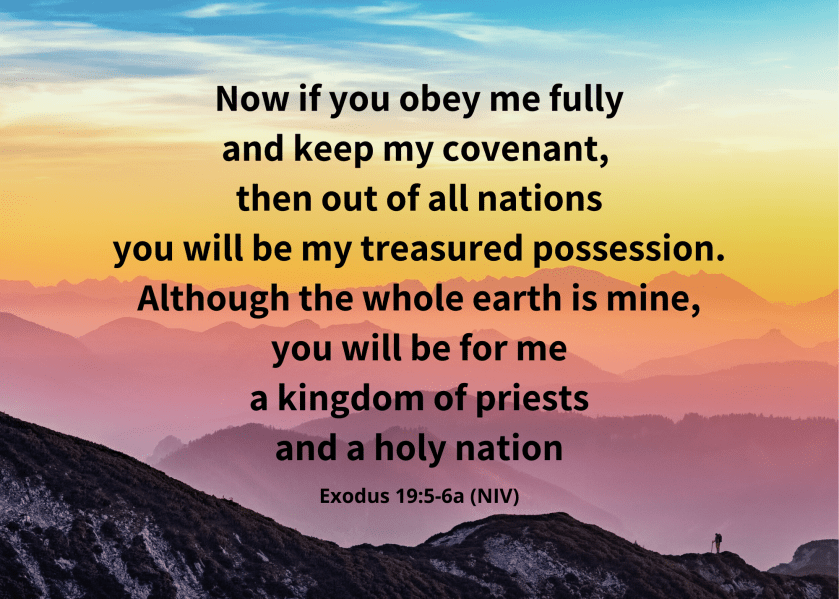
God tells Moses (Ex 19:4-6): “You yourselves have seen what I did to the Egyptians, and how I lifted you up on eagles’ wings and brought you to Myself...”(LSB). That is just beautiful. Pay special attention to 19:5, wherein God clearly states “…for all the earth is mine…” (See also Psalm 24:1). What beautiful imagery! You really need to imagine the setting of Ex. 19; there are most likely millions of people waiting expectantly at the base of the mountain, who all answer together “All that Yahweh has spoken we will do!”, after which God gives them very specific instructions to purify themselves, and then much like to Lt. Dan in the movie Forrest Gump, “…right then God showed up.” Never before had anything like this happened that we are aware of, God speaks to an entire people and gives them the “House Rules”.
This may shock some of you, but I was a rather rebellious child. I remember that the day I turned 18, I thought I had complete autonomy and authority because now I was an adult, and nobody could tell me what to do. Keep in mind that at the time, being a ripe 18 years of age, I already knew everything (most of which I have sadly since forgotten), so I was pretty certain I could just do anything I wanted. I made the mistake of mentioning this to my father at the time to justify a series of extremely poor decisions on my part, in what became a rather fervent discussion. In retrospect, perhaps I was not as smart as I thought I was.
Keep in mind that all of this took place while I was staying rent free in my parents house, the one they’d paid for, paid the bills for monthly, and stocked up with food for my consumption on a regular basis, without any contributions at all from me (aside from my stunning insights and wisdom about my own autonomy, of course). My parents at the time were also paying all of my bills, feeding me regularly, buying me clothes, had bought me a car, etc. So, you know, I was an adult taking care of myself… *ahem* . During this highly needed and educational discussion, my father made the statement “Well, you can absolutely make your own decisions since you’re technically an adult now, but as long as you’re living in my house, you will abide by my rules.”
The conversation that God has with the Israelites in Exodus 20 really strongly reminds me of that conversation, without the fervency perhaps, but with more clarity. Note that God has already defined “My house” in Ex 19:5, so when God is giving us the 10 commandments in Ex. 20 He is basically telling us “when you are living in my house, this is how I expect you to behave,” in advance.
“But…” some folks will say, “these commands were given to the Israelites, they don’t apply to us today as Christians..”. Fair enough, let’s look at what Jesus says about them. Turn over to Matt 19:16-29. In this passage, Jesus first humbly points out that the man shouldn’t call him good because only God is good (which is a bit confusing if you’ve accepted a confusing post-biblical theory about Jesus’ identity), and then states very clearly “…if you wish to enter into life, keep the commandments.” (LSB). Then he goes on to refer to some of the actual commandments, so we know what he’s referring to: it’s right here in Ex 20.
So are we as Christians responsible to keep the commandments? Only if we listen to our Christ, I would say. If you are an adult now, and no one can tell you what to do, and you have full authority and autonomy over your own life, well…you probably, like me at 18, already know everything and you don’t have to listen to anyone, ever (if you didn’t dectect the irony and sarcasm there, read it again slowly).
If, however, you are a humble Christian, seeking to please both Jesus and his God (yes, Jesus has a God, see John 20:17) then you may want to rethink that. You are, after all, living in God’s house. You should probably abide by His rules; particularly if you want a room in the kingdom, on the new earth that has been promised (and God always keeps His promises). Trust me when I tell you, you do NOT want to get kicked out of His house.
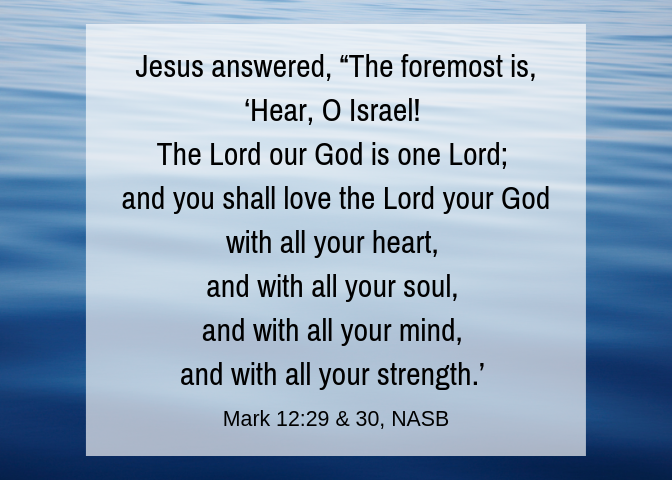
I love how God clearly identifies himself to his people, this has been grossly altered in most modern bibles, but what God actually says to preface his commandments is; “I am Yahweh your God, who brought you out of the land of Egypt...” (Ex 20:2, LSB). So we know exactly who’s talking. Then he lists his expectations while we’re living in His house. The first 4 commandments have to do with us and our interactions towards God. The next 6 commandments have to do with us and our interactions towards our fellow man(kind). These are all neatly summed up by our king, the Christ, in Mark 12:29-34 when Jesus says that the greatest commandment is “Hear O Israel! The LORD our God is one LORD, and you shall love The LORD your God with all your heart…”, and the second is this, “you shall love your neighbor as yourself.” Please note that this does not REPLACE the original commandments given by God, but summarizes them nicely.
Praise God that we serve a God of clarity and not confusion, He tells us His expectations right up front, and then lets us make our own decisions about whether or not we will listen and obey. We serve a wonderful, powerful, and amazing God who has shown that He will intercede on behalf of His people in miraculous and powerful ways throughout the scriptures, which cannot be broken. The only real question is: are we going to listen and obey and thereby be God’s People? Choose now for yourself, but as for me and my household, we will serve Yahweh the living God, who has sent us our Christ in order to bring us to Himself.
REFLECTION QUESTIONS:
- Do you keep all of the commandments? Why, or why not?
- Read Gen 2:3.Do you believe the 4th commandment (the Sabbath) is just for the Jews? Why, or why not? When did it change, if it did?
- When Jesus summarized the commandments in Mark 12, did it seem like commandment keeping alone was sufficient to enter the future Kingdom of God, or was there something else we should do? Summarize in your own words what else we should do, if you feel like there’s something else.
PRAYER:
Father God, you have created us and this place, and all things belong to you. Thank you for giving us life, and breath, and all things. You are beautiful. Every blessing that we have has come directly from your hand to us, an undeserving and rebellious people. Please forgive us, and teach us, and help us to follow your commandments. Lead us toward your kingdom, Father, and help us to enter into it. In Jesus name we pray, Amen.
 Seek Grow Love