
The Whole Duty of Man

Num 19-20

Ps 19

Mark 4

~ Devotion by Cayce Fletcher (SC)

Cayce Fletcher is a wife and homeschool mom of three. She writes and podcasts at amorebeautifullifecollective.com where she helps women cultivate a life of depth, discipline, and delight. Read the latest post on finding beauty in the everyday here

Numbers 19 finishes the communication of the law of God to his people through Moses. We then see a 38-year jump in time. Right after the Exodus from Egypt, the people traveled to Mount Sinai. There they encamped around the mountain for about a year. It is there they received the law and celebrated the first Passover. 

After the year spent around Sinai, the Israelites went directly to Canaan, where the infamous episode with the spies took place. The Israelites were forced to wander for 40 years. Numbers 20 begins during this 40th year. The old generation that included Miriam (126 years old when she died) and Aaron (123 years old) was passing away, and the new generation was preparing to enter the Promised Land. 

Still, even though so much time had passed, the people seemed to have learned nothing. They began grumbling and complaining again. Moses turned to God in his distress. He fell down on his knees in prayer. What a picture of how we should respond when we are at the end of our rope! 

God met him there and gave him the next steps to take. He was to go to the rock and tell the water to come out. 

And then the tragedy occurs – Moses, who always chose the humble path, responded in anger (with a little bravado) to the people. He goes up to the rock, “and he said to them, “Hear now, you rebels: shall we bring water for you out of this rock?”” Then, he strikes the rock twice. 

Because of his disobedience, he is barred from the promised land. God tells him that his response ‘did not uphold God as holy before the people.’

The right response to God is faithful obedience on our knees. It is there that we meet him face-to-face. But it is so easy to let our view of God get clouded by our messy emotions and our chaotic surroundings. 

Do we respond to God in faithful obedience? Or do we react rashly – foolishly – hoping God will bless the response even if it’s sinful? 

God requires whole-hearted obedience and an attitude that reflects a pure heart. Moses’ anger towards the people in that moment caused him to react violently – and Moses was judged for it. 

We rarely feel fear, awe, or reverence for authority today, but today’s passage reminds us that God is holy. We must remember the holiness of God and cultivate a healthy fear of God in our souls. The fear of God helps us to respond faithfully with humility to the commands of God. 

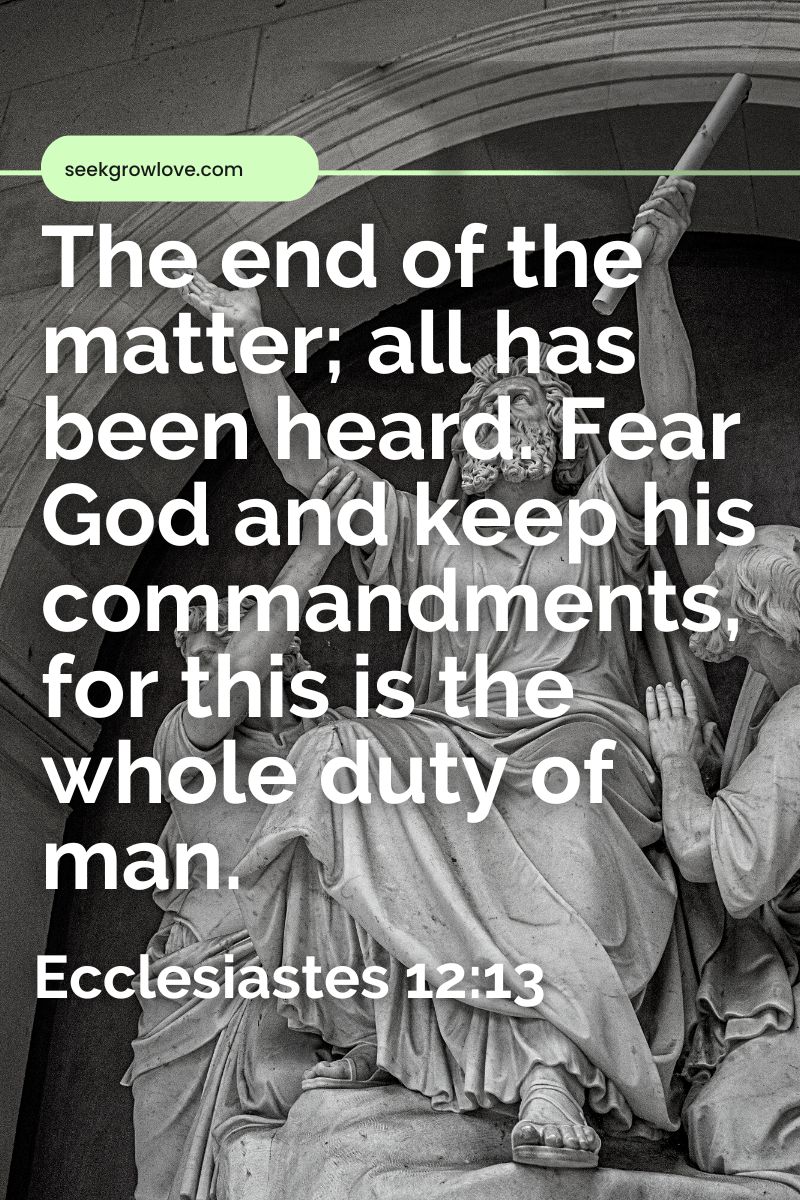
As we read of the end of Miriam and Aaron’s lives, let’s be reminded that the foundation of the legacy of our lives should be this fear of God. As Ecclesiastes 12:13 says, “The end of the matter; all has been heard. Fear God and keep his commandments, for this is the whole duty of man.”

Reflection Questions

  1. How does a life built on the foundation of the fear of the Lord differ from a life without it? 
  2. In what ways did Moses show a fear of God throughout his life? Why did this instance at Meribah not show a fear of God? 
  3. How do you grow in your fear of the Lord?

Prayer

Dear Heavenly Father, 

Please let us remember who the true Lord of our lives is. Let us remember how great you are. Let us remember that you are God and you are not. Thank you for the ways that you draw us back to this truth. 

In Jesus’ name,

Amen.

SGL.2026.CalendarDownload

Be Humble

Old Testament Reading: Numbers 12 & 13

Psalms Reading: Psalm 65

New Testament Reading: 2 Corinthians 2

In the Numbers 12-13 reading today we start with what appears to be some sibling rivalry.  Miriam and Aaron are sharing some negative murmurings about their brother Moses (verses 1 and 2) in what appears to be some pride or opposition to his leadership.  Years after watching him float down the Nile river in a basket to safety to later lead the Hebrews out of bondage in Egypt,  Miriam now sounds envious. But, while she and Aaron are whining for attention, verse 3 indicates quite a contrast in Moses.  Moses was more humble than anyone on the face of the earth!

In this case, the word used for “humble” is a Hebrew word used of Israel itself many times in the OT, suggesting someone who is “poor, lowly, meek, depressed in circumstance, may be oppressed by rich and powerful. “

But, it appears that the LORD, who of course heard everything Miriam and Aaron said and thought, was displeased with what was in their heart. He rebukes their attitudes and speaking against His chosen servant. Miriam ends up with a leprous skin disease, banned from the camp for 7 days, and caused yet another bump along the road of the Israelites’ pursuit of the promised land. But, there was forgiveness and the chance to move forward, and in chapter 13 we find the Israelites starting to explore Canaan.

This story seems an example of  what we see in Proverbs 3:34:

Proverbs 3:34, ESV: Toward the scorners he is scornful, but to the humble he gives favor.

Miriam and Aaron in all their human efforts to be recognized, putting down others along the way, ended up chastised and scorned. Moses was in God’s favor. And while the definition we read of the word humble doesn’t sound all that appealing in some ways, God’s favor certainly does. We know verse 3 commends Moses for his humility, and as we seek to find God’s favor, it seems evident that being humble, lowly, and meek are crucial.

Numbers 13 starts with the exploration of the long-awaited Canaan, and in fact they finally saw the milk, honey, and fruit! But, they also saw the. . . men of great size! Forget that milk and honey! Did you hear about all those “-ites” mentioned in verse 29? And so, they spread some bad reports, show fear, and felt like grasshoppers in comparison.  But, of course the LORD is not a grasshopper, and the LORD had told them where they were going, so we’ll have to keep reading this week to see what happened.  And if you are looking for an interesting topic to study, check out the various thoughts/research available on the Nephilim mentioned in verse 33. Pretty interesting stuff!

-Jennifer Hall

Reflection Questions

  1. Who do you know who could be added to the list of most humble?
  2. How would you rank yourself on the humility/pride meter? What can you do to improve (lower?) your score? What is hardest for you about taking a lowly, meek attitude?
  3. What are God’s views and actions toward the humble and the prideful? What else do you learn about God in your reading today?

Follow

Numbers 11 13 Cain

These next three chapters are where things start to heat up in the book of Numbers…literally. In verse 1, we see the Israelites start to complain. After all that God has done for them, I understand why He would be upset. When it says the “fire of the LORD burned among them,” this isn’t a metaphor, but instead literal fire burned throughout the outskirts of the camp. The people obviously didn’t like this fire, so they complained to Moses and Moses prayed to stop the fire. God stopped the fire, but apparently, this wasn’t enough to teach the Israelites their lesson. In verses 4-6, they complain about not having meat and nice food like they did in Egypt; all they had to eat was manna. In verses 11-15 Moses honestly lays out his heart to God to the point where he asks God to kill him. Now, to me, there is an important lesson that we can learn from this outpouring. Even the greatest among us can reach a point where we have had enough. However, we can always bring our troubles and anxieties to God. Even if the problem seems impossible, like feeding millions of people meat in the middle of the desert. God wants to deal with us in a personal way. He doesn’t want the perfect fake versions of ourselves where we have all the answers and are always composed. We can be honest with Him and show Him our true heart. God dealt faithfully with Moses when Moses came to Him with a huge problem and He will deal faithfully with us when we bring our problems to Him.

This interesting incident happens in 11:24-30. The Spirit of God comes upon the leaders of Israel much like what we see in the New Testament on the day of Pentecost. We usually think about the Spirit being a New Testament power, but it is also present in the Old Testament. After the spirit comes on the elders, two of the elders prophesy in the camp. A young man thought this was a problem, so he told Moses. Little did Moses know, God’s big plan was to give His Spirit to each of His followers in the new covenant that was coming. The elders prophesying was just a taste of what God had in mind for His people. I like how Moses doesn’t get jealous about God giving His Spirit to others, but instead trusts and respects God enough to allow Him to deal as He sees fit. I think we too should have this same attitude of trust in God.

In verse 34, Kibroth-hattaavah literally means “the graves of greediness”. They named the place after exactly what happened in that place. The names of places serve as reminders. Imagine going down the interstate and passing the exit to Graves of the Greedy Town. Chapter 11 serves as a good reminder to us about our selfishness and greediness. Do you feel like God owes you something? Are you complaining to God about the things you want? Let’s take chapter 11 as a good lesson for us today. God truly has our best interest at heart and has already rescued us from death and slavery. Let’s not be like the Israelites who are so quick to forget where God has brought them from and so quickly turn to our own desires.

In chapter 12 we read another story of disobedience. Aaron and Miriam get mad about Moses’s wife being a Cushite. This may be because she wasn’t a Jew and in the law people were only supposed to marry Jews. Regardless of the reason for their anger, they think they are justified in thinking they are better than Moses. They say, “’has the LORD indeed spoken only through Moses? Has he not spoken through us as well?’” (11:2). Almost as to say Moses married a Cushite women and God has spoken through us as well, what makes him think He is better than us? In the way that verses 2-4 talk about the situation, I can imagine Aaron and Miriam colluding in the corner of the Tabernacle, whispering to each other about how they are better than Moses. God sets them straight in verses 5-10, even giving leprosy to Miriam for her disobedience. Even the leaders of Israel were making big mistakes and being divisive. The scope of these happenings highlight the sin nature of man. Even after God has liberated the Israelites from Egypt, with all the miracles that went into that event, they still sin and disobey God. No matter the circumstances, people can’t stay away from sin very long. The only way we can be purified and righteous before God is through Jesus. When God looks at us, He doesn’t see all the mistakes we’ve made today. He sees His perfect son who covers our sin. When I read the Old Testament, it makes me very thankful for Jesus and the role that he plays in my life.

Even though the people have continued to fight and disobey God, He still leads them to the Promise Land. In chapter 13, we see the beginnings of God’s plan to move His people into the Promise Land. God wants the people to spy out the land.  However, things don’t go smoothly, even the spies are disobedient and give a bad report about the land. The only spies to come back and give a good report are Caleb and Joshua. It’s like the spies forgot what they just went through with the Exodus. Did they not see the plagues that God sent on Egypt? Did they not see God defeat the entire Egyptian army in one stroke? Did they not see the manna and quail that God provided? How can they go to the land of Canaan after experiencing all these things and not think God can take care of these people too? Where is their faith? More importantly and real to our lives, are we the same way? We know the stories about what God did. We know who God is and have seen Him work. We know that even death has no power, yet we let our faith fail when we are confronted by hard things. Are we different than the spies of Israel who gave a bad report about the land of Canaan out of fear? Is there a land in which God is leading you? We have seen how He works and He is faithful to follow through. He is powerful to complete any task which He undertakes. I want our faith to be strengthened by chapter 13 and I want us to learn a lesson from the Israelites. Let’s not forget and let’s have faith. Let’s be people who follow God through the wilderness, faithfully, so that we can walk into the place He has prepared for us.

Josiah Cain