
OLD TESTAMENT: Isaiah 13-15
POETRY: Psalm 106
NEW TESTAMENT: Hebrews 5
Growing up, I was one of the youngest out of both my family and all my cousins. I changed my first diaper when I was in college when my oldest niece was born. To say I was inexperienced around kids is probably an understatement. Because of this, parenthood has also meant lots of research about what it to actually do. Sleep routines, bathtimes, mealtimes, and independent play. There’s a lot that you need to learn even if it seems like it would be common sense.
As you read through the Bible, it can be easy to gloss over passages that reference parenthood when you are a teen and young adult. It’s not until you are a parenthood constantly trying to keep your two-year-old out of harm’s way that the significance of the passage “an infant will put its hand in a cobra’s den” really makes sense (Is. 11:8).
Today, we read a passage that also really only starts to show its true significance when you’ve been around children during their baby years. Every child is born helpless, needing constant love, care, and literal physical support. When they are born, they can only eat milk. In fact, if you tried to give your newborn an apple or even a banana they may very well choke. Their baby tummies may not be able to digest it, and they may end up having poor nutrition because they get more calories without the rich nutrients delivered by milk.
You only start feeding solids after several months of development so that babies can grow bit by bit into the food that they eat. There’s lots of different (and conflicting) advice about the methods and timing for introducing solids, but to keep it simple if you’ve never been around young kids going through this transition, the move from milk to solids is momentous and requires thought and care. Some parents I’ve talked to have even put it off into the child’s seventh or eighth month because of the lifestyle change it requires. However, it is a very necessary step towards a mature adult.
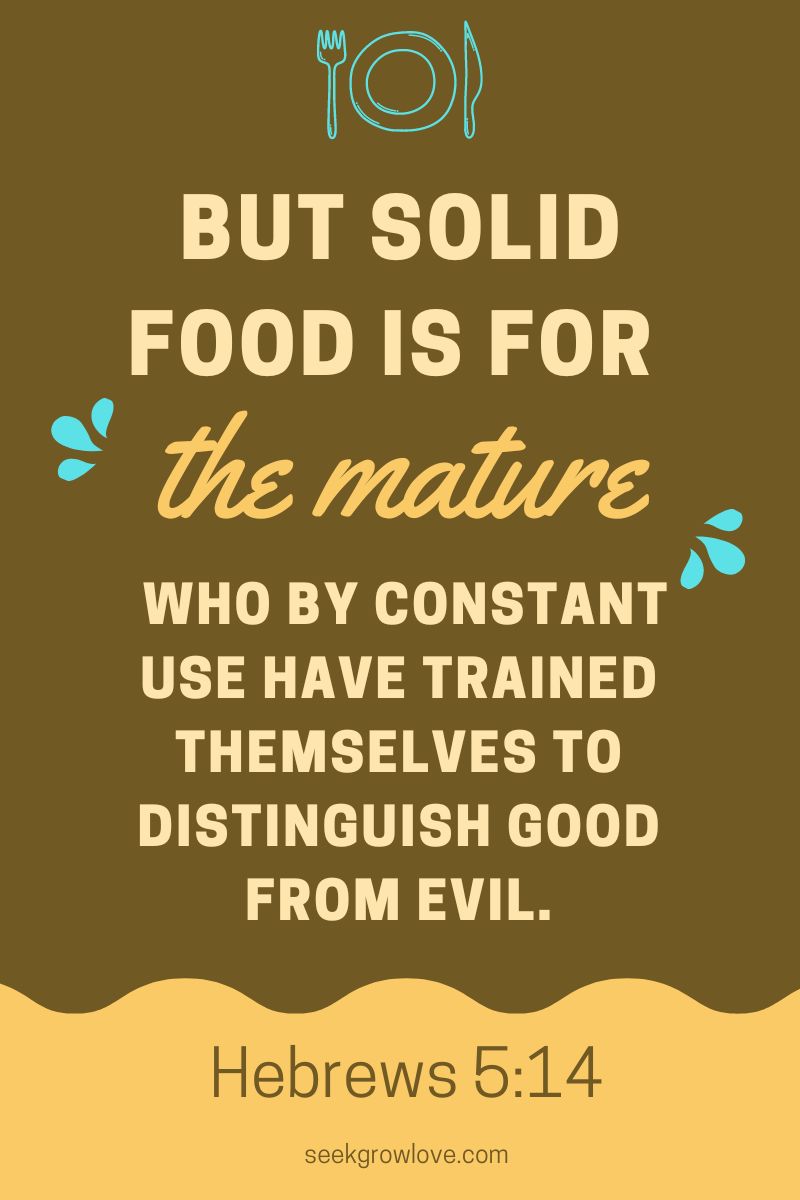
Today, we read in Hebrews 5:11-14, “We have much to say about this, but it is hard to make it clear to you because you no longer try to understand. In fact, though by this time you ought to be teachers, you need someone to teach you the elementary truths of God’s word all over again. You need milk, not solid food! Anyone who lives on milk, being still an infant, is not acquainted with the teaching about righteousness. But solid food is for the mature, who by constant use have trained themselves to distinguish good from evil.”
In our Christian walk, we want to strive for holiness and righteousness. We want to be mature in our faith. In James 1:4, we read that we want to be ‘mature and complete’ in our faith, not lacking anything.
The writer of Hebrews was pretty critical of the letter’s recipients. Instead of calling them mature, they were called newborns in the faith who lived on milk, not solid food. What is the milk of the faith?
The beginning of Hebrews 6 tells us: “Therefore let us move beyond the elementary teachings about Christ and be taken forward to maturity, not laying again the foundation of repentance from acts that lead to death, and of faith in God, instruction about cleansing rites, the laying on of hands, the resurrection of the dead, and eternal judgment. And God permitting, we will do so.”
When we read the judgments in the books of prophecy of the Old Testament, we can often feel a little overwhelmed. But, we want to grow and become mature in faith. This only happens if we are consistent and diligent in our study of God’s word and live out the things that we read. We have to move beyond the basics and move towards solid food. This means dealing with difficult passages, theological concepts, and ethical questions.
This solid food will help us to become wise. It will help us to have discernment as we deal with an increasingly difficult, complex, and uncertain cultural moment. It will help us to be able to distinguish good from evil and choose the right paths for our lives.
-Cayce Fletcher
Cayce Fletcher is a teacher-turned-SAHM mom of two. She blogs and podcasts at A More Beautiful Life Collective where she focuses on how you can create a life you love and cultivate your heart for God. Currently, she is working through a systematic theology series on her podcast. You can find her latest post on Bibliology here.
REFLECTION QUESTIONS
- Read through the list of teachings that is the milk of the Christian faith. Does this list surprise you? Would you add anything to this list?
- Do you think you are currently needing spiritual milk or solid food?
- What steps can you take to grow and mature in your faith?

 Seek Grow Love