
OLD TESTAMENT: Daniel 5
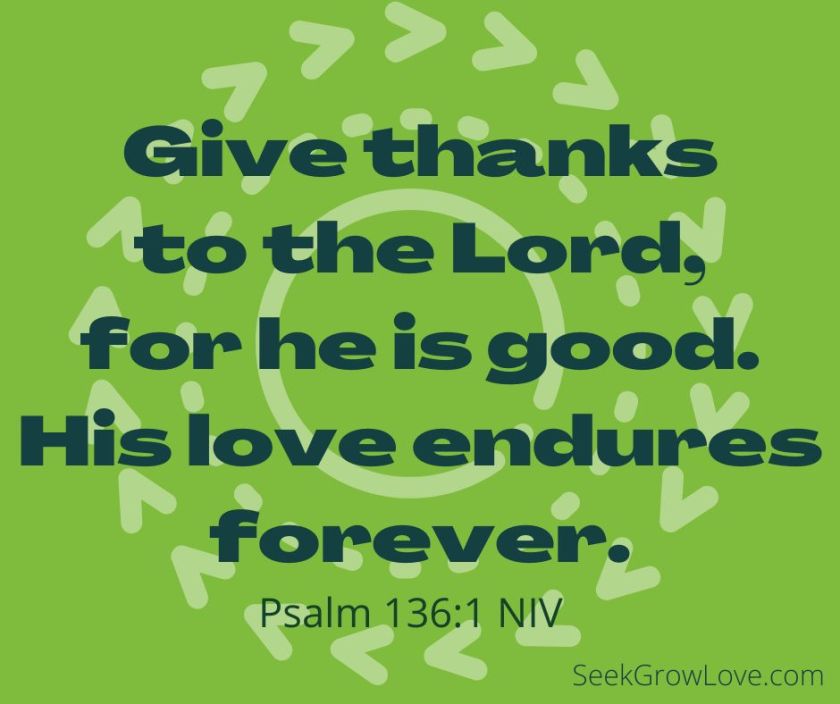
Poetry: Psalm 136
NEW TESTAMENT: John 8:48-59
Can I tell you a secret? I *loathe* the nickname “Turkey Day” for Thanksgiving.
Sure, the big bird is special to the day and to the success of the first colonist. Sure, Ben Franklin thought the bird was “a Bird of Courage.” But there is much more to Thanksgiving than the protein.
In a world of many gods, like Babylon, feasting and reveling for the glory of a deity was common. Sometimes, in the ancient world, the Kings would claim to be gods, or children of the gods, and would show their superiority over “other” gods and people by belittling the symbols of those gods. Belshazzar, the final king of Babylon, showed his contempt for Almighty God and God’s people by allowing his guests at his drunken feasts to eat and drink out of the Temple treasures that were in Babylon. In Daniel 5:4, we read “They drank wine and praised the gods of gold and silver, bronze, iron, wood, and stone.”
However, God does not take kindly when the glory due him is given to another. Therefore, because they are using God’s Temple’s treasures while worshipping other gods, God decides to give Belshazzar and his kingdom and his treasures to others, the Medes and the Persians. Daniel tells Belshazzar, “the Most High God rules over the kingdom of mankind, and sets over it whom he will.”

Thanksgiving was instituted by George Washington on October 3rd, 1789. Read this declaration to see why he instituted it : “Now therefore I do recommend and assign Thursday the 26th day of November next to be devoted by the People of these States to the service of that great and glorious Being [i.e., Almighty God], who is the beneficent Author of all the good that was, that is, or that will be—That we may then all unite in rendering unto him our sincere and humble thanks—for his kind care and protection of the People of this Country previous to their becoming a Nation—for the signal and manifold mercies, and the favorable interpositions of his Providence which we experienced in the course and conclusion of the late war—for the great degree of tranquillity, union, and plenty, which we have since enjoyed—for the peaceable and rational manner, in which we have been enabled to establish constitutions of government for our safety and happiness, and particularly the national One now lately instituted—for the civil and religious liberty with which we are blessed; and the means we have of acquiring and diffusing useful knowledge; and in general for all the great and various favors which he hath been pleased to confer upon us.
and also that we may then unite in most humbly offering our prayers and supplications to the great Lord and Ruler of Nations and beseech him to pardon our national and other transgressions—to enable us all, whether in public or private stations, to perform our several and relative duties properly and punctually—to render our national government a blessing to all the people, by constantly being a Government of wise, just, and constitutional laws, discreetly and faithfully executed and obeyed—to protect and guide all Sovereigns and Nations (especially such as have shewn kindness unto us) and to bless them with good government, peace, and concord—To promote the knowledge and practice of true religion and virtue, and the encrease of science among them and us—and generally to grant unto all Mankind such a degree of temporal prosperity as he alone knows to be best.”
President Washington desired for his Nation to thank the true God, not the gods of this world, but the “glorious Being,” the subject of “true religion and virtue”. Thanksgiving was instituted, not just to feel grateful but to give thanks to the only God, the God who is there, the God who is present in the affairs of this world and in the life of this nation and in the prosperity and peace of humankind. Today is and should be a day of feasting and merriment for all our many blessings. In the midst of all the joy of this holiday, be sure to give thanks, sincerely and humbly, to the Almighty, the Most High God.
Happy *Thanksgiving*!
Growing deeper:
Are you thankful for your blessings? If we aren’t conscious, we could miss them. Today, don’t answer questions but make a list and try to think of every blessing in your life. Number them and see how high you can make your list. Don’t forget the blessings that might be too small to consider (aren’t eyelashes amazing?) and the blessings that might be too big to see (you are able to read this, so you have life, a computer or phone, and access to the internet, plus electricity…). The list grows quickly.
-Jake Ballard

 Seek Grow Love