
Ecclesiastes 4:1-5:7
Solomon, as cheerful as ever, writes about what he witnessed around him; the tears of the oppressed, power on the side of the oppressor, and no comfort for the oppressed. Who are the oppressed today, in our world, our country, our community? People are oppressed based on ethnicity, religious beliefs, economic status, gender, you name it. Some appear to less oppression than others but it is an illusion. We are all subjugated to one great oppressor, sin! Solomon rightfully says that we have no comforter … here on earth at least. He reminds us to look at what role we each play in the oppression of others for we cannot be a comfort if we are part of the problem, whether we realize it or not.
The dead! The dead are free from oppression … and happiness … and joy … and living. Peter wrote that it is only those who trust in God that may see the good that can come out of suffering. Thank you Peter for being a ray of sunshine! He says this though because we have a hope in Jesus of an eternity where sorrow and suffering will be no more. Peter was, as we are, on the other side of the cross so to speak so we have a better understanding of the impermanence of this life and its troubles and of the future promise of life in the coming kingdom.
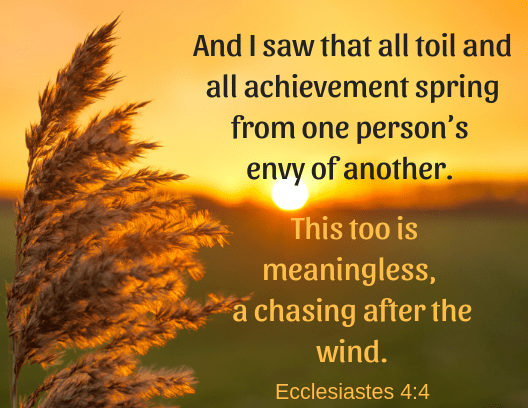
But for today, greed and envy are tremendous motivators for oppression. When people strive for more wealth and power they rarely care for who gets pushed aside, trampled on or abused. It is a grabbing after that which will only give momentary happiness. Solomon suggests that it is better to have one handful with tranquility. … Yeah I read that and did not get it at first either. He is saying that we should not over reach or overextend ourselves. His wisdom guides us to be content with what we have, with what God has provided.
In chapter four Solomon gives two examples. The first is of a rich man whose insatiable thirst for more isolated him to the point that he had no partnership. He did not share with anyone and one day realized the immensity of that loneliness. In contrast, Solomon commends sharing in relationship. There are advantages in this as he points out. In companionship we find greater profit, a good return from our labor. We are able to help one another in difficult times when we are together. He pities those who have no one to help them when they fall. Together we can provide each other with comfort but there is no one to comfort the selfish and greedy. Companionship also affords greater protection when facing dangers. He goes further with that by saying that two is good but three is even better.
The second example is that of a poor but wise youth who succeeds the foolish king. He comes from nothing and it is implied that he was imprisoned at one point. But he rose to power and everyone followed him. He had it all! In time the people grew tired of him and he lost everything. All of his striving after money, power, and adoration was ultimately meaningless. It all comes and goes like the wind.
You might look at the opening verses of chapter five as advice or instruction on proper worship, the proper attitude, appropriate practice of prayer, and the respectful payment of vows. The reality though is Solomon is warning against straining our relationship with God. He warns against making rash vows. Rash vows become the “sacrifice of fools” and the “speech of a fool”. He advises us to be thoughtful before coming to God with an oath or vow. To consider our own limitations and our motivations. We ought to weigh all things against God’s word so that we know that it is good according to His perfect will. “What is the big deal about making vows?” A vow is a promise and for the God who always keeps His promises, breaking our promise is detestable to Him.
Whether facing oppression or battling against the sins of greed and envy, trying to stay humble enough to be content with what we have or avoiding quick words and rash vows, Solomon always returns to our Creator God. ”Therefore stand in awe of God”, trust in Him and His providence. In awe of Him rather than standing in awe of ourselves. Then we can face the troubles and strife with great endurance. Then we can rise above our baser nature. We can find contentment and dare I say … meaning!
To be continued …
Jeff Ransom
 Seek Grow Love