
In Need of a Shepherd

OLD TESTAMENT: EXODUS 2

POETRY: PSALM 23

NEW TESTAMENT: MATTHEW 18:21-35

The hot, dry desert sun beat down on the reddened backs of the laborers, scars crisscrossing their backs from where the whips had cracked. Generations after generations of Israelites had born and died as outcasts and slaves in Egypt, living as foreigners and aliens in a pagan land. They had been the victims of genocide, their babies torn from their arms and murdered. The only sin the Israelites had done to the Egyptians was existing and multiplying. It was the Egyptians’ fear that caused them to mistreat the Israelites and make their lives bitter. 

Yesterday, we considered how we were like sheep that had gone astray. The theme of sheep and shepherds runs deep throughout the Bible. Abel was the first shepherd and his sacrifice was the one that God preferred. Noah, Abraham, and Isaac all were wealthy with livestock, but the next patriarch who is described primarily as a shepherd is Jacob. He builds his wealth through gathering up the speckled and spotted sheep of Laban. These vast herds of sheep followed his family to Egypt where the Israelites settled in the land of Goshen nestled in the Nile Delta. Shepherds were detestable to the Egyptians at that time. The Nile Delta was actually the best in the land for their family. 
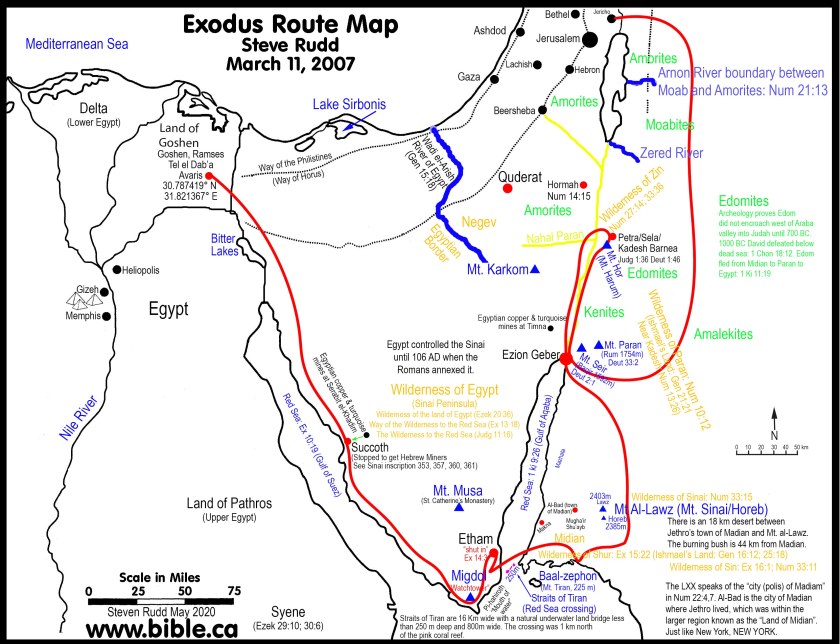
Jacob’s family lived in peace and grew to be a mighty numerous nation. After years and years in the land, the Egyptians turned against them and began to subjugate the Israelites with forced labor. “The Israelites groaned because of their difficult labor, they cried out, and their cry for help because of the difficult labor ascended to God. God heard their groaning, and God remembered his covenant with Abraham, with Isaac, and with Jacob. God saw the Israelites, and God knew” (Exodus 2:23-25). 

The Israelite people needed a shepherd. They needed someone who would come and deliver the people from the misery of their Egyptian enslavement to a better life. During this time, I’m sure that they dealt with doubt. They may even have dealt with unbelief, feeling that nothing would ever change in their lives. 

But, they had the truth of the promise of the covenant of God to fall back on. Abraham was told in Genesis 15:13-16 that his descendants would be foreigners and aliens, enslaved and oppressed, for 400 years. God ended this prophecy by saying, “However, I will judge the nation they serve, and afterward they will go out with many possessions.” 

In Exodus 2, we read that God saw and knew the Israelites’ groaning and misery. At that moment, he was setting in motion a plan to deliver his people and bring to pass the deliverance of them to the promised land of Abraham, Isaac, and Jacob. 

That plan would be fulfilled with none other than a shepherd boy (or old man- since Moses was close to 80 at the time). Moses was away finding a lost sheep when he encountered God in the burning bush. A type of our savior, he went to rescue the Israelites and save them from their enslavement. 

Moses would go from being a shepherd in the land of Midian to a shepherd of God’s people. 

~ Cayce Fletcher

Cayce writes about discipleship, productivity, and homemaking at her blog https://amorebeautifullifecollective. You can find her latest post on cultivating good habits here. You can also listen to A More Beautiful Life Collective Podcast on Apple Podcasts, Spotify, YouTube, or wherever you listen to podcasts. 

REFLECTION QUESTIONS

  1. Why are sheep and shepherds such an important and repetitive theme throughout the Bible? What is God trying to teach us about ourselves by using this pattern? 
  2. Abraham was told the prophecy that his people would live in enslavement and oppression through no fault of their own. We read about the effects of this enslavement in our scripture today. How do you make sense of suffering in light of the sovereignty of God?
  3. Read John 10:11-18. In John 10:11,  Jesus says, “I am the good shepherd.” How is Jesus a good shepherd to us? 

SGLCalendar2024DOWNLOAD

Moving to Egypt

Genesis 46-47

Genesis 46 3 4a NIV

When Jacob receives a vision, we get almost no insight into his reaction. Verse 2 states that Jacob said, “Here I am.” but that does not indicate whether he has experienced this type of vision frequently or if this is the first time since he saw the vision at Bethel when he was young (Genesis 28). It also doesn’t tell us how he reacted to the vision. We know that he made a sacrifice to God on that same day, but after seeing the vision, there was no obvious change in Jacob’s plan. Before the vision, he was moving his family to Egypt and after the vision, he continued to move his family to Egypt. To us, the story would read exactly the same if verses 2-4 were left out. It would read, “Jacob came to Beer-sheba, and then he left.” Yet the author of this passage clearly wanted us to read verses 2-4 otherwise, he would not have included it. Why do you think these verses are included? My first inclination is that sometimes God will speak to us just to tell us that the path we are following is the right one and we should stay our course. Nothing changes before or after, and we may not even experience a change in confidence that our course was correct. In my experience, most of the times when it seems like God is telling me something, it is that I need to change. Perhaps I am missing, and should be paying attention to, the times when he is saying, “Keep on moving.”


The name Serah, daughter of Asher jumps out at me. She is the only granddaughter of Israel that is listed. What makes her so important as to be listed among her brothers? It turns out that she has a rich tradition in the Jewish Midrash, a rabbinical text that expanded and commented upon the books of the Old Testament. The texts hold that she had a part in the Exodus story, correctly identifying Moses as the prophet who would save the Israelites from enslavement to the Egyptians. Most Christians view the stories of the Midrash to be parables with some amount of truth to them, however they were kept as oral tradition and contain various historical contradictions, leading it to be kept out of our modern day Bible. If you are interested in learning more about Serah, you can read a great, yet lengthy article here: https://jwa.org/encyclopedia/article/serah-daughter-of-asher-midrash-and-aggadah


Goshen is described as being the best farmland in the area around Egypt. Here again we see Joseph being extremely cunning. He secures the land of Goshen, which he knows to be good land, for his family by making his family appear dirty. He convinces Pharaoh that his family are detestable and should be kept away from the center of Egypt, and in doing so guarantees that his family will have room to grow both in wealth and in size. When Joseph tells his family to say that they are shepherds, it almost sounds like he is trying to get them to lie. For the most part, it is true that they are shepherds. The family does keep animals, but I am sure that not every member of his family is directly involved in the handling of animals. By having each and every one of them claim to be a shepherd, he ensures that the family is not split off into two groups, the clean and the detestable. As a bonus, the Israelites are even put in charge of Pharaoh’s own livestock, but based on what we have seen from Joseph so far, I am confident that he knew this outcome would be achieved.


Chapter 47 verse 25 is striking. The men of the region sell themselves into slavery to Pharaoh and all that is required of them is that they give 20% of their income to the government? Most working Americans pay more than that on their income alone, let alone sales taxes, property tax and the like. Still, I would rather be a “slave” to the American government paying taxes and having access to medical care that does not involve surrounding myself with feces or drinking potions made from dog blood as the ancient Egyptians would. If that statement has sparked your interest, read on here (see “Techniques” and “Healing”): http://www.bbc.co.uk/history/ancient/egyptians/magic_01.shtml
Nathaniel Johnson


Today’s Bible reading can be read or listened to at https://www.biblegateway.com/passage/?search=Genesis+46-47&version=NIV


Tomorrow’s reading will be the final chapters of Genesis  – 48-50 on our 2020 Chronological Bible Reading Plan