Twenty years ago, I moved 1,000 miles with all my possessions loaded into a Buick Skylark, including my goldfish riding shotgun, to share a two-bedroom apartment with my newlywed wife. Now, as we move out of our home of fourteen years, it has taken six trips with a U-Haul, countless carloads, and a dumpster to move just 10 miles away. Granted, our family has grown to five people and a dog, but the math still doesn’t justify an increase of roughly 100 times more stuff. I can’t help but wonder: When did we get all of this? And why? Does it make us better equipped? Not necessarily. Does it bring us joy? Not really—especially not over the last month. Does it move us closer to God? Rarely.
This is not the rant of a minimalist millennial, nor a critique of your cherished possessions. There is still quite a plank in my own eye here. Rather, it is simply an acknowledgment that while we stand at the beginning of a calendar year, the beginning of a new reading plan, and the beginning of both the Old and New Testaments, we are not at the beginning of our lives. We carry things with us as we move from one year to the next. Our trailers in tow may look different, but they are often filled with trophies and affirmations, expectations and disappointment, habits and vices, grief and trauma. There can be a quiet vanity, trending toward insanity, in everything we accumulate along the way. However, in all of this, we can still look to “In the beginning…”
In Genesis 1, we are reminded that beginnings matter because our sovereign God is a God of purpose. Creation is not a random display of infinite power, but an act that makes all things matter (excuse the science pun). God purposely names, separates, and shapes what was formless, repeatedly calling it “good.” From the very first verse, we learn that clarity and meaning do not come from compiling, but from God’s intentional and intelligent design.
“The fear of the LORD is the beginning of knowledge; fools despise wisdom and instruction.” —Proverbs 1:7
Accumulation can be a trap —more plans, better systems, or tighter control—will somehow translate into the power and wisdom of our Creator. However, Proverbs’ opening provides a clear contrast. It is a pursuit in fear and reverence that makes God’s wisdom accessible. As we begin to examine what fills our moving truck from one year to the next, it is through God’s understanding that we prioritize what matters, process the hurt, and chunk into the bin the things that no longer serve His purpose for us. A good start might simply be to pause your reading long enough to tell your Heavenly Father you are ready to revere Him in the coming year.
Finally, our last beginning comes from the Gospel of Matthew, where Mary is foretold of the birth of Jesus. Gabriel says He will be called Emmanuel—“God with us”—the ultimate title given to God’s greatest gift of great joy to creation. He entered a crowded, cluttered world, as He still does today, not asking us to take on baggage on His behalf, but instead inviting us to bear only the burden of His cross.It is the one thing that should be clear and conspicuous as we wander, move, and rove; it is Christ who shoulders the majority of the burden, carrying it alongside us.
As I consider this moment —and the truckloads of stuff waiting in storage—perhaps the question is not what can I add to make this year memorable, but instead, where can I begin to let go in reverent surrender. As we begin to unpack what the next year might hold, let us first make room for God’s presence, preparing only to keep only what can be called good by our Heavenly Father in the beginning.
Reflection Questions
What are you carrying with you into the New Year? What positive things? What has been put into your moving truck that is not beneficial to you? What might God like to see you surrender this year?
What do you love about the creation account? What do you learn about God from His creation?
How do you/could you prioritize the fear of the Lord? Pray for God to give you wisdom, insight and dedication to living this new start in a way that is pleasing to Him.
Matthew begins the New Testament with the genealogy of Jesus Christ the Messiah to confirm that he was the prophesied direct heir to King David’s throne. Because we so often sleepwalk through this genealogy, we almost miss five names. Five names that belong to women— Tamar, Rahab, Ruth, Bathsheba, and Mary. It was not customary to include women in genealogies, so we are left to wonder why Matthew included them.
TAMAR
Hers was a sad, terrible story of grief and sin. Genesis 38 recounts her story. She first married Judah’s oldest son, who was so wicked the Lord took his life. At that time, if a woman’s husband died, her deceased husband’s brother would marry her to provide for her and keep her in the family. So, Judah arranged for Tamar to marry his second son, who, unfortunately, followed in his brother’s footsteps and was put to death by the Lord. Judah promised Tamar that she could marry his third son when he grew up, but Judah had lied. Tamar was in great need, so she developed a plan and deceived Judah by disguising herself as a prostitute. Her plan worked, and Tamar became pregnant with twins. When Judah was told that his daughter-in-law was pregnant through prostitution, he ordered her to be burned. But, as the story unfolded, Judah realized that Tamar was the prostitute he had bought. Not a pretty story, but Judah confessed and took responsibility for his sins, and said, “she is more righteous than I, since I did not give her to my son Shelah.” (Gen 38:26)
The story of Tamar and Judah demonstrates that God can use the most scandalous circumstances for His purposes. Tamar became the first women mentioned in the genealogy of the Messiah, where Tamar and Judah’s son, Perez, became the father of Hezron. (Matt 1:3) The lineage of Jesus continued, despite a bump in the road.
RAHAB The HARLOT.
Everyone knew her profession. She was that Canaanite prostitute living in Jericho. Throughout the Bible she was known as Rahab the harlot. Even in the faith chapter she is called Rahab the prostitute. (Heb 11:31)
But Rahab was also known for something else, something much more important. She was the one who kept the Israelite spies safe in her home in Jericho when they were sent by Joshua to spy out the land. (Josh 2) She willingly lied to the King of Jericho about the whereabouts of the spies, jeopardizing her own safety, because “the Lord your God, he is God in the heavens above and on the earth beneath.” (Josh 2: 11) How often do we judge people by things that don’t matter—their appearance, their house, their wealth, or their “job”, when what we need to focus on is their faith, and that God can redeem anyone. Even a prostitute. That is what the coming of the Messiah was all about—redemption.
“Salmon the father of Boaz, whose mother was Rahab.” (Matt1:5)
RUTH
There are so many words that you could use to describe Ruth. Faithful, selfless, caring, giving, devoted, loving, reliable, unwavering, a Moabite.
Ruth’s husband had died, and there were no more sons of Naomi for her to marry. Even Naomi’s husband had died. There was no way for Naomi to provide for Ruth. So, Naomi gave Ruth permission to return to her native home where her family could provide for her. She refused. Why? Because Ruth loved Naomi with a steadfast love. “Wherever you go, I will go; wherever you live, I will live. Your people will be my people, and your God will be my God. Wherever you die, I will die.” (Ruth 1:16,17). She promised to love and care for Naomi until the end. She did not have to do that. She was free to return home. She chose to stay.
In God’s perfect timing and plan, Ruth, the Moabite, was blessed with a husband by the name of Boaz. They had a son named Obed, who had a son named Jesse, who had a son named David. (Matt 1:5)
BATHSHEBA
If you take a quick glance through the genealogy, you will not notice the name of Bathsheba. That is because Bathsheba is referred to as Uriah’s wife. “David was the father of Solomon, whose mother had been Uriah’s wife.” (Matt 1:6) Bathsheba was the wife of Uriah. You probably remember that story. As the story goes, Bathsheba was the faithful wife of Uriah. King David spotted her one day out on a roof top and desired her. Since David was the King, what the king said or wanted must be obeyed. She obeyed him, and in the end, King David arranged for Uriah’s murder to cover his sin. Eventually David married Bathsheba, but it is heartbreaking that King David’s life is marred by adultery and murder. Yet it demonstrated how desperately Israel and David needed the promised Messiah, and how desperately we need him too, “because he will save his people from their sins.” (v21)
“David was the father of Solomon, whose mother had been Uriah’s wife.” (Matt 1:6)
MARY
She was willing. She was humble. She believed in God. She submitted to God’s will and plan. She was young, and she was a virgin. Miraculously, she was a mother—the mother of Jesus who was called the Messiah.
Mary’s story of the virgin birth of Jesus was improbable if it weren’t for the working of the Holy Spirit. But it is true. Soon the whole world would know.
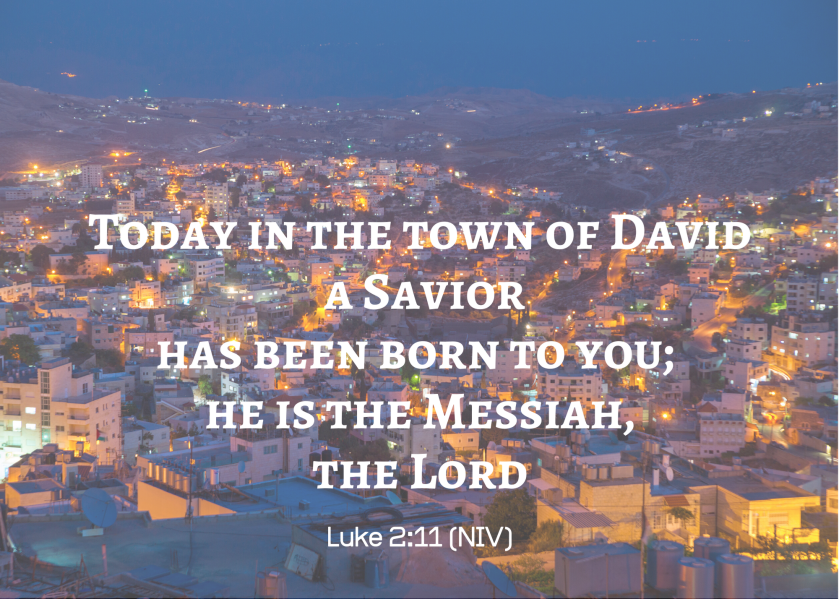
In the quiet of the night shepherds were in the fields taking care of their sheep, when suddenly an angel of the Lord appeared to them awakening them out of their drowsiness. They were terrified. But the angel said, “Do not be afraid. I bring you good news that will cause great joy for all people. Today in the town of David a Savior has been born to you; he is the Messiah, the Lord.” (Luke 2:8-11) Then “suddenly a great company of the heavenly host appeared with the angel, praising God and saying, ‘Glory to God in the highest heaven, and on earth peace to those on whom his favor rest.” (Luke 2: 13-14) The shepherds traveled to Bethlehem, and there they saw the baby Jesus, surrounded by Joseph and Mary, his mother. After seeing Him, they testified to what they had seen, and all who heard it were amazed at what the shepherds told them. (Luke 2:16-18) Very soon the whole world would know.
“And Jacob the father of Joseph, the husband of Mary, and Mary was the mother of Jesus who is called the Messiah.” (Matt. 1:16)
It is true.
Reflection Questions
Question One: Why do you think that Matthew included the names of these women in the genealogy of Jesus, when it was not customary to do so? Which story was your favorite? Why?
Question Two: How do you think Matthew intended these stories of these five women to impact your understanding of the coming Messiah? Which of the five stories had the most impact on you? Why?
Question Three: Do you think that the instances of adultery, prostitution, and murder were just happenstances or planned? Did those sins ruin the story line of the Messiah or make it more meaningful? How does that impact what you believe about the fulfillment of the purposes of God?
Question Four: What about your life? Do you have skeletons tucked away in your closet that keep you from working out the plans and purposes of God in your life? Can you now break free from that after hearing the stories of Tamar and Judah, Rahab the Harlot, or Bathsheba and David?
While it might seem that Christmas is far behind us in the rear view mirror, technically we are on the tenth day of Christmas, when the lords are leaping. Today’s reading crosses paths with the humble, yet noble beginning of our Savior that we have been well-seasoned in. The genealogy presents Jesus as the rightful heir to the kingship of Israel. What is peculiar about Matthew’s opening, our first reading of the gospels, is the line which he chooses. Jesus is presented as heir to the throne through his adopted earthly father, Joseph. Unfortunately, during our advent season, the role of the Son of Man’s early father is often downplayed, as the screen time is often given to Mary, the shepherds, the wise man, John the Baptist, even Simeon, yet the story of Joseph is often skipped or scrapped as much as the the genealogies. I think there is much we can learn from his story.
The first lesson we can learn from the narrative of Joseph is God wanted Jesus to have an earthly Father. It is sad to see and say, but that the role of the father in our present day and age has been reduced to the punchline of a sitcom. Dads are important. The statistics show that when a mother alone attends church with her children, the chances that her children will grow to be a regular attender is a one in fifty chance. However, when the father attends, the effect is fiftyfold. The statistics are baffling but speak to the point of the subtle, yet intentional role of the father’s influence on the family. From the scriptures we can see that Joseph took his family to synagogue. From the intentionality in God’s plan, I don’t think it would be farfetched to say that Joseph did even more for the spiritual upbringing of Jesus, going beyond giving him a ride to church and providing a model and example of a life dedicated to God.
Next, in the face of disgrace, Joseph showed compassion. Joseph didn’t need to take a paternity test to know he wasn’t the father. By His measure, he had not done anything dishonorable. It was well within his right to expose Mary, and not only break their engagement, but to have her stoned to death. While there isn’t much to this part of the narrative, so we don’t know all the nitty-gritty details, we can see that Joseph made it a point not to disgrace Mary. We can empathize with Joseph because he didn’t have all the facts or at least was confronted with a moment which required great faith. It is likely that he doubted and refused to believe, but he didn’t give into his anger, instead choosing a merciful course of action to deal with what he thought was sin. As people who experience mistakes, either done to us or by us, let us show grace.
“When Joseph woke up, he did what the angel of the Lord had commanded him and took Mary home as his wife.” – Matthew 1:24
Finally, God spoke directly to Joseph, and he immediately took action. When an angel of the Lord delivers the life-changing message to Joseph, he changes his course to follow the Lord’s direction. He takes Mary as his wife. He waits to consummate the marriage. He names his son, Jesus. In tomorrow’s reading we’ll see he moves on direct instructions in the middle of the night in order to protect his wife and newborn child. He then again waits and listens for the voice of God before he returns home. I am positive that Joseph continued to listen for the voice of God long after the toddler stage of Jesus. Joseph became closely aligned to his Heavenly Father by listening for His voice. We too, have the same opportunity. The Word of God has been delivered to us. We simply need to open our Bible, click on a link, and the words are as clear as an angel’s voice in the midst of our dreams. If we are seeking God, we must allow ourselves to be convicted: to change course and take action. While we may not be rearing the adopted Son of God, we all have an opportunity to speak with our lives to those adopted through Jesus Christ, as mothers and fathers of faith.
-Aaron Winner
Reflection Questions
What do you think Jesus may have learned from Joseph, his earthly father?
To whom, and how, can you be a mother or father of faith?
In my Bible reading today, I found God to be________________.
And, as an extra little bonus, in preparation for adding in our Old Testament Bible Reading tomorrow, beginning with Genesis 1&2 – here is the…
Introduction to the Book of Genesis
The book of Genesis is probably the most important book ever written. The word Genesis means “origin.” The book of Genesis contains the history of the origin of:
the universe
the solar system
the atmosphere
life
man
marriage
evil and death
languages
government
culture
nations
religion
God’s chosen people
No other book of the Bible is quoted or referred to as often as Genesis – in other books of the Bible. I have read that there are at least 200 quotations or allusions to Genesis in the New Testament.
If Genesis were eliminated from the Bible, the rest of the Bible would be impossible to understand. For example, look at these comparisons between the first few chapters of Genesis and the last few chapters of Revelation:
Genesis Revelation
Division of light and darkness (1:4) — No night there (21:25)
Division of land and sea (1:10) — No more sea (21:1)
Rule of sun and moon (1:16) — No need of sun or moon (21:23)
Man in a prepared garden (2:8, 9) — Man in prepared city (21:2)
River flowing out of Eden (2:10) — River flowing from God’s throne (22:1)
Gold in the land (2:12) — Gold in the city (21:21)
Tree of life in the midst of garden (2:9) — Tree of life throughout city (22:2)
Precious stones (2:12) — All manner of precious stones (21:19)
God walking in garden (3:8) — God dwelling with HIS people (21:3)
Cursed World (Genesis) Eternal World (Revelation)
Cursed ground (3:17) — No more curse (22:3)
Daily sorrow (3:17) — No more sorrow (21:4)
Thorns and thistles (3:18) — No more pain (21:4)
Sweat on face (3:19) — Tears wiped away (21:4)
Returning to dust (3:19) — No more death (21:4)
Evil continually (6:5) — Nothing that defiles (21:27)
Coats of skins (3:21) — Fine linen, white and clean (19:14)
Satan opposing (3:15) — Satan banished (20:10)
Kept from tree of life (3:24) — Access to tree of life (22:14)
Banished from garden (3:23) — Free to enter city (22:14)
Some suggest that Genesis (at least the first 11 chapters) are an allegory, and not historically accurate.
If Genesis were not historically trustworthy, then neither is the rest of the Bible, including what it says about Jesus. If Adam is only an allegory, then by all logic, so is Christ. Genesis is not a collection of myths and legends, but a factual record of real events and real people, possibly even diaries of those people at the beginning of history.
The book of Genesis is written in the form of narrative records of historical events. Biblical parallels to Genesis are found in such books as Kings, Chronicles, Luke, and Acts. In all of these, the writer either collected previous documents and edited them (e.g. I and II Kings, I and II Chronicles), or else recorded the events which he had either seen himself or had collected from others who were witnesses (e.g. Luke, Acts).
Moses actually wrote Exodus, Leviticus, Numbers and Deuteronomy. Moses likely compiled and possibly edited the material in the book of Genesis, with the Holy Spirit guiding him in this process. The original material may have been passed down, from father to son, via the line of the patriarchs listed in Genesis. It may be that Adam, Noah, Shem, Terah, and others each wrote down an individual account of the events which had occurred during his own lifetime. These records presumably were kept in such a way that they would be preserved until they finally came into Moses’ possession.
It is probable that these original documents can still be recognized by the key phrase: “These are the generations of…” The word “generations” is a translation of the Hebrew word “toledoth,” and means “origins” or “records of the origins.”
“These are the generations of the heavens and the earth” Gen 2:4
“This is the written account of the generations of Adam” Gen 5:1 (This suggests these were written)
“These are the generations of Noah” Gen 6:9
“Now these are the generations of the sons of Noah” Gen 10:1
“These are the generations of Shem” Gen 11:10
“Now these are the generations of Terah” Gen 11:27
“Now these are the generations of Ishmael” Gen 25:12
“And these are the generations of Isaac, Abraham’s son” Gen 25:19
“Now these are the generations of Esau” Gen 36:1
“And these are the generations of Esau” Gen 36:9
“These are the generations of Jacob” Gen 37:2
An understanding of Genesis is vital to an understanding of the eternal plan of GOD. Strap yourselves in as we prepare to read through God’s word again this year.



 Seek Grow Love