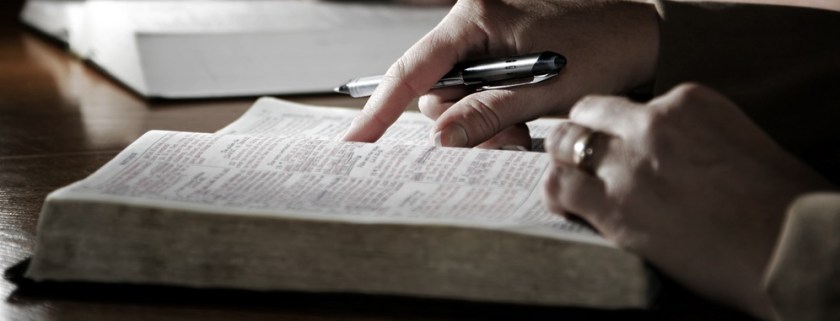
This week, we’ve been focusing on the importance of God’s word for our lives. Yesterday, we focused on the nitty gritty aspects of Bible Study. Today, we’re going to look at the bigger picture as we wrap up the week!
So, when we think about Bible Study, we should have four phrases in the back of our minds:
Read it
Meditate on it
Memorize it
Live it
Yesterday, we talked about our daily quiet time that normally involves reading the scripture. It’s important to remember that we can study the Bible in different ways! Last year, we looked at the Big Picture of the Bible. We read through it quickly and tried to see how each part of the Bible related to God’s epic plan. We can also study the Bible by studying specific books of the Bible, which we will do beginning this Sunday as we study the book of Proverbs. Another type of study that we can do is a topical study, where we look at specific topics like love or marriage and study what the Bible says about it whenever that topic comes up. Each of these ways of studying the Bible really helps us to have a complete picture of what we’re studying, and so we should try to do them at some point in our study of the Bible.
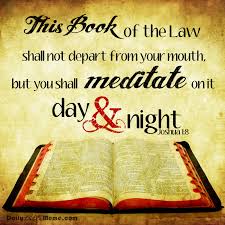
Once we read the Bible, we should meditate on it. If we look at verse 1-3 of Psalm 1, our key passage for today, we see that the man who meditates on the law of the LORD day and night is blessed! What is the law of the LORD? The Bible! But, what does meditating mean? Generally, it means to “think deeply or carefully about something” or to “consider.” It can be tempting to treat our daily reading of God’s word as a chore that we have to check off our to-do lists. We skim through a chapter or two a day and then close our Bibles without ever thinking about it again. The danger in this is that we never let God’s word sink into our hearts! That’s why it’s so important to meditate on it, to think carefully and deeply about what the Bible says. Yesterday, I mentioned that you could journal after reading to help you think. This is a great option! Prayer also helps us to do this. If you’re artsy, Bible Journaling Art can be a great way to meditate on scripture as you make artwork that relates to what you’ve read.
Another aspect of Bible study that’s important and can help us to meditate on the scripture is memorization. Growing up, I never really saw the value in memorizing scripture. My family is Christian so we had about 15 Bibles to choose from if I really wanted to look up a verse. On top of this, my brothers and I got a laptop to share when I was about 7 or 8 years old. By the time I really cared to look up verses, I always had Google or Bible Gateway at my fingertips. This is even truer now when I constantly carry around my phone. All this being said, even when I know that I have the capability of looking up scripture to help me work through a situation or strengthen my faith, I, unfortunately, don’t choose to do this first thing. A worrier by nature, I immediately start analyzing my situation from my viewpoint, and if it’s a problem that stresses me out too much, I’ll enlist the help up my friends to sort it out. If I don’t have scripture ready at the forefront of my mind that I’ve thought about and hidden in my heart (Ps. 119:11), I’m afraid I won’t turn to it until I’ve already done something that I probably shouldn’t have.
For instance, if I am worried about a situation that’s making me anxious and keeping me up at night, I can (1) journal about it, maybe cry about it, and maybe even call a friend if I’m real upset. OR I can remember Philippians 4:6, which says, “Do not be anxious about anything, but in every situation, by prayer and petition, with thanksgiving, present your requests to God.” That’s a pretty profound truth that totally changes the way that I think about how to handle the problems that I face!
Memorization is important. It can help you in situations like this. (Because we both know that even if you have a smartphone AND a Bible sitting at your bedside table if scripture isn’t the first thing on your mind, you’ll probably be picking option one in the scenario above.) And, it can help you as you defend your faith (1 Peter 3:15). Look at Jesus’ temptation in the desert in Matthew 4 if you need some more evidence for the importance and benefits of memorizing scripture. This year, you’ll have some great verses picked out for you to help you memorize Scripture each week with these devotions!
Lastly, we should remember our fundamental purpose for why we study the Bible. We want it to change our hearts. We want to know and live for God. If you do the first three phrases consistently in your life, this, in addition to the power of the Holy Spirit, will really begin to make a big change in your life. And, if we check ourselves with this purpose each day, it will be harder to fall into the trap of viewing the reading of God’s word as a stale chore to be tackled each day.
Let’s dedicate ourselves to reading, meditating on, memorizing, and living out the truths we find in God’s word!

 Seek Grow Love