

One Foot in the World vs. Whole Hearted Devotion

2 Chronicles 17-19

2-chronicles-16

Monday, November 28

You might have noticed in your reading that 1 and 2 Samuel and 1 and 2 Kings read like history, while 1 and 2 Chronicles seem written to teach what it means to follow God rather than simply giving the history of the people. As noted in the intro to 1 Chronicles, these books might have been written after Israel returned from exile in Babylon. Since it covers material already recorded in Samuel and Kings, it would seem evident that this author has more in mind than simple history.


Here are two things to notice in today’s readings. First, Jehoshaphat made sure that the people were taught the way of God, first by sending teachers throughout the land (2 Chron. 17:7-10), and then by teaching the people how to live when they went to court to settle disputes (19:8-11). Second is the back story behind the battle alliance between Ahab and Jehoshaphat.


Before they went into battle, Jehoshaphat wanted to inquire of the Lord. All the prophets predicted success, but when he asked for one more, with reluctance Micaiah predicted that Ahab would be killed. He went on to say that God had put a lying spirit in the mouths of the prophets who curried Ahab’s favor. That certainly gives us something to think about, doesn’t it. It seems that if you want to believe the wrong thing, God will let you believe it.


So how can we know what to believe? Jehoshaphat went down the wrong road when he made alliances with a king who did not honor God. If we are trying to keep one foot in the world, we can never trust what we hear. Those who are whole-heartedly dedicated to God will not be misled.

Pastor Greg Demmitt
Faith of Our Fathers (1 Chronicles 11-13)

Friday, November 18

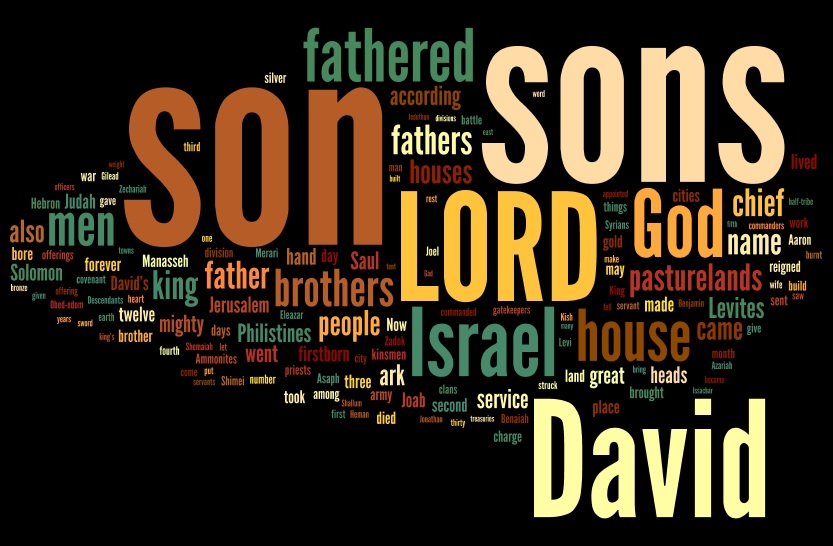
13-wordle-1-chronicles

As I mentioned in the devotion a few days ago for 1 Chronicles 1-2, tradition says that this book was probably written after the Israelites returned to Jerusalem following 70 years in exile.  This was probably during the time that Jerusalem was being rebuilt, a time with a lot of struggles and fear.   There were not walls around the city.  There were enemy nations around.  They had not had their own kingdom in the entire time most of the people had been alive.  This was all new for them.

These chapters start the retelling of the time when David was king, a prosperous time in their history.  In 1 Chronicles 11:4, it says:

David and all the Israelites marched to Jerusalem (that is, Jebus).  The Jebusites who lived there said to David, “You will not get in here.”  Nevertheless, David captured the fortress of Zion, the city of David.

Then in verse 8, it says about King David:

He built up the city around it, from the supporting terraces to the surrounding wall, while Joab restored the rest of the city.

This must have been very encouraging at this time to see that David had to conquer and then build up Jerusalem, including the walls, during his reign.  The nation was greatly blessed while David reigned, so why couldn’t they rebuild and be prosperous and be blessed again.  David had trusted God, and they were now trusting God, so they could look forward to blessings and protection just as the people in the time of David.

We can all look back to the people in the church before us, and see how they trusted God, and how the church has been blessed through them.  This may be people in our family, in our local church, or others that we know of.  Their examples and the things that they have done through faith should teach us that with faith, we can also have protection, peace, and blessings as we serve the LORD.

-Andrew Hamilton