I’ve heard sad stories of siblings living hostilely toward one another for decades because of arguments regarding the inheritance from a late parent. I wonder if the Israelites assumed God picked favorites as he doled out their assigned territories in the Promised Land.
Remember Caleb? At eighty-five years old, Caleb finally realized his dream of inheriting Hebron four decades after he had first explored it. He and Joshua were the only two of the dozen spies who had encouraged the nation to take their Promised Land; the ten other agents involved in the espionage had invoked great fear in their people. As a result of their collective lack of faith, the Israelite nation would wander for 40 more years in the wilderness while most of that unfaithful generation died off. Caleb, now an octogenarian, was very eager to finally claim the territory that had been promised to him two scores ago. He and Joshua had kept the faith, remained true to God, and waited patiently to receive their inheritance, just like we must wait patiently for our Promised Land, the Kingdom (Romans 8:25).
Perhaps the Levites, the tribe designated to serve as priests, initially felt slighted when they learned that they would inherit no land at all; rather, God promised to be their portion and take care of their needs as they served as religious leaders for His people. Though it might seem like they had received nothing tangible, they actually received the best gift: a closeness with and dependence on God that most would never experience.
We, too, are beneficiaries of a similar priestly portion: “But you are a chosen people, a royal priesthood, a holy nation, God’s special possession, that you may declare the praises of him who called you out of darkness into his wonderful light.” 1 Peter 2:9
Unfortunately, we tend to chase temporary things in this life, like fortune and fame, rather than keeping our eyes on the eternal prize. None of this truly satisfies, and we can’t take it with us when we die – you’ll never see a hearse pulling a U-Haul, after all! Jesus reminds us to “store up treasures in heaven… for where your treasure is, there your heart will be also” (Matthew 6:20-21). As followers of Jesus, we have a much greater inheritance promised to us, far better than all the riches of this world.
I leave you with the priestly blessing from Numbers 6:24-26:
The Lord bless you and keep you;
the Lord make his face shine on you and be gracious to you;
the Lord turn his face toward you and give you peace.
-Rachel Cain
Reflection:
What does it mean personally to you that God is your portion? How does that impact your soul?
Meditate on these scriptures as you thank God for being your portion!
My flesh and my heart may fail,but God is the strength of my heart and my portion forever. Psalm 73:26
Because of the Lord’s great love we are not consumed, for his compassions never fail. They are new every morning; great is your faithfulness. I say to myself, “The Lord is my portion; therefore I will wait for him.” Lamentations 3:22-24
And this is God’s plan: Both Gentiles and Jews who believe the Good News share equally in the riches inherited by God’s children. Both are part of the same body, and both enjoy the promise of blessings because they belong to Christ Jesus. Ephesians 3:6
I’ve been a pastor for 35 years (actually, 40 now, as this was written in 2020). I’ve pastored local congregations. I’ve served on the mission field in a different country. I’ve served as a hospice chaplain with people who have been diagnosed with life ending diseases and as a hospital chaplain with people who are very sick, or having surgery, or recovering from surgery or recovering from pneumonia, or have attempted suicide or are struggling with mental health issues and need extra support. I preach each week to people in the nursing home and those who are suffering from Alzheimers and other forms of dementia. I’ve stood at the bedside and prayed with families whose loved one is about to die or who has already died. I’ve prayed blessings over newborn babies and people over 100 and everywhere in between.
The one common need I find over and over again is the need of the person going through crisis to know that God is with them. Everyone goes through challenges and difficulties, losses and pains in life. It’s not a question of, “Will bad things happen?” or even, “Why do bad things happen?”, it’s more a case of, “When bad things happen what resources do you have to draw from to help you get through it?”
As God’s people, Israel was being transformed from slaves to the people of God who were to be a light to all nations, they were going to face many challenges on that journey of transformation. They had a desert to cross. They had numerous enemies to face who all wanted to prevent them from reaching the promised land, and once they arrived in the land, there were enemies who wanted to take the land away from them and turn their hearts away from undivided loyalty to God.
To get through these challenges Israel needed regular assurance that God knew them and that God was with them. If you’ve been a Christian for most of your life, it is likely that you know these things already. You know that God knows you by name, that before He formed you in your mother’s womb he knew you. You know Jesus’ promise that he will be with you always, to the end of the age, right? There’s no way you would ever forget that God knows you and that Jesus is with you, right? (More about that in a minute).
The people of Israel were spiritual babies. They were just starting to learn about who this God is and to get used to the idea that God would stay with them and not abandon them. They needed a lot of reminders. So, in addition to having a tent of meeting constructed in their midst (see yesterday’s devotion) they needed to know that they had representatives who would go before God regularly on their behalf. So God set aside a group of men who would serve as priests. They had a special calling and were set apart or consecrated to do the work of a priest.
Today’s reading describes the various pieces of clothing that the priests wore and the purpose of each item- ephod, breast piece, robe, tunic, turban, urim and thummin, gold plate, sashes etc… of all of these descriptions in Exodus 28 one in particular stands out: “Engrave the names of the sons of Israel on the two stones the way a gem cutter engraves a seal. Then mount the stones in gold filigree settings and fasten them on the shoulder pieces of the ephod as memorial stones for the sons of Israel. Aaron is to bear the names on his shoulders as a memorial before the Lord.” (11-12). So when the priest went before God, he went bearing the names of the sons or tribes of Israel. This was a reminder that they were there on behalf of the entire people of God. The message for the people was that the priests would bear on their bodies a constant reminder to God of His beloved people.
We might ask the question,” if God is perfect and all knowing, why would he need such a reminder? ” I would say that the reminder wasn’t for God as much as it was for the people to have the assurance that they were being constantly brought before God. Prayer works the same way for us. When someone prays to God on our behalf, they aren’t exactly bringing new information to God’s attention. God knows our needs before we ask. One of the benefits of intercessory prayer is to remind us that we are not alone in the midst of our needs. When I was first diagnosed with cancer and underwent surgery and radiation lots of people were praying for me. It brought me great comfort and encouragement to be reminded regularly that people were remembering me before God’s throne.
In Exodus 29 it provides a description of the rituals that were used to consecrate or set apart the priests for their duties of bringing the people before God. Notice how the consecration involved sacrifices and blood. In order for the priests to go before God on behalf of the people, their sin and guilt had to be covered over by blood. In fact, every day, morning and night, a lamb was to be sacrificed to God. “For the generations to come this burnt offering is to be made regularly at the entrance to the tent of meeting, before the Lord. There I will meet you and speak to you; there also I will meet with the Israelites, and the place will be consecrated by my glory.” (42-43)
This served as a constant reminder that God was holy and sinless, and that human beings are sinful and needed to be cleansed and forgiven of their guilt in order to come near to God’s presence. As a result: “Then I will dwell among the Israelites and be their God. They will know that I am the Lord their God, who brought them out of Egypt so that I might dwell among them. I am the Lord their God.” (45-46) These daily sacrifices served as a constant assurance to God’s people that He was their God and that He was with them.
As Christians, we are not required to sacrifice a lamb day and night in order to be assured that God is with us. Jesus is the lamb of God who takes away the sins of the world. He, as the high priest and the sacrificial lamb, went into the most holy place with his own blood and offered a sacrifice that covers over all of our sins once and for all. (Once you read the book of Exodus, the book of Hebrews in the New Testament is much easier to understand… check it out). When Jesus was first prophesied in Isaiah 7 it was said that he would be a sign that God is with us (Immanuel means God is with us). In the name of Jesus we can be assured that God is with us – not because we are perfect or sinless, we are no more sinless than the nation of Israel was, but we have been made holy by the blood of Jesus.
Earlier I asked the question: “There’s no way you would ever forget that God knows you and that Jesus is with you, right?” The fact is, we all have times when we forget that God knows us and that Jesus is with us. This is a danger when everything is going well in our lives- when we are busy enjoying the blessings that God gives us and are on a roll, we can get so caught up in enjoying the gifts that we forget to worship the one who gives them to us, God. It is also a danger when things are tough and we are hurting and feel all alone or worry that God isn’t answering our prayers. When we go through spiritual depression or the dark night of the soul we can forget that the Lord promised never to leave us. We need constant reminders, in the good times and the bad times. That’s why we need to gather regularly with other believers to find encouragement and strength, so we don’t forget. That’s why we need to regularly break bread and drink the cup at communion, to help us remember. You and I need ongoing reminders that God is with us, that God remembers us. We need to know others are bringing our names before God in difficult times, and we need to remember to bring others before God during their difficult times. We may not have to wear ephods and robes and rub lamb’s blood on us, but as Christians we are all priests and we all need to go before God regularly on behalf of each other and on behalf of people in the world, in the name of Jesus. Don’t forget to remember, God is with us and God will never forget you.
Throughout the Bible, there have been many examples of priests and chief priests. However, out of all the priests that have lived, there is only one that is the most important: Lord Jesus Christ. Unlike the other priests and chief priests, Jesus made the ultimate sacrifice by dying for everyone’s sins and shedding his own blood rather than using goat or bull’s blood as an offering. Jesus died so that a new covenant could come into play. According to Hebrews 8:10-12, the Lord declared: “I will put my laws in their minds and write them on their hearts. I will be their God, and they will be my people. No longer will a man teach his neighbor, or a man his brother, saying, ‘Know the Lord,’ because they will know me, from the least of them to the greatest. For I will forgive their wickedness and will remember their sins no more.” This new covenant gives us the opportunity to know God through Jesus Christ if we believe that Jesus died for the payment of our sins and that he will come again to bring salvation to those waiting for him.
God wants us to be wholeheartedly obedient and devoted to him. He doesn’t want us to just be “half-time” Christians. “Let us draw near to God with a sincere heart in full assurance of faith, having our hearts sprinkled to cleanse us from a guilty conscience and having our bodies washed with pure water” (Hebrews 10:22). This is done when Jesus takes away our sins, enters our lives, and redirects us toward God through baptism. He wants us to encourage each other by showing love and doing good deeds. God is pleased with us when we continue to gather together with other believers because we belong with those who have faith and are saved. Some of you are serving on the UP Project in Minnesota this week, others are working or going to school, and still others may be so excited for FUEL that they are packing a week early. Whatever you may be doing, do it for the glory of God. Hebrews 10:36 states: “You need to persevere so that when you have done the will of God, you will receive what he has promised.” That sounds like some pretty good advice to follow.
Today, I pray that you find the time to open your Bible and really study God’s Word. He is waiting to have a relationship with you and truly wants your undivided attention. Come to Jesus and God with a sincere heart and a strong faith and ask Him what He wants you to learn or do for Him. Make sure you assemble with other brothers and sisters in Christ and be an encouragement to them. I pray that you will be strong in your faith and share what you have learned with others. God bless you. Amen.
Chapter 6 starts with listing the descendants of Levi. The tribe of Levi is set aside to be the priests, workers in the tabernacle and temple, and things like that. In verse 11, it says “These are the men David put in charge of the music in the house of the LORD after the ark came to rest there.” This is the list of men who had a specific job because of their genealogy.
In verses 48 and 49, it says “Their fellow Levites were assigned to all the other duties of the tabernacle, the house of God. But Aaron and his descendants were the ones who presented offerings on the altar of burnt offering and on the altar of incense…” Again, these other Levites had specific jobs or duties because of their genealogy.
As we move into chapter 7, we see lists of other groups of people, and for each one, it lists their number of fighting men or warriors. Each of these also had a duty as warriors, both in defense and offense.
As I was reading this, I thought about how this could relate to us. We each have special roles in the church. If we look at the genealogy of the church, where do each of us fit in it? Would you be listed as having “priestly duties”, the spiritual leaders in the church? This could be as a pastor, elder, or a scholar possibly. Would you be listed as a musician, giving praise to the LORD? Would you be listed as a warrior, standing up for your faith on the defense and/or evangelizing and spreading the word on offense?
We are not cast into a certain position based on the tribe we belong to, but there is a place where each of us fit. I encourage you to examine what roles God is leading you to, and follow God’s plans for you.
What a contrast we have going on in the Hebrew camp in Leviticus chapter 24!
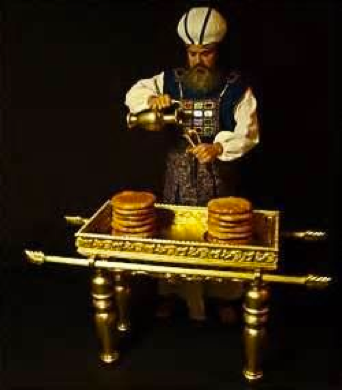
God is explaining what is required to honor Him through priestly worship. We visualize the tent of meeting and the priest in charge of the oil lamps. We can imagine the light radiating as Aaron tends the lamps on this golden lampstand continually throughout the night.
This huge, extraordinary lampstand with its seven lamps would light up the table of pure gold. I imagine the showbread and the smell of the incense placed beside the two stacks of bread. Each Sabbath the bread was set out on behalf of the Israelites, as a lasting covenant. Aaron and his sons would eat it in the sanctuary because it was a most holy part of their share of the food offerings presented to the Lord. I imagine the awesome communion with God in this very special place.
Yet outside a fight broke out in the camp. An Israelite was fighting with a son of an Israelite mother and an Egyptian father. The son of the Israelite woman blasphemed the Name with a curse. The just punishment for blasphemy of the Name of God was the death penalty. This man chose to insult God and he suffered the consequences.
The Hebrews had a choice, just like we do. They could chose obedience or disobedience, right or wrong, to go God’s way or their way. God was giving instructions (even including holidays of joyous festivals) and showing His presence to everyone in the camp. One man chooses to insult Him, but others choose to learn of Him. We are also choosing to learn of Him as we move through the scriptures. We can look to God, spend time with Him, learn His requirements for our lives and make our relationship with Him our top priority. We can throw ourselves into God’s work and be followers of Christ. His promise for us doing this is His Love and Blessing!




 Seek Grow Love