Five Women

Matthew 1 and Luke 2:1-38

Devotion by Telva Elwell (SC)

Matthew begins the New Testament with the genealogy of Jesus Christ the Messiah to confirm that he was the prophesied direct heir to King David’s throne. Because we so often sleepwalk through this genealogy, we almost miss five names. Five names that belong to women— Tamar, Rahab, Ruth, Bathsheba, and Mary.  It was not customary to include women in genealogies, so we are left to wonder why Matthew included them.

TAMAR

 Hers was a sad, terrible story of grief and sin.  Genesis 38 recounts her story.  She first married Judah’s oldest son, who was so wicked the Lord took his life. At that time, if a woman’s husband died, her deceased husband’s brother would marry her to provide for her and keep her in the family. So, Judah arranged for Tamar to marry his second son, who, unfortunately, followed in his brother’s footsteps and was put to death by the Lord.  Judah promised Tamar that she could marry his third son when he grew up, but Judah had lied.  Tamar was in great need, so she developed a plan and deceived Judah by disguising herself as a prostitute.  Her plan worked, and Tamar became pregnant with twins. When Judah was told that his daughter-in-law was pregnant through prostitution, he ordered her to be burned. But, as the story unfolded, Judah realized that Tamar was the prostitute he had bought. Not a pretty story, but Judah confessed and took responsibility for his sins, and said, “she is more righteous than I, since I did not give her to my son Shelah.” (Gen 38:26)  

 The story of Tamar and Judah demonstrates that God can use the most scandalous circumstances for His purposes. Tamar became the first women mentioned in the genealogy of the Messiah, where Tamar and Judah’s son, Perez, became the father of Hezron. (Matt 1:3) The lineage of Jesus continued, despite a bump in the road.

RAHAB The HARLOT.

 Everyone knew her profession. She was that Canaanite prostitute living in Jericho. Throughout the Bible she was known as Rahab the harlot.  Even in the faith chapter she is called Rahab the prostitute. (Heb 11:31)

But Rahab was also known for something else, something much more important.  She was the one who kept the Israelite spies safe in her home in Jericho when they were sent by Joshua to spy out the land. (Josh 2) She willingly lied to the King of Jericho about the whereabouts of the spies, jeopardizing her own safety, because “the Lord your God, he is God in the heavens above and on the earth beneath.” (Josh 2: 11) How often do we judge people by things that don’t matter—their appearance, their house, their wealth, or their “job”, when what we need to focus on is their faith, and that God can redeem anyone.  Even a prostitute. That is what the coming of the Messiah was all about—redemption.

 “Salmon the father of Boaz, whose mother was Rahab.” (Matt1:5)

RUTH

There are so many words that you could use to describe Ruth.  Faithful, selfless, caring, giving, devoted, loving, reliable, unwavering, a Moabite.

Ruth’s husband had died, and there were no more sons of Naomi for her to marry.  Even Naomi’s husband had died.  There was no way for Naomi to provide for Ruth.  So, Naomi gave Ruth permission to return to her native home where her family could provide for her.  She refused.  Why? Because Ruth loved Naomi with a steadfast love. “Wherever you go, I will go; wherever you live, I will live.  Your people will be my people, and your God will be my God. Wherever you die, I will die.” (Ruth 1:16,17). She promised to love and care for Naomi until the end. She did not have to do that.  She was free to return home. She chose to stay.

 In God’s perfect timing and plan, Ruth, the Moabite, was blessed with a husband by the name of Boaz.  They had a son named Obed, who had a son named Jesse, who had a son named David. (Matt 1:5)

BATHSHEBA

If you take a quick glance through the genealogy, you will not notice the name of Bathsheba. That is because Bathsheba is referred to as Uriah’s wife. “David was the father of Solomon, whose mother had been Uriah’s wife.” (Matt 1:6) Bathsheba was the wife of Uriah. You probably remember that story.  As the story goes, Bathsheba was the faithful wife of Uriah.  King David spotted her one day out on a roof top and desired her.   Since David was the King, what the king said or wanted must be obeyed.  She obeyed him, and in the end, King David arranged for Uriah’s murder to cover his sin.  Eventually David married Bathsheba, but it is heartbreaking that King David’s life is marred by adultery and murder. Yet it demonstrated how desperately Israel and David needed the promised Messiah, and how desperately we need him too, “because he will save his people from their sins.” (v21)

“David was the father of Solomon, whose mother had been Uriah’s wife.” (Matt 1:6)

MARY

She was willing. She was humble. She believed in God.  She submitted to God’s will and plan.  She was young, and she was a virgin. Miraculously, she was a mother—the mother of Jesus who was called the Messiah.

Mary’s story of the virgin birth of Jesus was improbable if it weren’t for the working of the Holy Spirit. But it is true.  Soon the whole world would know.

 In the quiet of the night shepherds were in the fields taking care of their sheep, when suddenly an angel of the Lord appeared to them awakening them out of their drowsiness.  They were terrified.  But the angel said, “Do not be afraid.  I bring you good news that will cause great joy for all people.  Today in the town of David a Savior has been born to you; he is the Messiah, the Lord.” (Luke 2:8-11) Then “suddenly a great company of the heavenly host appeared with the angel, praising God and saying, ‘Glory to God in the highest heaven, and on earth peace to those on whom his favor rest.” (Luke 2: 13-14) The shepherds traveled to Bethlehem, and there they saw the baby Jesus, surrounded by Joseph and Mary, his mother.  After seeing Him, they testified to what they had seen, and all who heard it were amazed at what the shepherds told them. (Luke 2:16-18) Very soon the whole world would know.

“And Jacob the father of Joseph, the husband of Mary, and Mary was the mother of Jesus who is called the Messiah.” (Matt. 1:16)

It is true.

Reflection Questions

Question One:  Why do you think that Matthew included the names of these women in the genealogy of Jesus, when it was not customary to do so? Which story was your favorite? Why?

Question Two:  How do you think Matthew intended these stories of these five women to impact your understanding of the coming Messiah?  Which of the five stories had the most impact on you? Why?

Question Three: Do you think that the instances of adultery, prostitution, and murder were just happenstances or planned? Did those sins ruin the story line of the Messiah or make it more meaningful? How does that impact what you believe about the fulfillment of the purposes of God?

Question Four: What about your life?  Do you have skeletons tucked away in your closet that keep you from working out the plans and purposes of God in your life?  Can you now break free from that after hearing the stories of Tamar and Judah, Rahab the Harlot, or Bathsheba and David? 

Messy Parts

Joshua 1-4

Then Joshua son of Nun sent two men secretly from Shittim as spies, saying, “Go, view the land, especially Jericho.” So they went, and entered the house of a prostitute whose name was Rahab, and spent the night there. Joshua 2:1 (NRSV)

Context is important. Out of context, this verse might convey something completely different from the story that follows. In the same way, when we hear an unsavory detail about an individual, it could easily prejudice our opinion of them. Everyone has messy parts of their lives, but those messy parts don’t tell the whole story.

Descriptors carry weight. Rahab the prostitute… If, in casual conversation, you hear that about someone, what do you think? The modern vernacular is “sex worker” trying to clean up a description about someone who works in a profession that is not lacking in crude descriptors. We won’t go there. You probably don’t think the best of that individual. You ask what happened that they went down that path in their life? So many questions… or maybe none. We write them off as someone who is living outside of God’s will and God’s grace.

The spies are commissioned to go and get a close-up of what Jericho is about. Boots on the ground in an espionage mission to help determine what will need to happen to eliminate a fortress city that is currently situated in the land that has been promised to God’s people.  

The spies get there, they meet a prostitute, and they go lay low in her house. Probably not who they expected to find as a sympathizer. Rahab is knowledgeable about the God of Israel. She offers and provides help to these spies and ensures they remain hidden from the Canaanites, who are wary and fearful of the impending insurgence of Israelites into “their land”.

But a prostitute…

Everyone does not get to choose their lot in life. Millions of people are trafficked or remain in a human sex trafficking situation at any given time. These people do not enter this willingly, it is essentially slavery.

Rahab. A prostitute. By choice? We don’t get much clarity here, but Rahab was likely forced into this situation where she engaged in prostitution. Slavery of this kind would not have been uncommon. Perhaps she was widowed or divorced and had no other recourse? Again, we don’t know. What we do know is that this unlikely ally to the people of Israel changed the course of history. While her profession was unsavory, her heart was made of gold. She had respect for Yahweh, the God of the Israelites, and she was willing to help Israel for a guarantee of safety and liberation. Seems legit. It’s a bad situation Rahab has found herself in, but she has heard of the power of God and wants to be a part of the community that is protected by the almighty God.

The spies promise her safety if she protects them, and they uphold their end of the bargain after she keeps them safe (Josh 6:22).  When Jericho is destroyed, Rahab and her household are spared.

James 2:23-26 says, “And the scripture was fulfilled that says, “Abraham believed God, and it was credited to him as righteousness,” and he was called God’s friend. You see that a person is considered righteous by what they do and not by faith alone. In the same way, was not even Rahab the prostitute considered righteous for what she did when she gave lodging to the spies and sent them off in a different direction? As the body without the spirit is dead, so faith without deeds is dead” (NIV).

Describing Rahab as a prostitute, something that she did in Jericho, does not do her justice. We are, after all, talking about King David’s great-great-great grandmother. She is not just a footnote in history; she is in the genealogy of the savior of the world (Matthew 1:5)! Rahab is, in her actions, a savior for the Israelites, especially the two spies who trusted her, and is an ancestor to Jesus, the most consequential figure in human history. The Son of Man, the Son of God, the anointed king of the coming Kingdom of God.

When I think about Rahab, I think about a talk that Tony Campolo gave about throwing a birthday party for a prostitute at 3 AM. You can watch it here: https://www.youtube.com/watch?v=kWlMV-UmueM&ab_channel=EvanCourtney

Don’t write people off. They may be far from God or living in situations that, for lack of a better descriptor, we would call complex. No one is beyond redemption, and we should strive to extend grace and try to bring the joy that we find in Christ into the lives of everyone we meet, whether they be a pastor, an executive, that elderly woman who sits three rows in front of you every week at church, or the prostitute you bump into at a diner at 3 AM when you are adjusting to being many time zones away from home.

-JJ Fletcher

Reflection Questions:

  1. Why is it so easy to dismiss “unsavory” people?
  2. Do you have “unsavory” parts to your life that you don’t want anyone to know about? What if people knew? How would they treat you? Is there a way you can use the messy parts of your story to help someone else?
  3. What can we glean from the role of Rahab in the victory of the Israelites over Jericho? What can we glean from how the spies treated and trusted her?
  4. Sin is sin. Why does sexual sin have a different gravitas than most other sins?

Rahab – Used by God

Old Testament: Joshua 2

Poetry: Psalm 44

New Testament: Romans 15

Isn’t it funny how you can read the same passage of scripture numerous times and still find new nuggets within it? I know the story of Rahab quite well, and since I love studying strong women of the Bible, I even read a historical fiction novella about her (“Unashamed” by Francine Rivers, if you’re interested). Still, I discovered a rabbit trail of new insight into Rahab through an oft-overlooked Bible feature: the footnote. 

In the first verse of Joshua 2 (NIV), upon noticing a footnote following the word “prostitute,” I glanced to the bottom of the page to find this clarification: “or possibly, an innkeeper.” Excuse me? “Innkeeper” and “prostitute” are very different occupations! As I dug deeper, I found respectable commentaries arguing on both sides of the fence why one interpretation was definitely more likely than the other, and some even suggested that she operated both an inn and a brothel. In either case, Rahab was a Gentile who, because she met many travelers, was privy to a lot of information about the happenings outside her city walls, including the miraculous power of the God of Israel. When the king’s men came to inquire about the spies, she not only hid them, but committed treason by leading the guards astray to chase after the spies, knowing full well they were hiding on her roof. Rahab risked her life to protect the spies, and the spies honored her request to spare her life (and the lives of her family) when they would later take over Jericho. Not only was her physical life spared, but Rahab married Salmon (who was perhaps one of the spies), became grafted into God’s chosen people, and is mentioned as an ancestor to Jesus. 

Let’s assume that she was a prostitute, as many interpretations of the Bible seem to imply. This woman was super important to the success of God’s people. Though we think she had a dark past, Rahab feared and trusted God perhaps even more than the Israelites did. How cool is it that God used not only a Gentile, but a promiscuous one at that, to help His people gain their Promised Land! It really gives us all hope that God can use us no matter our histories. In Romans 15, Paul reminds his readers that he is preaching not only to his fellow Jews, but also to help the Gentiles know about the saving power of Jesus. Thank God that his grace is for all of us! 

Psalm 44 ties well into this storyline of conquering Jericho, confirming over and over again that it is only by God’s power that people throughout history have conquered their enemies: “They did not conquer the lands with their swords; it was not their own strength that gave them victory. It was by your mighty power that they succeeded… only by your power can we push back our enemies; only in your name can we trample our foes… it is you who gives us victory over our enemies.” (Psalm 44:3,5,7)

I’ll close with this blessing for your day from Romans 15:13 (NIV): “May the God of hope fill you with all joy and peace as you trust in him, so that you may overflow with hope by the power of the Holy Spirit.” 

-Rachel Cain

Reflections: 

– God has a history of using “unworthy” people (like Rahab) for His glory. Reflect on your life, your unworthiness. How has God used your story for His glory? In what ways can you allow Him to do that even more in the coming years? 

– Can you think of anyone in your life whom you would have judged as unworthy, whom God has saved for his glory? Praise God for His faithfulness to all of us! 

– For further reading about Rahab, check out this article: https://tidings.org/articles/her-name-is-rahab/

Nothing is Hidden

Joshua 5-8

Joshua 7 12 b NIV

Joshua chapters 5 and 6 recount the sacking of Jericho.  This is one of the most memorable stories in scripture.  Jericho was the first city the Israelites encountered after crossing the Jordan River, and it was a doozy, perched on a hill with large fortified walls.  And yet it was no problem for God, as recounted in these chapters.


I am a big fan of Biblical apologetics, including Biblical Creation and Biblical archaeology.  The Jericho site is a fantastic example of archaeology confirming what the Bible says.  Several key findings back up the Biblical narrative:  Jericho was a walled city that was destroyed  The walls were discovered to have fallen outwards, which is the opposite of what you would expect during a siege.  Also, one section of the wall was still intact, with housing inside of it, which would match up with the account of Rahab the prostitute.  Finally, the city had been burned afterwards, and burned containers full of grain were found, demonstrating that the siege would not have been a long siege, and it would have occurred not long after the harvest, all of which again backs up the Biblical account.


You can read about these findings here: https://www.ancient-origins.net/ancient-places-asia/walls-jericho-0012893  Findings like this should be exciting for Christians to hear about, and can always be used as a resource in developing the faith of others.


Chapters 7 and 8 recounts the sin of Achan and how it hindered God’s people in their ultimate success against Ai.  During the destruction of Jericho, Achan took some forbidden items for himself and hid them in his tent.  After the Israelites failed in their first attempt to take Ai, Achan’s sin was laid bare.  Many of us have regular hidden sin in our lives, such as addictions to narcotics, alcohol or pornography.  Greed, pride, envy and unrighteous anger are other examples.


Chapter 7, verse 12b says, “I will not be with you anymore unless you destroy whatever among you is devoted to destruction.”  When you are living in sin, God cannot be with you.  When you choose a life of sin, you are in effect turning your back to God.  You are choosing destruction instead of life.  Secret sins are the most likely to deceive us because we are not getting wise counsel from others.  Also, we somehow justify continuing in these secret sins, having been deceived, and making them much harder to break away from.  On the outside we seem fine.  But on the inside, we rot away.  And God knows.


If you are suffering from secret sin, do the best thing you can do, which is to repent of the sin and share the struggle with someone else who can hold you accountable and support you.  This is proven to be the most effective way to break those hidden chains.  Choose everlasting life, not destruction.


Greg Landry


Today’s Bible reading can be read or listened to at https://www.biblegateway.com/passage/?search=Joshua+5-8&version=NIV

Tomorrow’s reading will be Joshua 9-11 as we continue searching God’s Word on the 2020 Chronological Bible Reading Plan

He Will Never Leave You nor Forsake You

Hebrews 13


Hebrews 13 16

Boy, it is hard to think about our life after reminiscing about the lives of those faithful giants listed in Hebrews 11.  We tend to compare ourselves with them, both in the good and the bad.  We’d love to do something great, something extraordinary for God just like them.  When we think of Enoch we can only image what it would be like to be translated.  Translated?? Somebody needs to translate that word for me, so Paul did.  He says that Enoch was translated “so that he should not see death” (Heb. 11: 5).  Wow! His faith was so great and powerful that God allowed him to cheat death.  I want that!  Or Abraham.  God called him to leave his home, his life, and go to a new home even though Abraham did not know where in the world God was sending him.  Nothing like a little adventure with God in control.  Sarah, the wife of Abraham, had a baby in old age because God promised her a son.  When she had Isaac, she had lived longer than most of us will live, yet she was having her first baby. Remember that Abraham was Sarah’s husband and he was ever older than she was.  Through this old man and old lady they had descendants more numerous than the stars in the sky or the grains of sand on the beach.  Each time you run your toes through a sandy beach think about that a little.

Of course God was not through with Abraham yet, so He led him up to a mountain and told Abraham to use his only son as a sacrifice in his worship to Him.  That was tough, but it certainly made life exciting for Abraham!  Even though this looked like a bad thing for Abraham, it certainly appears as though God had some special plans for Abraham.  God just needed to make sure that Abraham was on His side.

It is tough being a parent, I am sure.  But being asked to offer up your son to God might be going a bit too far, but not for Abraham.  Or in the case of Moses’ parents, they chose to refuse Pharaoh’s orders and hid their son for three months.   They were not afraid of Pharaoh and his commandments!  And that courage paid off big time.  For after Moses was grown up he lead the children of Israel safely through the Red Sea—something that Pharaoh and all of his horses and mighty men could not do!

The story of Rahab is a hard one to swallow.  We all know about Rahab.  After all, she was a harlot, not exactly a pillar of the community.  She had a reputation.  Everyone knew who she was.  Surely God knew.  The word was out on the street, after all.  But Rahab, of all people, was chosen for a special part in God’s work.  She hid two spies (and lied about it) sent out by Joshua to check out the land including Jericho.  What she did took great daring on her part.  And what did she get out of all of this?  She got great faith, God spared her, she got a mention in the faith chapter (Hebrews 11), and she became an ancestor of the Messiah, Jesus (Matt. 1:5).  Sometimes it just doesn’t seem right, that someone like Rahab who lived such a bad life, could then be used in such an extraordinary way by God.  In comparison, our lives, which we try very hard to live in a worthy manner for Him, are pretty boring.  I wonder, are we, am I, doing something wrong?  Why don’t we have stories to tell like Enoch, Abraham, Sarah, Moses, and even Rahab, about how God is using us?  What is wrong with us?

At times we feel as though we are not accomplishing anything for God.  Are we still on the same team with God? Everything is going smoothly, but we are not doing anything really big for God.  I’d love to hide a few spies!  What is wrong with us?  Have we lost our way?  Or, is it God who has quietly slipped out the back door of our lives?

Maybe Paul has read our minds.  Because he seems to speak about these same things, if we look closely and maybe read between the lines a bit.  Hebrews 13 begins with the simple things, the simple acts that we are to accomplish.  Not a lot of fanfare.  Not a lot of glory or bells and whistles.  Certainly no sea parting and walking on dry ground stuff.  Just the basics.

“Through Him then let us continually offer up a sacrifice of praise to God, that is, the fruit of lips that acknowledge His name.  Do not neglect to do good and to share what you have, for such sacrifices are pleasing to God. Let brotherly love continue.  Do not neglect to show hospitality to strangers, for thereby some have entertained angels unawares.  Remember those who are in prison, as though in prison with them, and those who are mistreated, since you also are in the body.  Let marriage be held in honor among all…Keep your life free from love of money, and be content with what you have, for he has said,      ‘I will never leave you nor forsake you.’”( Hebrews 13: 15-16 and 1-5)

 No, He has not quietly slipped out the back door of our lives.

It’s just that God does not demand extraordinary things from us.  He simply wants the simple things.

-Luke Elwell

Reprobate

Rahab

Hebrews 11-31

Read Joshua 2:1-21, Joshua 6:22-23

If you have made it through high school literature classes you have more than likely ran across the story of “The Scarlet Letter” by Nathaniel Hawthorne. Whether you sat down and read it while sipping on a cup of cocoa or madly skimmed through the cliff notes you probably know the basic story. Hester Prynne is marked with a scarlet letter because of her sin of adultery and is forced to be branded with the letter A making her and her illegitimate child reprobates in their town.

Early in the book of Joshua we find another woman who could have also been branded as a reprobate. Joshua 2 tells us about how Joshua sent out spies to get a glimpse of Jericho. While at Jericho the two men end up seeking refuge at Rahab’s home. Rahab was a harlot in Jericho. It seems that she was pretty well known for being a harlot as the King himself sent her a message to hand over the men that came to her home. (Joshua 2:3)

At this point we as readers can do one of two things. We can treat Rahab like the townspeople did Hester Prynne’s character and focus on that giant “A” embroidered into her clothes or we can focus instead on her heart and faith. Basically we can either focus on Rahab’s flaws or potential.

In Joshua 2 while the spies are still hiding in her home Rahab demonstrates great faith and courage. By hiding these spies she was committing treason which could have resulted in her death but she recognized the power of God and was willing to be courageous and hide the spies while sending her own countrymen on a wild goose chase. Although she had grown up with pagan gods she saw that Yahweh was powerful and was willing to put her faith in him so that she and her family would survive. Rahab also showed that she was intelligent and wise with how she very carefully orchestrated the spies’ getaway.

In Joshua Chapter 6 after the walls of Jericho tumbled down we find that Rahab did as the spies instructed and that God was faithful to her. She is also noted in Hebrews 11:31 and James 2:25 as a woman who was faithful and righteous. We even find that Rahab is in the genealogy of Jesus (Matt 1:5).

How can it be that a prostitute is so highly spoken of and even in the lineage of our Savior? It is because God didn’t see her as a harlot but rather as His creation. He saw her as a person who had value and potential and redeemed her as His own.

-Lacey Dunn

Do You Know a Rahab?

Joshua 2

Joshua 2-11 b

Tuesday, October 10

There aren’t a lot of Bible stories which showcase a prostitute as the heroine.  But, here, in Joshua 2, we are introduced to Rahab.  She  is a prostitute in Jericho – one of the fortified cities just inside the Promised Land.  Most likely this was one of the fortified cities that the Israelite spies had seen 40 years ago when their fear and small view of God kept them from entering the Promised Land under God’s watchful eye.

So, now, Rahab is visited by spies from the Israelite camp.  It is very interesting to see who is afraid now.  Rahab tells the spies that she KNOWS that her native land will be given to God’s People – the Israelites.  They have heard many stories of the amazing power and might of the Israelite God – stories that the Israelites themselves would have done well to remember 40 years ago!  And now the Jericho natives are shaking in their boots because they realize that they are not protected by a living and active and all-powerful God.

Rahab is thankful for this opportunity to meet with spies who have connections with this all-powerful God of heaven and earth.  She courageously hides them from her king and helps them escape – with the understanding that when they come back to conquer her city they will return the favor by saving her and her family.

Do you know a Rahab?  Maybe someone who has heard about God but hasn’t had or taken the opportunity to become a follower, yet.  How can you help show her/him the way?   Their world will be conquered – don’t let them be left behind.  Don’t take for granted the God of Heaven and Earth that you know – and others NEED to know.  He is an amazing God.

-Marcia Railton


Jericho! (Joshua 5-7)

Saturday, September 24

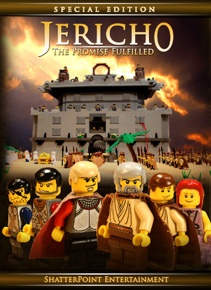
joshua-lego

By Jill McClain

God told Joshua that the Israelites were going to use a very unusual strategy to conquer the walled city of Jericho. The Israelites marched around the city once every day, for six days.  Then on the seventh day they marched around the city seven times.  On the seventh time around the city they played their trumpets and shouted, and then miraculously the walls surrounding the city came crashing down, so the Israelite army could enter the city and destroy every living thing in the city, except for Rahab and her family. Rahab was spared because she had faithfully assisted the spies that Joshua had earlier sent to the city. God had his people conquer the city of Jericho in such a unique way, so that there would be no doubt that God had been in control and caused the victory.  Do you have a something in your life that seems too large or difficult to overcome?  Do you need to turn your issue over to the Lord and let him help you win the battle?  Listen carefully for signs from God about how you should proceed with your problem.  We read earlier in Joshua that God wants you to remain strong and courageous in your battles against the world and that he will never leave your side.  However, just like the Lord’s army had to obediently march around the city for seven days, there may be actions that the Lord requires of you before you can be victorious in your own battles.

Following the successful battle at Jericho, Joshua sent a portion of the army on to the region of Ai.  There were only a few people living in Ai, so Joshua assumed that it should be an easy victory for his army. However, the Israelites lost 36 of their soldiers in the battle and were quickly defeated and chased out of Ai. At first, Joshua was devastated by their loss and could not understand why God would allow his chosen people to face defeat. Then God revealed to Joshua that one of the Israelites, Achan, had stolen plunder from Jericho for himself, despite God’s specific commands to destroy everything in Jericho. God allowed the Israelites to be defeated at Ai because Achan had been deliberately disobedient.   Are there sins in your own life that you need to seek repentance for?  Are there areas in your life that you need to turn over to God so that you can experience all of his blessings?


(Note from GROW16BibleReading – feel like some Saturday morning cartoons – here’s a 60 second story of The Battle of Jericho from Taylormation – Enjoy!

If you were making the cartoon, what would you have included?  AND – how can you use each and every one of your talents to please God and spread His Word? )

https://www.youtube.com/watch?v=94ltRveQVJY


Learning From Joshua (Joshua 1-4)

Friday, September 23

josh-1-8-pic

By Jill McClain

With the death of Moses, Joshua becomes the new leader of God’s chosen people.  The book of Joshua records Israel’s conquest of the Promised Land.  God quickly reminds Joshua that it is imperative that Joshua and his people remain faithful and then they will succeed in finally entering Canaan.  “Keep this Book of the Law always on your lips; meditate on it day and night, so that you may be careful to do everything written in it. Then you will be prosperous and successful.” (Joshua 1:8)  God has lovingly given us a book that contains instructions for how we are to live our lives.  However, it is up to each of us to thoroughly study his word day and night, so that we will know how to do just as it says, not veering to the right or left of what has been written.  Hopefully, these devotions have encouraged you to read your Bible daily. Meditating on the Bible is an important first step, but that must be followed up with obedience to all that is taught in God’s word.

Leading God’s people out of the desert that they had been wandering in for 40 years was a challenging assignment.  Yet, Joshua bravely and with calm determination stepped up and became the strong leader that the Israelites needed.  Joshua was able to act courageously because for years he had witnessed God’s faithfulness and he knew that God would always be with him.  “Have I not commanded you? Be strong and courageous.  Do not be afraid; do not be discouraged, for the LORD your God will be with you wherever you go.” (Joshua 1:9)  What is something that you are facing that requires you to be strong and courageous?

In chapter two Rahab stepped out in faith to help the spies.  Rahab had heard how God had led his people out of Egypt and through the Red Sea.  She had heard stories of God’s protection of his people, and she knew that he must be the one, true God.  Because of Rahab’s faith, God was able to use her, a prostitute from Jericho, to help keep his people safe.  Think of a way that God may be calling you to step out in faith?

In the following chapter, God caused the Jordan River to stop flowing so that his people could walk across. He used this miracle to demonstrate once again that he was with his people.  Then in chapter four the people created a memorial from stones to serve as a reminder of God’s always present help.

joshua-1_9