
Gross – and Great – in 3 Chapters (Leviticus 15-17)

Thursday, August 25
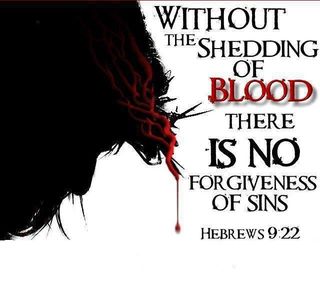
shedding of blood
When my kids go off to school, I have a home daycare and preschoolers invade the house.  Recently I was babysitting four preschoolers – three of whom were potty-training at the same time.  So, I do have some experience with bodily discharges (the topic of Chapter 15).   I found myself saying all sorts of things I never imagined I would need to say about not touching this or that or sitting here or there.  It was for very good reason that we removed the bathroom rug for several months.   And, there was no limit to the amount of times I made them wash their cute little hands – hands which didn’t even look dirty to them.  As naïve children, my preschoolers failed to see the dangers of unclean habits and the reasons and ways for cleaning themselves.   The Israelites had similar issues.  And, might we, too – at least when it comes to spiritual cleanliness?

Perhaps it is said best in Leviticus 15:31: “You must keep the Israelites separate from things that make them unclean, so they will not die in their uncleanness for defiling my dwelling place, which is among them.”  Our God is STILL a holy, CLEAN God who dwells among us and requires us to be clean to come into His presence.  Strive for purity (In your thoughts, words, attitudes, motives and actions).  When you “mess yourself” – realize the danger and harm of your sin.  Instead of making excuses – take the needed steps for cleansing.  Jesus Christ offers the best spiritual sanitizer possible.

Chapter 16 gives detailed directions for the yearly Day of Atonement – when “atonement (reconciliation) is to be made once a year for all the sins of the Israelites.” (16:34).  This will be the sacred time when the High Priest enters the Most Holy Place, and in addition to sin offerings and burnt offerings (which were also done regularly throughout the year) – a scapegoat will be released into the desert.  Wikipedia defines scapegoating as, “the practice of singling out any party for unmerited negative treatment or blame”.  Sure sounds just like what would be awaiting the Son of God so many years later.

In Chapter 17 – where the eating of blood is forbidden – we see yet another foreshadowing of Jesus’ purpose (atonement) and means to the end (death).  Verse 11 says, “For the life of a creature is in the blood, and I have given it to you to make atonement for yourselves on the alter; it is the blood that makes atonement for one’s life.”

We are dirty, sinful people – just as God’s people have been all through history.  Realize the danger of your unclean habits (sins).  Be sanitized.  Thank God He has made a way for us to be purified and reconciled to Him.   Thank you, Jesus, for being the scapegoat and the perfect sacrifice so we can come before The Almighty!

Marcia Railton
UNintentional Sin – is STILL Sin (Leviticus 5-7)

Monday, August 22

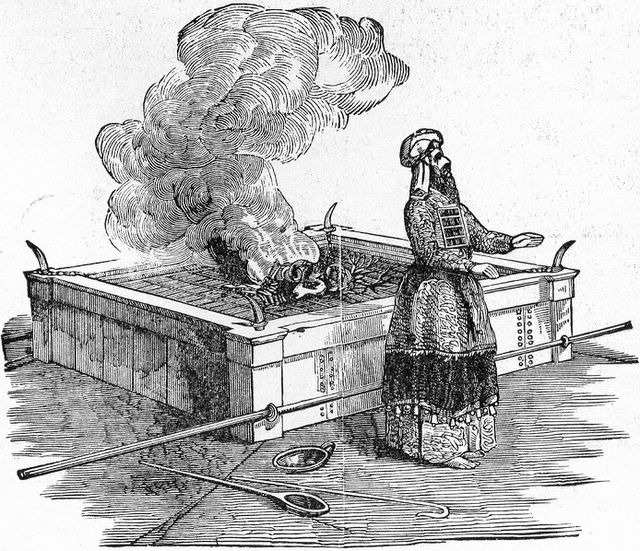
High_Priest_Offering_Sacrifice_of_a_Goat
One of the first phrases that caught my attention today was “ceremonially unclean”.  God gave the Israelites examples of what would be ceremonially unclean (in this case touching dead unclean animals or human uncleanness – from Leviticus 5:2-3).  These rules obviously weren’t given to spoil all their fun, but to help keep them safe and healthy.   Today we are well aware of some of the various illnesses that go ‘hand and hand’ with touching dead animals and not washing properly.  His rules are for our benefit.

I wonder what might be included if God were to give his people an updated 2016 version of his “ceremonially unclean” list.  Would processed foods or refined sugar make the list?   What about pornography and violent video games?  Are there habits and choices you are making that need to be changed because they are harmful and spreading illnesses through your body and brain?  Would other generations before or after ours be shocked at how we are allowing filth and hazardous materials (as dangerous as unclean carcasses) into our homes, mind and bodies?

The other phrase that stood out for me was “unintentional sin.”  I remember Rick McClain speaking at FUEL of the huge danger in “deliberate sin”.  Hebrews 10:26 says, “If we deliberately keep on sinning after we have received the knowledge of the truth, NO sacrifice for sins is left”.   And, yes, this was written WELL after Jesus died for “all” sins!   This deliberate sin sounds like some serious business.  But, what about a “sin” that I don’t deliberately commit – that can’t be so bad, right?  I became a bit more curious about these “unintentional sins”.   Leviticus 5:17 says, “If a person sins and does what is forbidden in any of the Lord’s commands, even though he does not know it, he IS guilty and WILL be held responsible.”   So, it appears both deliberate and unintentional sins are SCARY stuff!   How can I strive to do a better job of avoiding deliberate and unintentional sins?

I am reminded of verses such as “Watch your life and doctrine closely” (I Tim 4:16).   I need to do a better job of studying myself, checking my motives, actions, attitudes, thoughts and speech.   I can search myself for unintentional sins that I didn’t even know were there (perhaps jealousy, selfishness or greed) as well as quickly exposing and dealing with deliberate sins.  Then I can ask for forgiveness (accepting Christ’s perfect sacrifice without defect) and make the needed corrections.  Also, it can be very helpful if I am open to receiving correction and sound advice from wise brothers and sisters in Christ.  In this way, the body of Christ acts as a royal priesthood – urging God’s people to live holy lives.

Be set apart this week!  Keep Reading Leviticus!
–Marcia Railton