
God’s Best Way

 2 Samuel 5:11-6:23

1 Chronicles 13-16

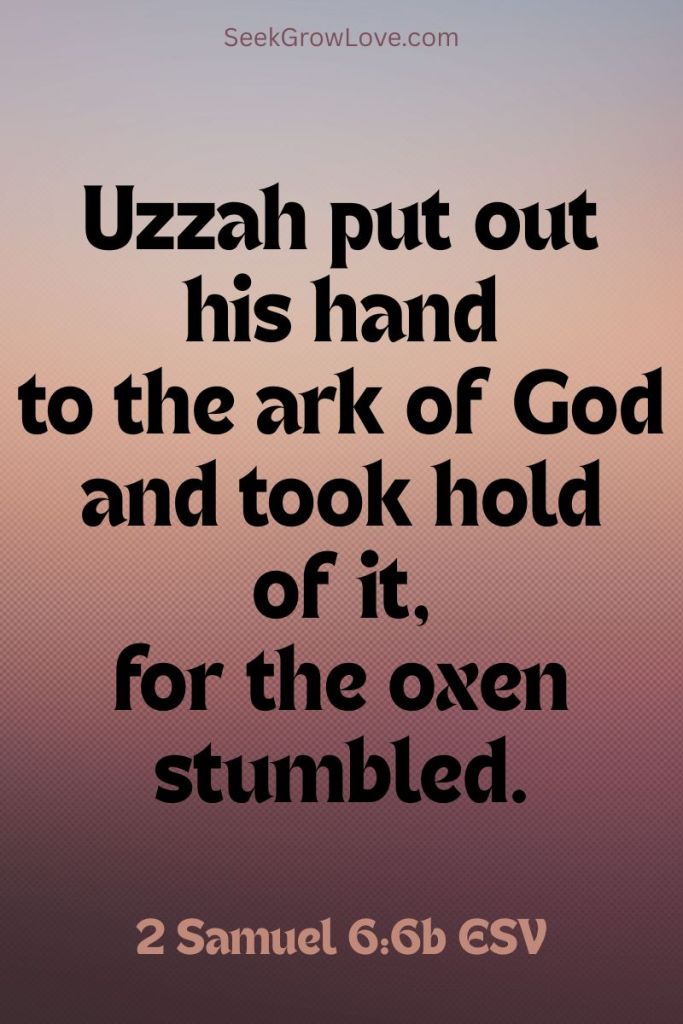
2 Samuel 6 is one of those stories in the Bible that never sat well with me in my youth.  Here, we have a scene of a joyful celebration as the ark of the Lord Almighty is brought to its rightful home in Jerusalem.  We’re singing, we’re dancing, we’re having a grand time.  Suddenly, the oxen stumbles, and the ark begins to fall.  Here, we have Uzzah, who reaches out to steady the ark to keep it from falling. See, to me, that seems like a noble thing to do.  After all, we’d hate for the ark to fall to the ground, wouldn’t we? Yet, God strikes him dead for this act.  Come on…the guy was just doing the best he could do!  It always seemed to me that God acted unfairly to someone who seemed like they were trying to do a good thing.

You know, now that I think of it, I tend to have that same attitude toward acts of disobedience in my life. Sure, I know that sometimes I do wrong things, but if my intentions are good, isn’t it ok? I know that God doesn’t want me to lie, but if my lie has a good outcome, wouldn’t God say that’s ok?  I know I’m not supposed to touch the ark, but if I keep it from falling, wouldn’t that be ok? Unfortunately, that’s not the way it works. 

If you’ve been following along with the Bible readings, you’ll remember that in 1 Samuel 15, we learn that to God, “it is more important to obey than to sacrifice.”  God prefers faithful adherence to His commands more than grand gestures performed according to our own understanding. I think God would rather have had Uzzah follow his commands, treating his instructions with respect and reverence than try to do what was right in his own eyes.

And another thing, the disobedience didn’t start with him reaching to steady the ark.  Uzzah wasn’t even supposed to be one of the men transporting the ark as he wasn’t a Kohathite (the Levites specifically instructed by God to be in charge of this task). Not only that, but they weren’t even transporting it the right way. They made a cart for the ark, but God gave specific instructions for how to carry this thing around, and a cart was not part of the deal!  Things could have been so different if only they had done things the way God said.  

What we learn from Uzzah and the mistake that he made is to pursue obedience even when our own understanding leads us a different way. In this life, you will be drawn toward doing things that go against God’s teachings.  Even if it doesn’t make sense, God’s way is always the best.

-Hope Fletcher

Reflection Questions

  1. How do we avoid getting caught up in doing things our own way instead of God’s way? How do we learn what God’s way is? What are the differences between my way and God’s way?
  2. How does Uzzah show us our need for a Savior? How important is Jesus’s death – and resurrection?
  3. The chronological Bible reading plan has many benefits – but if you are looking for some RESURRECTION inspiration today – here are several past SeekGrowLove devotions to choose from.

His Tabernacle

Numbers 7 cain

During the building of the tabernacle, the tools and utensils were not holy. Everything was normal cloth or gold material until they were consecrated. Once Moses anointed and consecrated the tabernacle and the things that went in it, they were no longer normal objects.  Instead, they were objects of God. If God can turn a simple lamp stand into a holy object, then what can He do with us? We can be made holy and set apart by God to serve a great purpose. As we have said many times, through the book of Numbers God seeks holiness for Himself and His people. This desire didn’t disappear when Jesus came into the world. God desires for us to be holy. Although we sin, God can redeem us just like He did with the tabernacle in Numbers 7.

There is a moment after the tabernacle is consecrated that the people of Israel begin to bring sacrifices and gifts.  Among the gifts are six carts and 12 oxen that are going to be given to the Levites. Carts and oxen make moving things easier.  This would be a pretty handy gift during the time of the wilderness as they move everything they have across the desert by hand! In verse 9, we see the sons of Kohath weren’t given any of the oxen and carts – what kind of rotten deal is that? Why didn’t any of the carts go to the sons of Kohath? The sons of Kohath were in charge of carrying the holy objects on their shoulders. Each heavy object in the tabernacle, including the Ark of the Covenant, was built with places for poles to slide into so that they could be carried by pole on the shoulders of the sons of Kohath. You may remember the story of Uzzah in 2 Samuel 6 when the Ark was going to be moved back into the city of Jerusalem after being gone for a long time. Notice in 2 Samuel 6:3 they placed the Ark, “on a new cart”. This was a big no-no. The Ark was not supposed to be put on a cart, but instead carried on poles like we see in the law. Then what happens? The Ark begins to fall off the cart on the way into the city and Uzzah, who was just trying to help by catching the Ark, died right as he touched it. God’s holiness can’t be infringed upon. Albeit easier, you don’t put the Ark on a cart. This is why no carts where given to the sons of Kohath. They didn’t need carts to assist in the moving of the holy objects of the tabernacle. Isn’t it interesting how the Bible connects in such unique places? Who knew that around 400 years after God gave the command to not move the holy objects on carts that Uzzah would learn the severity of breaking the command.

The rest of chapter 7 sound maybe like Pete and Repeat wrote it. These aren’t particularly exciting verses and the gifts of each tribe are the same. Between verse 10 and 83, the tribes, their gifts and their offerings are listed. After 12 days of offerings the total was: 12 silver dishes, 12 silver bowls (a total of 2,400 shekels of silver), 12 gold pans (a total of 120 shekels of gold), 12 bulls, 12 rams, 12 male lambs 1year old, 12 grain offerings, 12 male goats, 24 bulls for peace offerings, 60 rams, & 60 male goats for peace offerings (a total of 192 animals). The Israelites would have given a total of around $16,000 in silver and around $71,500 in gold. What a great out pouring from the sons of Israel to God in celebration and honor of the new tabernacle.

After the anointing of the tabernacle and 12 days of offerings, one of the coolest things I can imagine happened to Moses in verse 89. God spoke to Moses from above the Ark of the Covenant. Finally, after all the effort that has gone into getting the Israelites out of Egypt, God now has a place to dwell with His people. The time has come when God speaks to Moses from among His people. No longer does Moses have to travel to the top of a mountain to speak to God. God has moved even closer to His people today. We don’t have to travel to a temple in Jerusalem to be with God because, as we see in the New Testament, we are God’s temple (1 Corinthians 6:19). God can now dwell among us in a more personal way; He has moved into the hearts of His people. We have been anointed and sanctified by the blood of Jesus to become the new temple that God dwells in. We see an ever moving forward march by God to be closer to His people. It started with the tabernacle, then into the hearts of men in the time of the New Testament and now. In the future, we have the hope of God dwelling with us in person in the kingdom! He is with us now in the power of the Spirit that moves among us but, at the time of the restoration of all things, God is going to be with us like it was in the garden of Eden. Revelation 21 says that God is going to dwell among men. There is no part of the Bible without significance. All of it is connected because all of it is the word of God. God’s desires don’t change and He desires to be with us. The creator of the universe, the creator of the estimated 1,000,000,000,000,000,000,000 stars wants to be with you. To me, the realization of this fact is humbling and inspiring.  Thank you, God!

Josiah Cain


Today’s Bible reading can be read or listened to at https://www.biblegateway.com/passage/?search=Numbers+7&version=NIV

Tomorrow’s Bible reading will be Numbers 8-10 as we continue the 2020 Chronological Bible Reading Plan

The King is Coming (II Samuel 4-7)

Wednesday, October 19th

2-samuel-7-28-pic

Nathaniel Johnson

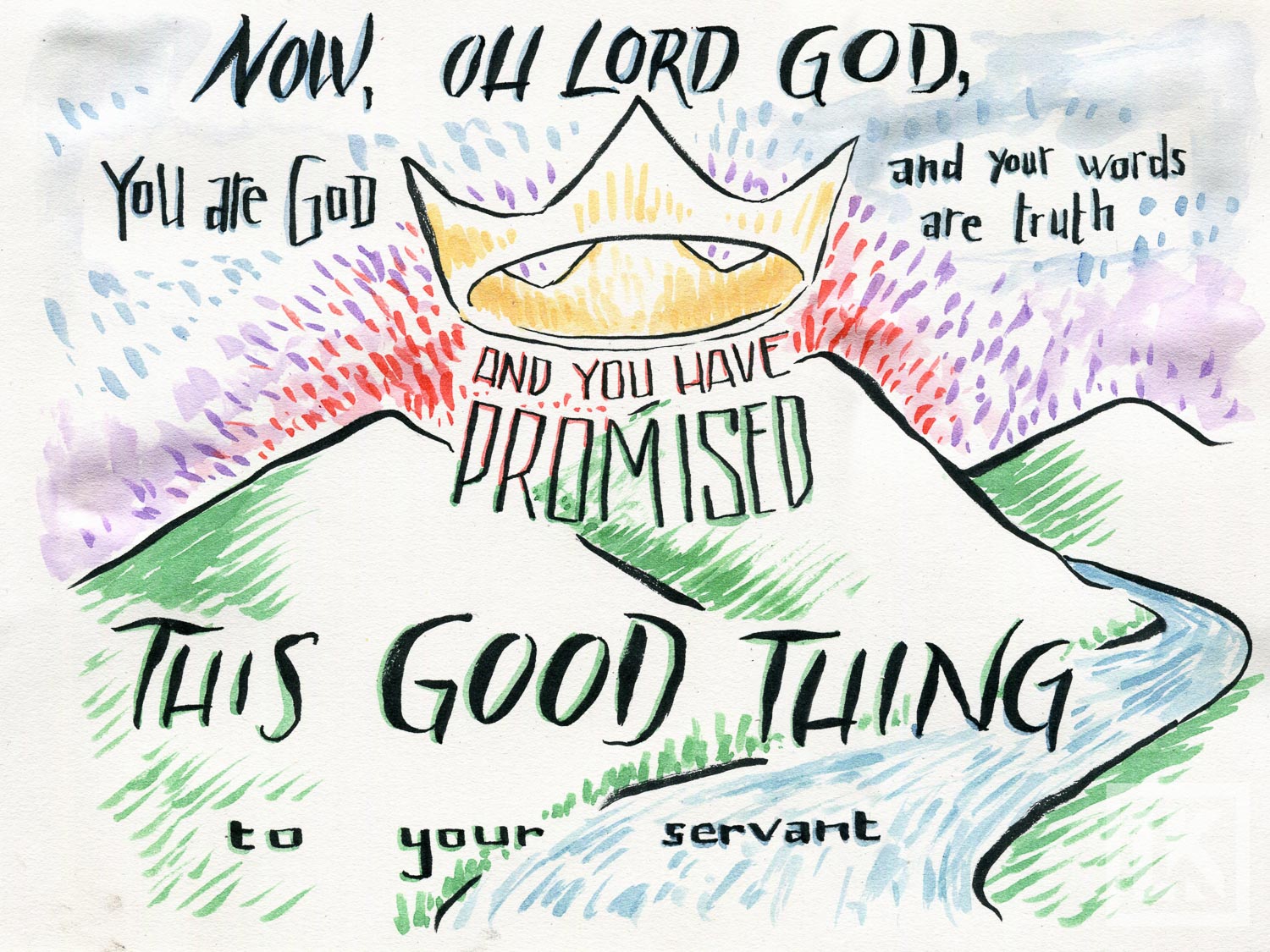
What is going on? Why was a man struck down for trying to keep the ark from falling? It may seem odd to us that the God of Mercy gave Uzzah only one chance here. I’m sure he had the best of intentions but we know that God’s judgement is just (1 Thessalonians 1:5). I think there’s good reason that’s about to be revealed in chapter 7. Even though Uzzah died, we need to remember that we serve a God who has power over death and that death is not the end. One chapter after Uzzah was struck down, God makes an interesting promise to David. He promises that David’s offspring will be the son of God, he will be punished by the rod of men and that his kingdom will endure forever. Does that sound like any one we know? God is telling David about the coming of Jesus. The same man who came and broke the power of death. He died and lived again. Just as Jesus did, so will we and Uzzah because all will stand before the Judge (2 Corinthians 5:10). David sums this all up perfectly in verse 28: “O Sovereign Lord, You are God! Your words are trustworthy.” Rejoice, for God’s words are trustworthy! Jesus came once and he will come again!