
Obadiah
Psalm 82-83
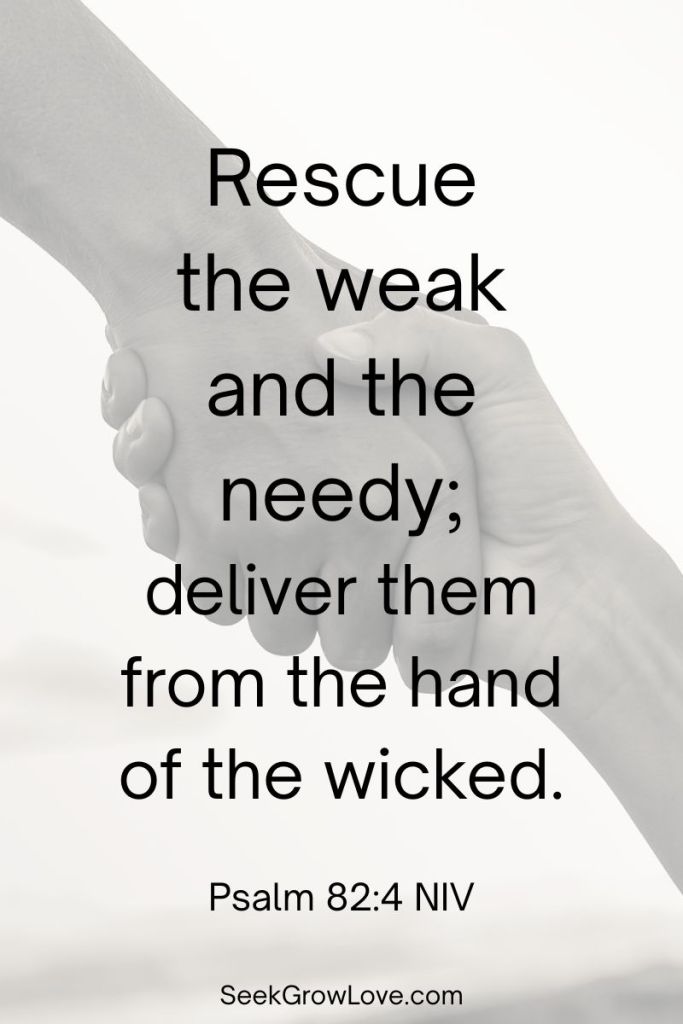
Many of the Psalms point to our hearts and minds bringing praise, glory, and honor to God. Some also provide instruction for living, as we find in Psalm 82. Psalm 82:3-4 says, “Defend the cause of the weak and fatherless; maintain the rights of the poor and oppressed. Rescue the weak and needy; deliver them from the hand of the wicked.”
Providing help and justice for those in need is a theme we find throughout the Bible. The Mosaic law supports this (Deuteronomy 10, 15, 22), the prophets support this (Isaiah 58), the gospels support this (Matthew 25, Luke 10), and the New Testament letters support this (James 1, I John 3). As we see this theme come up in Psalm 82, we should recognize this does not stand alone within Scripture, but fits within the context of the whole.
Psalm 82 verses 3 and 4 stand in stark contrast to verse 2. Verse 2 asks, “How long will you defend the unjust and show partiality to the wicked?” We have a propensity to long after our own gain, which sometimes causes us to support the unjust and wicked. This should not be the case. Instead, we should defend the weak and fatherless, maintain the rights of the poor and oppressed, and rescue the weak and needy.
The underdog story makes for great sports. The 1980 “Miracle on Ice” when the USA beat the Soviet Union in Olympic Men’s Ice Hockey. The 1983 upset of North Carolina State over Houston for the NCAA Men’s College Basketball Championship. Rulon Gardner, who won gold in wrestling in the 2000 Olympics over heavily favored Aleksandr Karelin of Russia. These underdog stories are easy to spot, since each team or individual was clearly not favored to win. However, in our lives, I believe it is much more challenging to spot the underdogs in life around us.
Who are the people we should be working so hard to defend, rescue, and maintain their justice? Are they as easy to spot as the sports underdogs? Maybe it is easy to see they are poor, or weak, or needy. Maybe they are the people who are clearly ‘outcasts’ within our social settings because they don’t match the norms of interaction. However, maybe they are a little harder to see, but we are still called to defend, rescue, and maintain their justice. I think of our friends who are close talkers, who interrupt when others are speaking, or who struggle with social interactions. Do we provide for them defense and rescue, or do we relegate them to solitude and the outskirts of our attention? Sometimes it’s easy to see the needs of those we can help and other times it is far more challenging.
Putting Psalm 82:3-4 in action is more than giving money to a service ministry. We can give out of our abundance but we can also show kindness to those in need around us every day. Be encouraged to look for those in need in more diverse places around you, or in more diverse people around you!
-Michael Cisler
Reflection Questions
Who is someone you see regularly who may be weak, oppressed, or needy in ways other than financial or physical?
How can we provide support and defense for those who are socially awkward around us?
 Seek Grow Love