
*OLD TESTAMENT: Isaiah 30 & 31
POETRY: Song of Songs 5
NEW TESTAMENT: Hebrews 11
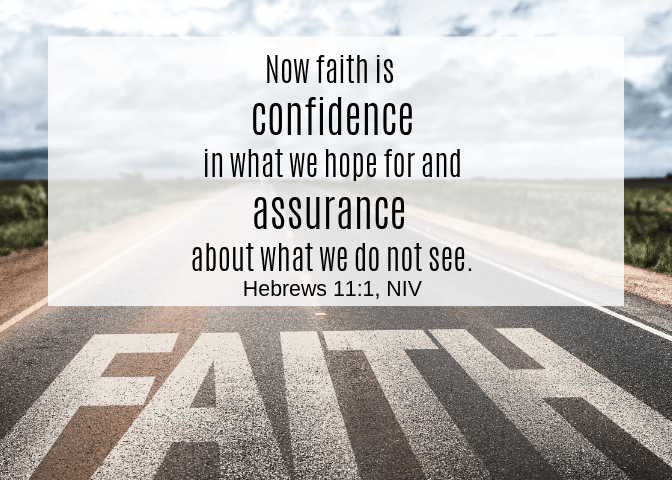
By faith, everything is made better. Faith is the certainty of things hoped for, a proof of things not seen that were promised or spoken of by God. By faith, the people of old gained approval by God.
Throughout scripture, we have examples of God’s people who lived by faith, fulfilling their role in the covenant that God made with them, because they believed that God was faithful to fulfil his promises. There were some promises that were fulfilled in their time, according to the specific covenant God made with them (e.g., the Abrahamic covenant, the creation covenant, covenants of blessings, or children, or land, etc..), but all the faithful examples listed in this chapter died in faith, without receiving the promises of the New Covenant, but having seen and welcomed them from a distance.
They were people who knew that this world (the current age) is not their home. They knew they were strangers, looking for a better home, a heavenly one (that will come down to earth), whose maker was God.
By faith, Abraham offered up Isaac. He knew his God was faithful to his promise that through Isaac, the promised seed (Jesus) would be born. That can’t happen if his son is dead. So Abraham had faith that God was able to raise people from the dead.
By faith, Moses chose to suffer with his people, rather than to indulge in the temporary pleasures of sin that came with the territory of being a grandson to a rich Pharoah. He considered the shame of Messiah greater riches than the treasures of Egypt, because he was looking to the reward.
There are so many examples of faithful people of God mentioned in this chapter. If you’re lacking in faith, read about them, you won’t be disappointed! The point in reminding the Hebrew readers of this I believe, was to teach them, or to remind them, that the people of old were faithful to the end of their lives, to a God they believed was faithful in keeping his promises—even the ones they had not yet received prior to dying, and thus became pleasing to God. They were chosen because of their faith, enduring until their end.
Yet, God wasn’t willing to establish his kingdom with them in their time, because he wanted them to be with the Hebrews in this letter. By extension, he wanted them to be with us. He didn’t want them without also having you! That’s the God you chose to serve!
The promise of a better hope, the one obtained now through the New Covenant, spoken of in the law and the prophets of old, is for those pleasing to God – the faithful; the chosen. It’s for those who have gained approval through their faith (their obedience to whatever covenant God made with them because they believed he was faithful), who are made perfect with those of us who chose to enter the New Covenant with God through Jesus. The better promises are all through Jesus, and they’re available for everyone who seeks God through him, choosing God back through their faith.
“6 And without faith it is impossible to please Him, for he who comes to God must believe that He is (exists) and that He is a rewarder of those who seek Him.
-Juliet Taylor
Reflection Questions
1. It is common for people to say, “Have faith,” but I don’t think people should have faith in something that God never promised them. The examples in this chapter seem to reflect that. What do you think?
2. Whose faith recorded in this chapter do you admire most, and why?
3. We are to have faith in promises not yet received in this age too. How will you keep your faith until the end?
 Seek Grow Love