
OLD TESTAMENT: Nahum 1-3
POETRY: Psalm 119:137-144
NEW TESTAMENT: Revelation 11
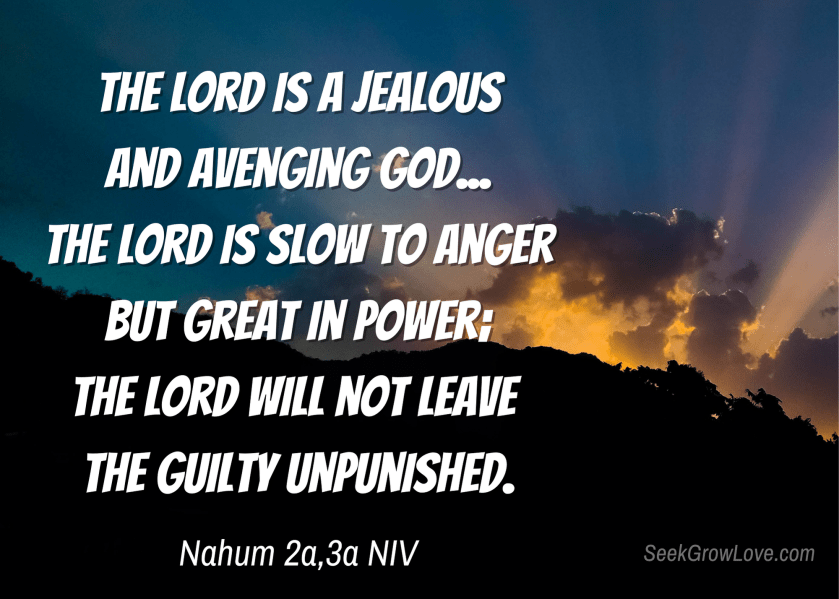
Nahum 1:2-3 (LEB):
“A jealous and avenging God is Yahweh;
Yahweh is avenging and has wrath.
Yahweh takes vengeance on his adversaries
and reserves wrath for his enemies.
Yahweh is slow to anger and great in power,
and he will not leave the guilty unpunished.
In whirlwind and storm is his way,
and clouds are the dust of his feet.”
Psalm 119:137-144 (LEB):
“Righteous are you, O Yahweh,
and upright are your judgments.
You have commanded your testimonies
in righteousness and exceeding faithfulness.
My zeal has consumed me,
because my enemies have forgotten your words.
Your word is very pure,
and your servant loves it.
I am small and despised,
yet I do not forget your precepts.
Your righteousness is an everlasting righteousness,
and your law is true.
Trouble and anguish have found me out,
but your commandments are my delight.
Your testimonies are righteous forever;
give me understanding, and I will live.”
Revelation 11:15-16 (LEB):
“And the seventh angel sounded the trumpet,
and there were loud voices in heaven, saying,
‘The kingdom of the world has become the kingdom of our Lord and of his Christ,
and he will reign forever and ever!’
And the twenty-four elders who were seated before God on their thrones
fell on their faces and worshiped God.”
The book of Nahum reveals God’s sovereignty over the nations and His fierce justice against those who oppose Him. Specifically, it proclaims God’s impending judgment against Nineveh, a city known for its wickedness and cruelty. The opening verses declare God as a “jealous and avenging God,” emphasizing His commitment to righteousness and the protection of His people. God’s slowness to anger highlights His patience, but His ultimate justice is assured; the guilty will not escape unpunished.
Nahum reminds us that while God is loving and merciful, He is also just. His judgment against Nineveh serves as a reminder that evil cannot persist forever without consequence. This gives us hope, especially in a world where injustice and oppression often seem rampant. As we witness suffering and wrongdoing, we can trust in God’s righteous judgment and His commitment to setting things right in His perfect timing.
In Psalm 119, the psalmist expresses a deep love and reverence for God’s law and testimonies. The declaration of God’s righteousness sets the foundation for understanding His judgments. The psalmist’s zealous love for God’s word is driven by the reality of his enemies and the challenges he faces. Despite being small and despised, he finds delight and strength in God’s commandments.
This passage encourages us to anchor ourselves in God’s word, especially during trials. The psalmist recognizes that while trouble and anguish are inevitable, God’s commandments are a source of delight and guidance. When we immerse ourselves in Scripture, we find wisdom, comfort, and a reminder of God’s faithfulness. The law becomes a light in our darkness, guiding us toward a path of righteousness and understanding.
Revelation 11 culminates in the triumphant announcement of God’s kingdom. The seventh trumpet sounds, proclaiming that the kingdom of the world has become the kingdom of our Lord and of His Christ. This proclamation signifies a pivotal moment in redemptive history—where God’s reign is fully established, and the powers of darkness are defeated.
The response of the twenty-four elders, who fall on their faces in worship, reflects the rightful reaction to God’s sovereignty and majesty. In this vision, we see the culmination of God’s justice and the fulfillment of His promises. As believers, we are invited to participate in this celebration, anticipating the day when God’s kingdom is established forever.
-Jeff Ransom
Reflection Questions:
How does the concept of God’s jealousy and justice in Nahum impact your understanding of His character? In what ways does this knowledge provide comfort during difficult times?
Reflect on the importance of God’s word in your life. How can you cultivate a deeper love and delight for Scripture, especially when facing challenges or opposition?
How does the promise of God’s kingdom in Revelation encourage you in your daily walk with Christ? In what ways can you live in anticipation of the kingdom?
Consider the response of the twenty-four elders in Revelation 11. How can you incorporate worship into your daily life, acknowledging God’s sovereignty and majesty?
 Seek Grow Love