Draw Near to Listen

Ecclesiastes 5-6

Psalm 104

1 John 2

-Devotion By Paula Kirkpatrick (MN)

One of my favorite verses in the Bible is Psalm 46:10. “Cease striving and know that I am God.  I will be exalted among the nations, I will be exalted in the earth.” (NASB) This verse daily reminds me that all my planning and busywork, which often brings me stress, fades in the knowledge that God is sovereign in the world’s events and should be sovereign in my life as well.  “Striving” is a good word description of my often, feeble attempts to meaningfully serve Him.  And yet, I am drawn to the NIV version of the first part of this verse. 

“Be still, and know that I am God.” (NIV)

Be still.  Not moving. Quiet.  Then, you can be aware of God’s presence.  Then you can be aware of His vibrant touch in the world that surrounds you. 

In Ecclesiastes 5:1-7, the writer encourages this same reverence as God’s people went to the house of God.

“Guard your steps as you go to the house of God and draw near to listen rather than to offer the sacrifice of fools; for they do not know they are doing evil. Do not be hasty in word or impulsive in thought to bring up a matter in the presence of God. For God is in heaven and you are on the earth; therefore let your words be few. For the dream comes through much effort and the voice of a fool through many words.  When you make a vow to God, do not be late in paying it; for He takes no delight in fools. Pay what you vow!  For in many dreams and in many words there is emptiness. Rather, fear God.” (Ecclesiastes 5:1-3, 7)

Guard your steps, draw near to listen, do not be hasty.  Why?  Because God is in heaven and we are on earth.  Let our words be few.  Be still! 

The Communicator’s Commentary, Ecclesiastes, Song of Solomon” by David A. Hubbard, page 131, paragraph 2, explains more on this passage as it relates to the Israelite nation. 

“‘The sacrifice of fools’ was empty sacrifice, going through the ritual but missing its meaning.  What was the basic purpose of the offerings God required?  It was communion with God expressed by ‘listen’ which means virtually to obey, and ‘draw near’ which frequently describes the intimacy between God and those who go to Him for worship and fellowship.  The sacrifices dealt with the major human needs.  They brought forgiveness…they expressed thanksgiving…they fulfilled vows.  Listing them, was an essential requirement if the sacrifices were to have any meaning.”

As verse 7 says, in many words there is emptiness.  The last three words of the verse declare the remedy.  “Rather, fear God.”

God desires a relationship with us. Yet, in that bond, He deserves our reverence.

Open your mind and your ears to God’s message for you.  Come before Him in humble devotion.  He has much to share with you.  Just listen.  

Reflection Questions

  1.  How do you listen to God?
  2.  In what ways, do you show reverence to God? 

Prayer

Dear God in Heaven – Thank you for creating, loving, sustaining, guiding us on Earth. I want to praise You, revere You, fear You, love You, serve You, and follow You, Your Word and Your Son all the days that You give me. Help me to listen to You.

The Peaceful Tongue

Job 22-24

Psalm 98

James 3

-Devotion by Makenna Landry, née Cisler, a 2021 ABC graduate. Makenna is a licensed pastor of the Church of God General Conference working to service God by teaching His word and supporting His people through all aspects of life. She has two children, a passion for helping people, and loves Disney. She spends her time writing and enjoys playing board games with friends and family. 

Key passage: “But the wisdom from above is first pure, then peaceable, gentle, open to reason, full of mercy and good fruits, impartial and sincere. And a harvest of righteousness is sown in peace by those who make peace.” James 3:17-18 (ESV) 

James 3 starts off by making the claim that not everyone can be a teacher. This is similar to the lesson I wrote on 1 Timothy that not everyone has the right to understand or focus not on scripture but on other things that tickle the ears of the listeners. This warning from James ties into the passage of Job. Job’s friends are trying their best to help Job and Job refutes them at every turn. At the end of Job, we see neither party was in the right. Job and his friends hold an example to us to be careful what we say to others. 

This is why the entire chapter of James 3 is so important. It teaches and guides us on how we can speak to others and what wisdom we should pass along to others. 

Let’s break down the chapter. 

James 3:5 (ESV) says, “So also the tongue is a small member, yet it boasts of great things. How great a forest is set ablaze by such a small fire!”

James is not telling his readers that people should have low self esteem and a bad view of themselves. He warns against pridefully honoring yourself over others. This can be seen more as bragging about your accomplishments instead of humbly celebrating victories. 

James 3:8 (ESV) but no human being can tame the tongue. It is a restless evil, full of deadly poison.

This verse is pretty doom and gloom! It feels helpless and like we are in an endless maze. So the question arises what does that mean? What does it mean that the tongue is a restless evil that cannot be tamed?

You know how sometimes when you stub your toe really hard you cry out in pain. Some people swear others have swear alternatives like “gosh darn it”, “holy cow”, or “great googly moogly” (can you imagine someone actually saying that besides Major Monogram from Phineas and Ferb ha!). All these phrases and words, a lot of us have used in place of curse words. But does that make it good to say it? When I was young and really into the phase of finding alternative expressions from curse words, my mom shared a piece of advice that still shapes how I speak and talk to this day: any word used poorly becomes a curse word. When our intention is to express anger and pain towards an individual or object our words are no longer from God but from the evil that plagues this world. 

No matter how hard one might try not to use the socially deemed words with bad meetings, our heart behind anything we say reflects whether or not the words are bringing glory to God. This might not even be the words we say but the tone we say it in! Our language abounds in ways that we can be rude to others. But, that doesn’t mean we can’t try. We will mess up and we won’t ever be perfect, yet we can be reminded by James to try our best to tame our tongue. 

What are some ways you might be cursing in your life? Do you use curse words, do you use alternative curses, or does your tone reflect one of judgment and anger? What are ways you can work towards taming your tongue?

When we consider shaping the things we say to God, we have to consider what would bring Him glory. That’s why I started the lesson with James 3:17-18. It brings into the view the focus of our hearts and words. Wisdom is not just something we impart to others but something that should be imbued in our very being. Our thoughts, words, and deeds should be done in wisdom. 

From James 3:17-18, what does it look like to have wisdom in the way that we speak?

Psalm 98 is a great reminder of the heart behind our words to God. James is specifically focusing on our words to others, but Psalm 98 can be an example of the heart behind the words we say. 

Have you ever heard someone say, “I can’t sing so I make a joyful noise”? I know many individuals who have said it to me and they are some of the most joyful worshipers I have ever seen. To give them credit they also can sing a lot better than they think.  But worship isn’t about perfection. It’s not about a big band, special lighting, perfect pitch and harmony. 

When we worship God with Him as the focus, we are taming our tongue. The more we align ourselves with God’s goodness, faithfulness, and lovingkindness the more our words are shaped to reflect Him. Singing praise to God fills us with holy thoughts and focuses our attention on the one we should be following. 

Further QUESTIONS TO PONDER:

How can worship help you tame the tongue?

What are ways you can bring glory to God through your words?

How did you relate to the individuals in the book of Job in today’s reading?

PRAY:

Father in heaven may glory be brought to You in my words and deeds. Help me tame my tongue and speak gently to those around me. You have made all things and Your love endures forever. Be gracious to me and show me how to be gracious to those around me. In the name of Jesus Christ, my savior and mediator, amen. 

The Courts of Heaven

*Job 1-3

Psalm 93

Hebrews 6

-Devotion by Jeremy Martin (TN)

            The book of Job offers us insights and understanding in some areas that surpass any other sources: it’s a really good book to study deeply.  Authorship of the book of Job is commonly thought to be Moses by the majority, but as with anything that old there is some debate among scholars.  Job is thought to be the oldest book written in the Bible as well due to it’s linguistic and thematic antiquity, written as a stand-alone book.  It also just happens to be the book that has “my” verse in it,  technically verses: which would be Job 33:14-30 for those of you who are interested (it’s why I’m alive).  That bit is not technically in today’s reading, so no need to look it up unless you’re really interested, or want the extra credit points.

            The thing that stands out to me the most in today’s Job reading is the description of the Courts of Heaven.  This picture of God is one that resonates within me, as a great and omnipotent ruler, sitting on a heavenly throne and being attended to by myriads of the “sons of God” (ie, angels or spiritual beings, heavenly creatures created by and serving God, but not human).   The picture of all of these heavenly beings acting as supplicants before the Almighty, attending to Him like a group of courtiers, and seeking how best to serve and gain favor with their King is just fascinating to me.  I imagine the vying to get nearer, to be favorably noticed, and to advance in the politics of the heavenly realm.  I do not understand it completely, because I’m just a man, but the mental image of it strikes a chord in my heart.  I actually have a theory about the members of the heavenly court, but as it is complete speculation I’ll keep it to myself.  Suffice it to say that it is absolutely understandable to me that the Most High God should have thousands upon thousands of intensely powerful beings in attendance, all seeking how to please the Most High God and gain favor in His courts.

            When God says “Let us make man in our image…” back in Gen 1:26, I think this court described in Job 1 is who He was talking to.  I’ve heard other theories, some better than others, but I tend to lean into this explanation.  Without getting too deep into physics, dimensions, or the nature of God (that’s a very deep speculative pond that we could dive into), we do know a couple things because scripture specifically tells us.  Firstly, God is spirit (John 4:28).  Do we fully understand that?  Of course not, we’re dumb humans: but it’s safe to say that God exists at a whole different level than we do (eg; eternal, omnipotent, omniscient, etc etc).   Secondly, no man has ever seen God (at least His face) directly,  See for clarification Ex 33:20, John 1:18, and 1 John 4:12.  Now this would seem to be contradictory at face value to some specific interactions that men have had with God at different times, until you understand the “law of agency” or “shaliah”.  Basically that’s just a fancy way of saying “God interacts with His creation through designated agents”.  Not exclusively mind you, but in large part.

            Let me give you what (I believe) is the first example of this in scripture.  If you flip over to Ex 3:2-4 the law of agency (or, shaliah) is clearly shown for the first time (although it can be implied in a number of earlier interactions in Gen) by comparing and contrasting Ex 3:2 (“And the angel of Yahweh appeared to him in a blazing fire from the midst of the bush“, LSB) with Ex 3:4 (“And Yahweh saw that he turned aside to look, so God called to him from the midst of the bush“, LSB).  In the above example, the angel of Yahweh is addressed as Yahweh.  In Jewish culture “the one who is sent” speaks with the full authority of the sender, so it’s absolutely kosher to address the angel of Yahweh as Yahweh, but it’s caused some confusion among modern non-Jewish readers because we didn’t understand the culture or the context properly.  This is also exhibited in Ex 23: 20-21 when God says to listen to the angel because “My name is in him” (ie, the angel has been granted the authority to speak on God’s behalf), and repeatedly throughout the book of John when Jesus explains (about 40 times) that he has been sent, and further explains that the words he speaks are not his own.  There are innumerable examples of God interacting with his creation through agents in scripture, moving on.  God also interacts with His creation through dreams and visions, and in the purest form, the pouring out of the holy spirit upon flesh.

            Before I dug into this, as a child I had a somewhat solitary picture of God; not the thriving, active, and busy central hub of governance that is described in scripture.  Job 1 is one of many chapters that offer a description of the Courts of Heaven and their functionality.  1 Ki 22:19-22 and 2 Chron 18:18 show the prophet Micaiah having a vision of God on His throne and the entire host of heaven in attendance, deciding on earthly matters.  Daniel 7:9-10 shows a vivid vision of the Ancient of Days on a flaming throne with thousands attending.  Ps 82:1 states that God presides in the divine assembly.  Rev 4-5 depict a throne in heaven with “myriads upon myriads” of angels and heavenly beings praising God and The Lamb (the latter for his obedience to God), and describes a scene of continuous worship and governing.  Zech 3:1-5 depicts a scene reminescent of a Perry Mason courtroom, where Satan accuses Joshua the high priest before the angel of the Lord, who in turn rebukes him.  Rev 20:11-12 depicts the final judgment at the great white throne, where all humanities deeds are weighed and they are rewarded accordingly.  These are all great verses, look them up if you get a chance.

            I love these small peeks behind the curtain, where we get little glimpses of the sovereignty of God, get small nods of understanding as to how just and truly merciful God is, and how holy He is.  Here’s the thing: do you remember the story about when 1 angel (see June 16th devotional for this year) killed 185000 of the most technologically advanced troops of it’s day?  There are myriads upon myriads of those beings, angels or whatever title you want to give them in the Courts of Heaven.  There are at least 3 distinct types of these beings (Seraphim-Isaiah 6, Cherubim-Ez 1, and Living Creatures- described in Rev) in scripture.  We have no idea as to the actual number of them, but each one has the potential ability and power to wipe out an entire army or nation.  Each one of  them has power and wisdom beyond our understanding.  Even though they are different in form and function though, they all have one thing in common, even our Adversary who occasionally makes an appearance at the courts.  Have you figured out what it is?

            They are all subservient to the Most High God.  Every single one of them.  They are mostly described as awaiting His pleasure, to determine how they can best serve the Most High God.  Innumerable beings of immense unfathomable power, all with the bended knee and bowed head to YHWH God, the Creator and Sustainer of all life.  This is the same God, the ruler of the entire universe, the entire multiverse (if such a thing exists), the ruler of all things…who reached out His mighty hand to save me, a tiny insignificant nothing.  Who reached out to save you, even when you were ignoring Him.  It is fiercely humbling, when you consider the scope of His authority and power, that He takes the time to draw you to Him.  He knows you by name, and knows the number of hairs on your head.  He knows you better than you know yourself, and He still loved you enough to send His son to die for you, to cleanse your sin.  Holy God above have mercy, we are completely undeserving of such high favor.

REFLECTION QUESTIONS

Had you ever previously considered the hierarchy and governance of the Courts of Heaven?

Did considering this and some of the other descriptive verses of the Heavenly Courts change how you perceived God?

Have you ever considered just how blessed and highly favored you are that God seeks you?

PRAYER

Father God, Most Holy Creator of all things, who gives life, breath, and all things; thank you.  I am completely undeserving of the high favor you have shown me.  Please forgive me when I fall short, lead me into your will, and help me to be a servant who pleases, in Jesus name, Amen.

I Exalt Thee

Ezra 5-6

Psalm 86

1 Timothy 6

-Devotion by Carla Hardy (MI)

The second part of Psalm 86 is full of verses where David exalts God.

As much as God wants us to come to him with our despair, worries & sadness, he also wants us to come to him with reverence. He is a holy God, worthy of our praise and adoration. 

David says to the Lord:

v. 8 “There is none like you…O Lord…”

v. 10 “For you are great and do wondrous things…”

v. 11 “…unite my heart to fear your name.”

v. 13 “For great is your steadfast love toward me…”

David knew the importance of praising the Lord. He knew that a relationship with the Lord is not a one-way street. God wants a relationship with us, and to have that requires mutuality. We cannot simply keep asking God for His favor, rescue and intervention in our lives without recognizing who He is and what He has done for us. He loves us and would give us anything – and indeed He has! – and for that we should desire to exalt His name in humble gratitude. 

Reflection Questions:

  1. Do you include praise to God in your prayers? If you don’t do that regularly, let me encourage you to do so. He is worthy! 

Prayer:

God, thank you for all you have done and will do for us. You are our creator, provider, hope and in Jesus, our salvation. We owe you everything. Help us to remember that and to acknowledge that before you always. We love you. Amen.

The Slow Collapse

1 Kings 11–12

Psalm 61

1 Corinthians 12

-Devotion by Brian Froehlich (IL)

It is one of the saddest turns in all of Scripture.

Solomon — the man who asked God for wisdom, built the temple, and spoke profound truth — slowly drifted away from wholehearted devotion to God.

1 Kings chapter 11 does not describe a sudden rebellion. It describes a gradual compromise.

One relationship at a time.
One excuse at a time.
One divided loyalty at a time.

Solomon married many foreign women, and eventually “his wives turned his heart after other gods.” The problem was never simply ethnicity. The issue was spiritual influence and divided devotion. The man who once dedicated the temple to the LORD eventually participated in idolatry himself.

That is the terrifying reality of spiritual drift:

Nobody plans to ruin their walk with God.

People usually drift slowly, almost invisibly, until one day they realize they are far from where they once were.

And Solomon’s personal compromise eventually affected an entire nation.

After his death, the kingdom fractured. Rehoboam, Solomon’s son, inherited incredible opportunity but lacked wisdom and humility. When the people pleaded for lighter burdens, he rejected the counsel of experienced elders and listened instead to arrogant young advisers.

His answer was harsh.
His pride was costly.

The result?
The kingdom divided.

Ten tribes rebelled and formed the northern kingdom under Jeroboam, while Judah remained under Rehoboam’s rule.

What David united, Solomon weakened, and Rehoboam shattered.

These chapters are painful reminders that leadership matters. Pride spreads. Compromise spreads. Foolishness spreads. The consequences of one generation’s decisions often impact the next generation deeply.

But there is another tragedy here.

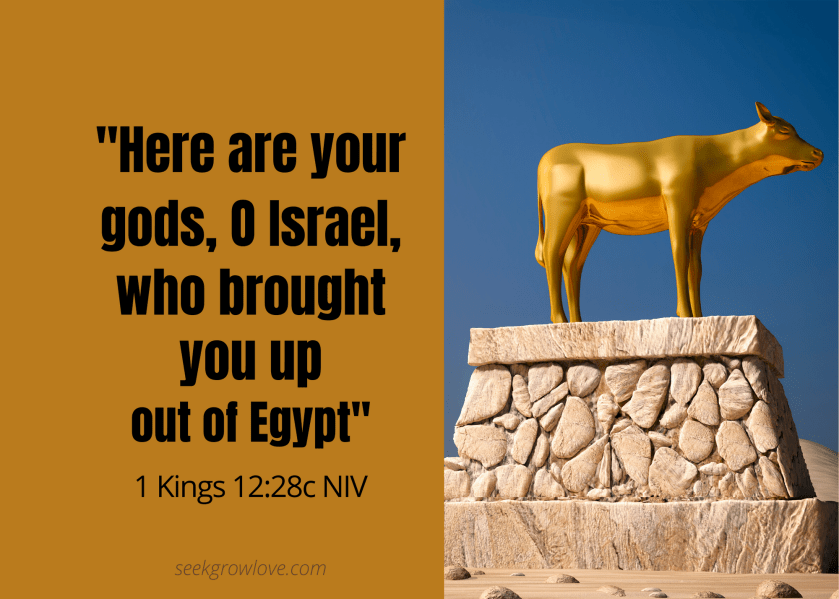
Jeroboam immediately feared losing political control if people continued worshiping in Jerusalem. So he created counterfeit worship centers with golden calves and told the people:

“Here are your gods, Israel…”

It was a recycled sin from the wilderness days under Moses.

Human nature has not changed much.

People still prefer convenient religion over costly obedience.
We still create watered-down substitutes for true worship.
We still reshape God into something more comfortable, manageable, and politically useful.

Yet even amid judgment and division, God preserved His promises.

The kingdom split, but God’s greater plan did not collapse.

The prophets would continue speaking.
The promised Messiah would still come through David’s line.
And God’s future Kingdom would still one day reunite what human sin had shattered.

That future hope matters because every earthly kingdom eventually fractures under the weight of human failure.

But the coming Kingdom of God will not be built upon fragile human wisdom. It will be ruled by a faithful King who will never drift, never compromise, and never fail.

Three Things to Remember

  1. Spiritual collapse usually happens slowly.

Small compromises can eventually reshape the entire heart.

  1. Pride destroys unity.

Rehoboam’s arrogance divided a kingdom.

  1. God’s promises survive human failure.

Even after division and rebellion, God continued moving history toward His coming Kingdom.

Sin rarely looks dangerous in its early stages.

That is why we must guard our hearts carefully.

Because kingdoms usually do not collapse overnight.

They collapse one compromise at a time.

Reflection Questions

  1. In what ways have you seen “Here are your gods, (insert name of your country)…”?
  2. Give an example of when unity has been destroyed by pride.
  3. Consider a sin in your own life. What were some compromises that led to this sin? How can we guard our hearts?

Prayer

Dear Lord, I praise You. Help me learn from Your word. Thank You for Your faithfulness through all the ages and in my life. Show me what You want from me. May I humbly follow You without compromise.

An Incredible Witness

Judges 13-14

Psalm 41

Acts 16

Acts 16:25: “About midnight Paul and Silas were praying and singing hymns to God, and the other prisoners were listening to them” (NIV). I am always deeply moved by this passage and always wonder what those hymns consisted of. According to the Jamieson-Fausset-Brown Commentary, “As the word here employed is that used to denote the Paschal hymn sung by our Lord and His disciples after their last Passover (Mt 26:30), and which we know to have consisted of Ps 113:1-118:29, which was chanted at that festival, it is probable that it was portions of the Psalms, so rich in such matter, which our joyous sufferers chanted forth; nor could any be more seasonable and inspiring to them than those very six Psalms, which every devout Jew would no doubt know by heart.”

Of course I had to rush to read Ps. 113-118 to try and imagine what that might have sounded like. I noticed several lines from these passages that are found in modern-day worship songs like

“From the rising of the sun to the place where it sets,

    the name of the Lord is to be praised.” (Ps. 113:3, NIV)

and

“Give thanks to the Lord, for he is good;

    his love endures forever”. (Ps. 118:1, NIV)

Further down on Ps. 118, I spotted some great words of comfort that no doubt really resonated with the other prisoners:

5 

When hard pressed, I cried to the Lord;

    he brought me into a spacious place.

The Lord is with me; I will not be afraid.

    What can mere mortals do to me?

The Lord is with me; he is my helper.

    I look in triumph on my enemies.

What an incredible witness they were to the faithfulness of God and their faithfulness to God! They were so kingdom-focused that they didn’t dream of taking the opportunity to escape when their shackles fell off. Not only were they a tremendous witness to the prisoners, but to the guard when they refused to escape. Their faithfulness to their God-given mission resulted in the guard and his household becoming believers. Praise in the midst of hardship is a recurring theme in this week’s readings. Many are watching us and listening to us and we have the opportunity to be a great testimony by how we react to our trials and struggles. Do we reflect the faith of Paul and Silas?

Reflection Questions

  1. When faced with a difficult (or worse) day, what are some of your first responses? Are there times you let worry, fear, complaining, blaming, self-pity, negativity, shutting down, lashing out, or other harmful responses take over?
  2. How might praying, and singing hymns and worship songs (especially those created from Scripture, so I will even add recalling and reading the Bible) be helpful to you? And beneficial to those around you?
  3. Do you reflect the faith of Paul and Silas? What could you commit to working on this week to boost your faith and your testimony of God’s faithfulness, even when your life has some challenges along the way?

Prayer

Dear God, Thank you for being a faithful God. You do not desert Your children. I am sorry for the times I have neglected to turn to You first with prayer and worship and filling my mouth and mind and heart with Your perfect words of hope, comfort, righteousness, correction, mercy, love and faithfulness. Help me see that You and all of the good gifts You have already supplied are sufficient for my needs, even on days I experience trials. May I forever be a faithful witness of Your faithfulness to me.

The Heart of the Matter

Numbers 33-34

Psalm 23

Mark 7

-Devotion by Emilee Christian (MO)

We’ve all heard the saying, “it’s the thought that counts.” Intentions matter. That’s what Jesus is getting at in today’s scripture reading in Mark 7. 

Jesus tells the Pharisees actions without heart mean nothing. He quotes Isaiah 29:11 saying, “These people honor me with their lips, but their hearts are far from me” (NLT). It got me thinking about how easy it can be to practice routine spiritual disciplines without our hearts being fully present. The spiritual disciplines I’m referring to include tithing, regular church attendance, praying before meals, communion, prayer, worship, and reading of scripture. These are the things that easily become mundane for the longtime practicing Christian. It’s important to find ways to mix things up once in a while. We can easily get stuck hamster wheeling through the motions without taking the time to really consider what it is we’re doing. Taking a break from your normal routine can reignite your passion. When we feel like we’re going on autopilot, switching things up, practicing our spiritual disciplines in different ways, helps us refocus on the task and approach it with a renewed attitude. 

I understand not everyone’s mind works like this, so I’ve created a list of suggestions. This week I encourage you to choose one discipline to switch up. See if the task means more to you. If you get more out of the experience. Or, perhaps you’ll learn just how much you enjoyed doing it your way, which will hopefully renew your heartfelt intentions. The goal of this challenge is to bring yourself back to the heart of why we do what we do, by pausing and re-evaluating your intentions. 

Tithing 

  1. Write your check at a different time than normal. If you’re always doing your check right before the plate is passed, try preparing it at home first. If you always come with your check prepared, try writing it during the worship service. I personally really enjoy tithing during services. To me, there’s something intimate about listening to the worship music, getting on my phone and checking my pay stubs, doing quick math on the back of a bulletin, then placing my check in the offering box. 
  2. Include your children in tithing. This may be by encouraging them to put their own money in the plate, or giving them something to put in the offering. I still remember the feeling of importance I got as a little girl whenever I dumped my change into the offering. It felt good to give to God and made me feel part of something bigger than myself, even if all I contributed were pennies. 

Church Attendance 

  1. Go to service at a different time if your church offers multiple services. 
  2. Sit somewhere else during the service. 

Praying Before Meals

  1. If you typically pray silently, pray aloud.
  2. If your family is the fold hands type – try holding hands to pray. 
  3. Put your hands in a different position. 
  4. Start your prayer off with thanking Him for one specific blessing you experienced since your last meal. 
  5. Have your family take turns saying the prayer. 

Communion 

  1. If you know it’s communion Sunday, sit somewhere else during the service so you are taking communion in a new environment. 

Prayer

  1. Pray aloud.
  2. Pray at a different time in the day.
  3. Put your hands in a different position.
  4. Start a prayer journal. Or just simply write down your prayers. 
  5. Create a prayer chart with a white board. 
  6. Pray when you are bored or waiting. This is how we learn to pray without ceasing and be in constant conversation with God. 
  7. Take yourself to a quiet place and pray on your knees.
  8. End your prayer time with a worship song. 
  9. Pray with your children.
  10. Pray with your spouse.
  11. Pray in public. Without being the annoying guy in Luke 18:9-14. For example, you could end your coffee date with your friend by praying for her right there in the shop, quietly in the corner taking a private moment together. 

Worship

  1. If your church is a standing and singing church, sit down during a song, bowing your head in prayer. 
  2. Don’t sing. Listen to the words. 
  3. Do sing! Even if you are no good and you think no one wants to hear your voice – God does. 
  4. Do a mini worship session in the car on the way to work. Turn on the local Christian radio, or play some of your favorite worship music. 
  5. Take a Sunday off from leading worship if you’re part of the worship team. Sometimes it can be nice to simply be a part of  the service instead of leading it. This also may give the opportunity for others in your church to step up and serve. 

Reading of Scripture

  1. Sit someplace else in your house for your quiet time.
  2. Take a break from what you are currently reading. It’s okay to flip to a different part of the Bible, or a different devotional book. Doing it just for the sake of doing it and saying you completed something is exactly what Jesus was accusing the Pharisees of doing. 

Questions: 

  1. Which challenge are you going to choose? 
  2. Give yourself a heart check. Are there areas of your faith that have become mundane? 

Prayer –

based on the lyrics “The Motions” by Mathew West

Dear God,

I don’t want to go through the motions. I don’t want to go one more day without your all consuming passion inside of me. Let your love make me whole. 

In Jesus’ name, 

Amen. 

Festivals

*Leviticus 23

Psalm 13

Matthew 26

Devotion by Emilee (Ross) Christian

Our reading in Leviticus lists the six festivals the LORD commanded the Jews to follow and observe. I thought it would be fun to take a deep dive into each. For each festival, I searched additional scriptures where it was mentioned. I also investigated how it is celebrated in today’s modern world.

Passover and Festival of Unleavened Bread

This is perhaps the most commonly known Jewish holiday. In our passage today, the festival is said to last seven days, the first and last days marked with a “holy assembly” and “no work.” This festival commemorates when the tenth plague passed over the Israelites in Egypt. This final plague ultimately led to their deliverance from Egyptian slavery. In scripture, Passover is seen as a time of rededication, purification, remembrance, and celebration. It is during this celebration the Last Supper takes place, and from this the Christian practice of communion. The reverence and sincerity in which passover is handled in the Old Testament is a reminder to us Christians of the mindset we should have when taking communion. The passover is still celebrated by Jews, today. Jewish families gather in their homes for a special meal called the Seder. During this, the story of the Israelites exodus from Egypt is read. Special food is served at this meal to symbolize aspects of the Jewish faith. 

Celebration of First Harvest

This celebration is marked by bringing sacrificial grain offerings from the first fruits of the crop to be presented to the LORD. It is also referred to as the Feasts of Firstfruits and is tied into the Festival of Harvest, yet still as a separate day of celebration, according to the text. I found it much more difficult to find information of this day alone as it is so closely related to the Festival of Harvest. From what I can tell, this day is no longer celebrated on its own. Yet, God made a distinction here, in Leviticus. I think part of that purpose is to show how God desires our worship and honor. God wanted a separate day set aside just for the first fruits of a crop. This was so he could be acknowledged as creator and giver of life. One way that we as Christians can continue this theme of gratitude for provisions is to pray before our meals. 

Festival of Harvest 

The Festival of Harvest, or Festival of Weeks, was later referred to as Pentecost and is known today as Shavout. It is to take place fifty days after the Celebration of the First Harvest. According to our text in Levitus, this festival was marked by various offerings of “pleasing aroma to the LORD” and a day or holy assembly in which no work was to be done. In Deuteronomy 16:9-12 it is described as a time of great celebration. The focus of the holiday in today’s age is no longer agricultural but instead serves as a time to celebrate the giving of the Torah. It is a sacred time in Jewish culture. It is observed with traditional foods, decoration of synagogues, and confirmation services. I think it’s incredibly special how practicing Jews set aside a time to remember and give thanks for their scriptures. How often do we as Christians pause and give thanks for our own Scriptures? When was the last time you honestly thanked God for the Bible? Perhaps we Christians could learn something from the modern day celebration of Shavout. 

Festival of Trumpets

The Festival of Trumpets is a day for holy assembly and no work. Specific offerings are to be presented. These are described in more detail in Numbers 29:1-9. During this celebration there is to be a blast of trumpets. I imagine this was the biblical version of setting off fireworks. This festival later became known as Rosh Hashanah, the Jewish New Year. It is celebrated by traditional foods, such as sweet breads to signify the hopes of a sweet new year. The specific readings during services focus on God’s sovereignty, past deeds, and anticipation of the future. The instructions in Leviticus for this festival are unique as it shows music as an example of worshipful offering. This is something each of us are capable of doing. God wants to hear our praise in song and deed. 

Day of Atonement 

The Day of Atonement is the second most well-known Jewish holiday. It is known today as Yom Kippur. Leviticus 16 goes into further detail of the requirements for the Day of Atonement. It is a day of holy assembly, fasting, and offerings of purification made by the High Priest. Jesus is our High Priest and his sacrifice on the cross is symbolic of the offerings made on the Day of Atonement. It is considered one of the holiest days in Jewish culture. Today, it is marked by a time of fasting and confession. The Day of Atonement shows that God is in the business of reconciliation. He provides a path of redemption for all people. The Day of Atonement was a physical reminder of God’s covenant grace with his people. Jesus has allowed that same covenant of grace to extend to all people who come to Christ. 

Festival of Shelters

The Festival of Shelters is also referred to as Festival of Booths or Festival of Tabernacles. It is an eight day celebration. Days one and eight are characterized by holy assembly days and days of rest. On each day of the festival, specific offerings are to be made, detailed in Number 29:12-40. Deuteronomy 16:13-17 reveals it is to be a time of great joy and celebration, reflecting upon the good harvest. Our text, Leviticus 23, instructs families to build tiny huts from branches to live in during the week of the Festival. This is to represent their time living in shelters after being delivered from Egypt. Today, this holiday is known as Sukkot. Interestingly enough, it is still widely celebrated in a similar fashion with families gathering in small temporary huts called sukkahs. This festival reminds us of the importance of pausing to thank God for all our many blessings. It is meant to be a joyous celebration, where we are to rejoice in God’s goodness. We should have this attitude of praise daily, but it is also good to set aside time dedicated just for thankfulness. 

Questions: 

  1. What do you do to prepare yourself for communion?
  2. Do you pray before every meal? Why or why not?
  3. Do you think Christians take scripture for granted? How can we remember to treat God’s word with holiness? 
  4. Do you sing along during worship at church? Why or why not? Do you think you should start?
  5. In what ways is Jesus our High Priest?
  6. Can you think of a U.S holiday similar to the Festival of Shelters? Even though Thanksgiving is a long ways away, how will you plan to make this year’s celebration a holy time?

PRAYER:

Dear Lord God, You are so worthy of our worship. Help me daily, and in special ways and times, honor and celebrate You, Your scriptures (yes, including Leviticus), Your precious Son – the perfect High Priest we need, , the good gifts that You give, the good God that You are. Thank you for life and redemption, for your perfect plans through the ages, for music, prayer, communion, church, feasts, fasting and holidays. Help me to prepare well for the celebration that will surpass them all, when Your Son returns to earth to set up Your Kingdom for eternity.

Remembering God’s Care

Exodus 15-16

Psalm 1

Matthew 15

Devotion by Jeremy Martin (TN)

            In our Ex 15: 1-20 reading today, we find the Israelites flushed with joy (and probably a bit surprised and amazed) at their very recent miraculous escape from Pharoah’s army through the Red Sea.  The song that Moses and the Israelites sang, which is beautiful, highlights their joyous wonder and details the miraculous hand of God in their redemption.  Then they walked for 3 days to the well of Marah (Ex 15:22-27) and began a pattern which would repeat pretty regularly throughout the book: complaining and whining.  Kind of like us, right?  How many times in your life has God done something miraculous and then within days or weeks you’ve completely forgotten about it and moved on with your life?  It sounds painfully familiar because at heart most of us are exactly the same.  God will do something utterly and completely miraculous, and we celebrate it and praise Him, and then forget about it and are looking for our next blessing.  Why are we like that?  How can we act differently? (There are some practical answers towards the end, if you want to skip down)

            So after God once again miraculously cared for them by giving them water to drink, predictably, the sons of Israel once more started grumbling (Ex 16:2).  God then began to provide for His people, and did so for 40 years (Ex 16:35) from this point, until they came to the promised land.  In the morning he gave them manna, a miraculous bread from heaven, and in the evening he gave them meat (in the form of quail) (Ex 16:13-14).  During these 40 years of provision, the Israelites where physically and spiritually trained in the concept and keeping of the Sabbath (Ex 16:22-29).  There is a neat description of the texture and taste of manna in Ex 16:31. 

            I have 2 very large dogs (Bo and Luke): they’re very sweet, very large, and very pushy.  I’ve had them now for about 7 years, they’re good boys (mostly).  I bring them up only to make a point.  Every day I’ve had them, I have fed them the exact same dog food, in the exact same portions, twice a day.  Do you know how they react?  They LOVE it.  Every single time, it’s like they just won the lottery, like they got the family pass to Disneyland and it’s Christmas morning, they are SO excited.  Bo does standing jumps up in the air about 4′ high from the moment I go to the back to get the food until the moment I put it down for them, and Luke wags his entire backside so hard that he’ll knock you over if you get in the way (I have this on video, it happens daily).  They are SO happy and just excited and grateful to get that same exact dog food, in that same exact bowl, at the same time daily.  Then when they are done, they come lick my face happily (and for a bit longer than I’m usually comfortable with) while wagging their whole bodies to let me know how much they appreciated the food.

            So what about you?  When God gives you your daily provision, every day, do you show Him how grateful you are?  Do you do standing jumps 4′ in the air and wag your whole bottom?  Do you then go and lick God’s face repeatedly in thanks (figuratively, of course)? Think about it.  Most of us would be more along the lines of the ancient Israelites “Ugh, manna and quail AGAIN??!“, while completely overlooking the fact that we have been provided for.   Our creator, the God of Abraham, Isaac, Jacob, and you gives us blessings every day.  I urge you, as I urge myself; jump for joy, wag your tail, kiss the hand of the Almighty who has given us such abundant blessings undeservedly.

PRACTICAL STEPS

  1. Pray when you wake up.  Gush.  Get on your hands and knees and thank God that you woke up today, that He has seen fit to grant you another day of life.
  2. Look at your blessings, consider how ALL of them come from the hand of God (Ps 24:1)
  3. Look at the sky in the morning, and praise God that He’s given us, His children, such a beautiful playground to live in.
  4. Breathe in, Breathe out.  That is the breath of life that God put inside you, thank Him for it.
  5. Love the people you meet, God created them too, they are your brother/sister and it pleases Him when you acknowledge this.
  6. When you struggle, thank God for refining you and strengthening your spirit.  Ask for his help if you are failing.
  7. When you eat anything, thank God.
  8. When you bathe, thank God for the cleansing water.  Ask Him to cleanse your heart as well.
  9. When you go to bed, thank God for the day He gave you, and you’re still alive.  Ask for forgiveness if you’ve failed in any way to please Him, and then wake up in the morning and do better.
  10. Glorify God at all times, in everything you do, in every thought you have, in every action you take.  Diminish your “self” and enlarge God’s spirit within you.

            I’ve went on a bit long about our OT reading this morning, but I would be absolutely remiss if I didn’t point out a couple things in our Matt 15 reading.  When the pharisees confront Jesus about some legalistic violations, Jesus calls them out (Matt 15:3) and points out the difference between honoring God with your heart and just “going through the motions”.  It’s important to note that the traditions of men are not necessarily the commandments of God, we need to honor God and love him in our hearts.  If we’re not doing any of the things we do daily as rituals out of pure love for God, then we too are missing the whole point. 

            I have a friend who believes firmly (and I don’t disagree) that “unconditional love towards the Father” is in itself perfect religion lived properly.  I humbly suggest that some of the daily rituals suggested above may help us to refocus our attention and gratitude to where it belongs.  May God bless you and lead you, and touch your heart with His spirit.

Reflection Questions:

  1. Do you (figuratively) wag your tail and lick the hand that fed you, every time you get food?  Why or why not?
  2. God physically and spiritually trained his children the Israelites to keep the sabbath every week for 40 years.  Do you think it was important to him?
  3. Should we keep the Sabbath nowadays?  No cheating by repeating whatever you were told by someone else: look it up in scripture, use your own words to answer, and show your work.

Prayer:

Father God, THANK YOU! You have provided for my every need, every day, and given me far beyond what was needed.  I have not deserved it, I have not earned it, but you have been a gracious and loving God to me anyway.  Lord God please forgive me, help me to love you with that same fierce love that you have loved me with since I was born, and teach me the depths of your awesome love.  Thank you for life, and breath, and all things.  Please guide me and be with me, in Jesus’ name, Amen.

Wisdom of God’s Word

Exodus 13-14

Psalm 1

Matthew 15

Devotion by Tom Siderius (MI)

Our reading today includes so much powerful material and wisdom.  The reading from the Psalms is from Psalm 1 and tells us how to live and worship our God in 6 easy verses.  Just do these things and your life is on path and blessed by God.  How is it that God distills such great truth so many times into passages that give us such pure direction in a short section. This should be a familiar section of scripture to many and be a comfort and help in our lives. I have it here quoted in the KJV because of the familiarity of the section wording, and also that it does a good job of showing us the poetic nature of the Psalm.

Psalms 1(KKJV) Blessed is the man
that walketh not in the counsel of the ungodly,
nor standeth in the way of sinners,
nor sitteth in the seat of the scornful.
2 But his delight is in the law of the LORD;
and in his law doth he meditate day and night.
3 And he shall be like a tree planted by the rivers of water,
that bringeth forth his fruit in his season;
his leaf also shall not wither;
and whatsoever he doeth shall prosper.
4 The ungodly are not so:
but are like the chaff which the wind driveth away.
5 Therefore the ungodly shall not stand in the judgment,
nor sinners in the congregation of the righteous.
6 For the LORD knoweth the way of the righteous:
but the way of the ungodly shall perish.

The Old Testament was memorized by the Hebrews and many of them knew the whole of the scrolls by heart. The poetic nature of the original writing helped them to remember the passages. Some of the easiest passages to memorize are those that are poetic in their structure for us in English. The Psalms were also written to be sung which is an even more powerful way that helps us remember scripture. Think about small songs that you may have sung as a child.  For me many taught me were verses from the Bible and etched those verses in my memory.

How about you?  What puts the words of the Word into your memory?

Do you meditate on the Word of God every day? 

What is a good way to bring it to mind for you?

When we read the section of Matthew 15 this morning Jesus cuts right to the chase with the people there and then puts us on the right track of understanding and action.  The argument he has with scribes and Pharisees is over the disciples hand washing rituals before a meal. It wasn’t for sanitary purposes that these rules were developed but were regulations made up to control people’s lives by ritual.

Matthew 15:1-9(NLT) Some Pharisees and teachers of religious law now arrived from Jerusalem to see Jesus. They asked him, 2 “Why do your disciples disobey our age-old tradition? For they ignore our tradition of ceremonial hand washing before they eat.”
3 Jesus replied, “And why do you, by your traditions, violate the direct commandments of God? 4 For instance, God says, ‘Honor your father and mother,’ and ‘Anyone who speaks disrespectfully of father or mother must be put to death.’ 5 But you say it is all right for people to say to their parents, ‘Sorry, I can’t help you. For I have vowed to give to God what I would have given to you.’ 6 In this way, you say they don’t need to honor their parents. And so you cancel the word of God for the sake of your own tradition. 7 You hypocrites! Isaiah was right when he prophesied about you, for he wrote,

8 ‘These people honor me with their lips,
but their hearts are far from me.
9 Their worship is a farce,
for they teach man-made ideas as commands from God.’”

This passage is from Isaiah 29 and Jesus knowing the scriptures draws on a section where God judges the standard for our actions and faith. 

Isaiah 29:13(NKJV) Therefore the Lord said:
“Inasmuch as these people draw near with their mouths
And honor Me with their lips,
But have removed their hearts far from Me,
And their fear toward Me is taught by the commandment of men,

Then God tells us in this section of Ezekial another prophecy about Jesus:

Ezekiel 33:30-33(NKJV) As for you, son of man, the children of your people are talking about you beside the walls and in the doors of the houses; and they speak to one another, everyone saying to his brother, ‘Please come and hear what the word is that comes from the LORD.’ 31 So they come to you as people do, they sit before you as My people, and they hear your words, but they do not do them; for with their mouth they show much love, but their hearts pursue their own gain. 32 Indeed you are to them as a very lovely song of one who has a pleasant voice and can play well on an instrument; for they hear your words, but they do not do them. 33 And when this comes to pass—surely it will come—then they will know that a prophet has been among them.”

I am aways astounded by God’s anticipation of all that Jesus does in his life here on earth and in his ministry.  These words of God’s true wisdom that Jesus speaks are ignored then and ignored today by all that don’t believe his words.  When we hear God’s Word with our ears but don’t hear with our hearts then we are far from the God that made us and created His life in us. 

Isaiah 29:15-16(NLT) What sorrow awaits those who try to hide their plans from the LORD,
who do their evil deeds in the dark!
“The LORD can’t see us,” they say.
“He doesn’t know what’s going on!”
16 How foolish can you be?
He is the Potter, and he is certainly greater than you, the clay!
Should the created thing say of the one who made it,
“He didn’t make me”?
Does a jar ever say,
“The potter who made me is stupid”?

How can we change our hearts and actions today?

What will put this Word into our hearts and minds?

Our lives are determined by what we truly believe in our hearts and not by what we do and Jesus shows us this again in Matthew 15. 

Matthew 15:15-20(NLT)Then Peter said to Jesus, “Explain to us the parable that says people aren’t defiled by what they eat.”
16 “Don’t you understand yet?” Jesus asked. 17 “Anything you eat passes through the stomach and then goes into the sewer. 18 But the words you speak come from the heart—that’s what defiles you. 19 For from the heart come evil thoughts, murder, adultery, all sexual immorality, theft, lying, and slander. 20 These are what defile you. Eating with unwashed hands will never defile you.”

REFLECTION QUESTIONS:

See questions in bold above

PRAYER: 

Father, please open our hearts to hear your Words and believe them.  Give strength to us to do the actions You ask us to do.  Give us works of righteousness to do to show others your greatness and deliverance.  Let us not be defiled by our unrighteous thoughts but changed to become like Your Son in every way.  In Jesus name we pray this day.