This is the Psalm that…

Open Bible on a wooden surface with a glowing background, featuring the text 'I delight in your decrees; I will not neglect your word. Psalm 119:16 NIV' in bold white font.

Isaiah 54-55

Psalms 119

Luke 2

-Devotion by Jeremy Martin (TN)

            For many of you “of a certain age” that grew up watching kid shows on TV, you might remember a cute little sock puppet named “Lamb Chop”, a creation of childrens show host and puppeteer Shari Lewis.  Lamb Chop made it’s debut on the “Captain Kangaroo” show in 1956, and starred in “Lamb Chop’s Play-Along” show through ’97 (which won 5 emmys), in addition to appearing in a number of other shows.

            On the “Lamb Chop’s Play-Along” show, they’d play a certain song at the end of every show to play them off, and if you’ve seen it you’re probably way ahead of me here.  The song was called “The Song That Never Ends”, and I’ve included it here for your amusement and a tongue-in-cheek punitive action.  If you’re young enough to have never heard it, look it up on youtube, and I’m sorry (because it will be stuck in your head forever).

The Song that Never Ends

This is the song that doesn’t end
Yes, it goes on and on, my friend
Some people started singing it not knowing what it was,
And they’ll continue singing it forever just because …. (repeats, ad infinitum, ad nauseam)

            When we read Psalms 119, the longest chapter of the bible, it seems like it doesn’t end. In my bible, it takes up about 3 full pages for this one chapter, with 176 verses in it.  About midway through reading it today, I heard the Lamb Chop song in my head and transliterated it “This is the Psalm that doesn’t end…”.  Good luck getting that out of your brain now. 

            All joking aside though, this is a great study with one overwhelming and pervasive message about God’s word.  It should be a very interesting point of study that the longest chapter in the book of  God’s word is about the importance of God’s word.   The author uses about ten different terms for Scripture such as law, statutes, precepts, commandments, etc. to highlight its perfection and necessity.

            Psalms 119 portrays the author’s deep love for and obedience to God’s instruction, presenting Scripture as a lamp and light for guidance and a source of comfort and strength during persecution, affliction, and trials. It emphasizes that meditating on and living by God’s Word brings joy, wisdom, and spiritual renewal, serving as the ultimate refuge and authority for a believer’s life. There are a couple very well known and often quoted verses that you’ll recognize as you read this Psalm.

            It seems like there have been quite a few additions made to God’s word, starting just a few generations after Jesus was resurrected.  Traditions, theories, and speculations.  These are dangerous, and everything you hear from the pulpit should be carefully weighed against the word of God.  1 Corinthians 4:6 warns us “…not to go beyond the things that are written… ” (REV).  Jeremiah 8:8 laments: “How can you say, ‘We are wise, and the law of Yahweh is with us?’ But behold, the lying pen of the scribes has made it into a lie.” (REV). Revelation warns us in chapter 22:18-19 that: “I testify to everyone hearing the words of the prophecy of this book, if anyone adds to them, God will add to him the plagues that are written in this book, 19and if anyone takes away from the words of the book of this prophecy, God will take away his part from the tree of life, and out of the holy city, which are written in this book.” (REV).  Seems pretty important, right?

            Jesus says in John 5:39: “You search the scriptures because you think that in them you have life in the age to come …” (REV) so yes, it’s super important, if you want to enter the kingdom of God. 2 Tim 3:16-17 says “All Scripture is God-breathed and is profitable for teaching, for reproof, for correction, for training in righteousness, so that the person dedicated to God can be fully capable, thoroughly equipped for every good work. ” (REV).  Jesus himself (in Matt 4:4, and quoting Leviticus 19:18) declares that humanity lives not by bread alone but by every word that comes from the mouth of God.

            So if the word of God is that important (as we patently see that it is, as exhibited throughout scripture), if the understanding and practice of it can grant us life and literally be the difference between life and death both now and eternally; why don’t people read the bible more?  Why don’t we study it, dissect it, and spend almost every waking hour trying to love it as much as the author of Psalm 119, and to implement it into our lives actively?  We have a God who loves us and seeks to redeem us.  According to the scriptures there is also an adversary, who desparately seeks to distract us and draw our attention to other things.

            Here’s the thing: we are not promised tomorrow.  We live our lives as if they will never end, because we are so short sighted it’s hard for us to even accept that our bodies are finite.  We go through our lives blindly assuming that tomorrow will be just like today, only maybe better, but the reality is: God has set a timeline for these things, from creation to the time of the establishment of His kingdom.  We do not know that timeline, the angels didn’t know it, Jesus didn’t know it, only God knows it.  The point is, our time is limited, we don’t have forever; it would behoove us to do what we can while we’re able to study God’s word and to do His will.

            The below verse highlights this concept perfectly, taken from a portion of our other reading today: Isaiah 55:6-11: “Seek Yahweh while he may be found; call on him while he is near.  Let the wicked person forsake his way and the unrighteous man his thoughts; and let him return to Yahweh, and he will have mercy on him; and let him return to our God, for he will abundantly pardon. “For my thoughts are not your thoughts, neither are your ways my ways,” says Yahweh.  “For as the heavens are higher than the earth, so are my ways higher than your ways, and my thoughts than your thoughts. For as the rain and the snow comes down from heaven and does not return there, but waters the earth and makes it bring forth and bud and gives seed to the sower and bread to the eater, so will my word be that goes forth out of my mouth; it will not return to me void, but it will accomplish what I please, and it will prosper in the thing I sent it to do.“

            Each of us goes through different seasons in our lives.  Sometimes, we prioritize different things during these different seasons.  Psalms 119 tells us clearly that we need to prioritize the word of God, always.

REFLECTION QUESTIONS

Right now, in this season of your life, what is your priority?

What is the potential gain that you possess by making this your priority?

What is the potential loss that you possess by making this your priority?

How can we shift our priorities to properly align with the design God has for us?

PRAYER

Father God, thank you for caring enough to give us your word, to send us your son, and to continually reach out towards your creation for reconciliation.  Please help us to seek you while you are near, to seek understanding in your word, and to listen when your spirit guides us.  In Jesus name, Amen.
I Will Carry You

*Isaiah 46-47

*Psalm 119

*Luke 1

-Devotion by Jeremy Martin (TN)

            There is a whole underlying theme of “burdens” in the first few chapters of today’s reading, and it begins by speaking of the Babylonian gods “Bel and Nebo” (also known as Marduk and Nabu, 2 Babylonian deities in a pagan pantheon), unflatteringly. 

            Isaiah 46:1-2 describes these ‘gods’ as “bowing down” and “stooping” because their heavy statues were being loaded onto beasts of burden during the fall of Babylon. This imagery highlights the irony that the gods themselves were powerless to save their temples, their people, or even their own images, which became a burden to the weary beasts carrying them into captivity.  Not only could they not carry their people, God is highlighting the fact that they can’t even carry themselves: they’re just statues.

            The next batch of scripture in v3-4 contrasts the above idols with God brilliantly, and says: “3“Hear Me, O house of Jacob, And all the remnant of the house of Israel, You who have been burdening Me from birth And have been carried from the womb; 4Even to your old age I will be the same, And even to your graying years I will bear you! I have done it, and I will carry you; And I will bear you, and I will rescue you. ” (LSB).  God lets Israel know that they’re the burden, that He’s been carrying them from birth, and that like a father to his children He will continue to carry them, bear them, and rescue them. 

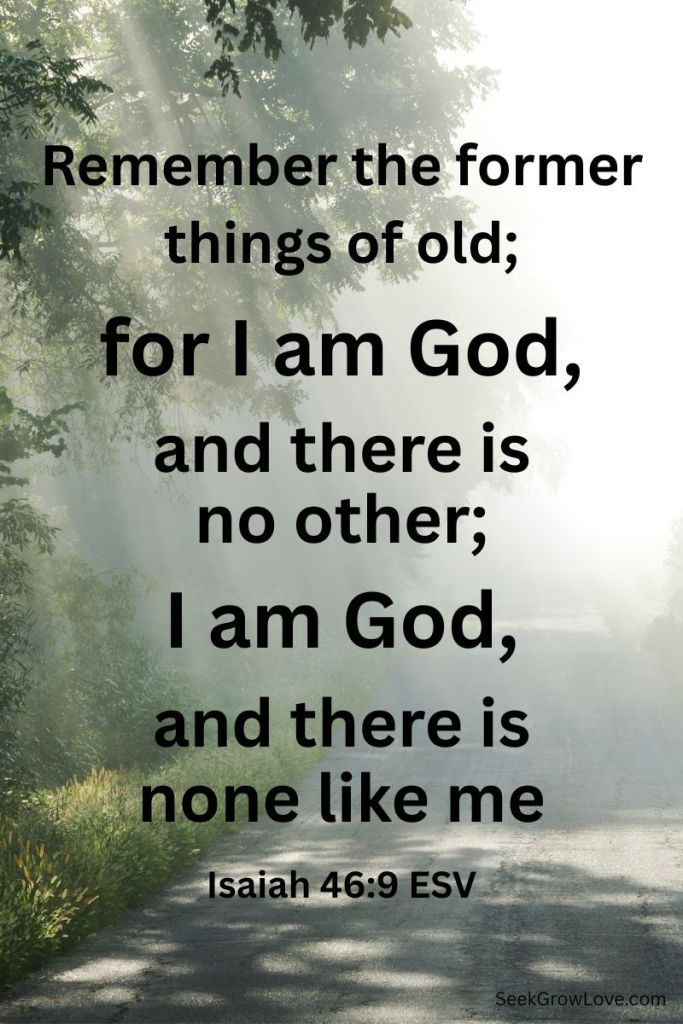
            Back before the return (from the Babylonian captivity), idolatry was rampant for the ancient Israelites.  Likewise, in today’s world, mankind has elevated silver, gold, and sometimes even the servants of God to equal status as the God who created everything.  God explains it to us directly and bluntly: “5“To whom would you liken Me And make Me equal and compare Me, That we would be alike?” (LSB, Isaiah 46:5).  Just in case there was confusion later (there is), He goes on to clarify: “9…For I am God, and there is no other; I am God, and there is no one like Me,” (LSB, Isa 46:9).  What a beautiful, simple, and straightforward understanding about the nature of God, and if you notice there is a strong consistency to the message that Yahweh God is God alone (see also Deut 6:4, which Jesus the servant of God later quotes as the greatest commandment in Mark 12:29). 

            Moving on down to our Psalms reading today, we find ourselves beginning the longest chapter in the bible, and it’s just a really good one.  We’re obviously not going to cover the entirety of Ps 119 today (it’s huge), but we’ll try to get in a good solid overview of the first 40 verses or so. 

            The author of this Psalm spends a lot of time focusing and reiterating on obeying God’s laws, on seeking God with all your heart, and on God revealing His will and precepts as a source of joy and life.  Ps 119:1-40 all carry this theme explicitly, here are just a few excerpts from today’s scripture to reiterate this thematically (these are all from the LSB translation, Ps 119): 

1 How blessed are those whose way is blameless, Who walk in the law of Yahweh. 2 How blessed are those who observe His testimonies,They seek Him with all their heart.

33 Instruct me, O Yahweh, in the way of Your statutes, That I may observe it to the end. 34 Cause me to understand, that I may observe Your law And keep it with all my heart.

            You get the idea.  The author here is very focused on God, and on obeying God’s precepts, and asks repeatedly for his own comprehension and God’s help and protection.  This strikes me as a very healthy outlook for anyone seeking to be a servant of the living God.  We search the scriptures because we believe that by them we may receive eternal life (See John 5:39), and the author of Ps 119 seems to agree with that, and also go further and asks God to change his heart (see also for reference Jer 31:33), and to grant him discernment and wisdom to understand and obey.

            I did want to point out one very cool thing that’s in our Luke reading today.  In Luke 1, Gabriel is a busy angel, God sends him first to Zechariah to inform him about the birth of his son (John the baptist), and then to Mary to inform her about the birth of her son (Jesus).  Note that Gabriel doesn’t just show up and start saying whatever he wants: he is sent by God and delivers only the message(s) that God sent him to deliver, because he’s not God, he’s God’s servant. 

            This is true for any of the servants of God: even though they are not God, they are sent by God to fulfill a specific purpose on God’s behalf, and when they do so we are to accord them the same honor and authority that we ascribe to our Creator, because they are sent by God.  That is actually the criteria to be a servant of God, that God sends you.  This includes Jesus, the son of David, the servant of God (for reference see John 1:22,33, 3:34, 4:34, 5:23-24,30,36-38, 6:29,38-39,44,57, 7:16,28-29,33, 8:16,26,29,42, etc etc etc.-30 times in John per Jesus).  Jesus really tried to make it very clear that God sent him, and that he didn’t act from his own authority but did what God told him to do, and said what God told him to say.  Jesus was completely obedient to the authority of YHVH God, as not only as a servant (which he was) but as a son.

            There’s something staggering that the angel (literally, “messenger”) Gabriel says when he’s delivering his messages here in Luke 1.  Think about the descriptions of the throne of God (see Aug 5th devotional from earlier this year for scriptural references and descriptions about the Courts of Heaven): in every instance you see the Most High God seated on the throne, with the courts full of heavenly beings as supplicants around him, often prostrating themselves.  Gabriel says this particular phrase in Luke 1:19: “…I am Gabriel, who stands before God,”  Stop and think about that for a moment.  That’s huge.  This may be a servant of God, but he is given much power and authority if he is allowed to stand before the most high God.  Now think about the Christ, our king Jesus.  Not only does he stand before God, but God has invited him to sit at His right hand.  The ultimate authority, just under God.  It’s amazing.

REFLECTION QUESTIONS:

  1. We’re probably all familiar with the poem “Footsteps”.  How many times in your life has God carried you? Reflect on them for a moment.
  2. How can you personally increase the love of God’s laws in your heart, like the author of Ps 119?
  3. Had you ever caught that bit about Gabriel “standing before God” before, and pondered it?

PRAYER

Father God, thank you for carrying me when I couldn’t make it on my own.  Plant within my heart the fervent desire to study and obey your precepts, and to listen to the messengers You sent.  Thank you for life, breath, and all things.  Please carry me just a little bit further.  In Jesus name, Amen.

My Hope is in His Word

Psalm 119:89-176

I don’t think that any child would say that they love rules. And yet, they subconsciously crave them. Rules from a loving parent show a child that someone loves them enough to guide them. Structure makes them feel reassured and gives a sense of stability. Without those directions and guidelines, children become stressed and tend to feel out of their depth. 

Even as an adult, I like to have rules and guidelines that make logical sense. Structure eases my mental burden because it removes some of the many options that exist. In fact, research says that too many decisions and too many options are harmful to our mental health and can lead to mental fatigue and anxiety, causing us to either avoid making decisions or make harmful decisions that don’t align with our life goals. 

If I know that by following wise guidelines I will avoid many mistakes, my mind and soul feel more at ease. How blessed are we, then, that we have a loving father who cares so much about us that he has set boundaries for his children to keep us safe? 

The author of Psalm 119 clearly knows the value of God’s laws. His gratitude to God for providing wisdom and guidance is clear. When I first read through this passage my initial thought was, “How can someone go on this long about laws and rules!?” But the truth is that these verses aren’t proclaiming the glory of guidelines. They are testifying to the everlasting love God has for us.

We live in a sinful world that is full of deceit, pitfalls, and endless opportunities for mistakes. But Psalm 119:113-114 offers reassurance that though the world is wicked, our God loves us so much that he has provided all of the guidance we need to navigate life. 

“I hate double-minded people, but I love your law. You are my refuge and my shield; I have put my hope in your word.”

What a beautiful reminder to bury ourselves in God’s commands. I pray that you find love, peace, and reassurance in his words written for you. 

-Jenn Haynes

Reflection Questions

What are some decisions you are facing right now? What would God advise? 

Many people find rules restricting. How do you feel about some of God’s rules for you? If you find them restricting, do some reflection to find out why. Is what God wants for you clashing with what you want? 

Take some time to thank God for some specific rules he has set forth for you that you have found helpful. Revel in his love for you! 

Loving Laws

Psalm 119:1-88

As I read through the first half of this Psalm, one thing that stuck out to me was the repetition of the thought of loving God’s law/commands/decrees or desiring to love them. 

When we think about laws, we don’t usually think about loving them.  We follow the laws so we don’t get punished.  Some laws, we understand and agree that they are good, so it makes sense to follow them, and some, we don’t and the only reason to follow them is to not get in trouble (like prohibiting nursing homes from playing Bingo more than two times per week or not crossing state lines with a duck on your head).

The concept of loving laws makes much more sense when you consider a loving God that created them.  Though we may not understand all of them, we can know that God put them into place for the good of people.

Though the requirements of the law were fulfilled in Christ and there wasn’t an expectation for the Gentiles to follow the law, we can still look at the law and see valuable guidance like washing your hands.  You can see how the instructions on dealing with dead bodies or blood would have made sense, especially before more medical advances were made.  And whatever doesn’t make sense to you at this time, if you believe that God is good and loving, you can trust that the laws were made with a reason.

When we look at the direction given by Jesus that went above and beyond the call of the law, we can also believe that he gave those directives because he loves people too and wants us to as well.

When we want to do good because it is good rather than because of a fear of punishment (or a promise of reward), we can live our lives differently than the world around us.

God, teach us to love your ways, to truly believe that your ways are good and trustworthy.

~Stephanie Fletcher

Reflection Questions

  1. What are your favorite 3 verses in Psalm 119:1-88? Why did you choose each one?
  2. What is the benefit of having good laws? What laws help your home, school or work environment run more smoothly?
  3. Do you trust that God’s laws are good? Pick one of God’s good laws that God might want you to love more. What would that look like?
  4. What do we learn about God’s laws from Jesus?

His Commands and Judgments

OLD TESTAMENT: Zephaniah 2

POETRY: Psalm 119 – all

NEW TESTAMENT: Revelation 16

Zephaniah 2:3 (LEB):

“Seek Yahweh, all you humble of the land,

who do his just commands;

seek righteousness, seek humility;

perhaps you may be hidden on the day of Yahweh’s anger.”

Psalm 119:1-3 (LEB):

“Blessed are those whose way is blameless,

who walk in the law of Yahweh.

Blessed are those who keep his testimonies,

who seek him with their whole heart,

who also do no wrong,

but walk in his ways.”

Revelation 16:9 (LEB):

“And they were scorched by the fierce heat,

and they blasphemed the name of God who had power over these plagues.

They did not repent and give him glory.”

In Zephaniah 2, we find a poignant call to repentance directed at the humble of the land. The prophet urges them to seek Yahweh, emphasizing the importance of righteousness and humility in the face of impending judgment. This call serves as a reminder that, even amidst God’s warnings, there is hope for those who choose to align their hearts with His will.

The notion of seeking righteousness and humility resonates deeply with our spiritual journey. In a world often driven by pride and self-sufficiency, we are invited to recognize our need for God. This scripture challenges us to reflect on our own lives: Are we seeking the Lord earnestly? Are we embracing humility in our daily interactions? God promises that those who earnestly seek Him may find refuge from His anger, providing comfort amidst the chaos.

Psalm 119 begins with a declaration of blessing for those who walk in God’s ways. This passage emphasizes the joy and fulfillment found in obedience to His law. As the psalmist notes, seeking God with our whole heart leads to a life marked by righteousness.

This reflection encourages us to evaluate our own walks with God. Are we wholeheartedly pursuing Him? Are we actively aligning our lives with His commandments? The blessings promised in this passage are not just for a select few but are available to all who earnestly seek the Lord. As we immerse ourselves in His word and strive to live according to His teachings, we open ourselves to experiencing His goodness and grace in profound ways.

Revelation 16 depicts the severity of God’s judgment as the plagues are poured out upon the earth. Despite experiencing intense suffering, the response of many is to curse God rather than repent. This stark portrayal highlights the hardness of the human heart when faced with divine discipline.

As believers, we are reminded of the importance of humility and the willingness to repent. God’s judgment serves as a call to return to Him, to acknowledge our sins, and to seek His forgiveness. The refusal to repent leads to separation from God and the continued cycle of rebellion. This passage compels us to reflect on our own hearts and our responses to God’s correction. Are we quick to recognize our failings and turn back to Him, or do we resist His call to repentance?

-Jeff Ransom

Reflection Questions:

What does it mean for you to seek Yahweh with humility? How can you cultivate a humble heart in your daily life?

Reflect on the blessings promised in Psalm 119. How can you actively pursue a deeper understanding of God’s law?

In what ways have you experienced God’s correction in your life? How did you respond, and what did you learn from that experience?

How can you prepare your heart to be more receptive to God’s call for repentance and change?

Who Will Not Fear You?

OLD TESTAMENT: Zephaniah 1

POETRY: Psalm 119:169-176

NEW TESTAMENT: Revelation 15

Zephaniah 1:14-16 (LEB):

“The great day of Yahweh is near,

near and coming very quickly.

The sound of the day of Yahweh is bitter;

the mighty man cries aloud there.

A day of wrath is that day,

a day of distress and anguish,

a day of ruin and devastation,

a day of darkness and gloom,

a day of clouds and thick darkness,

a day of trumpet blast and battle cry

against the fortified cities and against the lofty battlements.”

Psalm 119:169-176 (LEB):

“Let my cry come before you, O Yahweh;

give me understanding according to your word.

Let my supplication come before you;

deliver me according to your word.

My lips will pour forth praise,

for you teach me your statutes.

My tongue will sing of your word,

for all your commandments are right.

Let your hand be ready to help me,

for I have chosen your precepts.

I long for your salvation, O Yahweh,

and your law is my delight.

Let my soul live and praise you,

and let your rules help me.

I have gone astray like a lost sheep;

seek your servant,

for I do not forget your commandments.”

Revelation 15:3-4 (LEB):

“And they sing the song of Moses, the servant of God,

and the song of the Lamb, saying,

‘Great and amazing are your deeds,

O Lord God the Almighty!

Just and true are your ways,

O King of the nations!

Who will not fear, O Lord,

and glorify your name?

For you alone are holy.

All nations will come and worship you,

for your righteous acts have been revealed.'”

The prophet Zephaniah opens with a solemn warning of the coming Day of Yahweh, a day characterized by divine judgment. The imagery of darkness, anguish, and distress serves as a powerful reminder of the seriousness of God’s justice. For those who reject His ways, this day brings fear and despair.

Yet, within this stark portrayal lies a call to repentance and an invitation to seek refuge in God. While Zephaniah emphasizes God’s wrath, it is important to remember that His justice is always intertwined with His mercy. In moments of turmoil and judgment, we are reminded of our need for God’s grace and guidance. This day of reckoning compels us to reflect on our own lives, ensuring that we align our hearts with God’s will.

In Psalm 119, the psalmist expresses a deep longing for God’s guidance and salvation. His heartfelt cry for understanding echoes the sentiment of Zephaniah—a recognition of human frailty and the need for divine intervention. The psalmist’s desire to follow God’s commandments illustrates the importance of aligning our lives with His truth.

As he pleads for deliverance and praises God’s statutes, we see the relationship between our obedience and God’s faithfulness. In our own lives, we are invited to seek God’s understanding and mercy, especially when we feel lost or astray. This passage reassures us that, even in our wandering, God is attentive to our cries, ready to respond with love and grace.

Revelation 15 presents a scene of worship in heaven, where the redeemed sing the song of Moses and the Lamb. This song celebrates God’s greatness, justice, and holiness. The acknowledgment of His righteous acts inspires awe and reverence, uniting all nations in worship.

In the midst of judgment, the song of the Lamb reminds us that God’s mercy prevails. The ultimate act of redemption through Christ is the source of our hope and assurance. As we reflect on our journey, we are invited to join in this eternal song, declaring God’s majesty and righteousness. The assurance of His salvation empowers us to face the trials of this world with faith and courage.

-Jeff Ransom

Reflection Questions:

How does the imagery of the Day of Yahweh in Zephaniah challenge your understanding of God’s justice and mercy?

In what ways can you seek God’s understanding and guidance in your daily life, especially during challenging times?

Reflect on the psalmist’s desire for salvation and obedience. How can you cultivate a deeper love for God’s commandments in your life?

What does it mean for you to sing the song of the Lamb in your everyday life? How can you express your worship and gratitude for His redemption?

Rejoice in the God of Your Salvation

OLD TESTAMENT: Habakkuk 3

POETRY: Psalm 119:161-168

NEW TESTAMENT: Revelation 14

Habakkuk 3:17-19 (LEB):

“Though the fig tree does not blossom,

nor fruit be on the vines,

the produce of the olive fail

and the fields yield no food,

the flock be cut off from the fold

and there be no herd in the stalls,

yet I will rejoice in Yahweh;

I will take joy in the God of my salvation.

Yahweh, my Lord, is my strength;

he makes my feet like the deer’s;

he makes me tread on my high places.”

Psalm 119:161-168 (LEB):

“Princes persecute me without cause,

but my heart stands in awe of your words.

I rejoice at your word

like one who finds great spoil.

I hate and abhor falsehood,

but I love your law.

Seven times a day I praise you

for your righteous rules.

Great peace have those who love your law;

nothing causes them to stumble.

I hope for your salvation, O Yahweh,

and I do your commandments.

My soul keeps your testimonies;

I love them exceedingly.

I keep your precepts and testimonies,

for all my ways are before you.”

Revelation 14:1-3 (LEB):

“Then I looked, and behold, the Lamb was standing on Mount Zion,

and with him were one hundred forty-four thousand who had his name

and the name of his Father written on their foreheads.

And I heard a voice from heaven like the roar of many waters

and like the sound of loud thunder.

The voice I heard was like the sound of harpists playing on their harps,

and they were singing a new song before the throne

and before the four living creatures and before the elders.

No one could learn that song except the one hundred forty-four thousand

who had been redeemed from the earth.”

Habakkuk concludes his book with a powerful declaration of faith, despite the dire circumstances he outlines. He paints a vivid picture of loss and despair: the fig tree not blossoming, the fields yielding no food, and the flock cut off from the fold. Yet, even in the bleakest of situations, Habakkuk chooses to rejoice in Yahweh. This radical joy is rooted not in external circumstances but in the unchanging nature of God.

This passage challenges us to examine our own responses to adversity. Are we quick to rejoice in the Lord even when life is hard? Habakkuk’s resolve reminds us that true joy comes from our relationship with God. When we focus on who God is—our strength, our salvation—our hearts can remain anchored in hope, regardless of our circumstances.

The psalmist expresses a profound reverence for God’s word, even amidst persecution. Despite the challenges posed by those in authority, the psalmist finds joy and peace in God’s law. His love for God’s commandments fuels his praise and steadfastness.

This passage underscores the power of God’s word to provide stability and comfort during turbulent times. The psalmist’s commitment to praise God seven times a day illustrates the importance of a continuous relationship with Him. By immersing ourselves in scripture and seeking God’s guidance, we cultivate peace in our hearts. In doing so, we can stand firm against the chaos of the world around us.

In Revelation 14, we witness a scene of triumph and celebration in heaven. The Lamb stands on Mount Zion, surrounded by the redeemed, signifying victory over sin and death. The new song sung by the one hundred forty-four thousand is a testament to their redemption and unwavering faithfulness to God. This passage serves as a powerful reminder of the ultimate hope we have in Christ.

As believers, we are called to anticipate this glorious day when we will stand with the Lamb, rejoicing in his victory. The new song symbolizes the joy and gratitude we will express for our salvation. While we may face trials and tribulations on earth, this passage encourages us to keep our eyes fixed on the promise of eternal life with Christ.

-Jeff Ransom

Reflection Questions:

In what areas of your life are you struggling to rejoice in the Lord? How can you shift your focus from circumstances to God’s character?

How can you cultivate a deeper love for God’s word in your daily routine? What specific actions can you take to incorporate scripture into your life?

Reflect on the ultimate hope found in Revelation 14. How does the promise of redemption encourage you in your faith journey?

Consider the significance of singing a new song in your life. What is your personal testimony of God’s faithfulness that you can share with others?

Trusting, Seeking & Standing Firm

OLD TESTAMENT: Habakkuk 2

POETRY: Psalm 119:153-160

NEW TESTAMENT: Revelation 13

Habakkuk 2:2-4 (LEB):

“And Yahweh answered me and said:

‘Write the vision and make it plain on tablets,

so that he may run who reads it.

For still the vision awaits its appointed time;

it hastens to the end—it will not lie.

If it seems slow, wait for it;

it will surely come; it will not delay.

Behold, his soul is puffed up; it is not upright within him,

but the righteous shall live by his faith.'”

Psalm 119:153-160 (LEB):

“Look on my affliction and deliver me,

for I do not forget your law.

Plead my cause and redeem me;

give me life according to your word.

Salvation is far from the wicked,

for they do not seek your statutes.

Great is your mercy, O Yahweh;

give me life according to your rules.

Many are my persecutors and my enemies,

yet I do not swerve from your testimonies.

I look at the faithless with disgust,

because they do not keep your commands.

Consider how I love your precepts;

give me life according to your steadfast love.

The sum of your word is truth,

and every one of your righteous rules endures forever.”

Revelation 13:7-8 (LEB):

“And it was permitted to make war on the saints and to conquer them.

And authority was given it over every tribe and people and language and nation.

And all who dwell on the earth will worship it, everyone whose name has not been written from the foundation of the world in the book of life of the Lamb who was slain.”

In Habakkuk 2, God instructs the prophet to write down the vision He has revealed. This vision, while it may seem slow in coming, is assured and will ultimately be fulfilled. God encourages Habakkuk to remain faithful and patient, for the righteous shall live by faith.

In our own lives, we often find ourselves in seasons of waiting, questioning God’s timing and plans. Like Habakkuk, we may feel that the answers we seek are delayed. Yet, God’s assurance reminds us that His promises are sure, and we are called to trust in His character and faithfulness. This passage challenges us to embrace a faith that endures, especially in uncertain times.

Psalm 119 continues the theme of seeking God in times of trouble. The psalmist cries out for deliverance, expressing his deep reliance on God’s law and commandments. He recognizes that while he faces persecution and opposition, he is determined to hold fast to God’s truths.

The psalmist’s plea, “Look on my affliction and deliver me,” reflects a heart that is anchored in God’s mercy and truth. He understands that salvation is found in God alone, and he chooses to love and meditate on God’s precepts, despite the trials he endures. This teaches us the importance of grounding ourselves in God’s word and seeking His help in our struggles. We can draw strength from the truth that God’s steadfast love is the source of life and hope amidst adversity.

Revelation 13 presents a sobering reality: the world may rise against believers, and authority may be given to oppose the saints. This passage speaks to the challenges and tribulations that Christians may face as they navigate a world often in conflict with God’s kingdom. However, it also reassures us that not everyone will follow the ways of the beast; those whose names are written in the book of life will stand firm in faith.

In the face of persecution and temptation to conform to worldly standards, we are reminded that our allegiance lies with Christ, who has triumphed over sin and death. This call to remain steadfast is a powerful encouragement to persevere in our faith, knowing that our ultimate victory is secured through the Lamb who was slain.

-Jeff Ransom

Reflection Questions:

In what areas of your life are you waiting on God’s promises? How can you cultivate patience and trust during this time?

Reflect on the importance of grounding yourself in God’s word. How can you actively seek His truth and guidance in your daily life?

How does the reality of opposition in Revelation encourage you to live out your faith boldly? What steps can you take to stand firm in your beliefs?

Consider the psalmist’s expression of love for God’s precepts. What practices can you incorporate to deepen your love for God’s word in your life?

Seeking God, His Justice and His Victory

OLD TESTAMENT: Habakkuk 1

POETRY: Psalm 119:145-152

NEW TESTAMENT: Revelation 12

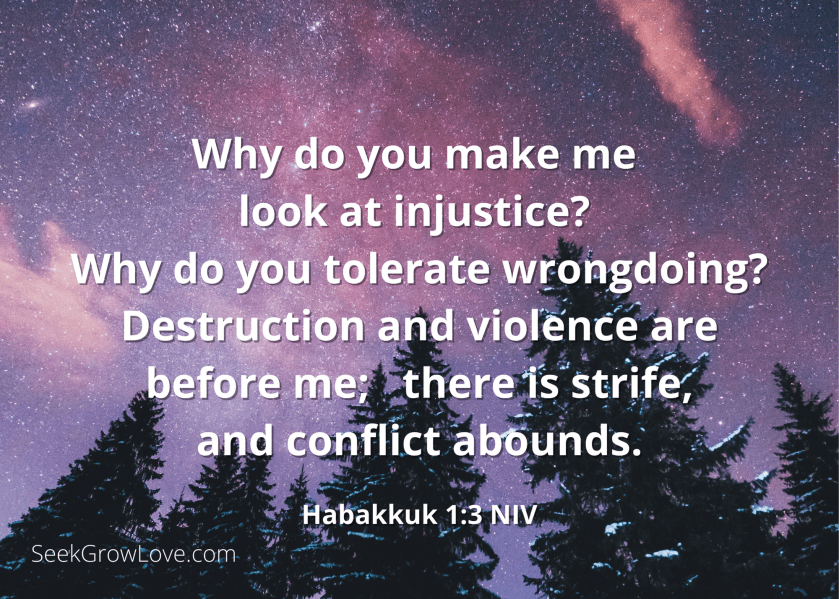
Habakkuk 1:2-4 (LEB):

“How long, O Yahweh, must I cry for help,

and you do not listen?

I cry out to you, ‘Violence!’

and you do not save.

Why do you make me see iniquity,

and why do you look idly at wrongdoing?

Destruction and violence are before me;

strife and contention arise.

Therefore the law is paralyzed,

and justice never goes forth;

for the wicked surround the righteous;

therefore justice comes out perverted.”

Psalm 119:145-152 (LEB):

“I cry out with my whole heart; answer me, O Yahweh!

I will observe your statutes.

I cry out to you; save me,

that I may keep your testimonies.

I rise before dawn and cry for help;

I hope in your words.

My eyes are awake before the watches of the night,

that I may meditate on your promise.

Hear my voice according to your steadfast love;

O Yahweh, according to your justice give me life.

They draw near who persecute me with evil purpose;

they are far from your law.

But you are near, O Yahweh,

and all your commandments are true.

Long have I known from your testimonies

that you have founded them forever.”

Revelation 12:10-11 (LEB):

“And I heard a loud voice in heaven saying,

‘Now the salvation and the power

and the kingdom of our God and the authority of his Christ have come,

for the accuser of our brothers has been thrown down,

who accuses them day and night before our God.

And they have conquered him by the blood of the Lamb

and by the word of their testimony,

for they loved not their lives even unto death.'”

The book of Habakkuk begins with a profound sense of lament and confusion. The prophet cries out to God, questioning why He seems silent in the face of injustice and violence. Habakkuk’s raw honesty reflects the struggles many of us face when we encounter suffering, evil, and a lack of justice in the world. He sees the wicked prospering while the righteous suffer, and he cannot understand why God allows this.

In our own lives, we may find ourselves in similar situations—crying out to God for answers, feeling like our prayers go unheard as we witness injustice. Yet, Habakkuk’s cry serves as a reminder that it is okay to bring our questions and struggles before God. He desires honesty in our relationship with Him.

In Psalm 119, the psalmist embodies a similar urgency in seeking God. He cries out with his whole heart for God to answer him, showing a deep reliance on God’s word and a yearning for His guidance. The psalmist acknowledges the darkness around him and the threat from those who persecute him, but he clings to the truth that God’s commandments are near and true.

This passage emphasizes the importance of persistent prayer and meditation on God’s promises, especially when we face trials. The psalmist rises early and stays awake at night, seeking the Lord’s assurance and strength. It is in these moments of desperation that we must remember God’s steadfast love and justice. The psalmist’s faith is rooted in the belief that God is near, and His promises endure forever.

Revelation 12 offers a powerful proclamation of victory amid the spiritual battle that believers face. The voice from heaven announces the establishment of God’s kingdom and the defeat of the accuser, the one who brings charges against God’s people. Through the blood of the Lamb and the word of their testimony, believers conquer the enemy, demonstrating that faith in Christ triumphs over every accusation and hardship.

This passage assures us that even in the face of persecution and struggle, we have the victory through Christ. The acknowledgment that the accuser has been thrown down is a reminder that God’s justice prevails. As we navigate our own trials, we can hold on to the assurance that Christ has already won the battle for us.

-Jeff Ransom

Reflection Questions:

In what areas of your life do you feel like God is silent in the face of injustice? How can you bring these concerns to Him honestly?

How does the psalmist’s commitment to prayer and meditation inspire you to seek God more fervently in your own life?

What does it mean for you to conquer through the blood of the Lamb and the word of your testimony? How can you share your story of God’s faithfulness with others?

Reflect on the assurance that God’s kingdom is established and that the accuser has been defeated. How does this truth impact your daily walk with Christ?

Past, Present and Future

OLD TESTAMENT: Nahum 1-3

POETRY: Psalm 119:137-144

NEW TESTAMENT: Revelation 11

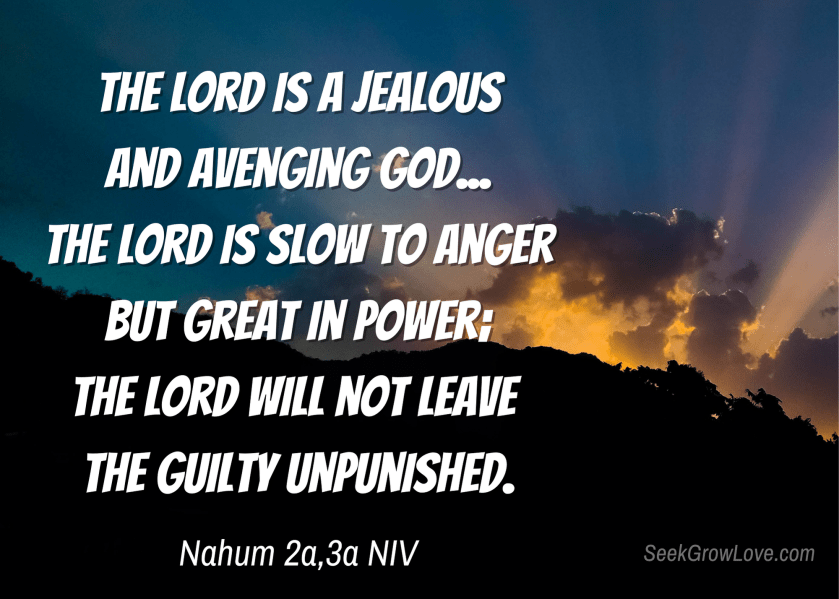
Nahum 1:2-3 (LEB):

“A jealous and avenging God is Yahweh;

Yahweh is avenging and has wrath.

Yahweh takes vengeance on his adversaries

and reserves wrath for his enemies.

Yahweh is slow to anger and great in power,

and he will not leave the guilty unpunished.

In whirlwind and storm is his way,

and clouds are the dust of his feet.”

Psalm 119:137-144 (LEB):

“Righteous are you, O Yahweh,

and upright are your judgments.

You have commanded your testimonies

in righteousness and exceeding faithfulness.

My zeal has consumed me,

because my enemies have forgotten your words.

Your word is very pure,

and your servant loves it.

I am small and despised,

yet I do not forget your precepts.

Your righteousness is an everlasting righteousness,

and your law is true.

Trouble and anguish have found me out,

but your commandments are my delight.

Your testimonies are righteous forever;

give me understanding, and I will live.”

Revelation 11:15-16 (LEB):

“And the seventh angel sounded the trumpet,

and there were loud voices in heaven, saying,

‘The kingdom of the world has become the kingdom of our Lord and of his Christ,

and he will reign forever and ever!’

And the twenty-four elders who were seated before God on their thrones

fell on their faces and worshiped God.”

The book of Nahum reveals God’s sovereignty over the nations and His fierce justice against those who oppose Him. Specifically, it proclaims God’s impending judgment against Nineveh, a city known for its wickedness and cruelty. The opening verses declare God as a “jealous and avenging God,” emphasizing His commitment to righteousness and the protection of His people. God’s slowness to anger highlights His patience, but His ultimate justice is assured; the guilty will not escape unpunished.

Nahum reminds us that while God is loving and merciful, He is also just. His judgment against Nineveh serves as a reminder that evil cannot persist forever without consequence. This gives us hope, especially in a world where injustice and oppression often seem rampant. As we witness suffering and wrongdoing, we can trust in God’s righteous judgment and His commitment to setting things right in His perfect timing.

In Psalm 119, the psalmist expresses a deep love and reverence for God’s law and testimonies. The declaration of God’s righteousness sets the foundation for understanding His judgments. The psalmist’s zealous love for God’s word is driven by the reality of his enemies and the challenges he faces. Despite being small and despised, he finds delight and strength in God’s commandments.

This passage encourages us to anchor ourselves in God’s word, especially during trials. The psalmist recognizes that while trouble and anguish are inevitable, God’s commandments are a source of delight and guidance. When we immerse ourselves in Scripture, we find wisdom, comfort, and a reminder of God’s faithfulness. The law becomes a light in our darkness, guiding us toward a path of righteousness and understanding.

Revelation 11 culminates in the triumphant announcement of God’s kingdom. The seventh trumpet sounds, proclaiming that the kingdom of the world has become the kingdom of our Lord and of His Christ. This proclamation signifies a pivotal moment in redemptive history—where God’s reign is fully established, and the powers of darkness are defeated.

The response of the twenty-four elders, who fall on their faces in worship, reflects the rightful reaction to God’s sovereignty and majesty. In this vision, we see the culmination of God’s justice and the fulfillment of His promises. As believers, we are invited to participate in this celebration, anticipating the day when God’s kingdom is established forever.

-Jeff Ransom

Reflection Questions:

How does the concept of God’s jealousy and justice in Nahum impact your understanding of His character? In what ways does this knowledge provide comfort during difficult times?

Reflect on the importance of God’s word in your life. How can you cultivate a deeper love and delight for Scripture, especially when facing challenges or opposition?

How does the promise of God’s kingdom in Revelation encourage you in your daily walk with Christ? In what ways can you live in anticipation of the kingdom?

Consider the response of the twenty-four elders in Revelation 11. How can you incorporate worship into your daily life, acknowledging God’s sovereignty and majesty?