
OLD TESTAMENT: Habakkuk 1
POETRY: Psalm 119:145-152
NEW TESTAMENT: Revelation 12
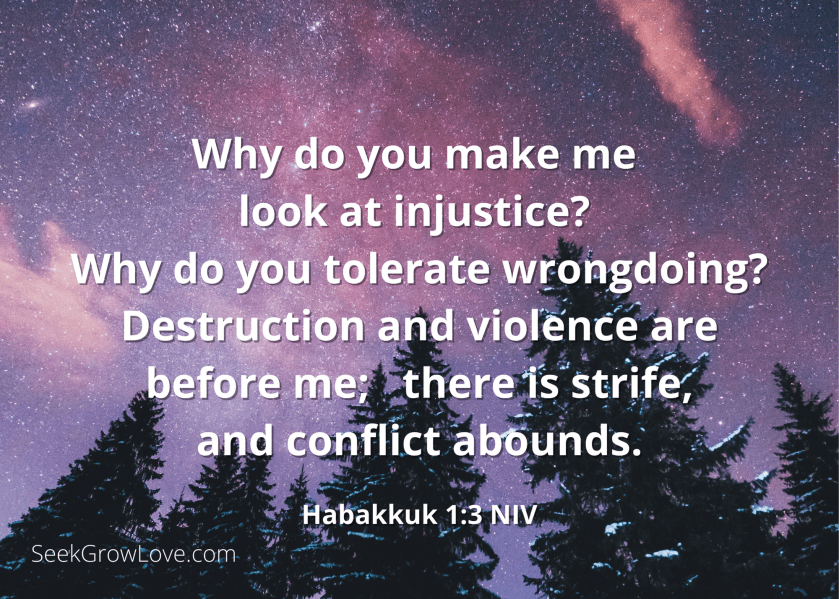
Habakkuk 1:2-4 (LEB):
“How long, O Yahweh, must I cry for help,
and you do not listen?
I cry out to you, ‘Violence!’
and you do not save.
Why do you make me see iniquity,
and why do you look idly at wrongdoing?
Destruction and violence are before me;
strife and contention arise.
Therefore the law is paralyzed,
and justice never goes forth;
for the wicked surround the righteous;
therefore justice comes out perverted.”
Psalm 119:145-152 (LEB):
“I cry out with my whole heart; answer me, O Yahweh!
I will observe your statutes.
I cry out to you; save me,
that I may keep your testimonies.
I rise before dawn and cry for help;
I hope in your words.
My eyes are awake before the watches of the night,
that I may meditate on your promise.
Hear my voice according to your steadfast love;
O Yahweh, according to your justice give me life.
They draw near who persecute me with evil purpose;
they are far from your law.
But you are near, O Yahweh,
and all your commandments are true.
Long have I known from your testimonies
that you have founded them forever.”
Revelation 12:10-11 (LEB):
“And I heard a loud voice in heaven saying,
‘Now the salvation and the power
and the kingdom of our God and the authority of his Christ have come,
for the accuser of our brothers has been thrown down,
who accuses them day and night before our God.
And they have conquered him by the blood of the Lamb
and by the word of their testimony,
for they loved not their lives even unto death.'”
The book of Habakkuk begins with a profound sense of lament and confusion. The prophet cries out to God, questioning why He seems silent in the face of injustice and violence. Habakkuk’s raw honesty reflects the struggles many of us face when we encounter suffering, evil, and a lack of justice in the world. He sees the wicked prospering while the righteous suffer, and he cannot understand why God allows this.
In our own lives, we may find ourselves in similar situations—crying out to God for answers, feeling like our prayers go unheard as we witness injustice. Yet, Habakkuk’s cry serves as a reminder that it is okay to bring our questions and struggles before God. He desires honesty in our relationship with Him.
In Psalm 119, the psalmist embodies a similar urgency in seeking God. He cries out with his whole heart for God to answer him, showing a deep reliance on God’s word and a yearning for His guidance. The psalmist acknowledges the darkness around him and the threat from those who persecute him, but he clings to the truth that God’s commandments are near and true.
This passage emphasizes the importance of persistent prayer and meditation on God’s promises, especially when we face trials. The psalmist rises early and stays awake at night, seeking the Lord’s assurance and strength. It is in these moments of desperation that we must remember God’s steadfast love and justice. The psalmist’s faith is rooted in the belief that God is near, and His promises endure forever.
Revelation 12 offers a powerful proclamation of victory amid the spiritual battle that believers face. The voice from heaven announces the establishment of God’s kingdom and the defeat of the accuser, the one who brings charges against God’s people. Through the blood of the Lamb and the word of their testimony, believers conquer the enemy, demonstrating that faith in Christ triumphs over every accusation and hardship.
This passage assures us that even in the face of persecution and struggle, we have the victory through Christ. The acknowledgment that the accuser has been thrown down is a reminder that God’s justice prevails. As we navigate our own trials, we can hold on to the assurance that Christ has already won the battle for us.
-Jeff Ransom
Reflection Questions:
In what areas of your life do you feel like God is silent in the face of injustice? How can you bring these concerns to Him honestly?
How does the psalmist’s commitment to prayer and meditation inspire you to seek God more fervently in your own life?
What does it mean for you to conquer through the blood of the Lamb and the word of your testimony? How can you share your story of God’s faithfulness with others?
Reflect on the assurance that God’s kingdom is established and that the accuser has been defeated. How does this truth impact your daily walk with Christ?
 Seek Grow Love