
-Devotion by Cayce Fletcher
When I was in elementary school, I sat by a girl in one of my science classes who I became close friends with over the course of the year. In the midst of kid-friendly science experiments (probably involving something edible), she mentioned something she told me in confidence.
And something that I soon told someone else.
Somehow, word got back to this girl that I had spread this secret around. She confronted me and told me how it made her feel. Ultimately, sharing this secret was something that she couldn’t forgive so easily, and our friendship wasn’t the same. (She moved at the end of the year.)
I still remember the way that I felt at the end of our conversation. When she first brought it up, it was like my stomach dropped. I was afraid, and I could feel my cheeks get hot. It was a Friday, and as I went home, I kept thinking about it—wishing I could take it back. And I knew that I shouldn’t have shared what I did.
All of these emotions were unfamiliar to me. It was the feelings of guilt and shame.
Shame was not something we were originally created with. With the introduction of sin, we also were introduced to shame. Adam and Eve hid from God when they knew they did wrong. We still want to hide.
This elementary school conversation was one of the first times I navigated these feelings—but it has definitely not been the only time since.
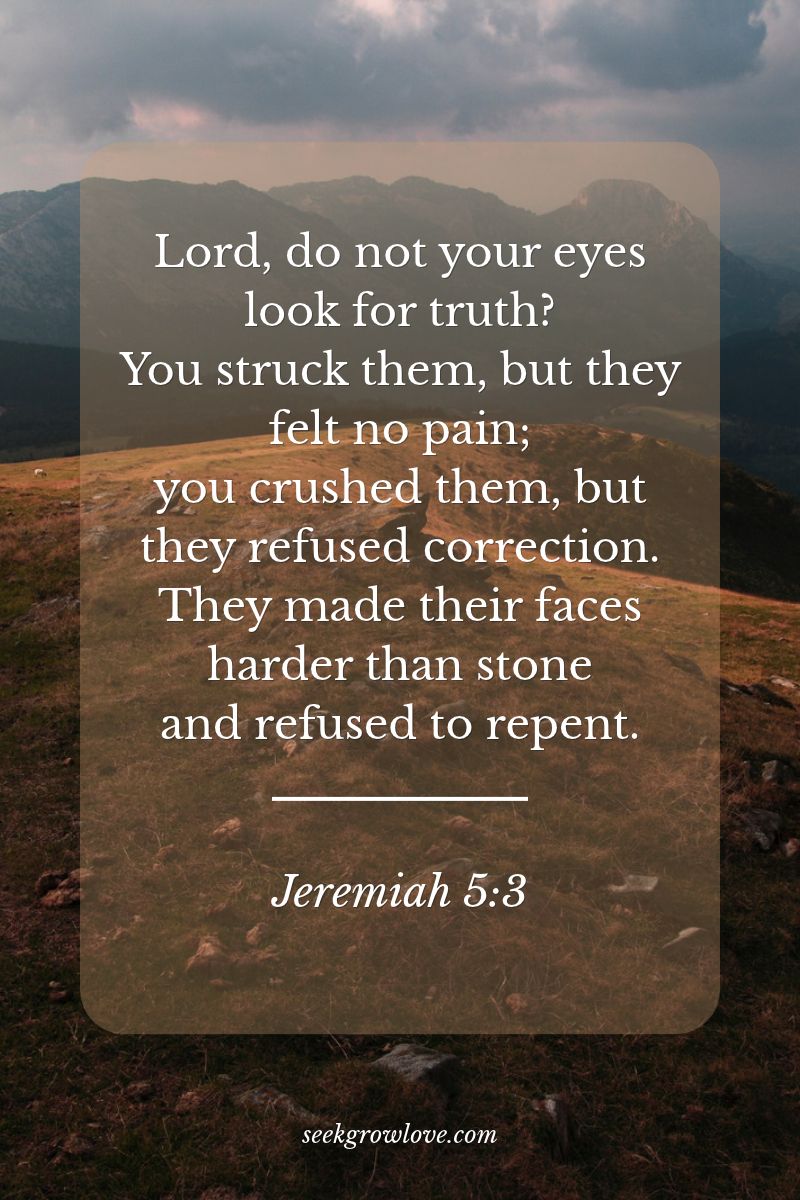
Guilt and shame are inevitable in a world marred by sin, but what I find interesting in this passage is the lack of shame exhibited by the people. Their faces are like stone (Jer. 5:3); they are unapologetic about sin (Jer. 5:7–8); and they take a low view of sin (Jer. 5:12).
In the garden, Adam and Eve had a childlike impulse to literally hide what they were doing, but today, we have become so desensitized to sin that we don’t even try to hide what we are doing. In our pride, we hide our hearts from the gravity of sin. We say that it’s not a big deal. We say that everyone’s doing it. We say that it’s good to go our own way. But truly, this is just the path to destruction.
God was calling the people back to Him, but that call required a right understanding of sin.
When we have a wrong view of sin, we minimize it and justify ourselves. We compare ourselves to others. We make excuses. We tell ourselves that what we are doing isn’t really that bad. Instead of allowing conviction to change us, pride hardens our hearts and allows us to continue down the same path.
But when we have a right view of sin, conviction leads us to repentance. We recognize sin for what it is: rebellion against a holy God that damages the relationship we were created to have with Him. Instead of defending ourselves or hiding from Him, we confess our sin and turn back to God.
The answer to sin isn’t to live buried beneath guilt and shame. It is to let those feelings alert us that something is wrong—and then respond to God’s call to return to Him.
Guilt and shame—also known as conviction—are a clue that we need confession and repentance.
We don’t have to live in the land of guilt and shame forever. Christ has made a way for us to break free from those shackles and step forward into freedom. Praise God!
Cayce Fletcher is a wife and mom of three. In addition to homeschooling and other ministry projects, she writes and podcasts at amorebeautifullifecollective.com about faith, motherhood, and theology.
Reflection Questions
- How does sin impact our relationship with God?
- Do you have a low view or a high view of sin? How serious are you about sin and its effects?
- What is one area where you feel shame (aka conviction), and how might you practice confession and repentance in that area?
Prayer
Dear Lord, we know you are a holy God. We also know that we fall short. When we face these feelings of shame, may we not grow prideful or distant from you. Instead, please let these feelings draw us closer to you through the practices of confession and repentance. In Jesus’ name, Amen

