God at Work

Exodus 13-15

In our devotion yesterday Jeff Fletcher was describing the Dark Night of the Soul when it seems like God is distant. Certainly being enslaved for 400 years in a foreign land could have that effect. I wonder if even through all those years of painful toil if many or some Hebrew parents were still faithfully telling their children of the God of Abraham, Isaac and Jacob who had promised Abraham that his descendants would come out of that land of slavery after 400 years with great possessions and God’s judgment upon their former masters (Genesis 15:13). Was anyone still counting the years in anticipation? Were they talking to God about how He would show up? Were they watching to see how God might be acting on their behalf day after day while in slavery? I don’t know. But I hope so. In our reading today, there can be no doubt, God is at work and He shows up in some major ways – and also in some small surprising ways, too – but always faithful.

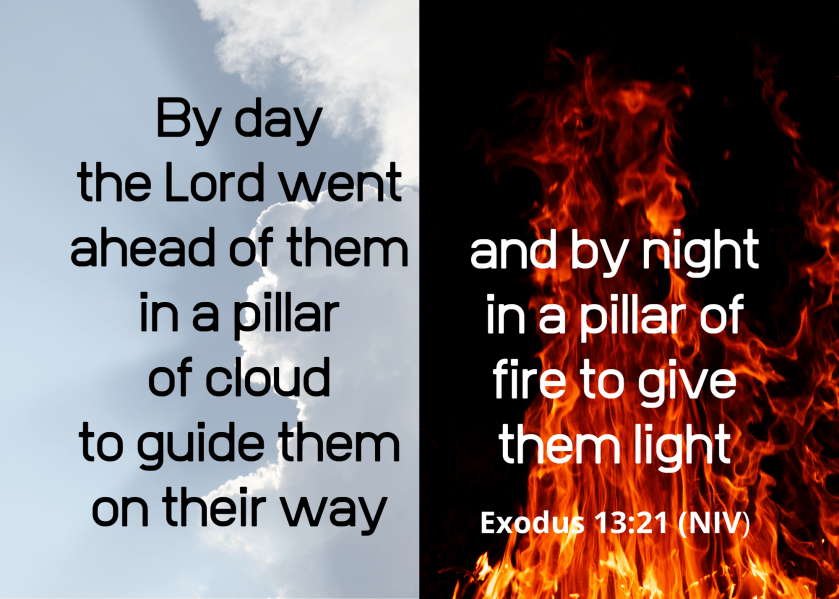
I will assume that you already have some knowledge of these events from Exodus 13-15. So, you already know of the amazing way God chose to lead the Israelites on their journey out of Egypt – with a pillar of cloud by day and a pillar of fire by night – spectacular! And you already know of God’s strong east wind that split the Red Sea with a wall of water on their right and a wall of water on their left as His cherished people crossed on dry land – astounding!

So, today I will focus on two of the smaller things – wheels and logs.

I don’t know about you – but I take great delight (maybe a little too much) in the picture of God at work in Exodus 14:25. Here the great God of the universe who has been directing the winds to create great mountains of water is watching from the pillar of fire/cloud which He specifically moved from in front of the Israelites where it had been guiding to the rear where it was protecting. So this great all-powerful God of the universe reaches down from on high to clog the chariot wheels of the advancing Egyptians who want to take back their slaves. Is there an adversary chasing you who wants to make you or someone you know a slave again? God is good at protecting His children, sometimes in ways I wouldn’t even think of. In big and small ways. God so loved the world. But we know everyone is not going to listen and play on His side. Some will play the role of adversary, but do not fear, our God knows how to clog their chariot wheels. Oh, and, make sure you are playing on the right team because the God who clogged their wheels also sent the mountainous walls of water crashing down on the Egpytians and none survived. His judgment is right and sure and coming at God’s perfect time not ours. And the whole world will know He is the Lord.

The second little example of God at work even in small ways in His big plans comes at the end of our reading today. The Egyptians are no longer a problem. Now, thirst is. They have traveled three days and have not found water. And when they finally reach water at Marah, they find the water is bitter, not just unpleasant to drink but likely unhealthy and perhaps deadly as well. The people grumble, Moses cries out to the Lord, and the Lord answers by showing Moses a log.

Thanks, God. This will help – if we want a campfire or need to start building a log cabin. But we really need water now. The Bible doesn’t record that Moses questioned God, but I might have. I love the partnership between Moses and God. God could’ve fixed the problem any way He wanted to. And if He wanted to sweeten the water with a log He could have easily picked up the right log and thrown it in himself – after all we just saw Him displace how many gallons of water and clog chariot wheels without any help from human hands. But more to His “normal” working – He shows Moses which log – and Moses simply steps up, pitches it in the water and God makes the waters sweet and healthy and life-giving.

Today, whether God is displacing the sea for you to walk through on dry land or clogging some chariot wheels to protect you, or showing you which log He wants you to pick up to sweeten your bitter surroundings – follow Him. He is at work, in big and small ways, guiding and protecting and sustaining.

-Marcia Railton

Reflection Questions

  1. What inspiring words did Moses have for the people at the edge of the Red Sea in Exodus 14:13 & 14? Which phrase do you need to hear today? What words does the Lord God have for Moses in Exodus 14:15? Where do you think God is calling you to go forward?
  2. Exodus 15 includes the first recorded hymn of the Hebrew people. If you were to create a hymn or worship song praising God for who He is and what He has done for you what would you include?
  3. Where do you see God at work – in big and small ways? Like Moses picking up the log God showed him – what might God be showing you to do to change bitter to sweet and help sustain the weary, thirsty children of God?
Light Dawns on the Dark Night of the Soul

Exodus 10-12

As we go through life, there are times when it seems like God is very active and involved in our day to day lives and we sense God’s love, nearness and active interest in our lives.  However, if we are honest, there are other times when life seems to just move along and God doesn’t seem to be saying much or doing much on our behalf.  The technical term for this awareness of God’s absence is called “the dark night of the soul.”  Many growing Christians have and do experience times of God’s apparent absence in our lives.

As we read through the Bible it becomes apparent that there are times when God gets actively involved with His people.  God was there in creation, making the earth, making the plants and trees, making the animals, making Adam from dirt and Eve from Adam’s rib.  God was there in Eden talking openly and directly with Adam and Eve.  God was there asking Cain about his brother Abel.  But then we don’t hear much from God.  We know that people like Enoch “walked with God”, but we’re told very little about what God is up to for hundreds of years, as the population of earth increases and also the sin of humanity increases.  There is a long period of God’s apparent absence from history until the days of Noah when God appears to Noah and tells him to build the Ark because a flood is coming.

After the flood there appears to be more years of silence, until the Tower of Babel gets built and God comes down and confuses people’s language.  Then there is more silence from God until he calls Abraham.  And so on and so on…There are intermittent times where God is active and involved and times when God seems silent throughout the book of Genesis.

At the end of Genesis God saves Abraham’s family from famine by bringing them down to Egypt.  At first, all is well as Joseph, Abraham’s great grandson is the second most powerful man in all of Egypt.  But Joseph eventually dies, and he is no longer able to protect his family from the powerful Pharaoh, and eventually the descendants of Abraham are enslaved by the Egyptians.  This lasts for a period of roughly 400 years.  During that 400 years it seems that God is once again silent.

During that time Israel is growing from a few hundred people, to millions of people.  Millions of men, woman and children living in bondage in a foreign land.  Perhaps stories about God and their ancestors Abraham, Isaac and Jacob were passed along by word of mouth, but we might imagine that so many years of silence may have left the nation of Israel in a permanent Dark Night of the Soul.  But then… out of the darkness and silence, Moses is born and becomes a member of the Egyptian royal family.  God is at work, but he’s not quite ready to make himself fully known to Israel.  Moses kills an Egyptian and flees to the wilderness and it seems that the darkness continues and the voice of God remains silent…until God appears to Moses in the burning bush and tells him to go back to Egypt.

In Exodus 10-12 the time has come for God to make himself known to His people… and to Egypt. Exodus 10:1-2 – “Then the Lord said to Moses, “Go to Pharaoh, for I have hardened his heart and the hearts of his officials so that I may perform these signs of mine among them that you may tell your children and grandchildren how I dealt harshly with the Egyptians and how I performed my signs among them, and that you may know that I am the Lord.”

Here, God tells Moses that He’s about to make his presence known in a powerful way.  God’s about to show up, the darkness is ending, the silence is over.  And show up He does!  God shows up in a profound and powerful display of his power and might.  Bear in mind, Egypt was, at the time, the most powerful empire in the whole world.  Pharaoh was the most powerful person in the whole world.  Pharaoh had been exerting his power in a ruthless way over God’s chosen people for hundreds of years.  Lord Acton once said “Absolute power corrupts absolutely.”  In the United States we live under a Constitutional system that intentionally balances power among three different branches of government- Executive, Legislative and Judicial.  This is to prevent any one person from having too much or absolute power.  These lessons were learned after observing thousands of years of kingdoms.  Pharaohs and other absolute monarchs have historically used their power in destructive and unjust ways.  And with such unmatched power comes hubris.

The Poet Percy Bysshe Shelly captures the hubris in his powerful poem Ozymandias:

I met a traveller from an antique land,

Who said—“Two vast and trunkless legs of stone

Stand in the desert. . . . Near them, on the sand,

Half sunk a shattered visage lies, whose frown,

And wrinkled lip, and sneer of cold command,

Tell that its sculptor well those passions read

Which yet survive, stamped on these lifeless things,

The hand that mocked them, and the heart that fed;

And on the pedestal, these words appear:

My name is Ozymandias, King of Kings;

Look on my Works, ye Mighty, and despair!

Nothing beside remains. Round the decay

Of that colossal Wreck, boundless and bare

The lone and level sands stretch far away.”

Pharaoh, like Ozymandias in the poem, was filled with hubris over his unmatched power.  He believed himself to be king of kings.  He needed to be taught a lesson in humility by the true King of Kings.  God showed up.  Ten plagues later and all of Egypt was brought to their knees.  Meanwhile, the people of God began to see first hand just how great and powerful their King, the true God, YHWH really was.  That story has been told for thousands of years, and today, the people of Israel continue to sit down and eat bread without yeast and drink wine and remember the Passover and how powerful their God really is.

Sometimes, God seems to be silent, but make no mistake, God is still there and God is still powerful and in the end, God will show himself to be greater than all human opposition.  May you know the true God.

Jeff Fletcher

(originally posted for SeekGrowLove on February 2, 2020 – Thank you, Jeff!)

Reflection Questions

  1. Have you ever felt like you were in a dark night of the soul? How would you describe this time? How might God describe this time? Is there anything you found helpful during this time?
  2. How do you think the Israelites were feeling as they: made bricks without straw, encountered the first 9 plagues, asked their Egyptian neighbors for jewelry – and received, selected a lamb, killed it, put the lamb’s blood on their doorframe, experienced the distinction God made between Israel and Egypt?
  3. What lesson was Pharaoh learning in Exodus 10-12? What were the Israelites learning? What are you learning about man and about God?

So They Will Know

Exodus 7-9

Moses does not believe that he can speak adequately, so what does God say? He does not tell Moses, “I am sorry. I picked the wrong man.” No. Instead He says, “I picked you for a reason. If you can not speak, then delegate that duty to Aaron.” God still says that He is going to speak through Moses, not Aaron. Once Aaron has received the words from Moses, then Aaron can speak them to Pharaoh. In fact, this is the way that religion is going to work for the rest of human history. God will pick a prophet, whether that prophet thinks he is capable or not, and will speak to the rest of humanity through that single person. God is also able to set up leadership through this prophet and the prophet can lead others and coordinate with them in order to achieve more and reach more people. This is what is established in the Levitical priesthood.

I recently heard an interesting interpretation on the hardening of Pharaoh’s heart. I have usually not been able to define the phrase “hardened heart” when I read it. This interpretation however, defines the hardening of a heart as making a man brave. Under this interpretation, God did not force Pharaoh to refuse to listen. Pharaoh first chose to ignore the words of God. Then, when he became fearful because of the plagues, he was willing to let the Israelites go. It is at this point that God makes Pharaoh brave, allowing the Pharaoh to hold to his original decision not to let them go. I think this interpretation has some merit and is interesting at least.

Why did God choose the plagues that he chose? Why did he turn the Nile to blood? He could have turned it to mud or dried it up or anything. Why did he send a plague of frogs? Why not crocodiles or giant river snakes or something a little more intimidating? Why gnats? Gnats are just tiny little things, a nuisance at worst. Well God is the mastermind behind all of this, so He must have known what he was doing. Let’s try to think about all of these plagues in the context of Egypt. We know that Egypt is full of sorcerers who have a handful of tricks. We also know that the Egyptians were polytheistic and had many zoomorphic gods. Finally, we know that the Pharaoh had been oppressing the Egyptians with hard work and even worse, had slaughtered all of their baby boys.

God could have just dried up all of the water in the Nile and it would have had the same effect. All the fish would die and begin to rot and stink. There would be no water to drink. Yet God chose blood. This relates to what I said yesterday about turning people by degrees. God is starting with a plague that the Egyptians think is mere magic. The same thing occurs for the frogs, but the magicians can not create gnats. There is definitely some symbolism to blood in the Nile, possibly referring to the Pharaoh’s slaughter of the newborns. I also think it has to do with the significance of the river to Egypt. That river was a large part of the economy for them, they relied on it. So God took it away. Man should rely on God because he is the source of life. Even at this point in history, people knew that blood is an essential part of life and thought that a person’s life was in their blood. Thus, by turning the river to blood, God is saying, “I give life and I take away life.”

The plague of frogs is a weird one for me. The way it is described makes it sound like an inconvenience; they are just everywhere. One commentator I read said that this was poking fun at the Egyptians gods Hapi and Heqt. God was directly challenging the gods of Egypt.

The gnats are particularly nasty. Have you ever been out on a run in the summer when all of a sudden your mouth is full of gnats? Maybe that is just me. It is one of the most unpleasant experiences. Now have you ever been in a dry, dusty field running around and kicking up dirt? That is also quite unpleasant. It gets tough to breath. One time I was in a situation like this and I had to keep blowing my nose until it stopped coming out black. Now replace the dust in this field with gnats. That is a nightmare.

I am going to stop there and ask that you ask yourself these questions and see if you can come up with an answer. Why flies? Why livestock? Why boils? Why hail? God has every tool imaginable at his disposal, yet He deems these to be the best plagues for this situation. Why is that?

Thanks everyone for starting this plan and sticking to it! If you started from the beginning, great job making it this far and if you are just joining, I hope that you are able to find a routine of your own or hop in with this one. There is nothing better for the mind than to focus on God’s word daily.

Thanks for reading,

Nathaniel Johnson

(originally posted for SeekGrowLove on February 1, 2020)

Reflection Questions

  1. Why do you think God chose the plagues that he did? At which plaque would you have let the Israelites go?
  2. How might you describe a hard/hardened heart? Where have you seen one before? Have you ever experienced one? When is there a downside to being brave?
  3. What were some of the truly miraculous things about the plagues – including the timing, the location, the extent of each? What were the Egyptians learning? What were the Israelites learning? What are you learning? Who can you pass this knowledge on to?

Be with My Mouth

Exodus 4-6

Oh Dear Lord, please be with my mouth and teach me what I shall speak! Because my mouth is not eloquent.

Sometimes it is downright rude. Sometimes it lies. Sometimes it gets angry. Sometimes it hurts people.

Oh Dear Lord, please be with my mouth and teach me what I shall speak! Sometimes it stays shut when it should open to speak your words. Sometimes it forgets to give you praise. Sometimes it prefers to be grouchy or selfish instead of thankful.

Oh Dear Lord, please be with my mouth and teach me what I shall speak! Sometimes it doesn’t speak up for the oppressed. Sometimes it misses opportunities to spread joy and hope and your love. Sometimes…

Oh Dear Lord, please be with my mouth and teach me what I shall speak!

In Exodus 3 & 4 Moses is giving God lots of reasons (excuses) why He should pick someone else for the job of delivering God’s first-born child (the Israelites) out of slavery in Egypt.

  • I am nobody special
  • I don’t even know your name
  • The elders won’t believe me
  • I am not eloquent
  • Somebody else can do it better

God has answers for it all. I love the Lord’s words in Exodus 4:12 (ESV): “Now therefore go, and I will be with your mouth and teach you what you shall speak.” What a beautiful promise! Yet, Moses still pleaded with Him to just send someone else! God got angry at that one. How many times does this child of God need to be reassured that his God is bigger than any fear that comes with doing His Work. The maker of your mouth can teach you how to use it – when you step up and GO where He wants you to GO! Did you notice that little two letter word at the start of God’s promise to be with Moses’ mouth and to teach him what to say? You’ll never know what words God is waiting to teach you to say if you say no and don’t go.

God graciously compromised with Moses and rather than sending someone else instead of Moses, He sent someone else to go along with Moses, his brother Aaron who was not ‘coincidentally’ coming out to the wilderness to meet Moses.

Maybe it’s time I spend less time on my excuses and instead say YES, step out and GO and trust God to do what He says He will do – be with my mouth and teach me what I shall speak!

-Marcia Railton

Reflection Questions

  1. What excuses have you tried giving God for not stepping out to do a job He wants you to do? How do they stand up to your GREAT BIG GOD?
  2. How can you be someone’s Aaron and come alongside him/her to do a job for God that perhaps neither of you would feel you could do “on your own”? Though, you are of course never “on your own” when you are doing the Lord’s work!? What are some other instances that God used the buddy system and what were some advantages to having a partner?
  3. So – the big question is – where does God want you to go? If you aren’t sure yet, be praying. And then, thank Him for being with your mouth and teaching you what you shall speak.

His Name Forever

Exodus 1-3

After Moses fled Egypt and saved the Midianite women from the jerks at the well he settled down and had children and lived a simple life as a farmer/shepherd.  Meanwhile the rest of the Israelites were groaning in their captivity in Egypt and their cry rose up to God and he took pity on them (Exodus 2:23-25).  God was then ready to call up Moses out of the wilderness so that he can carry out God’s plan.

Exodus 3:10-15

10 So now, go. I am sending you to Pharaoh to bring my people the Israelites out of Egypt.”

11 But Moses said to God, “Who am I that I should go to Pharaoh and bring the Israelites out of Egypt?”

12 And God said, “I will be with you. And this will be the sign to you that it is I who have sent you: When you have brought the people out of Egypt, you will worship God on this mountain.”

13 Moses said to God, “Suppose I go to the Israelites and say to them, ‘The God of your fathers has sent me to you,’ and they ask me, ‘What is his name?’ Then what shall I tell them?”

14 God said to Moses, “I am who I am. This is what you are to say to the Israelites: ‘I am has sent me to you.’”

15 God also said to Moses, “Say to the Israelites, ‘The Lord, the God of your fathers—the God of Abraham, the God of Isaac and the God of Jacob—has sent me to you.’

“This is my name forever,

   the name you shall call me

   from generation to generation.”

It is very interesting that Moses had to ask God about his name.  In the eyes of the Israelites God had abandoned them when they were enslaved in Egypt, and they had mostly wandered away from God since then and had taken on the gods of the Egyptians.  It was the mindset of the Israelites that God had forsaken his promises to Abraham, Isaac and Jacob and Moses was basically asking if God was wanting to start over in his relationship with the Israelites and form new covenants.  God emphatically states that he is to be known to his people as the God of Abraham, the God of Isaac, and the God of Jacob, to remind them that those promises still stand, and will stand for eternity. It is helpful to remember God in terms of what he has done for you or your loved ones, which is why God instructs the people to remember him as the God of Abraham so they will remember the stories that have been passed down of God’s faithfulness to their ancestors.

We need to be reminded of the fact that God does not change his mind like we do.  God does not forget a promise. Just because things have changed in our lives and we are having doubts doesn’t mean that God is no longer the one who created the foundations of the earth.  If we have sinned, or walked away from God for a time, or had a traumatic event in our lives it doesn’t change the fact that God IS, and that the blood of His Son Jesus can still cover our sins.

-Chris Mattison

(Originally posted for SeekGrowLove on Oct 3, 2018)

Reflection Questions

  1. What do we learn about Moses in the first 3 chapters of Exodus?
  2. How did the first 40 years of his life, spent in Egypt in the Pharaoh’s house, help prepare him for the job God selected him to do when he was 80? How did his years in Midian help prepare him? What talents, characteristics, knowledge, wisdom, connections, experiences, failures and accomplishments are in your past and present that could be useful for a future task God is preparing you for?
  3. What examples of God’s faithfulness would you do well to remember and pass on to the next generation so they can remember, too?
  4. What does it mean to you that God wants to be known by this same name forever? What does it tell us about God? What does it tell us about the past, present and future?

Blessings

Genesis 48-50

At the end of their lives the patriarchs bless their children.  The ancients believed words matter.  If you asked them, “What’s wrong with the world?”  or “Why is the world broken?” they would answer, “The curse.”  What’s wrong with the world is that God cursed it–using words.  So, how should we expect the world to find healing and redemption?  How does God plan to undo the consequences of our first parent’s rebellion?  He blesses.  First he calls Abraham and blesses him.  Abraham calls Isaac and blesses him.  Isaac calls Esau, but Jacob impersonates him to receive the blessing.  Even so, now Jacob has come to die and he wants to pass on the  blessing to his twelve sons who will become the twelve tribes of Israel.  Somehow or other, God is going to use this dysfunctional Abrahamic family to initiate his master plan of redemption that will one day culminate with making everything wrong with the world right.  Jacob is here playing his part in God’s agenda.

What’s interesting about how he blesses his children is that for several of them, the blessing sounds more like a curse.  For example, to Levi and Simeon he says, “Cursed be their anger…I will divide them in Jacob and scatter them in Israel.”  Through Jacob’s words, God is prophesying about the future.  Indeed Levi was scattered throughout the tribes and Simeon was absorbed into Judah.  What’s so fascinating about the blessing is that Israel passes over his first born, Reuben, as well as his second and third born, Simeon and Levi, and he jumps to boy number four–Judah.  He compares Judah to a lion and then says, “The scepter shall not depart from Judah, nor the ruler’s staff from between his feet” (Genesis 49.10).  This prophesy is rather staggering as we look forward to the rest of the bible.  The great king David and his successors were from Judah.  Ultimately, Jesus, himself, descended from Judah.  So, how did Jacob know which of his children would hold the scepter?  The odds of guessing it right are only one in twelve–about 8%.  God was working with this man of faith to know what to say and whom to say it to.  Jacob might be old, but he is still walking with God, right up until his last breath.

After Jacob dies, we learn about how Joseph forgives his brothers rather than taking vengeance into his own hands.  Ultimately, Joseph himself arrives at death’s door.  We read in the New Testament hall of faith the following about Joseph:

Hebrews 11.22
By faith Joseph, at the end of his life, made mention of the exodus of the Israelites and gave directions concerning his bones.

Out of everything that Joseph went through, his heroic perseverance and faith in God, this is what he is remembered for.  When he came near to death, that same Abrahamic promise that had burned in Israel’s heart, blazed in Joseph’s as well, even while he came to the end of his life.  He expressed his faith by this last request:

Genesis 50.24-25
24 And Joseph said to his brothers, “I am about to die, but God will visit you and bring you up out of this land to the land that he swore to Abraham, to Isaac, and to Jacob.”  25 Then Joseph made the sons of Israel swear, saying, “God will surely visit you, and you shall carry up my bones from here.”

Look at the faith of this man!  He’s suffered so much in the course of his life and yet he never gave up on God.  He had been elevated to the highest office in the land, next to Pharaoh, and he still retained his faith.  In the end, God’s promises to Abraham, Isaac, and Jacob would not die.  One day he would return to the land of his childhood.  It would be centuries, but eventually, when the Israelites came out of Egypt, they carried Joseph’s sarcophagus with them through the desert and laid him to rest in the promised land.  Whether you experience hardship or prosperity, be like Jacob and Joseph and keep faith your in God’s promises to bring the kingdom.

-Sean Finnegan

(originally posted for SeekGrowLove – back when it was Grow16BibleReading – on August 8, 2016 – our first full month of daily devotions!)

Reflection Questions

  1. What can we learn from Jacob and his blessings for his offspring? What part of Jacob would you like to display in your life?
  2. What can we learn from Joseph and his relationship with his family, with Egypt and with God? What was important to him? What part of Joseph would you like to display in your life?
  3. Why is “the land” important? What have we seen happen throughout the book of Genesis in regards to the land?
  4. What have you learned from the book of Genesis about God and how He works? What characteristics does He have? What is important to Him? What is God’s agenda? How has He interacted with His people? What has been a genesis/beginning in your relationship with God? What blessings are awaiting God’s children?

The Big Reveal

Genesis 45-47

Next to the greatest story ever told, the story of Joseph is by far my favorite Bible story. There are so many valuable lessons one can learn from reading it. Some lessons that stand out to me are the sovereignty of God, the importance of trusting God even in the midst of tragedy and suffering, and the beauty and power of forgiveness. 

I have often asked myself if I would have had Joseph’s attitude in the midst of a seemingly unending chain of absolutely horrific events. In spite of the terrible hand that he continued to be dealt, we don’t see him being consumed by anger, self-pity or a quest for vengeance. There’s something very powerful about Joseph’s unwavering faith in God that inspires me. He seems to possess a quiet assurance that everything is ultimately going to be okay. 

In this 45th chapter of Genesis, we see Joseph revealing his true identity to his brothers. We know he had risen to a very prominent position of power as second in command of Egypt. The stage could have been set for him to get the “perfect revenge” against his brothers. We read in verse 5 right after Joseph reveals his identity to his brother: “And now, do not be distressed and do not be angry with yourselves for selling me here, because it was to save lives that God sent me ahead of you.” I find it especially poignant that not only does Joseph not want to exact revenge in this situation, he actually chooses to comfort his brothers in this moment rather than “giving them what for.” We know from earlier scriptures that Joseph was clearly hurt by their previous actions, but he wants to spare them the hurt of being angry with themselves or beating themselves up because of their actions. He points them to an understanding of God’s sovereignty and that they were players in God’s plan. 

How differently that 45th chapter of Genesis could have played out if Joseph had been bent on vengeance. Instead, we see the true beauty and power of forgiveness and a reminder that God is in control even in the midst of our darkest hours. 

If we choose to be consumed with anger or self-pity, we miss the important lessons God is trying to teach us. We read in Romans 8:28, “And we know that in all things God works for the good of those who love him, who have been called according to his purpose.” Perhaps the answer in those dark times is to focus on loving God even more deeply and purposely than ever before.

-Kristy Cisneros

Questions for Reflection and Discussion


1) When you encounter hardships and tragedies, does your attitude reflect one of unwavering faith in God? If not, how can you further nurture and strengthen that faith so that it is at the ready when life’s storms come your way?

2) What action can help us love God more deeply and purposely than ever before?

3) What other lessons can you learn from the story of Joseph?

(originally posted for SeekGrowLove on February 6, 2020)

Who Hurts?

Genesis 42-44

Joseph, from the Old Testament, was a very godly man.  He endured many hardships, but held onto his faith. But along the way, he picked up some bitterness and resentment toward his brothers.  When he had the chance, he tormented them, exacting some measure of revenge.  At that time there was such severe famine that Joseph’s brothers were forced to go back to Joseph a second time and buy grain.  This time, Joseph started by being kind to his brothers, and then he veered off, continuing to emotionally torment them.

In Genesis 44, everything finally came to a head.  Joseph deceived his brothers further, and made it appear that he was going to force the youngest brother, Benjamin, to stay there with Joseph in Egypt.  This plan may have seemed like another fine way to punish his brothers, but there was a huge problem.  His brother Judah approached Joseph, and said, “If you keep the boy Benjamin here, our elderly father will die from sorrow.”  Perhaps Joseph hadn’t considered the pain he was about to cause his own father–or the pain he had already caused him.  At this point, Joseph just about had an emotional breakdown (in tomorrow’s reading in Genesis 45).  All along Joseph had been trying to hurt his brothers, but he was the one who was hurt the most.  The pain he wished for them turned out to be the pain he felt.

At some point in your life, you may have someone really hurt you.  Maybe you already have.  And maybe at some point you will have a chance to hurt them back.  Maybe even hurt them back really bad.  Consider this: it will come with a huge cost to you.  You may want to hurt them back, but it will cost you something very real and something very big.  It would be better for everyone involved if you can somehow forgive them, and not pay them back in the way they deserve.

-Jason Turner

(Originally posted Oct 26, 2018 for SeekGrowLove)

Reflection Questions

  1. When have you seen “Hurt People Hurt People” in action? When have you seen someone rise above their hurts to forgive and show compassion?
  2. What emotions do you think Joseph is feeling in today’s reading? Are there any that ought to win? Are there any that you want to see him overcome? What does it take to overcome an emotion?
  3. Who has hurt you in the past? Are you still hanging onto pieces of bitterness and resentment? Can you see any evidence in your life that this bitterness is hurting you? Who else could be feeling the effects? What would it take to let it go?

A Prosperous Slave and a Successful Prisoner

Genesis 38-41

In the beginning of Genesis 39, Joseph has just been sold to a new master named Potiphar.  During the course of the chapter, Joseph is falsely accused and thrown into prison.  The chapter ends as Joseph goes from being a slave to being a prisoner.  Sounds pretty bad, right?  Strangely enough, the chapter starts out by saying of Joseph the slave, “The Lord was with Joseph so that he prospered, and he lived in the house of his Egyptian master.”  The chapter ends by saying of Joseph the prisoner, “The warden paid no attention to anything under Joseph’s care, because the Lord was with Joseph and gave him success in whatever he did.”  So God was with Joseph and gave him success and prosperity even as a slave and a prisoner.  Sounds very strange to me.  It would seem to me that success would be not being a slave and not being a prisoner.  But Joseph understood some things that many of us never understand.

We can learn a lot of good things from Joseph.  Whatever happened in his life, he kept on trying to live for God.  He continued to have a good attitude and he continued to work hard.  He didn’t pout, become discouraged, depressed or cry out, “Why me?”

How about you?  When you go through tough times, do you continue to seek God and discover His will?  Do you try to keep a positive attitude?  Would you keep working hard if you were in Joseph’s shoes?  We will soon see how God’s plan unfolded in Joseph’s life.  Feel free to read ahead in the Bible on this story of Joseph.  It is way more interesting than a TV show.

-Jason Turner

(Originally posted for SeekGrowLove on October 23, 2018)

Reflection Questions

  1. How about you?  When you go through tough times, do you continue to seek God and discover His will?  Do you try to keep a positive attitude?  Would you keep working hard if you were in Joseph’s shoes?
  2. What do you think about the phrase, “God was with Joseph”? What might that look like to others? What might that feel like to Joseph? What does it cause Joseph to do?
  3. Do you feel like you can say the same thing about “God was with (your name)” during your hardest trial thus far? Can you say it today? What might that look like to others? How does it make you feel? What does it make you do?

When Struck by Jealousy

Genesis 34-37

Today we are going to start on the beginning of the story of Joseph and I am pretty pumped for Joseph. He is a really awesome character of the Bible. There are a ton of lessons that you can learn from his life.

Have you ever caught yourself being jealous of another person? It may not even be their whole life but just like parts of. I know I totally have areas where I’m jealous. My personal areas are intelligence, athletic abilities, leadership style, their writing ability or musical talent.  Here is the thing I like about me. I do. I think God made me great and I think through God’s grace and patience he is continually making me better in the characteristics that he will use to build his kingdom. You are great too and God made you with the strengths that you have for a reason; to build his kingdom and glorify him. Yet, 99% of us still have issues with jealousy and the other 1% have pride problems. Hahaha.

Let’s get started on Joseph though. The first mention we have of Joseph is Genesis 37 and it starts out with his dreams. You definitely should go read this chapter. It will help out tremendously with understanding this devotion. Joseph was the one of the last born of Jacob’s children and because of that Jacob loved him more than his other sons. To demonstrate his love for his son, Jacob gave him a robe of many colors. His brothers noticed that their father loved Joseph and hated him because of it.

When Joseph was older he had a dream that said that his brothers will bow down to him. Remember, Joseph was the younger brother. After a half second of contemplation you would totally understand why Joseph’s older brothers would not be blessed by this dream. This made them hate him even more. Then another night he had a dream that his whole family including his mother and father would bow down before him. In verse 11 it says “And his brothers were jealous of him…”.

I can empathize with his brothers at this point. I have totally been jealous of some people that I have seen being used by God. I don’t think this is the worst thing in the world. I just want to be able to glorify God like they are and that is not a terrible thing to want. What Joseph’s brothers choose to do next is definitely not good.

Joseph’s brothers sold him into slavery when he was out in the field one day and then lied to their father and said that he had been killed by a wild animal.

Now, why do you think that his brothers did that? I am going to make a huge leap and say they were probably jealous. I know I am way out there on this one.

They were jealous of him for something small back in the beginning of the chapter and now their jealousy grew and grew and grew until they were selling their brother into slavery. They let it build and simmer under the surface until they did something crazy and harsh. I will go out on a limb here and say that if you were to tell the brothers that they would sell their brother into slavery at the beginning of the chapter they would have called you a liar.

Have you ever noticed that if you are jealous of someone, you have a hard time being friends with them? Maybe there is a little extra hostility in your voice that you didn’t intend or you secretly wish they would make a mistake or some sort of small harm would derail them.

I don’t think that what happened to Joseph’s brothers was all of a sudden. They had been jealous of Joseph for a while and because they didn’t resolve this jealousy, they did something that they would come to regret. Love leaves no room for jealousy. It is impossible to love God, love people and be jealous of them. These feelings of envy and jealousy when unkept turn into anger. That is why it is impossible to love someone and be jealous of them.

So how do we keep jealousy from building into anger like what happened to Joseph’s brothers? None of us want unkept jealousy that will ruin our joy and make us do things that we don’t want to do. I am not the authority on this but I can tell what has worked for me. I have found it to be really hard to compliment people I was jealous of. So, I went ahead and complimented them and bragged about them and became a supporter of them. I would tell other people how great I thought they were and it did something weird in my heart. I was no longer jealous of them but I was happy for them and rooting for them.

Another thing that you will need to do is find your strengths, the good things about how God made you, and talk yourself up. Remind yourself that you are made in the image of the maker of heaven and earth and all good things dwells inside of you. If you need help finding your strengths ask a friend what they are and then ask God to help you find your value and worth in Him.

I do all of these things on a semi-regular basis. Let’s keep an eye on that jealousy and remind ourselves of who we are in God, so that we can stay joyful and love others.

Daniel Wall

(Originally posted for SeekGrowLove on Jan 24, 2020)

Reflection Questions

  1. When has jealousy stolen your joy and love for others? How did you treat the object of your jealousy?
  2. Who would you like to work on complimenting and becoming a supporter of?
  3. What are your God-given strengths? How can you work at remembering them and growing them?
  4. What would you suggest to a friend or child who has been struck with jealousy?