
Matthew 1 and Luke 2:1-38
Devotion by Telva Elwell (SC)
Matthew begins the New Testament with the genealogy of Jesus Christ the Messiah to confirm that he was the prophesied direct heir to King David’s throne. Because we so often sleepwalk through this genealogy, we almost miss five names. Five names that belong to women— Tamar, Rahab, Ruth, Bathsheba, and Mary. It was not customary to include women in genealogies, so we are left to wonder why Matthew included them.
TAMAR
Hers was a sad, terrible story of grief and sin. Genesis 38 recounts her story. She first married Judah’s oldest son, who was so wicked the Lord took his life. At that time, if a woman’s husband died, her deceased husband’s brother would marry her to provide for her and keep her in the family. So, Judah arranged for Tamar to marry his second son, who, unfortunately, followed in his brother’s footsteps and was put to death by the Lord. Judah promised Tamar that she could marry his third son when he grew up, but Judah had lied. Tamar was in great need, so she developed a plan and deceived Judah by disguising herself as a prostitute. Her plan worked, and Tamar became pregnant with twins. When Judah was told that his daughter-in-law was pregnant through prostitution, he ordered her to be burned. But, as the story unfolded, Judah realized that Tamar was the prostitute he had bought. Not a pretty story, but Judah confessed and took responsibility for his sins, and said, “she is more righteous than I, since I did not give her to my son Shelah.” (Gen 38:26)
The story of Tamar and Judah demonstrates that God can use the most scandalous circumstances for His purposes. Tamar became the first women mentioned in the genealogy of the Messiah, where Tamar and Judah’s son, Perez, became the father of Hezron. (Matt 1:3) The lineage of Jesus continued, despite a bump in the road.
RAHAB The HARLOT.
Everyone knew her profession. She was that Canaanite prostitute living in Jericho. Throughout the Bible she was known as Rahab the harlot. Even in the faith chapter she is called Rahab the prostitute. (Heb 11:31)
But Rahab was also known for something else, something much more important. She was the one who kept the Israelite spies safe in her home in Jericho when they were sent by Joshua to spy out the land. (Josh 2) She willingly lied to the King of Jericho about the whereabouts of the spies, jeopardizing her own safety, because “the Lord your God, he is God in the heavens above and on the earth beneath.” (Josh 2: 11) How often do we judge people by things that don’t matter—their appearance, their house, their wealth, or their “job”, when what we need to focus on is their faith, and that God can redeem anyone. Even a prostitute. That is what the coming of the Messiah was all about—redemption.
“Salmon the father of Boaz, whose mother was Rahab.” (Matt1:5)
RUTH
There are so many words that you could use to describe Ruth. Faithful, selfless, caring, giving, devoted, loving, reliable, unwavering, a Moabite.
Ruth’s husband had died, and there were no more sons of Naomi for her to marry. Even Naomi’s husband had died. There was no way for Naomi to provide for Ruth. So, Naomi gave Ruth permission to return to her native home where her family could provide for her. She refused. Why? Because Ruth loved Naomi with a steadfast love. “Wherever you go, I will go; wherever you live, I will live. Your people will be my people, and your God will be my God. Wherever you die, I will die.” (Ruth 1:16,17). She promised to love and care for Naomi until the end. She did not have to do that. She was free to return home. She chose to stay.
In God’s perfect timing and plan, Ruth, the Moabite, was blessed with a husband by the name of Boaz. They had a son named Obed, who had a son named Jesse, who had a son named David. (Matt 1:5)
BATHSHEBA
If you take a quick glance through the genealogy, you will not notice the name of Bathsheba. That is because Bathsheba is referred to as Uriah’s wife. “David was the father of Solomon, whose mother had been Uriah’s wife.” (Matt 1:6) Bathsheba was the wife of Uriah. You probably remember that story. As the story goes, Bathsheba was the faithful wife of Uriah. King David spotted her one day out on a roof top and desired her. Since David was the King, what the king said or wanted must be obeyed. She obeyed him, and in the end, King David arranged for Uriah’s murder to cover his sin. Eventually David married Bathsheba, but it is heartbreaking that King David’s life is marred by adultery and murder. Yet it demonstrated how desperately Israel and David needed the promised Messiah, and how desperately we need him too, “because he will save his people from their sins.” (v21)
“David was the father of Solomon, whose mother had been Uriah’s wife.” (Matt 1:6)
MARY
She was willing. She was humble. She believed in God. She submitted to God’s will and plan. She was young, and she was a virgin. Miraculously, she was a mother—the mother of Jesus who was called the Messiah.
Mary’s story of the virgin birth of Jesus was improbable if it weren’t for the working of the Holy Spirit. But it is true. Soon the whole world would know.
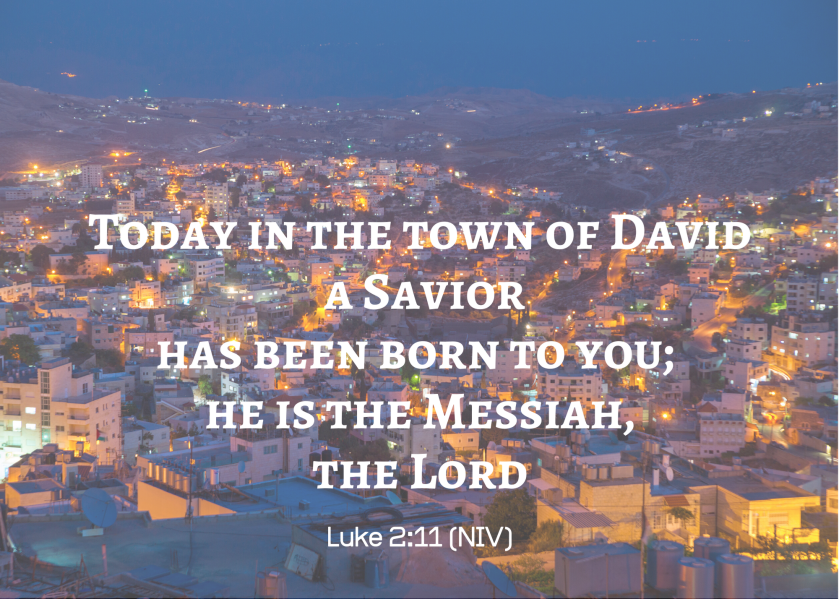
In the quiet of the night shepherds were in the fields taking care of their sheep, when suddenly an angel of the Lord appeared to them awakening them out of their drowsiness. They were terrified. But the angel said, “Do not be afraid. I bring you good news that will cause great joy for all people. Today in the town of David a Savior has been born to you; he is the Messiah, the Lord.” (Luke 2:8-11) Then “suddenly a great company of the heavenly host appeared with the angel, praising God and saying, ‘Glory to God in the highest heaven, and on earth peace to those on whom his favor rest.” (Luke 2: 13-14) The shepherds traveled to Bethlehem, and there they saw the baby Jesus, surrounded by Joseph and Mary, his mother. After seeing Him, they testified to what they had seen, and all who heard it were amazed at what the shepherds told them. (Luke 2:16-18) Very soon the whole world would know.
“And Jacob the father of Joseph, the husband of Mary, and Mary was the mother of Jesus who is called the Messiah.” (Matt. 1:16)
It is true.
Reflection Questions
Question One: Why do you think that Matthew included the names of these women in the genealogy of Jesus, when it was not customary to do so? Which story was your favorite? Why?
Question Two: How do you think Matthew intended these stories of these five women to impact your understanding of the coming Messiah? Which of the five stories had the most impact on you? Why?
Question Three: Do you think that the instances of adultery, prostitution, and murder were just happenstances or planned? Did those sins ruin the story line of the Messiah or make it more meaningful? How does that impact what you believe about the fulfillment of the purposes of God?
Question Four: What about your life? Do you have skeletons tucked away in your closet that keep you from working out the plans and purposes of God in your life? Can you now break free from that after hearing the stories of Tamar and Judah, Rahab the Harlot, or Bathsheba and David?
 Seek Grow Love