What an eclectic list of characters! Any guess on what they have in common?
They were all underdogs, devalued by society, and yet through some combination of luck, magic, leadership, divine appointment, and/or wise counsel, they went on to do mighty things. Though some characters in that list are fictional, there are plenty more true accounts in the pages of your Bible and in ancient and recent history of people overcoming opposition and obstacles to become the Greats we know today.
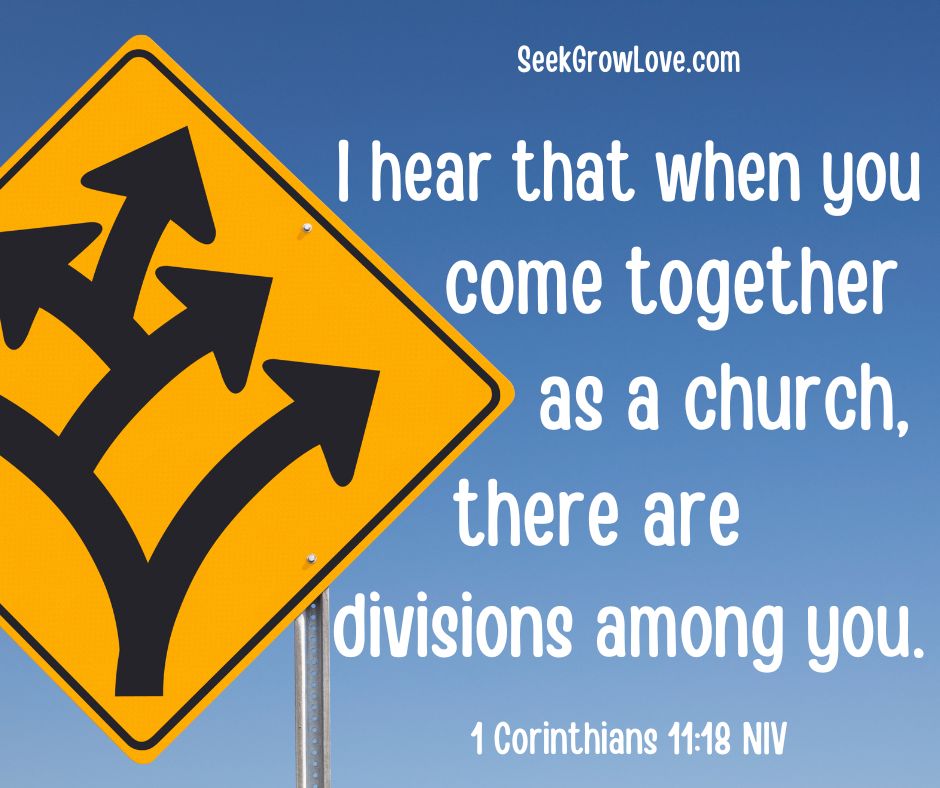
In I Corinthians 1, we read about how we were nothing special before we were saved by God’s grace and grafted into his family, that He often chooses the “underdogs” to do His work. In chapter 2, Paul reiterates that we need the wisdom and power of the Spirit in order to understand and speak the things of God; Paul clarifies that even he, who we now know as one of the greatest missionaries of all time, “did not come with eloquence or human wisdom as I proclaimed to you the testimony about God… My message and my preaching were not with wise and persuasive words, but with a demonstration of the Spirit’s power, so that your faith might not rest on human wisdom, but on God’s power” (verses 1, 4-5). Now, in the third chapter, while recapitulating to the Corinthians how we are all foolish without God, Paul is addressing quarrels and jealousy among the believers, reminding the Church how important it is to be united.
I bet that a lot of the same words he wrote to the people back then would also be penned to us today; we humans can still tend to think we’re all that and a bag of potato chips with no need for God, and division still dominates our fleshly nature. As a mom, I’ve broken up more quarrels than I can count; it seems that my kids will find a reason to argue with each other about anything and everything! And as the wife of a pastor, I’ve seen division rear its ugly head in the church too many times. Churches have even split over petty things such as decor. It seems silly that we find trivial things to bicker about when there are bigger issues plaguing the world today such as war, poverty, and human trafficking.
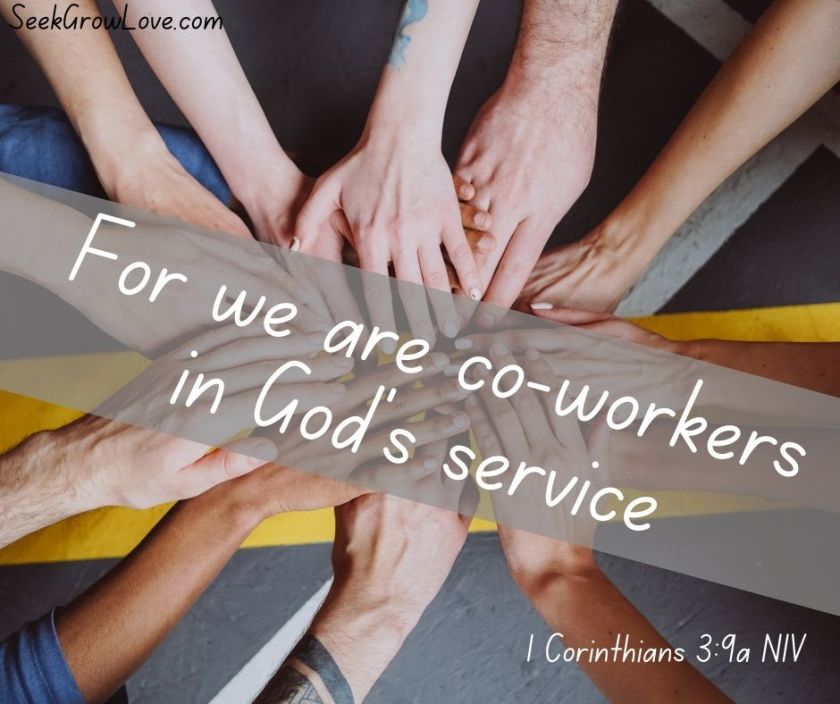
In this chapter, Paul emphasizes that we are all working together for God, but God is the real Force that makes anything happen. Paul reminds us that we are all on the same team, building on the foundation laid by Jesus Christ. In typical Paul fashion, he keeps us humble by reminding us of our foolishness; in modern-day terms, though we might have thick wallets or a string of letters behind our names indicating our importance in this world, we are all nothing without God.
I’m always encouraged when I see Christians set aside their differences to work as one unit for a good cause, or when churches with very different doctrines join hands to reach their communities for Christ. We are meant to be one body: the body of Christ. It is crucial that we as believers unite hands and hearts for God’s eternal mission.
-Rachel Cain
Reflection:
– Consider ways that you can help create unity and decrease division within your own church family. (A good place to start is to not participate in gossip).
– Are there any local organizations with which your church or your own family could join to show the love of Jesus to your local community? State? The world?
I graduated from Atlanta Bible College in 2003. I worked with a couple small churches after that, but found my “calling” in helping people through grief. Next month, my wife, Hannah, and I will celebrate our 18th wedding anniversary. Our marriage is almost old enough to vote. We have four children ranging in age from 12 to 3. In November 2021, we bought a purebred english mastiff puppy. We call her “Zippers” for her propensity to chew on jacket closures. This is the lens through which I see things, my source for some great sermon illustrations and the perspective from which I write today.
I am my parent’s oldest child. I was the first grandchild on both sides of the family. I had three whole years of life experience before my sister was born. I felt like I was practically an adult at age 13 when my youngest brother was born. When I went through grade school in DeKalb, Illinois, each student attended kindergarten through 4th grade at the elementary school closest to his or her home. Then “the whole city” converged on Clinton Rosette Middle School for 5th and 6th grade. Then, everyone transferred to Huntley Middle School for 7th and 8th grade. Finally, everyone went on to the last building of the journey, DeKalb High School. That means when I was a big 7th grader, my 4th grade little sister was still “two whole buildings behind me” in “baby school”, at Carl Littlejohn Elementary. I didn’t let her forget it. I mean it had “Little”, right there in the name. My sister and I would fight like cats and dogs growing up but if anyone else tried to mess with her, they’d better look out. Being “the big brother” or “the oldest” was a big part of my identity growing up. As adults, the three year chasm between my sister and I, does not seem so important. She’s about to finish her master’s degree and will probably make more money than me. My brother can definitely grow better facial hair than me. When we are together people have mistakenly thought he was my older brother. I’ll admit I don’t love having my sense of identity challenged. I think some of the early Christians in Corinth might have felt the same.
In 1998, I “officially” started dating the preacher’s kid, a “PK”, as they say. I quickly learned that people (including myself) make certain assumptions about how a pastor’s family members ought to behave. Sometimes there are unrealistic expectations. When you date a preacher’s daughter, people have some expectations for you too. Some are unspoken. Most of them should be. A lot of them aren’t. Churches are funny that way. People feel safe saying things they shouldn’t, or wouldn’t say elsewhere. If someone perceives you as too perfect, or not perfect enough, they might feel the need to take you down a notch, or give themselves a little ego boost by comparison. It’s kind of like social media.
Sometimes the point of what people are trying to say is correct, but it is lost because of the way they say it. If we aren’t careful, even discussing certain topics can ignite a public opinion forest fire. Polarizing material is pumped into our televisions and handheld devices every day. Maybe that’s why they call them devices; because they are so divisive. Lifelong friendships have been destroyed over which “side of the aisle” a person stands on certain topics. Gender equality is one of these “hot button topics”. At first glance it might look like 1 Corinthians 11 is “too hot for TV”. I suggest that it is not, but reader discretion is advised.
What is Paul talking about with all this head covering business in the first part of this chapter? Is he suggesting that women are somehow less important than men? Not at all.
As I understand it, the tradition of the time was for women to cover her head (and in some cases, her face too) while in public as a symbol of faithfulness to her husband. She was saving her beauty “for his eyes only”. An online Bible commentary on the subject explained that it was not completely unlike the message that would be conveyed by a woman wearing a big diamond engagement ring in today’s American culture. It said she is taken. It said, don’t event try to flirt with her. Prostitutes on the other hand, would not have covered their head in public. They wanted to draw attention to themselves. To do that in church, when the focus was supposed to be on worship, would have been quite provocative. Can you imagine if a woman came into church wearing “barely there beach attire” nowadays? It would be distracting for both men and women alike as was the case in the time Paul wrote this letter to the church in Corinth.
In case there was any question as to where Paul stood in regards to the value of women. He clears it up in 1 Corinthians 11:12 when he says: “For as woman came from man, so also man is born of woman. But everything comes from God.” So in the first part of 1 Corinthians chapter 11 Paul tries to build unity in the church by asking people to be modest.
The second half of 1 Corinthians chapter 11 is less controversial. Paul admonishes the Corinthians for abusing the opportunity for unity through communion. People in that time were eating without waiting for each other and totally missing the point of the exercise. It reminds me of obedient mastiffs and “Boy’s night waffles”.
My wife, Hannah, is a nurse. When my oldest son, Carter was little, Hannah would usually work the evening shift at the hospital. So when she worked, Carter and I had “‘Boy’s night!” Sometimes, I would make waffles and sausage for supper and we would load them all up with all the toppings we both liked: Chocolate chips, blueberries, strawberries, whipped cream, etc. Hannah would never buy all that stuff. So we called them “Boy’s Night Waffles”. As we had more kids, Carter still wanted Boy’s Night Waffles. But it became increasingly difficult with four children. It was like conducting an uncooperative orchestra to have all the waffles warm and the toppings cold and help the kids cut their food into reasonable bites so we could all eat at the same time. Now on the rare occasion that we have Boy’s Night Waffles, I just have the kids start eating as their food is handed to them. We don’t even try to eat at the same time on waffle night.
English mastiffs like our dog, are sometimes called gentle giants. They are known for their size. They are one of the largest breeds there is. A female, like ours, can easily be around 150 pounds. They can be intimidating looking, but they are generally very calm and don’t need a ton of vigorous exercise. These qualities match our family pretty well. I hope to use our dog Zippers as a therapy dog, so I have been going to obedience classes with her one or two times per week ever since she was small. A large part of what we do in class is walk in circles reminding her to watch me and not ahead of me or behind me. When we get to a doorway we practice having her wait and not allowing her to just run right in or out. When we put food in front of her she has to leave it until we say a release word. Zippers is pretty good at the waiting part. She’s not so good at the release word part. We have tried “OK” and “Free” and “Eat”. A lot of times she will not start eating unless one of us sits beside her. Paul would probably like this dog.
As I see it, 1 Corinthians Chapter 11 is meant to remind the reader, (originally, Christians at the church of Corinth in about 55 AD), about the importance of unity. Paul says he is glad that the Corinthians are following his teaching and traditions but, he wants to remind them that it is more important to follow Christ than following himself. He encourages the church to be modest and build unity over division.
-Brian Froehlich
Application Questions:
What traditions in your church have become a part of its identity?
What are some behavioral differences you notice when you visit another congregation?
What are two or three attitude adjustments your church should consider for the sake of unity?
How does the Corinthian Communion service compare to those you have participated in?
Would it surprise you to know that in a discussion about issues that people disagree on, Paul would bring up the subject of pride? The Corinthians disagreed on a lot, what to eat, how to worship, what was moral behavior, and more. Paul kind of leads with this in chapter one (1:10) saying that he ‘appealed to them’ to get rid of the divisions and live in unity with one another.
Now here, in chapter 8, Paul is in the middle of working through one of their many dividing issues. But instead of focusing on the issue, I’d like to hone in on some wisdom that Paul shares about unity in the body.
“Knowledge puffs up, but love builds up”
We shouldn’t be mistaken. Paul is not saying that knowledge itself is bad, or that the desire to pursue knowledge is in itself prideful. He’s not suggesting that we should pursue love instead of pursuing knowledge. Not at all. It seems that what Paul is concerned with is what that knowledge does in us and how we share that knowledge.
Do you like to be the smartest person in the room. That’s pride.
Do you use your tone of voice to make people feel dumb because they don’t know what you do. That’s pride.
And here’s an important thing to note… we’ll only really know that we are building up (or edifying) with our knowledge by how others respond. Edifying is not something we can claim.
“I hereby edify you!”
Nope. Not how it works.
If you think that you are sharing your knowledge with love, it will be evident by the unity that you are helping to create. When Scripture calls us to be peacemakers (Matt. 5:9, James 3:18) it implies actively building peace and unity. Being a peacemaker is more than just not shooting anyone. A peacemaker makes peace as opposed to division, they edify and build up those around them.
Picture a person filled with knowledge who you just love to be around because of the way they make you want to know more, to be better, simply because of the kindness and grace with which they speak. Their whole demeanor draws you to them. Sounds a lot like Jesus, if you ask me. It also sounds like the kind of person Paul is calling us to be.
In chapter 5 Paul taught that it is not right for those in the Church to judge those who are not in the Church because they are not held to the same standards that we have ascribed to. Similarly in chapter 6 Paul says that it is not right for those outside of the Church to be making judgements on arguments between those in the Church. If we have Christ’s love in us and if we are living according to his wisdom as Paul teaches we should, then we should be able to have reconciliation with our brothers and sisters in Christ without having to go to court. It is understandable that we will have disagreements in the Church, and feelings will get hurt, but Christ forgave the men who crucified him while he was still hanging on the cross. If he can do that then we can forgive the people in our Church. It is a shame on the Church when we cannot be reconciled to each other. When that happens Paul says in verse seven that “you have been completely defeated already”. We know from Ephesians 6:12 that this fight that we are in is against “the spiritual forces of evil in the heavenly realms” and for that reason we need to put on the full armor of God. But if we cannot unite as the Body of Christ then there is no point, we have already lost the battle.
One of Paul’s main goals in his letter to the Corinthians was to bring unity. Many of the situations in Corinth Paul was asking one of the sides to give in graciously, even though they were not wrong, in order to bring peace. Later in chapter 6 verse 7 it says “Why not rather be wronged? Why not rather be cheated?” We should seek unity in the Body over being right, or having justice. Jesus’ death was the greatest injustice in the world, and we are called to take up our crosses and follow him, we should not be surprised if we have to endure some injustice along the way.
In Acts 15 we see a fundamental theological question that the early church had to answer, and how they went about handling the situation. Jesus’ ministry, death, and resurrection represented a radical change in how mankind interacted with God. We no longer need to sacrifice for our sins because Jesus is the perfect sacrifice, and has fulfilled the law and the prophets. The problem is that the Law of Moses was the very foundation of basically all of Jewish culture and when Jesus ascended it was not completely clear to the apostles as to what to do with the Law of Moses. Because Christianity started in Jerusalem and then spread out from there to the rest of the world the early Christian leaders all came from a Jewish background and some of them tried to force their culture and the Law of Moses onto the new Gentile believers. To them this would seem natural because in their mind this is how you interact with God and what he expects from you, and has been for over a thousand years. They had not caught up completely with all of the changes that Jesus brought. The way I picture this is like a person who messed up their leg and needs to walk on crutches for a while, and then after the doctor performs a surgery that completely fixes their leg they decide to continue to use the crutches after that, and then also try to convince their friends that they should start to use crutches too even though that isn’t necessary at all and will only inhibit your friends. This is basically the conclusion that the early church leaders come to and they tell the gentiles that they do not need to follow the Law of Moses because it would hinder the gentiles from coming to God. They also tell the gentile believers that they need to make sure that they are not participating in the aspects of their old gentile beliefs that might cause issues for them. Just as the early church leaders saw that the Law of Moses would be a stumbling block to other people, they saw that aspects of the idol worship in many gentile areas would be a stumbling block as well.
I think it is very important that we recognize that there are many aspects of our modern secular American culture that are going to be stumbling blocks for our spiritual walk, and that we need to leave many of those things behind if we are going to devote our lives to Christ. This is not easy and was a very divisive issue in the early church, and has the potential to be divisive in our churches today. Some things as seemingly small as the use of drums and guitar in a church service can be very contentious in some churches. This passage also shows us how Paul dealt with the issue so as to not cause division. He was one of the first people preaching to the gentiles and had not had a lot of contact with the early church leaders in Jerusalem. Instead of trying to handle this issue by himself and decree what he knew the Holy Spirit was telling him he went to Jerusalem and discussed with the church leaders and showed them that God was working in the gentiles and that was proof that they did not need to follow the Law. Once they agreed this helped to legitimize Paul’s message and began the process of unifying the Church on this issue.
Jesus makes a distinction between conflict outside and within the Church. The bonds we have with people in the Church are different—we’re brothers and sisters. As brothers and sisters, we have an obligation to correct, discipline, and mentor each other. Proverbs 27:17 says, “As iron sharpens iron, so one person sharpens another.”
Just like rubbing iron together creates friction, there is sometimes friction in our relationships, especially when sin tries to sneak its way between us. Sin and conflict, if not handled properly, can fracture the unity of the Church. Jesus’ passion was the Church, He went as far as dying on a cross for the sake of preserving the Church for all eternity. Sin is the enemy of Jesus’ preservation mission, so we must handle sin and conflict inside the Church carefully but also with great urgency. Fortunately for us, Jesus lays out a three-step plan to dealing with trouble in our churches.
In Matthew 18:15-17, Jesus says, “If your brother sins against you, go and tell him his fault, between you and him alone. If he listens to you, you have gained your brother. But if he does not listen, take one or two others along with you, that every charge may be established by the evidence of two or three witnesses. If he refuses to listen to them, tell it to the church. And if he refuses to listen even to the church, let him be to you as a Gentile and a tax collector.”
The first step when a problem arises in the Church is to go directly to the culprit in private—doing so with love, mercy, and understanding. Jesus says it’s our responsibility to resolve conflict whether we’re the ones causing it or not. As peacemakers, we get the privilege in joining Jesus in his mission of preserving the Church. If the culprit listens and repents, congrats, you’ve completed your mission in record timing. If your mission was unsuccessful, don’t give up just yet. The next step is to take along another trusted member or two of the Church to confront the culprit. There is power in numbers. If the culprit refuses to listen yet again, bring the issue to the Church itself. This is the Hail Mary attempt. Pull out every stop and go the extra 500 zillion miles, praying that God will multiply your efforts. Up until this point, Jesus’ objective has been mercy, but if this final step fails, justice takes over. This unrepentant culprit is now considered a Gentile or tax collector, meaning he is no longer a part of the community of believers. Paul draws upon Jesus’ teaching in 2 Thessalonians 3:6, saying, “In the name of the Lord Jesus Christ, we command you, brothers and sisters, to keep away from every believer who is idle and disruptive and does not live according to the teaching you received from us.” If this is the fate of your mission, find peace in the fact that you are not responsible for changing hearts. You can love people, but you don’t have the authority and power to save them.
Today, pray for your church. This amazing connection we have to each other as believers of the one true God is frail and fragile in this broken world. Where there is a crack, more sin and troubles are sure to find their way in, so we must confront each crack diligently, following the procedure Jesus lays out for us in Matthew 18. Yes, confrontation is uncomfortable, but so was being nailed on a cross. Jesus never said it would be easy; he said it would be worth it.






 Seek Grow Love