
Amos 6-9
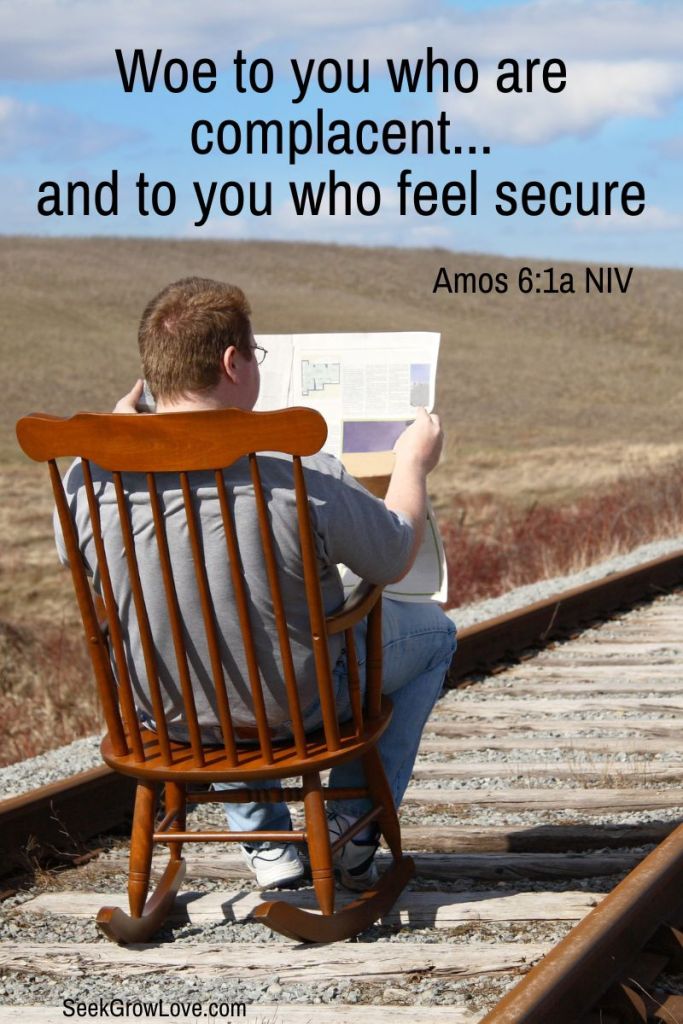
Today we are reading out of the third of the minor prophets, Amos. However, if the first three chapters make you feel a little uneasy: that’s entirely the point! Amos 6 starts with “Woe to you who are complacent in Zion,
and to you who feel secure on Mount Samaria,
you notable men of the foremost nation,
to whom the people of Israel come!”
Amos is speaking on behalf of God to the people of Israel in a time of prosperity. However, in a time of complacency, the people of Israel have once again allowed for themselves to become spiritually corrupt. They “lie on beds adorned with ivory,” and “lounge on (your) couches,” but they “will be among the first to go into exile.” (Amos 6:4-7). This is because they “do not grieve over the ruin of Joseph.” Because the people of Israel have become so complacent and uncaring of those in need lest it take away from their pleasure, God seeks to divide and destroy the nation as it currently stands.
Amos 7-8 essentially goes into vivid imagery of how Israel’s destruction will be met. First, the locusts. However, Amos convinces God to relent to an impending famine. Then, the fire. However, yet again Amos convinces God not to destroy the land. Then, God showed Amos a vision of him holding a plumb line, which is a device used to measure the straightness of a vertical drop. However, when God was “setting a plumb line among my people Israel,” he was measuring their righteousness to his standard. And for this, he must judge them and divide them.
Surely this should serve as a MASSIVE wakeup call for Israel. Unfortunately, the priest of Bethel (Amaziah) was not wanting Amos to prophesy against Israel in the city of the king. That didn’t end too well for him. Read Amos 7:17 for more on that. Ouch.
We must use this time when Israel was judged as a reflection on our own lives. What does it mean to be complacent? Does God despise complacency? Is it not okay to be comfortable? Although it almost certainly looks to be that way, I would argue that the grave mistake that Israel was making was their complete ignorance of righteousness and their spiritual lives. Are we more concerned with our personal comfort than with the brokenness around us? Do we avoid lamenting over sin and injustice because it disrupts our peace? Although we must always strive for times of peace, we must be aware of our own sin and also make active attempts to comfort those around us who are not at peace.
Furthermore, God says that a famine will fall upon Israel after all. However, it’s a little different than the usual famine. It’s “Not a famine of bread… but of hearing the words of the LORD” (Amos 8:11). Are we listening for God’s voice or have we tuned Him out in our own prosperity and ignorance? The greatest famine we could ever face is not material, but spiritual when we no longer hunger for God’s Word or even notice when it’s absent. With that said, we must heed the words of Amos and continue to hunger and thirst for the righteousness that God offers us through his words.
Although most of this sounds like a dire warning and a time for lamenting to come, we actually don’t get to end off our devotion with a bad note! As God promises in Amos 9 that there will be a restoration. “The days are coming… when the reaper will be overtaken by the plowman and the planter by the one treading grapes. New wine will drip from the mountains and flow from all the hills, and I will bring my people Israel back from exile” (Amos 9:13-14). Therefore, if we apply this message to our own spiritual journey, we can know that even if we are burdened by the weight of our own complacency and sin, that it is not too late to act. There is hope for our own restoration, just as God promised that there will be a restoration for the people of Israel.
-Colby Leggitt
Discussion Questions:
- Where in my life have I grown complacent or overly comfortable?
- What injustices am I ignoring or avoiding?
- Am I listening for God’s Word daily or has it become background noise?
- How can I live today with urgency for hope in restoration through repentance?

 Seek Grow Love