God’s Home – My Heart (I Chronicles 17-20)

Sunday, November 20

1-chr-17-9-ww-mf-9x

I am just going to be honest here. This is the fourth devotion I have written after reading through 1 Chronicles Chapters 17-20. David always intrigued me after hearing that he was a man after God’s own heart and there is so much in these chapters to learn.

Chapter 17 opens with the acknowledgement that David is no longer living in caves or sheep pens, yet is unable to be content because God is living in a tent. David wants to build God a home! Nathan, the prophet, gives the ok. God quickly sends Nathan back to tell David, “no thanks”; explaining He was content walking with his people tent to tent. In chap. 17:10 God says, “I tell you that Yahweh will build you a house” and proceeds to explain how salvation will come through David’s family and an eternal home established. That had to be David’s ultimate WOW moment. And he had plenty to choose from.

David had the opportunity to receive Gods blessing with humility or pride. He chose humility and poured out his heart before God in thankful praise. It is a beautiful moment captured in scripture of a true servant’s heart, broken in worship before his God.

After hearing God’s promise of a Messianic Kingdom, David was emboldened to conquer his own kingdom and began attacking and driving out all enemies from the Promised Land.  18:14 says that Yahweh gave victory to David wherever he went. The verse goes on to say that David “reigned over all Israel; and executed justice and righteousness to all his people.”

David was doing what he knew to do externally to display God’s power, but battles with perceived enemies do not conquer the inner enemies of the soul and do nothing to build a home for God in our heart.

Chapter 19 offers plenty of wisdom regarding the importance of choosing good friends and advisors; along with a good lesson why you should not expect the worse from perceived enemies when they come offering peace. David faces some undeserved bad treatment, no doubt, and seems to change his focus. He sets aside his covenant to honor God with his life and tries to mask over bad decisions through ill treatment of others. He began trusting in chariots and horses and leaving the fighting to others while he stayed home and lusted after another man’s wife.

In Chapter 20, when David received the spoils of war that others fought on his behalf he brutally destroys the people because they were related to the giants he fought in his youth.

So, what does all this mean for our lives? God isn’t needy. God is a provider. He loves to walk with us and will live with us in any situation. The home he desires is an inward one in our hearts.  When we try to cover up sin in our lives and believe we are able to hide our heart from God, our guilty conscience can be found on full display in our poor treatment of others.

If we are to win our personal battles and take ground for the kingdom of God within our own hearts, we have to stay committed and focused and willing to walk daily in God’s mercy and maintain a humble attitude for every victory that unfolds.

Glennis Walters


Faith of Our Fathers (1 Chronicles 11-13)

Friday, November 18

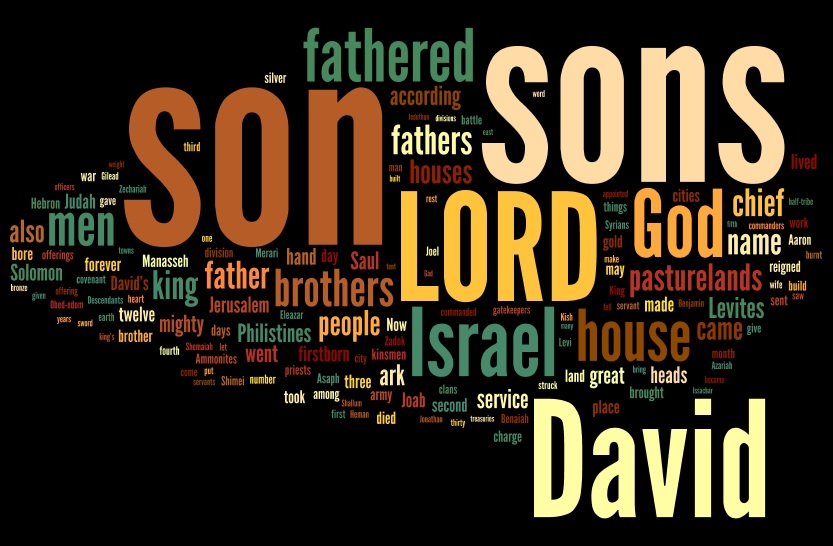
13-wordle-1-chronicles

As I mentioned in the devotion a few days ago for 1 Chronicles 1-2, tradition says that this book was probably written after the Israelites returned to Jerusalem following 70 years in exile.  This was probably during the time that Jerusalem was being rebuilt, a time with a lot of struggles and fear.   There were not walls around the city.  There were enemy nations around.  They had not had their own kingdom in the entire time most of the people had been alive.  This was all new for them.

These chapters start the retelling of the time when David was king, a prosperous time in their history.  In 1 Chronicles 11:4, it says:

David and all the Israelites marched to Jerusalem (that is, Jebus).  The Jebusites who lived there said to David, “You will not get in here.”  Nevertheless, David captured the fortress of Zion, the city of David.

Then in verse 8, it says about King David:

He built up the city around it, from the supporting terraces to the surrounding wall, while Joab restored the rest of the city.

This must have been very encouraging at this time to see that David had to conquer and then build up Jerusalem, including the walls, during his reign.  The nation was greatly blessed while David reigned, so why couldn’t they rebuild and be prosperous and be blessed again.  David had trusted God, and they were now trusting God, so they could look forward to blessings and protection just as the people in the time of David.

We can all look back to the people in the church before us, and see how they trusted God, and how the church has been blessed through them.  This may be people in our family, in our local church, or others that we know of.  Their examples and the things that they have done through faith should teach us that with faith, we can also have protection, peace, and blessings as we serve the LORD.

-Andrew Hamilton

Brother Against Brother (2 Kings 1-2)

Thursday, October 27

Sherry Alcumbrack

As we read these chapters, we may just decide our families are not so bad. So far we have had rape and attempted murder in the family of King David. Now, one of his older sons decides to make himself king before David dies and passes it on to his choice, Solomon. Adonijah proclaims himself king and even gets some of David’s advisors to go along with it. He had a celebration but did not invite Nathan the prophet, Benaiah, one of the mighty men of David, or Solomon. Nathan went to Bathsheba and warned her. She went to King David and reminded him that he had promised that Solomon would sit on the throne as king. So David did as he had promised and made Solomon the next king of Israel. As you can imagine, this did not sit well with Adonijah. After Solomon is made king, Adonijah was executed for his wicked behavior.

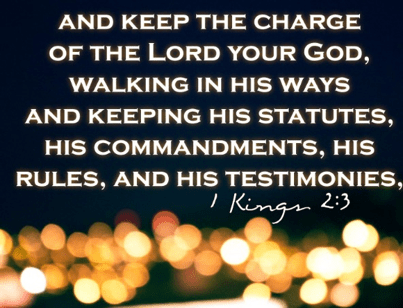
As the death of King David draws near, this is what he instructs Solomon. He said to follow these instructions “so that he might prosper in everything that he did and wherever he turned.”

i-kings-2-3pic

As we continue to read in Kings we will soon see that some of the kings followed these instructions and led pretty peaceful lives while the evil kings had all sorts of trouble during their reigns. If we follow these instructions our lives could also be so much more trouble free. We would still have trouble, but some of the trouble that we face is due to foolish decisions that we make when we don’t follow the instructions that God has set before us. He did not make these laws to keep us from having fun, but to benefit us. One of the major themes of the first books of the Bible has been that the Israelites, and us today, have to make a decision. We have a choice to make. In Deuteronomy, Moses said: “Choose life and blessings or death and destruction.” Joshua said “Choose you this day whom you will serve, as for me and my house we will serve the Lord.”  Here King David is passing this lesson down to Solomon. In Deuteronomy, it tells us to write these instructions on our heart, to talk to our children when we are sitting in our house, when we are walking with them, when we lie down, and when we rise up. Basically, we need to talk about the instructions that God handed down to us in every aspect of our lives. He gave Moses the 10 commandments for us to follow. They all deal with respecting and loving God and others.

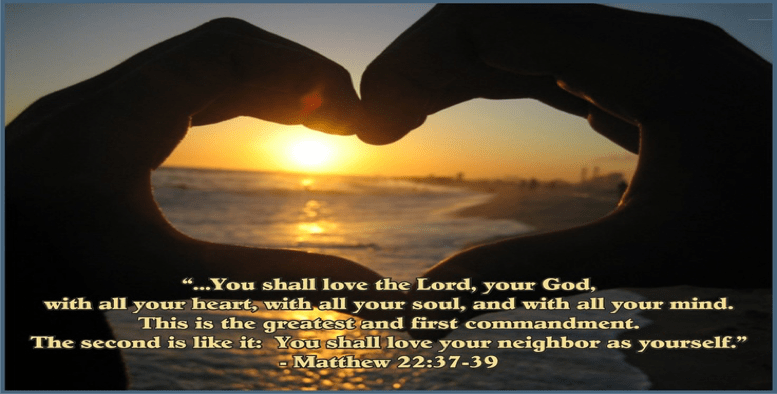
In the New Testament, Jesus says that the two most important commandments are to love God and love others. When we understand these commandments, we will be living a life after God’s heart like his faithful servant David.

matt-22-37pic

Onward, Christian Soldiers (2 Samuel 23-24)

Wednesday, October 26

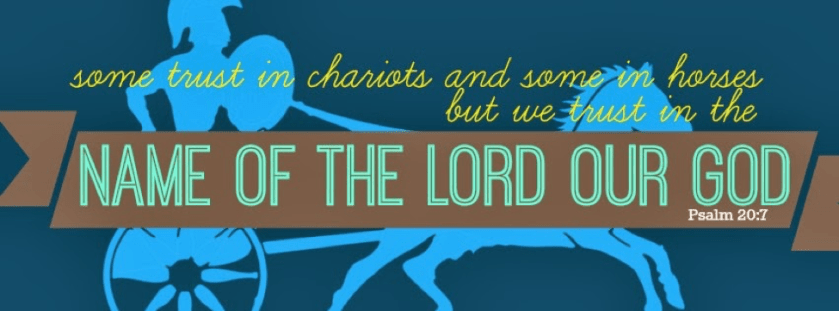
ps-20-7-pic

By Sherry Alcumbrack

Some of you may have noticed we have been in the middle of a contentious election race for POTUS. Here are some words of wisdom from Chapter 23:3b. “He who rules over men must be just, Ruling in the fear of God.” We need to get back to electing leaders that are Godly men and women like the leaders we have been reading about.

As we read about the mighty men of David, a couple of things struck me. Each of them had to do something. They didn’t just stay in their tent and wait for the Lord to go out and win the battle for them. Adino killed eight hundred men at one time. Eleazar, when the Israelites had retreated, “arose and attacked the Philistines until his hand was weary and his hand stuck to the sword.” Shammah stationed himself in the middle of the field, defended it, and killed the Philistines. And on and on the stories go, but at the end of the stories, they would say, “So the Lord brought about a great victory.” They took no credit for it. So, we, just like these mighty men, may have to get out there in harm’s way to be able to have a great victory. And then we need to glorify God, who is the one that brought it about. God uses His people to win His battles, but we have to be willing to go out on the battlefield with Him.

After all these victorious battles, David decides to take a census of the Israelites, which in and of itself is no sin. But the sin lies in the fact that David was feeling pretty prideful about what his armies were able to do and forgot to give God the glory. He started trusting in men and not God.

2 Samuel 24:10 b says,  “So David said to the Lord, ‘I have sinned greatly in what I have done; but now, I pray, O Lord, take away iniquity of Your servant, for I have done very foolishly.’” A prophet came to David and told him he had a choice for his punishment: seven years of famine, three months with his enemies pursuing him, or three days’ plague in the land. In verse 14 he says, “I am in great distress. Please let us fall into the hand of the Lord, for his mercies are great: but do not let me fall into the hand of man.” We know that there are consequences for our actions, especially when they go against the laws of God. But we also know that God is a merciful father and will forgive us of our sins.

mercy-pic

At the end of chapter 24, it shows David as the shepherd of the people of Israel and he pleads with God, “Surely I have sinned, and I have done wickedly; but these sheep, what have they done? Let Your hand, I pray, be against me and  against my father’s house.”  Jesus is our good  shepherd and he pleads for us to his father. It is comforting to know that we have an advocate that is speaking.

heb-7-25-pic

How Do WE Become Men/Women after Gods Heart? (2 Samuel 19-20)

Monday, October 24

By Sherry Alcumbrack

King David has a distinction that no one else in the Bible has. Act 13:22 “ After He had removed him, He raised up David to be their king, concerning whom He also testified and said, ‘I have found David the son of Jesse, a man after My heart, who will do all My will.” God calls David a man after his own heart. When we read about King David, we read how he committed adultery with Bathsheba, had her husband killed, etc. But when God forgives us after we repent, he forgives and it is like it never happened.

What made David a man after God’s heart? One of his characteristics that stand out in these chapters is his kindness. He was kind to several people, and he wasn’t kind to these people because he thought they could repay him.

golden-rule-pic

The first instance is with Shimei, now you may not remember that name but in Chapter 16 he was the man, from the family of Saul, who came out cursing King David and throwing stones at him and his servants when Absalom was pursuing him. After Absalom is killed and David is coming back to Jerusalem, Shimei meets King David at the Jordan River, he bowed before him and asked for his forgiveness. Abishai advised the king to put him to death because he had cursed the Lord’s anointed. King David said in 22b and23 “Should any man be put to death in Israel today? For do I not know that I am king over Israel today?” The king said to Shimei, “You shall not die.” Thus the king swore to him.

We heard about the kindness of King David to Mephibosheth earlier but he wasn’t finished. Mephibosheth did not leave with King David, and his servant Ziba lied to David about Mephibosheth. King David asked him “Why did you not go with me, Mephibosheth?” It had hurt King David because he thought another friend had deserted him. By this time King David had given Ziba the land that belonged to Mephibosheth but he restored it to him and said that he and Ziba would divide the land. But Mephibosheth was such a loyal friend that he said, “Let him take it all, since my lord the king has come safely to his own house.

The third story involves Barzillai, an old man who had taken care of the king when he was in Mahanaim. Barzillai was also someone that showed kindness to others and thought nothing of taking in the King even when he might have brought death to his own family if Absalom came after him. King David wanted to show his appreciation by taking him back to Jerusalem. Barzillai went with him as far as Jordan. He told King David, I am an old man, hard of hearing, I can’t taste what I eat or drink and I do not want to be a burden to you. Let me go back to my city to die near the grave of my father and mother. But he offered someone in his place, Chimham, (probably his son.) King David said “Chimham shall cross over with me, and I will do for him what is good in your sight; and whatever you require of me, I will do for you.” Later it is noted in 1 Kings 2:7 David tells his son Solomon to “show kindness to the sons of Barzillai of Gilead and let them be among those who eat at your table.”

Showing love and kindness to others who cannot repay us is a hallmark of Christians. It is what we are called to do in Matthew 7:12

matt-7-12-pic

Bad Company Corrupts Good Morals (2 Samuel 16-18)

Sunday, October 23 – Week 14

prov-12-15

By Sherry Alcumbrack

In these chapters we read about a struggle between a King and his son, Absalom. I know from being raised in a family with 8 children that there are struggles within the family as the children try to assert their independence. In this story Absalom asks for advice from 2 friends. Ahithophel encourages him to go into his father’s concubines in the sight of all Israel, to show the disdain that he had for King David. He also told him to choose 12,000 men to pursue King David. Then Absalom calls Hushai to ask his advice. He tells him that the advice that Ahithophel had given him was bad advice. He reminds him that his father, King David, was surrounded by mighty and valiant men who were loyal to King David and would fight and die for him. Absalom decides to take Ahithopel’s advice, to his detriment. In Proverbs it says a lot about taking advice from others and to listen to wise counsel. I recently heard someone say that he could tell you what your future holds by the friends we surround ourselves with. If they are foolish, we will make foolish decisions, as well. We need to make sure that we are listening to that Godly advice.

Hushai also shows his loyalty to King David by going and warning him of Absalom’s plans. King David was surrounded by people who were loyal to him, down to the servant girl who hid 2 of his friends in a well to keep them safe.

Even through all this, one of the things that stands out is the fact that King David loves Absalom and asks the people to treat him gently. This is his son that is trying to kill him.  In 2 Samuel 18:5, David says “Deal gently for my sake with the young man Absalom.” The last verse of chapter 18 is King David mourning for his son, after he heard of his death.

2-sam-18-pic

This is the type of love that God shows to us. He is constantly wanting the best for us. He grieves when we turn against him. 2 Peter 3:9 “The Lord is not slow in keeping his promise, as some understand slowness. Instead he is patient with you, not wanting anyone to perish, but everyone to come to repentance.” He is just waiting for us to turn back to him, like the father in the Prodigal Son parable that Nathaniel mentioned in a previous devotion.

luke-15-10-pic


We thank Sherry Alcumbrack for writing this week.  Sherry is a wife to Bob, mother to Morgann, Marshall, Grant and Jacob.  She lives in lovely Anderson, SC and attends Guthrie Grove.  She enjoys traveling,  has been to 48 states, and looks forward to visiting Alaska and Hawaii. She loves flowers,lighthouses, waterfalls and sunsets and taking pictures of her family in front of them (her children love this as well.) Spring and Fall are her favorite seasons.  She also loves to read and walk her dog.

Beware: Poison! (II Samuel 12-13)

Friday, October 21

oct-21-pic

Nathaniel Johnson

In the Garden of Eden, Adam and Eve were tempted to eat of the one forbidden fruit. In David’s kingdom, he was tempted to take Bathsheba as his own wife, even though she was already married. David’s son Amnon, was tempted to take his sister Tamar for himself, even though that is disgraceful. The sin that started with Adam found its way to king David, a man after God’s own heart, and on to his son Amnon. Like father, like son, they both went after the forbidden fruit. How silly of Amnon to not listen to Tamar! He could have been free of guilt had he only asked David to give him Tamar as his wife, but he couldn’t resist the temptation. The sin that Amnon commits spreads like a virus to his brother Absalom. Absalom handles this fairly well at first. He started to take care of his sister and let her live in his household. He also didn’t lash out at his brother. In fact, he didn’t say a single word to Amnon. But, he made one crucial mistake in dealing with his brother. He didn’t forgive him. I know it’s hard to imagine being in this situation and it’s even harder to be able to imagine being able to forgive someone for that. As Alan Cain once said, “Unforgiveness is the poison we drink thinking that it will harm someone else.” Absalom thought that by harboring this bitterness in his heart, he could pay back Amnon for what he did to Tamar. He was wrong. When the bitterness in his heart boiled over, he struck out and killed his brother. As a result, he not only hurt himself, but left an emptiness in his father’s life by running away in shame. When we sin, the worst thing we can do is duck our heads and run away. Just as David still wanted to see his son Absalom after he had sinned, our Heavenly Father wants to see us when we take a bite of that forbidden fruit. Through Jesus, God will always welcome us back with open arms as long as we come for forgiveness.

Intentional Kindness (II Samuel 8-11)

Thursday, October 20

i-corin-13-4-pic

Nathaniel Johnson

We all know that kindness is a trait that we should strive for as followers of Christ. Certainly kindness follows from serving others. In chapter nine, David shows a great act of kindness to a man that did nothing to deserve it. Sometimes, we think that kindness is responding positively when we see something. Like when you see a man struggling to carry a bunch of stuff and you offer to help him out and then go the extra mile with him and carry it for him (Matthew 5:41).  That’s a great way to show kindness, but what we see David doing here for Mephibosheth is very different. David didn’t know that Mephibosheth existed until he sought him out. Sometimes, to show God’s love, we have to intentionally look for situations where we can improve someone’s life. David did his research. He asked Ziba if there was anyone that he could show kindness to. For us to be as kind as King David, we also have to do our research. Maybe for you to show the kindness of a king is to volunteer and you, too, need to do your research. Find a cause that you can show kindness to. Do your research, and then hold nothing back, just like King David.

The King is Coming (II Samuel 4-7)

Wednesday, October 19th

2-samuel-7-28-pic

Nathaniel Johnson

What is going on? Why was a man struck down for trying to keep the ark from falling? It may seem odd to us that the God of Mercy gave Uzzah only one chance here. I’m sure he had the best of intentions but we know that God’s judgement is just (1 Thessalonians 1:5). I think there’s good reason that’s about to be revealed in chapter 7. Even though Uzzah died, we need to remember that we serve a God who has power over death and that death is not the end. One chapter after Uzzah was struck down, God makes an interesting promise to David. He promises that David’s offspring will be the son of God, he will be punished by the rod of men and that his kingdom will endure forever. Does that sound like any one we know? God is telling David about the coming of Jesus. The same man who came and broke the power of death. He died and lived again. Just as Jesus did, so will we and Uzzah because all will stand before the Judge (2 Corinthians 5:10). David sums this all up perfectly in verse 28: “O Sovereign Lord, You are God! Your words are trustworthy.” Rejoice, for God’s words are trustworthy! Jesus came once and he will come again!

Your Enemy Dies – So You . . . ? (II Samuel 1-3)

Tuesday, October 18th

mt5-44-pic

Nathaniel Johnson

Now that Saul is dead, there’s nothing in the way to stop David from being anointed as the King of Israel. You’d think that this would be a time of celebration for David; he’s finally free from the threat of Saul! But when David hears that Saul fell in battle, we see the opposite of celebration. David and his whole camp fasted and mourned all day. It would be one thing if David was just sad about his friend Jonathan dying, but he also wrote his song about Saul, a man who tried to kill him. How many other people do you know that would praise their enemies? I can think of at least one: Jesus. Jesus said to “love your enemies and pray for those who persecute you” (Matthew 5:44).

David is certainly living out a Christlike virtue here and we should strive to do the same. It can be really easy to be happy when we see our school bully get in trouble with a teacher. But that’s not how David would react and that’s not how Jesus says we should act. We should wish the best on our close friends and our enemies and pray for them daily, because if we do, we will “be sons of [our] Father who is in heaven.” (Matthew 5:44)