
Responding to the Glory of God


Ezekiel 43-44

IMG_0009

Sunday, April 2

How should we respond to God’s glory?

To be able to answer this question, we should know what God’s glory is. A simple definition is His character, holiness, and excellence revealed. It is the essence of God on display.

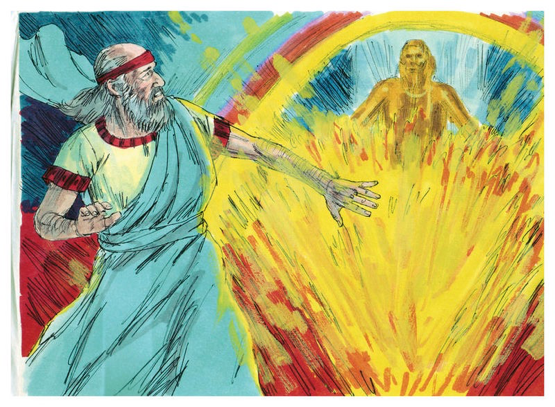
In today’s passage, we read about Ezekiel experiencing God’s glory in a vision. He hears the voice of the LORD (Yahweh), which sounds like “the roar of rushing waters,” sees the land “radiant with his glory,” and witnesses the glory of Yahweh filling the temple (Ezek. 43:1-6).

You and I will likely never get the opportunity to receive a vision from the Almighty in which we can see His glory in such an amazing fashion. But God has revealed aspects of His character, holiness, and excellence to us in several ways. In these we can experience the glory of God and respond to it.

God has revealed Himself through His creation. This idea is called Natural Revelation. Romans 1:20 says “For since the creation of the world God’s invisible qualities—his eternal power and divine nature—have been clearly seen, being understood from what has been made, so that people are without excuse.” When one looks at nature it is difficult, at least for me, to believe that everything seen came about by chance and was not designed by an intelligent being. While Natural Revelation doesn’t tell us much about who God is, it does show a great deal about what He is capable of and how great He is.

God has also revealed Himself through the scriptures. What Natural Revelation leaves out about who God is, the Bible fills in much more. The writers of each book in the Bible were inspired by God through His holy spirit. They rely stories of the wonderful things He has done and inform readers of what He can do, and some even reveal what He will do in the future. The Bible offers a large portrait of the greatness and goodness of God, but doesn’t give a complete picture. Not until we dwell with Him in His kingdom will we experience the full weight of His glory.

God has revealed Himself through His son. The apple doesn’t fall far from the tree is an expression often used to illustrate how a son is very much like his father, this could be said of Jesus. But more accurately it would be said that the apple doesn’t fall from the tree at all, it is essentially still part of the tree. Jesus is the exact representation of His father. If we want to get a better picture or understanding of God, the best thing we can do is to simply read the Gospels that tell of Jesus. The character of Christ is the character of God. The attributes Jesus exhibits are the same of his father. The glory of God is seen in His son.

The question still remains, how are we to respond to God’s glory?

I think our response should be twofold.

(1) We should be reverent. God is not like us. He is perfect. He is holy. He has great power. He created the world in which we live and, when we messed it us, had a way to make it right again. So, he deserves to be praised. He is entitled (it is his right) to be worshiped. This reverence we have for God should lead to not just passive adoration, but active glorification. We can stand in church and say God is great, but if we think this to be a great truth, it should move us to give our lives to him and serve him everyday of our lives.

(2) We should be repentant. When I say God is holy this means two things: he is set apart and he is pure. We, as human being who engage in sin, are not pure and we tend to act the same as everyone else, making us not set apart. That being said, we are called to be holy as God is holy. The first step towards holiness is repentance. We must forsake our sin and choose Jesus instead. He is the only one who can make us holy.

As you read our passage for today, as you go outdoors and see the beauty that is nature, and when you read about Jesus in the gospels, think about how you should respond. After all, you’re experiencing God’s glory.

-Joel Fletcher

Joel Fletcher is a former student of ABC. He currently lives in Minnesota with his wonderful wife Stephanie. He likes to read boring non-fiction books, watch boring baseball, and hang out with his NON-BORING wife in his free time. He is planning on teaching a class at FUEL this year (its topic will not be boring).
God’s Watchman to A Generation

Ezekiel 1-4

ezekiel 1

Sunday, March 19

Ezekiel was a priest in Israel during a tumultuous time in their history.  The Northern kingdom had been decimated by the Assyrian empire and its people scattered and assimilated resulting in a complete loss in their identity as a distinctive people of God.  The Southern Kingdom of Judah was now being systematically taken apart by the Babylonians.  Ezekiel was among the early members of Judah’s elite leaders who were taken captive to Babylon.  Ezekiel was now a priest living in a foreign land where he had no access to the temple of Jerusalem and the religious symbols that helped shape his life and give him meaning and purpose.

In today’s readings God comes to Ezekiel in a series of visions.  These visions  are recorded as a type of scripture known as apocalyptic- where something is revealed or unveiled.  In addition to portions of  Ezekiel there are apocalyptic passages in the books of Daniel, Isaiah and Joel.  God reveals what is going to happen as He brings an end to the present age preparing the way for the age to come or coming Kingdom of God.  You will notice some similarities between Ezekiel 1 and Revelation 1 and 4.

Ezekiel’s description sounds like something in a science fiction movie- 1:27-28 says: “ I saw that from what appeared to be his waist up he looked like glowing metal, as if full of fire, and that from there down he looked like fire; and brilliant light surrounded him.  Like the appearance of a rainbow in the clouds on a rainy day, so was the radiance around him.  This was the appearance of the likeness of the glory of the Lord. When I saw it, I fell facedown, and I heard the voice of one speaking.”

Imagine if, for a brief instant, God permitted you to have a vision of himself in all of His glory.  You would probably struggle to find the right words to communicate what you saw.  So it is with Ezekiel.  He is overcome by the glory of God and he falls on his face.

The whole of Ezekiel is surrounded by the image of a holy God.  But God’s people, Israel, have been disobedient to God.  Ezekiel is appointed by God to serve as his “watchman” (3:17) for the people Israel in captivity.  His mission is to warn God’s people of their sins and to call them to repentance.  Ezekiel 2:7-8: “You must speak my words to them, whether they listen or fail to listen, for they are rebellious.   But you, son of man, listen to what I say to you.”

The job of a watchman is to stay awake, keep one’s eyes open, and warn if anything dangerous or illegal is taking place.  It might also include a warning to those who are tempted to trespass.  Ezekiel’s job was to warn God’s people about the consequences of their sins and the coming judgment of God.  God tells Ezekiel essentially: “you need to warn the people about my coming judgment.  If they don’t listen to your warning, then they will suffer the consequences, but if you fail to warn them, then I’ll hold you responsible for their sins.”  God was letting Ezekiel know that he had a mission, to share God’s word with people.  If the people didn’t listen or heed the warning, it was on them, but if he refused to give the warning it was on him.

As followers of Jesus Christ today, we are called to be priests in this world.  Like Ezekiel,  we are living in an age where much of Christianity has been decimated by a massive turning away from God and people are scattered and assimilated into the world resulting in a complete loss in their identity as a distinctive people of God.  And like Ezekiel, we are to keep watch and issue warnings to the people of the world.  As with Ezekiel, sometimes we will warn people and they won’t listen.  If that’s the case, it’s on them.  But if we fail to do our job and give the warning, then it’s on us.  People won’t always like what we have to say- prophets and priests are sometimes labelled as intolerant and not very popular, but that should not prevent us from doing the work God has given us to be His watchmen to our generation.  (Note: our job is not to be the judge, it’s not our place to condemn the world, but to tell them what God tells us to tell them, which is the Gospel.)

-Pastor Jeff Fletcher

My name is Pastor Jeff Fletcher.  I’m one of the old guys.  I first attended what is now FUEL (then it was called National Camp) back in 1977 and I’ve been a camper or on the staff for most of the past 40 years.  I’m a graduate of Oregon Bible College, (Now ABC) and I’m completing a Master’s Degree from Eastern Mennonite Seminary.  I’ve pastored Churches in Illinois, England, Louisiana, South Carolina and now Virginia.  My wife Karen and I have eleven children and 4 grandchildren and my daughter, Karee Anne is getting married this Saturday, March 25.  In addition to pastoring a Church I also work as a hospital chaplain.  I am passionate about bringing the message of God’s loving presence to people who are hurting and in need of hope and purpose in life.