
Defining Jesus

Old Testament: 2 Kings 5 & 6

Poetry: Psalm 129

New Testament: Ephesians 1

In the first Chapter of Ephesians, Paul spells out the significance of Jesus Christ.  Jesus is the stipulation for the grace that we receive.  Without his propitiation, we are without a promise.  The role of Jesus in this plan isn’t singular, but multifaceted.  The intention of Ephesians 1 isn’t to spell out distinctive theology; however, to understand salvation you must understand the Messiah.  While this is not all-inclusive, here are some of the basics delivered to us in the beginning of this church’s letter:

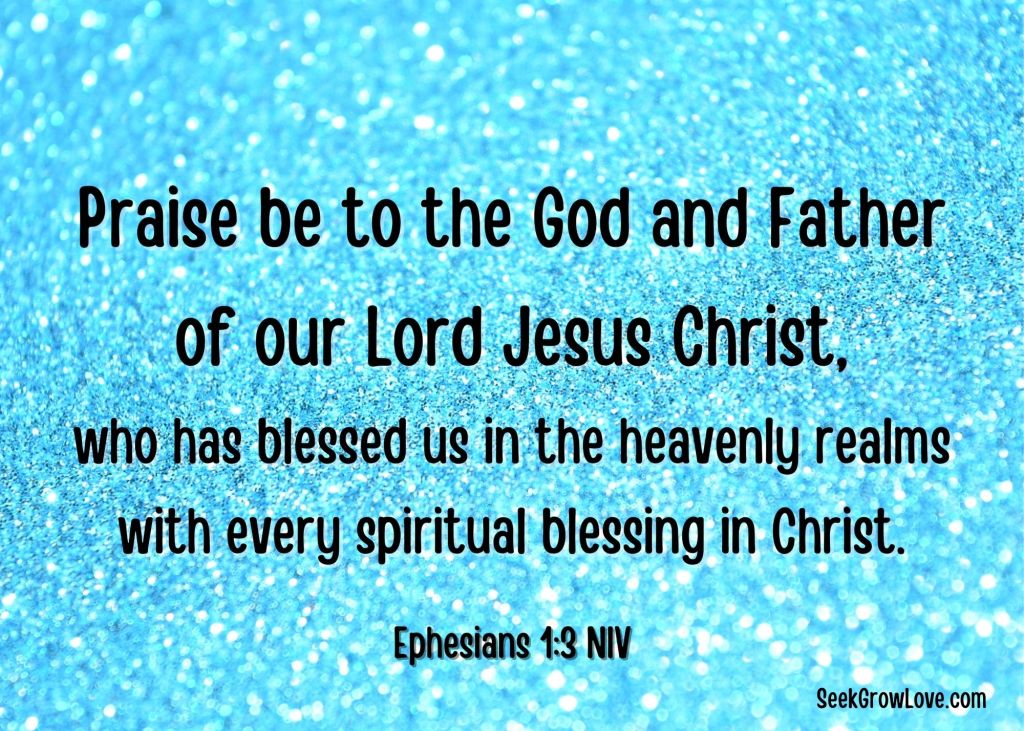
1. Jesus is the Son of God. His Father is also His God. (1:3, 1:17)

In verse three and seventeen of this Chapter, Paul refers to the Heavenly Father as the God of Jesus.  Wait. What?! Much of Christianity treats Jesus and God as synonyms.  Paul makes this important distinction in this letter to show that the Father is who we petition and who gives. Jesus makes this clear repeatedly in the Gospels when he states that he does nothing by his own power and authority. (John 5:30; 8:28) However, through the faith and name of Jesus, we have an eternal subscription to God paid through the blood of the Son of God, but it is our Heavenly Father who pours out His Spirit to us and gives us wisdom and revelation to know GOD better; to walk in step with him, just as Christ did.(John 17:20-23)

2. Jesus is our Brother. (1:5, 1:11,12)

Paul makes it clear in Ephesians and Galatians that we are God’s adopted sons and daughters. The particular phrase in verse five, “adoption to sonship,” had a greater meaning in Roman context, and is similar to the legal adoption process we know today. This means that we receive all the rights and privileges, we are considered equal to a biological relative, and we now bear the surname of God.  The inference then becomes we are the adopted brothers and sisters of Jesus, who, referring back to point one, is the Son of God.  What then do we receive? The same inheritance as Christ: the Holy Spirit, resurrection, and the Kingdom of God.

3. Jesus is our Savior (1:7, 1:18,19)

.While this statement has been alluded to in the opening paragraph and the previous point, it is most important to note that Jesus is our Savior.  Our inheritance would be null and void if not for the redemption of sin, which is a treasure in itself, a bounty of God’s grace.  Jesus accomplished this through a life and death in accordance with God’s will.  No more sacrifice is required because he became the fragrant offering.  He is still saving us; his death is still washing away the stain of sin.  He did save us once (Hebrews 7:27) but through the grace of God, saves us again and again through grace and repentance.

4. Jesus is Head of the Church. (1:22,23)

It is God who has appointed and placed the body of believers under the head of Jesus.  Jesus is literally God’s right-hand man. It is Christ’s spirit, meaning his purpose and drive, that should be the same spirit of the Church.  Who better to lead us than the one who experienced life in the same way as us? (Hebrews 4:15) Paul took direction from Jesus face-to-face, but we take direction from His life in the scriptures.  In the same manner, let us proclaim the Kingdom of God and message of salvation in a similar fashion to Jesus; he has shown us how to live in this manner.  

-Aaron Winner

Reflection Questions

  1. What is significant about the relationship between God and Jesus? What jobs/positions does each hold? According to this passage, what is unique about each?
  2. What do Christians miss out on when they use Jesus and God as synonyms?
  3. What has Jesus done for you? Thank God for His Son Jesus and all he is to you.
Dad!

Proverbs 30-31

Proverbs 30 4c NIV sgl

I doubt there are too many devotions over the last two chapters of Proverbs that are mostly aimed at the topic of Fathers, but for whatever reason or coincidence, here we are on Father’s Day – and our assigned Bible reading includes the Proverbs 31 superhero – the Wife of Noble Character.  But, I was surprised to see how many passages popped out to me regarding dear old dad and our relationship with him.

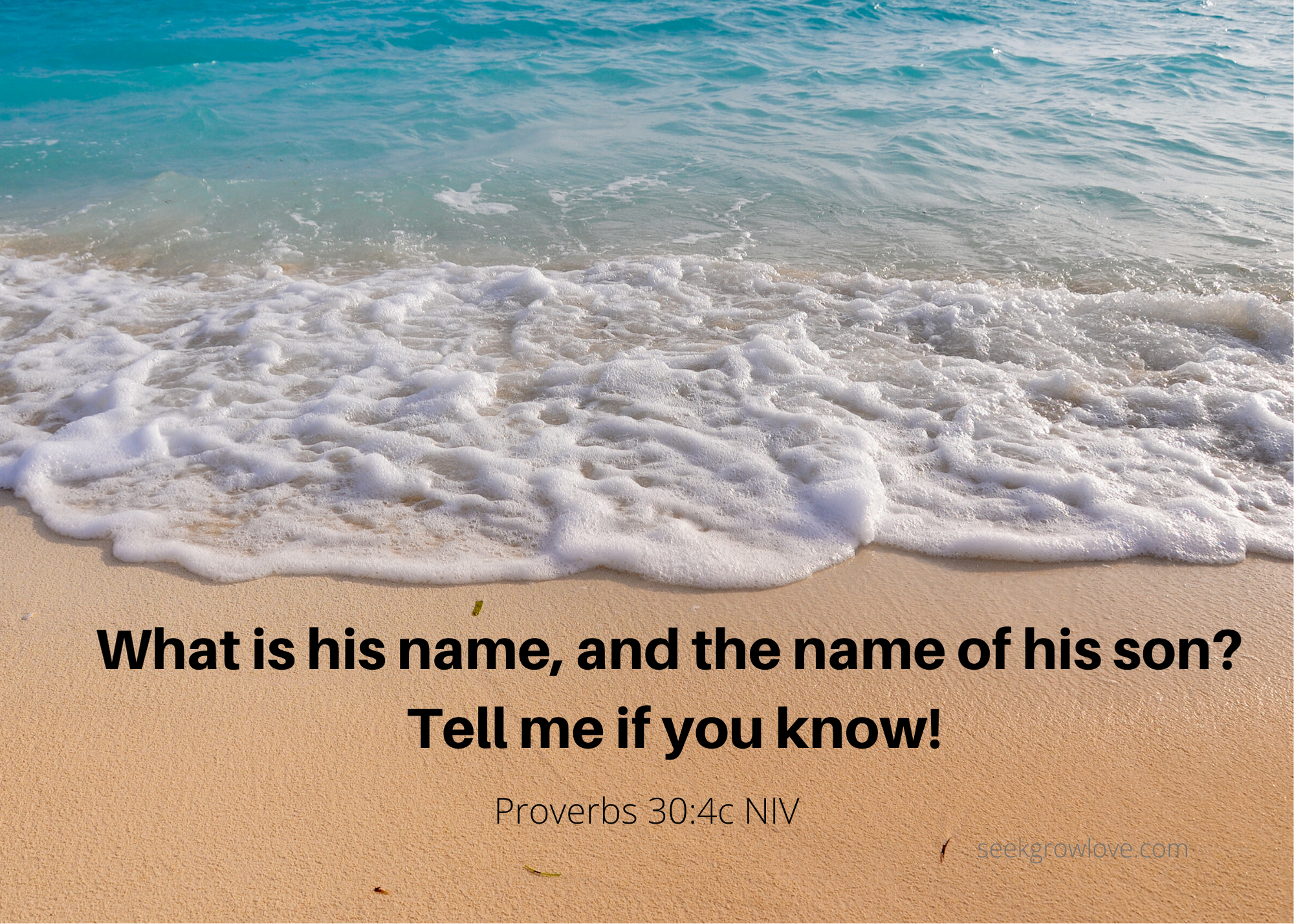
First of all, we run into an interesting passage of rhetorical questions about who can control the wind and water and established the ends of the earth?  “What is his name, and the name of his son?  Tell me if you know!”  (Proverbs 30:4 NIV)  I read some very differing commentaries on this passage and I feel a lot like the writer of this proverb, Agur, who confessed, “I am the most ignorant of men,” (Proverbs 30:2 NIV).  I do not have a full understanding of the Almighty God.  I can’t grasp His eternal greatness and power and all the deeds He has done  – and will do.  But, I am thankful that I DO know who created this spinning world we call home, the sun that warms it just right, the water cycle that refreshes it, the plants and animals that provide beauty, nourishment, and joy, and the families that inhabit it.  I marvel at the power, ingenuity and love of my Heavenly Father and the chance to be called His child.  And, I love, love, love, that He has a Son and I know his name is Jesus.  And this son Jesus would display his family resemblance to His dad by exerting power over the wind and the waves.  He would be given the most difficult but beautiful task of drawing us sinful creatures to His perfect Dad.

Poor Agur lived at a time when this plan of God was not yet revealed, but only hinted at here and there.  So, he was left asking – “Tell me if you know?”  If you know your Heavenly Father and what His Son has done so that YOU can be called a Child of God – who will you tell today?  Make it a Father’s Day that counts by telling someone about your Heavenly Father and His Only Begotten Son and the opportunity opened for them to have a perfect Dad, too.

I am so blessed that my father (and mother and grandparents and church family) on Earth did tell me – and many others.   Thanks, Dad!  It has been an honor to respect and try to live up to my dad.  I had a good one (and doubly blessed with a good father-in-law, too!).

There is a depressing passage of those who are haughty, disdainful, teeth for swords (heard any of that lately), devouring the poor.  And the FIRST description of these evil and hurtful people are, “There are those who curse their fathers…” (Proverbs 30:11 NIV) Can you think of any ways our society may have unknowingly become quite expert in cursing our fathers.  In so many sitcoms the father figure is stripped of all respect and is a bumbling goofball.  In giving women their “rights” we have neglected the responsibility and rights of dad.  And, then it sadly happens on a personal level, too.  Even in good Christian homes, sometimes.  How can we guard against cursing our fathers?  How will we show dad the respect God designed them to receive?  (Notice I did not say the respect that they have earned).

It appears there is even punishment in store for those who mock dad.  Oh be careful little tongue what you say.  AND – Agur seems to take it even a step further – be careful little eyes how you roll.  You know, the classic eye roll when you don’t agree with dad?  Guilty.  Proverbs 30:17 says “The eye that mocks a father, that scorns obedience to a mother, will be pecked out by the ravens of the valley, will be eaten by the vultures.”  Ouch.  This is serious stuff – regardless of what the “funny” sitcoms would have you believe.

Look at your own attitudes, words, actions, and eye rolls.  How are you showing respect for your father (and Christian father figures) not cursing or mocking?  Thankfulness not disdain?

Thanks Agur for the Father’s Day devotion.

Marcia Railton


Today’s passage can be read or listened to at https://www.biblegateway.com/passage/?search=Proverbs+30-31&version=NIV

Tomorrow’s reading will be 1 Kings 12-14 as we continue the 2020 Chronological Bible Reading Plan (1) (1)