Days Off!

Leviticus 23-25

In the United States, there are many holidays to celebrate and enjoy. At the federal government level, they recognize eleven holidays per year: there are even more if you include religious ones like Easter. Not only that, but we have laws that force us to take time off work every week and periodically throughout the year. Although you are allowed to work all seven days in a week, most employers are expected to pay even more money in overtime and usually prefer for their employees to simply take their days off.

These times of rest and celebration are often taken for granted: all of us have grown up in this environment of expected time-off and have never had to live in a world where we are expected to work every single day without relief. Yet, that was the world that the Israelites were coming out of when they left Egypt: there were no Human Relations department or Workers’ Union to argue against Pharaoh for their paid time off. They were slaves, and slaves were expected to work every day in extreme conditions without any sympathy. Once Moses helped free them from this oppressive world, God granted the Israelites the amazing gift of days free from work and yearly celebrations.

In Leviticus 23, we learn about all the blessed time that the Israelites were expected to rest and enjoy their lives under YHWH’s rulership. On a weekly basis, they were expected to take the seventh day off from any work (sabbath): if you were used to slavery and working every single day, how would you respond to that? What a gift from an amazing, caring God! Although there are warnings about being “cut off” if they choose to work that day, we should not get lost in the punishments and miss what a wonderful opportunity this was for the Israelites!

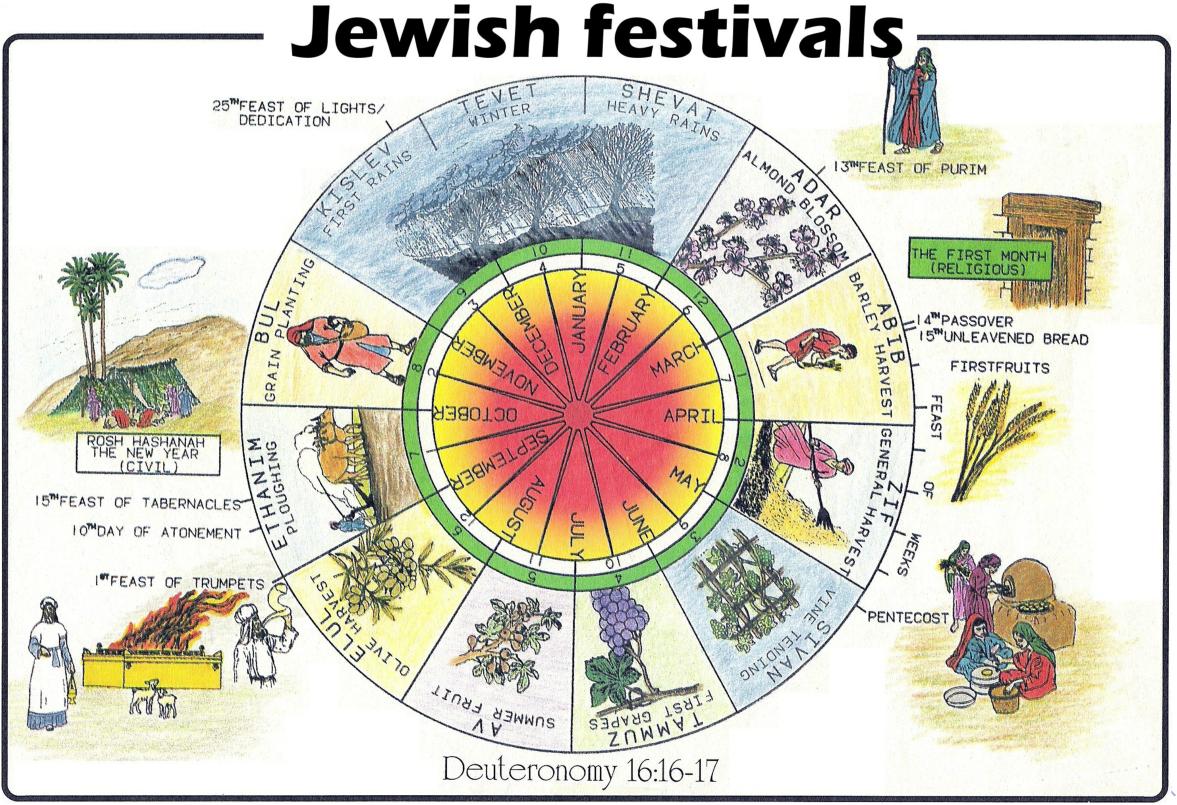
Not only do they receive a day of rest every week, but there are seven annual festivals that they get to enjoy: the great festivals and feasts of Passover, Unleavened Bread, First Fruits, Weeks, Trumpets, Atonement, and Tabernacles were to be celebrated every single year. Some of those celebrations are seven straight days of celebration and feasting! Can you imagine the shock and appreciation that the Israelites must have had for this generous and loving God, having come from their background in Egypt?

What stands out to me from this chapter is that, through everything God is commanding the people to do, He still is a caring Father that wants His children to enjoy the gifts He has for them. Yes, He needs them to obey His instructions (for their own good), but there can be great joy in serving Him with the right mindset. If they can see His laws as blessings, rather than restrictions, they will rejoice at the wonderful gifts that YHWH has for them. He is a God of joy and blessing, and we would do well to remember that as well when we faithfully serve Him.

… the joy of the LORD is your strength.” – Nehemiah 8:10 NASB1995

-Talon Paul

Reflection Questions

  1. What do you think God wanted His people to remember at each of the annual festivals and feasts He created? What was the point of each one? Which do you think would be your favorite and why?
  2. Do you take regular days off (weekly and annually)? What is good to do on days off, according to God? How can you do more of that?
  3. Do you see God as just a God of laws or a God of joy and blessings, too? What joy and blessings has He given you? How can you remember and celebrate these?
Celebrate and Remember

Deuteronomy 16

February 21

Chapter 16 begins with the reminder to celebrate the Passover. It was a time that was set aside to remember how their God saved them from Egyptian slavery. More specifically from the angel of death that passed over those Jewish people who placed the blood of a lamb on their door posts.

We also see the reminder of the Festival of Weeks (celebrating the harvest/first fruits) and the Festival of Tabernacles (remembering the years of wandering). Each were given specifications as to how and when to celebrate. 

Each of these celebrations was to be a reminder of where they came from and to celebrate God’s provision. God provided a way out, he provided the harvest and he provided for the Jewish people in their 40 year wilderness wandering. 

Knowing that God will provide in all life circumstances should give us joy and help encourage us in difficult times. God has been there before and he will be there again. He provides, always!

We all should set up reminders to celebrate the way God has worked in our lives. The reminders can help us remain thankful and never take for granted what God has done, is doing or what he will do in the future. 

-John Wincapaw

Questions for Reflection and Discussion

  1. Make a list of how God has provided for you. How will you express your thankfulness to the Lord? What reminders do you already have in place, and what reminders can you add to your home, your routine, and your calendar to ensure that you remember and thank God for the way He has provided?
  2. What is the danger in not being intentional in remembering what God has done and provided?
  3. What is your favorite holiday? Why? How do you celebrate it? What might God want you to remember as you celebrate? How could you do that better?
  4. Each of the three festivals decreed in Deuteronomy 16 included bringing a sacrifice, gift or offering to the Lord. “No one should appear before the Lord empty-handed: Each of you must bring a gift in proportion to the way the Lord your God has blessed you.” (verses 16b & 17) What can you give to the Lord so you do not come before Him empty-handed?

Feasting on His Word

Nehemiah 8-10

Now that the wall of Jerusalem was completed the people gathered together at the Water Gate to have Ezra read from the Book of the Law of Moses on the first day of the seventh month (which was actually last weekend on the Jewish calendar and the Feast of Trumpets. It’s not really the Jewish New Year, that was adapted from a later time in exile. The first month of the Jewish year is Passover). It states NINE times that “all the people” are included in the events happening in chapter 8.  The priests even helped the people to understand the readings, (8:8) and the people responded with WEEPING (8:9). Nehemiah encouraged them to go and “eat fat and drink sweet” for this day is holy to the Lord. They weren’t to be sad, for “the joy of the LORD is your strength.” (8:10) They knew the words were declared to them.

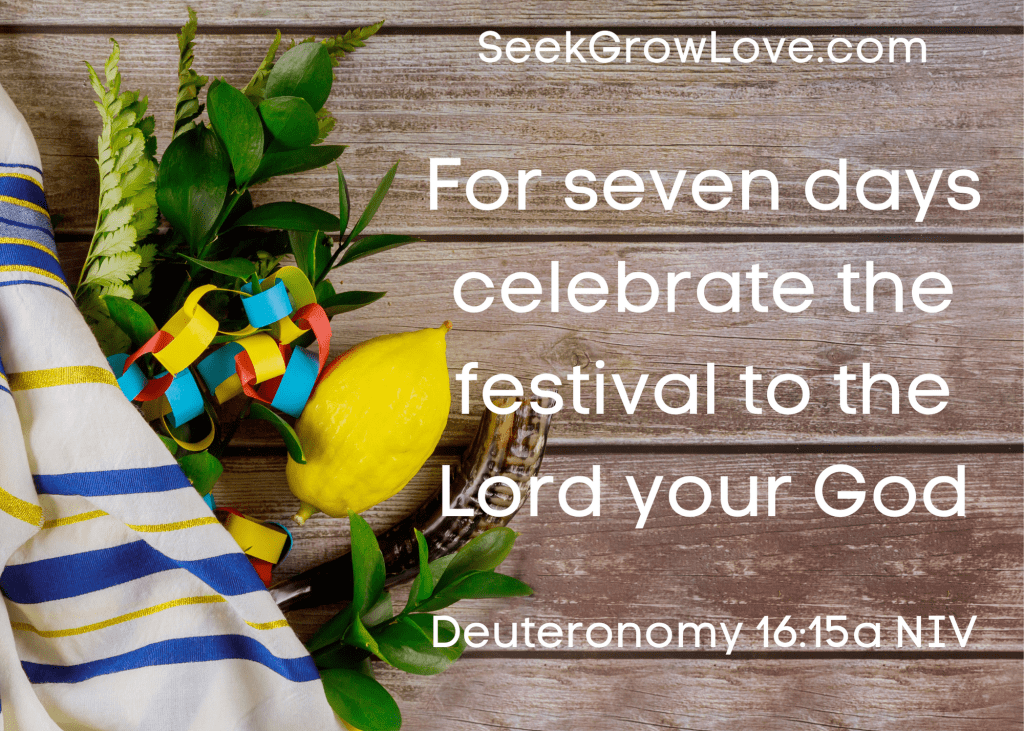
 The second day they gathered again to hear the Law and learned that in the seventh month they were to dwell in booths for a week.  They were to go to the mountains and gather olive branches, myrtle, palm, and leafy branches to make a booth.  The other day on my fast walk in the neighborhood I plucked various leafy bushes to add to the pop-up booth card I’m making to send to our grandson next week. 😊   I’m going to also include some fruit snacks he can enjoy by his “booth” as a celebration of the end of the harvest season. In Israel today, where we lived for many years, they still make and “dwell” in booths during this weeklong holiday.  They’re on rooftops, balconies, and yards.  They’re decorated with paper chains, lights, and pictures. Our kids liked to sleep in them some nights with their friends.  The people in Nehemiah’s time hadn’t celebrated the Feast of Booths/Tabernacles since the time of Joshua, so it was a time of “great gladness” (8:17), and still is to this day. Although, this year might be different as they’re on a full lockdown in Israel during these holiday times because of Covid.   

            They continued to read the Book of the Law for a ¼ of the day and for another ¼ of the day they confessed their sins and worshipped the LORD their God. (9:3) Some of the Levites stood up and recalled God’s work through Moses, Egypt, Wilderness, and how He brought them into a good land.  However, they “cast His Law behind their backs and killed prophets sent to them.” (9:26) So God “gave them saviors” when they cried out for help and many times delivered them. (9:27) “For many years You had patience with them and testified against them by Your Spirit in Your prophets, yet they would not listen.” (9:30)

Now therefore, our God, the great, the mighty, and awesome God, who keeps covenants and mercy… (9:32) You are just in all that has befallen us.” (9:33) How patient God was and is with His peopleIt says not the kings, princes, priests, or fathers have kept God’s Law.( 9:34)  How important it was for all the people to gather together and recall God’s work over time and their own lack of commitment, and thus to refocus their love and service for the LORD their God for the future.  Now that the wall of Jerusalem had been rebuilt, they needed God’s protection over them. Instead of blaming God for failures, it’s good they acknowledged they were wrong and refocus on Him as they move forward.  We too, can learn from their example in our lives today.

Stephanie Schlegel

Today’s Bible passage can be read or listened to at BibleGateway here – Nehemiah 8-10

Tomorrow we will finish the book of Nehemiah and read Psalm 126 as we continue seeing God’s faithfulness in our

Priestly Purity – and Then – it’s Time to Celebrate (Leviticus 21-23)

Saturday, August 27

hebrew_calendar_2016_pdf

Priestly purity is the topic of the first two chapters today.  As priests of the Most High their job was to represent God to the people as well as representing the people before God.  It wasn’t a job to be taken lightly.  It wasn’t enough to just belong to the right tribe (of Levi – thus the name of the book – Leviticus).  It wasn’t enough to be part of Aaron’s family within that tribe. It wasn’t even enough to follow all the laws given to the Israelites.   For, besides following all the rules for the Israelites, the priests also were committed to following a higher standard with additional rules for themselves, who they can marry, and how they will serve.  As we all know: with great power comes great responsibility.

And then (1,000 plus years later) there was Jesus.  He became the high priest and his believers became the royal priesthood – representing God to the world.  And still today: with great power comes great responsibility.   How are you handling the power?  Who will you represent God to today?   What will you do and say to be His agent in the world?  How will you hold yourself up to a higher standard than those around you?   What responsibilities are you ready to take on for the Almighty?

But, just when this representing is starting to sound like a lot of work . . . we hit the Time to Celebrate Chapter – #23.  As it turns out, God has designed his children (and representatives) to work BEST with regularly built in days to rest (Sabbaths come once a week) as well as special holidays to celebrate blessings and harvests, to remember God’s faithfulness throughout history, to offer sacrifices to God, to take a break from work, and to feast!  Some of these holidays were a week long!   One of the week long celebrations God created seems to look a whole lot like a camping trip to me – which is one of my family’s favorite ways to relax and remember God’s goodness in His beautiful outdoors.  The Festival of Tabernacles was a week spent in “temporary shelters” to remember how God took the Israelites out of Egypt and into the wilderness and provided for them on their way to the Promised Land.  God had this holiday planned even before they reached the Promised Land and their permanent homes.  I think it is neat that even back then there was benefit  and Godly gain from “getting away from it all”.  How can you “work in” some of these important aspects of holidays and festivals – to celebrate God’s goodness and faithfulness while taking a break from your regular work, while offering sacrifices and feasting?   I like the vacation plan for God’s representatives!  And then, with recharged batteries and a heart full of wonder and thankfulness to a Great Big God who supplies all the needs of every generation of believers past, present and future – let’s get to work again.  We have an Awesome God to represent!

Thank you for reading this week as we have worked through most of Leviticus together!  I pray you receive His blessings as you continue to dig in and seek His wisdom and way.  God’s Word is Great – because He Is!
Marcia Railton