Ominous Lines

Acts 7-8

Devotion by Rachel Cain (Ohio)

“Marley was dead, to begin with.”

These ominous lines commence the first stave of Charles Dicken’s classic novella, A Christmas Carol, which my children and I read together for the first time last year. Such chilling inaugural language sets the tone for the serious nature of the story. The tale delves deep into the meaning of life and Ebeneezer Scrooge’s radical transformation before concluding the final stave with these hopeful words: “And so, as Tiny Tim observed, God bless us, everyone!” 

As I read Acts 8, I was struck by the similarity between the forbidding opening phrases of A Christmas Carol and this sinister introduction to Saul: 

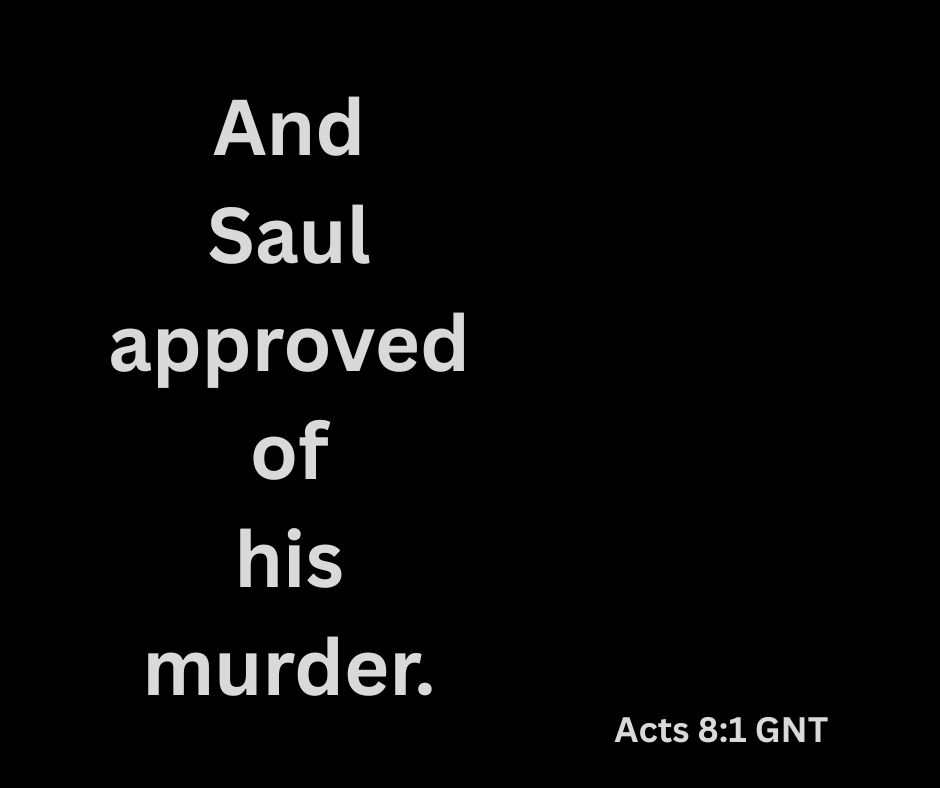
“And Saul gave approval to his murder” (8:1). 

Saul, a devout pharisee who kept every letter of the law and then some, was complicit in the death of the first martyr. But he didn’t stop there: Saul made it his mission to destroy the church by going house to house, imprisoning people who followed the ways of this Jesus guy. Saul thought he was working passionately for God by persecuting the followers of this heretic Jesus who claimed to be the Messiah. 

I always wonder how such heinous acts can be justified in the name of God. Did pride take over his heart? Was Saul so wallowing in his prideful Pharisee ways that he could not understand the grace and love that Jesus had shown and that his people were demonstrating? Was he blind to the prophecies that were fulfilled in Jesus? (Spoiler: In Acts 26, Saul gives some insight into his thoughts during that time, but ultimately he realizes that he was for sure NOT doing the work of God by persecuting his church.)

This is a good reminder that just because we claim to follow God doesn’t mean that everything we feel so strongly about is correct or God’s way. We can be sincere and still be sincerely wrong. Since it can be difficult to distinguish God’s voice from the myriad of opinions we hear constantly, it is important to be regularly grounded in the Word and prayer, truly seeking God’s desires more than our own preconceived notions or cultural norms. 

Just like with Scrooge’s interactions with the three spirits, all it took was one encounter with Jesus to turn everything on its head, transforming Saul’s heart and ultimately leaving us with many hopeful words in the New Testament. But you’ll just have to come back here tomorrow to read more of that story!

Reflections: 

Think about your life before vs. after you decided to fully live for God. What would be the opening line to your “before” chapter? 

What do you want the closing line of your chapter of life to be (like your epitaph)? Write it out as a guide and inspiration to keep you focused on what truly matters. 

Sometimes Like Saul

Old Testament: 2 Samuel 23 & 24

Poetry: Proverbs 28

New Testament: Acts 22


Have you ever seen a street-corner evangelist shouting into a megaphone about hell? I recently saw such a guy carrying his cross down the sidewalk—literally—he was pulling along a giant cross on wheels. It’s easy to point fingers at these people and think that their tactics are the very opposite of what Jesus intended (and his cross definitely didn’t have wheels).


But what if it’s not just these people? What if my actions and attitudes are contrary to the very heart of Jesus?


In Acts 22, Paul shares his testimony to the crowd after his arrest. It’s a scary story:


In one synagogue after another I imprisoned and beat those who believed in you (Jesus). And when the blood of Stephen your witness was being shed, I myself was standing by and approving and watching over the garments of those who killed him” (Acts 22:19b-20, ESV).


Looking back at Saul’s life, it’s scary because of the heinous acts he committed, but even more so because he thought he was doing everything right. He thought he was carrying out God’s work; after all, he was a “Hebrew of Hebrews” (Philippians 3:5) and on fire for God. This facade crumbles when he hears Jesus’ voice calling him on the road to Damascus:


And I fell to the ground and heard a voice saying to me, “Saul, Saul, why are you
persecuting me?” And I answered, “Who are you, Lord?” And he said to me, “I am Jesus of Nazareth, whom you are persecuting”
(Acts 22:7-8, ESV).


You and me are sometimes like Saul. We think we’re right, but maybe it’s more like self-righteous. Maybe our priorities are mixed-up. Maybe we’re quick to judge, hesitant to forgive, or eager to avenge. Are we accurate reflections of who Jesus is, or do we persecute him? Jesus’ harsh words to Saul are a warning to us, too.


Here are two ways to heed Jesus’ warning:

  1. Get to know Jesus. Saul didn’t know Jesus for himself. He accepted what his
    circle of religious elite said about Jesus (and it wasn’t nice). Get to know Jesus
    personally—who he is and what he stands for. We get to know him through
    reading accounts in scripture, prayer, and worship.
  2. Leave the Judgment to God. Saul got into trouble when he sought to avenge the supposed heretics. He relied on his own flawed and limited perception instead of God’s, the perfect Judge. Your job is to love and forgive; God will handle justice.

-Mackenzie McClain

Reflection Questions

  1. In what ways have your actions and attitudes “persecuted” Jesus? How can you be a better reflection of him today?
  2. Saul’s transformation story is incredible! Is there anyone in your life who you’ve dismissed as being too far gone? God’s not done working!

Who’s the Messiah?

Old Testament: 1 Samuel 27 & 28

Poetry: Proverbs 15

New Testament: Acts 9

We will continue to look at some theological themes from the book of Acts by studying the story of Saul’s conversion. When you look at the big picture, we can see Jesus chasing Saul and transforming his life into one that aligned with God’s will for his life. Saul truly believed that he was doing God’s will by persecuting Christians and the early church. From a Jewish perspective, we can understand why Saul thought this. Jesus came claiming to be the Messiah, but the Jews did not accept Jesus as the Son of God, just as it was prophesied. But in chapter nine of Acts, we see Jesus appear to Saul on the road to Damascus as he reveals to him his identity as the Messiah. Jesus chose Saul to preach the name of Jesus as the Messiah to both the Gentiles and Jews. I love this because it shows how much God and Jesus can use us for their Kingdom work when we let them. They have the power to transform lives. The power to turn persecuting Saul into preaching Paul.

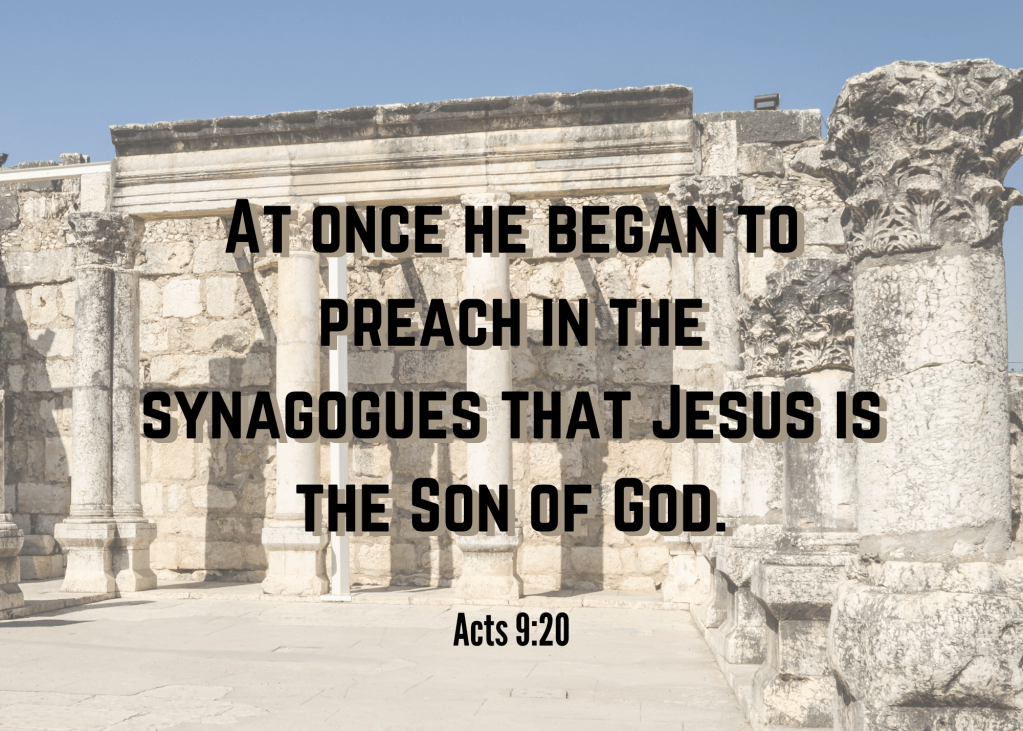
Saul is instructed to preach that Jesus is the Son of God (8:20). He was instructed to teach the Jews in the synagogues that the Jesus they rejected was the Savior whom they were waiting for. At no point is Saul told to preach that Jesus was God in human form. The Jews knew their prophecies and understood that the Messiah would save the world as a representative of God, not as God himself. So when it says that Saul preached Jesus as the Christ, the Jews should have understood this to mean that Jesus was the chosen human savior to complete God’s work on earth. Additionally, Jesus had the perfect opportunity to explain to Saul who he was. Saul asked who was speaking to him, and Jesus simply replied with, “I am Jesus, whom you are persecuting.” If Jesus were trying to get Saul—a practicing Jew with power and authority among the Jewish community—to understand that he was God, then he would have said something that clarified and explained how he was a god in flesh. Sometimes we can learn a lot from what is not said in the Bible. Verse 22 says, “Yet Saul grew more and more powerful and baffled the Jews living in Damascus by proving that Jesus is the Messiah.” If Saul proved to the Jews in Damascus that Jesus was the Messiah, then they simply would have understood it from a Jewish theological perspective. Saul did not even attempt to change or ‘correct’ their understanding of the Messiah, he simply revealed who the Messiah was. Current Jews today are still waiting for their Messiah to return because they missed it the first time. Therefore, they believe that God is one, and not a triune God. This idea of three entities would be considered idolatry from a Jewish perspective, because from the very beginning, God has revealed himself to his chosen people as the one true God. This means that the early church and apostles would have had to correct thousands of years of ‘incorrect’ theology if they wanted to preach that Jesus was God. Instead, the book of Acts stays consistent with the rest of the Bible, and preaches that Jesus was the Messiah.

Although looking at a chapter and studying what it leaves out does not necessarily prove anything, we can see that the Bible is consistent in the fact that there is no explanation of who Jesus is other than a human that God sent to be the Messiah, the Christ, the Son of the living God. Therefore, from a Trinitarian perspective, Acts would be a book full of missed opportunities to preach true theology to the Jews. But since God does not make mistakes, Acts is a beautiful book of theological truths that align with the rest of Scripture and paint a picture of Jesus as the Messiah that the Jews should have known and loved.

-Makayla Railton

Reflection Questions

  1. How does one let Jesus transform their life?
  2. How has the definition of Messiah changed over the years from the Jewish understanding to modern mainstream Christianity?