Listen – and Act Accordingly

Deuteronomy 5-7

These 3 chapters continue to reiterate the importance of REMEMBERING. Moses is addressing the new generation of Israel, preparing their hearts to enter the long-awaited Promised Land. We read in chapter 5 the repeated Ten Commandments, and Moses’ encouragement to follow these laws that bring life and blessing, “that you may live long in the land that you shall possess.” The Israelites are repeatedly reminded throughout these chapters that these laws are meant to serve them for generations to come; Moses emphasizes over and over again the cruciality of ensuring that their children and their children’s children not forget the foundation provided to their ancestors via these laws. 

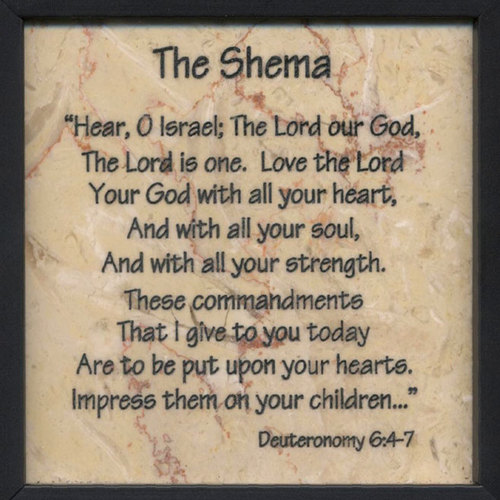
Chapter 6 is home to one of the most well-known prayers in the Bible, the Shema Yisrael, which has remained embedded in Jewish culture to this day. Ancient Jews combined Deuteronomy 6:4-5 with other Torah passages (Deut. 11:13-21; Num. 15:37-41), reciting the words every morning and every evening. This prayer became ingrained in Jewish tradition, and was widely practiced in the Second Temple Period. Jesus declared it the greatest commandment in the Torah in Mark 12:29-31. 

“The most important one,” answered Jesus, “is this: ‘Hear, O Israel: The Lord our God, the Lord is one. Love the Lord your God with all your heart and with all your soul and with all your mind and with all your strength.’ The second is this: ‘Love your neighbor as yourself.’ There is no commandment greater than these.” – Mark 12:29-31

Many of us memorized these verses at a young age. What gives this prayer such immense significance? Well, to the Jews at the time (and through history), it is a pledge of allegiance to God, emphasizing three main ideas:

  • Monotheism: The Shema asserts that there is only one true God, distinguishing Israelite faith from the surrounding polytheistic religions of the ancient world. (Deut 6:4)
  • Covenantal Relationship: The Shema affirms Israel’s special relationship with God, requiring wholehearted love and devotion. (Deut 6:5)
  • Daily + Generational Remembrance: It is recited morning and evening, reinforcing a life centered on God’s commandments, and ensuring that it is passed down to future generations. (Deut 6:6-9)

These truths remain relevant to us today, and this prayer is a beautiful, concise way to remind ourselves what Moses stressed throughout these passages. 

Something interesting about the opening line of the Shema, “Hear, O Israel,” is that in Hebrew, “hear,” or “shema,” does not only mean to listen. It means to listen and then act accordingly. It is directly tied to action. And the word “love,” or “ahavah,” similarly means to act in love. It’s more than just a feeling; it’s active obedience and loyalty. It’s a call for the Israelites to be faithful to their covenant with Yahweh. We, too, have a covenant with Yahweh, a renewed covenant with new laws and a new Promised Land. But as Jesus clarified, this command remains true, and we must make the active decision to live out the Shema each and every day. 

-Isabella Osborn

Reflection Questions:

  1. What are some practical ways you can incorporate Scripture into your daily life to ensure that you keep them on your heart, as to better remember and live by God’s Word?
  2. The Shema calls us to love God with everything we are. How can you intentionally cultivate a deeper love for Him in your daily life?
  3. Just as Israel was called to pass down God’s truths, we are called to disciple others. Who are you investing in spiritually? How can you be intentional about sharing your faith—whether with your family, friends, or community?
Stop the Slow Fade!

SEEK & SHARE

OLD TESTAMENT: Nehemiah 9

POETRY: Psalm 148

NEW TESTAMENT: John 20:1-9

“Freedom is a fragile thing and it’s never more than one generation away from extinction… it must be fought for and defended constantly by each generation…”

~ President Ronald Reagan. 

Reagan spoke these famous wise words during his inaugural address. It was a call for the country to not take our freedom for granted, to continue fighting to keep our freedom alive.

That reminds me of the instructions following the Shema, a major tenet of Jewish faith and our faith, found in Deuteronomy 6. The Shema states: “Hear, O Israel! The LORD is our God, the LORD is one. You shall love the LORD your God with all your heart and with all your soul and with all your might.” 

Those words are super important, but is that the end? Is that all we need to know and do? A big, resounding NO! Immediately following these core words, we are instructed to pass along our faith deeply to the next generation and embed it into our daily rhythms: “These commandments that I give you today are to be on your hearts. Impress them on your children. Talk about them when you sit at home and when you walk along the road, when you lie down and when you get up. Tie them as symbols on your hands and bind them on your foreheads. Write them on the doorframes of your houses and on your gates.”

If I am interpreting this scripture correctly, it seems like we are supposed to be thinking and teaching about God, like, all the time, right? We need to be in a state of constant communion with God not only in our own hearts, but also sharing that with our children and others around us. 

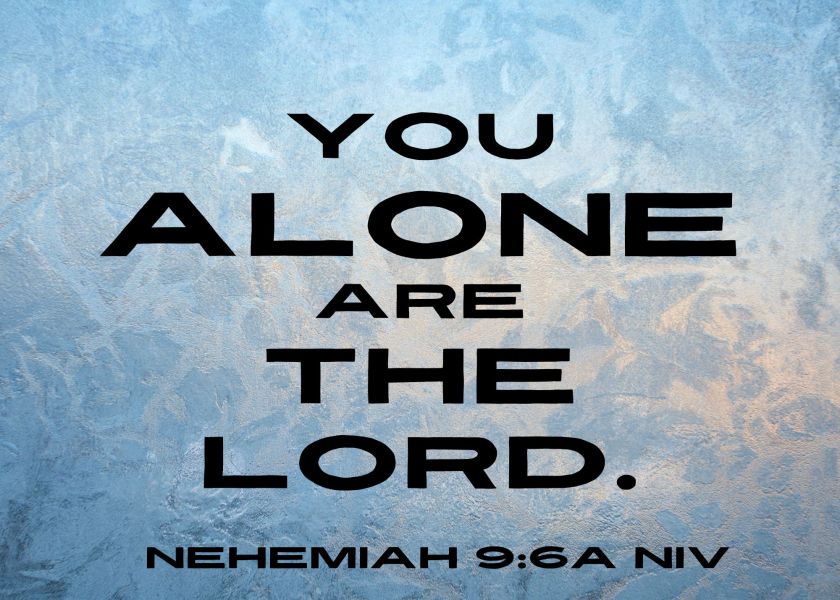
Nehemiah 9 describes Israel’s repentance, return to faith, and reinstallment of their covenant in a religious and legal document. Throughout the chronicle of their rebellion, they remember God’s covenantal love: “You are a forgiving God, gracious and compassionate, slow to anger and abounding in love” (v 17). They realize, though, that it is because of their sin that they are presently enslaved under Persia. 

We can’t let the next generation forget! This happened too many times in Israel’s history, and it continues to happen with us. Oh, sure, we don’t intend to not grow our relationship with God and teach our kids to do the same, but there’s just so much vying for our attention: school and work and sports and sleep and Netflix. It’s a slow fade, a side effect of busy-ness and forgetfulness and complacency, but ultimately it’s an abdication of our responsibilities as followers of Jesus. However, it is vitally important, in our farm-out-all-our-chores-to-someone-else culture, that we don’t assume someone else will teach our children about Jesus, someone else will share the love of God with our restaurant server, someone else will volunteer to meet the needs of our local church and community, someone else will…

We are called to be seeking and sharing about God from the time we wake up until the time we go to bed, whether we are at home or in another place. We are especially commanded to teach “them” to our children. (“Them” refers to commandments, but I think it means even more than that; I think it includes knowing and loving God enough to WANT to follow his commands, and passing that depth of understanding and passion onto the next generation.) 

In Nehemiah 9, with the Feast of Tabernacles fresh on their minds, the people were still  remembering their history of being slaves in Egypt, then finding freedom, and then following a cycle of rebellion and enslavement… rinse, lather, repeat. After their work with Nehemiah, they were hungry to return to God and understand the scriptures. Again, this is why the Shema and the instructions following the Shema are important – we can’t let the next generation forget who God is and what He has done in our lives! 

If we really peer outside our Christian bubbles, we will see a hurting and perverse world that is far from God. But it doesn’t have to stay that way! You can greatly influence your existing circle. Evangelist Gypsy Smith shared the secret to revival: “Go home. Take a piece of chalk. Draw a circle around yourself. Then pray, ‘O Lord, revive everything inside this circle.’” Start with yourself; renew your own relationship with God. Teach your family, and learn to follow Him better together. Then you won’t be able to keep it all inside! 

Connections to the other readings: 

In John, the disciples discover the empty tomb, but they seem confused about the whole event. Though Jesus had told them he would rise again, they didn’t fully understand until it really happened. Like the nation in Nehemiah longed to be free from Persian rule, Jesus’ peers wanted to be free from Roman rule. When Jesus didn’t save them in the way they wanted, they turned on him because they did not understand that Jesus was saving them in an even better, eternal way! 

Psalm 148 is a song of praise! The people in Nehemiah praised God for his faithfulness throughout this chapter. 

-Rachel Cain

Reflections: 

*Listen to this encouraging song. Be intentional to start a revival in your home and community today! https://www.youtube.com/watch?v=NlQQcQc0eHU

*Read the Psalm as a prayer of praise and gratitude to God. 

Creating Memory-Sparkers

OT: Joshua 4

Poetry: Psalm 46

NT: I Corinthians 1

As a history buff, I love touring historical monuments. Even pre-digital-selfie days, I would try to capture a film-based image of myself at national memorials and important sites to remember the adventure. When we’ve studied certain landmarks and events in our homeschool, I’ve proudly shared my visual memories with my (thoroughly unimpressed) children. I’m hoping they will be more impressed when we take them on a historical tour of the East Coast next month, but I’m already preparing myself to accept their inevitable apathy (while I have enough fun for the whole lot of us!). 

In Joshua chapter 4, we find the throng of Israelites having just completed the journey across the Jordan River (no simple task, especially at flood stage). What do you think was of first priority? Moving on to their destination? Getting a snack? Setting up camp for the night?

No, God had bigger plans – plans that might seem trivial to us, but that were much more important in the eternal perspective. He told Joshua to select twelve men (one from each tribe) to select a large stone from the river and bring it to their campsite for the night. They would then stack the stones near the river to build a monument representing the twelve tribes of Israel. “In the future, your children will ask, ‘What do these stones mean?’ Then you can tell them, ‘This is where the Israelites crossed the Jordan on dry ground. For the Lord your God dried up the river right before your eyes, and he kept it dry until you were all across, just as he did at the Red Sea… so that all the nations of the earth might know the power of the LORD and that you might fear the LORD your God forever.’” (Joshua 4:21-24, NLT)

God knew that the Israelites had a tendency to worship other gods and forget His faithfulness. With more challenging battles ahead, God wanted them to have a visual reminder of how He had provided for them in miraculous ways. Not only that, but He wanted the other nations to know the power of God! This monument served as a memory-sparker to help the Israelites pass down the legacy of their God to their children. 

As a parent, I know firsthand how easy it is to get caught up in the day and forget to share about God’s faithfulness. But God, who created children, surely knows that two of the favorite activities of children are 1) playing with rocks and 2) asking a bazillion questions, so a large and unavoidable monument made of rocks was the perfect reminder for parents to share with their children about God’s provision! But God didn’t want them to remember him only when they passed the monument; he wanted his people to remember him all of the time! 

Deuteronomy 6:4-9:  Hear, O Israel: The Lord our God, the Lord is one. Love the Lord your God with all your heart and with all your soul and with all your strength. These commandments that I give you today are to be on your hearts. Impress them on your children. Talk about them when you sit at home and when you walk along the road, when you lie down and when you get up. Tie them as symbols on your hands and bind them on your foreheads. Write them on the doorframes of your houses and on your gates.

That section of scripture contains the Great Shema, a major tenet of our faith. Don’t overlook the part about remembering God’s faithfulness! We are called to talk about God constantly throughout our day, remembering Him together from the time we get up until we go to bed and all the time in between. This can even be as simple as praying when we hear an ambulance or thanking God for lovely nature. 

We might feel inadequate for such an important task as helping those around us to remember God throughout the day, but remember the words of Paul from our reading in I Corinthians 1:27-29: “God chose the foolish things of the world to shame the strong. He chose the lowly things of this world and the despised things and the things that are not – to nullify the things that are, so that no one may boast before him.” Even Moses, the man chosen to lead God’s people out of slavery, insisted that he could not do it because of a stutter, among other excuses. (We all like to give excuses, don’t we?) But God used Moses in mighty ways, and He has plans for us too – if we will choose to remember his ways and live for him. 

-Rachel Cain

Reflection:
-What are your excuses for not doing some of the things God has asked you to do? Debunk those excuses and pray to God to soften your heart. 

-How can you help pass along the message of God’s faithfulness? What memory-sparkers would God like to see you create? How can you remember and speak of God and His faithfulness more throughout the day?

Making A Different People : Repeated, Enhanced, and Focused

Leviticus 19-21

Leviticus 19 18 NIV
Today, let’s start with a quick rundown of the laws of each section and chapter, and then go back and focus on some important points.
Leviticus 19 has a lot of different laws covering many topics. You may notice some repetition between Leviticus and Exodus (and even other parts of Leviticus). Leviticus 19:3 is very similar in the command about honoring mothers and fathers in Exodus 20:12, for example. Moreover, certain laws are enhanced, like how the peace offering of Leviticus 3 is to be eaten. Leviticus 19 goes through topics like lying, going to psychics and mediums, and being honorable and above board in business.
Leviticus  20 contains laws that are about being faithful : being faithful to God over other Gods, being faithful to God over mediums, being faithful to your spouse over adultery, and being faithful to family over sexual gratification. God warns that being faithful is a prerequisite to possessing the promised land, and if the Jews act unfaithfully, the land will “spew you out!”
Leviticus 21 enhances all the laws so far and talks about how a priest must act and what priesthood requires. The life of a priest was a holy and blessed honor, but not everyone could be a priest, only a select group of people.
I know it’s a lot. But let’s break it down to three key elements:
Repeated : When God repeats something, he wants you to pay attention. For example, he gave us four gospels. Obviously, the story of Jesus was important enough to get four testimonies. So, when we see a law get repeated, we need to take inventory of that law. As noted above, some of the laws in this section are repeated from Exodus in the twelve commandments, some are repeated from Leviticus 18, and some will be repeated again in Deuteronomy. Look for repetition and see if you should follow that command in practice (how to be pure sexually) or if you should follow it in principle (how to sacrifice well).
Enhanced : Be careful that you are paying attention to commands and to whom they are addressed. When we look at the commands of Leviticus 21, we can see that there are additional regulations put on priests, not just any old Tom, Dick or Harry… or even Theophilus, Dan or Hananiah. Today, because of Christ, all believers comprise a royal priesthood.(1 Peter 2:9) But, even in that royal priesthood, those who are leaders, teachers, pastors, elders and deacons are held to stricter standards, and must be above reproach in their leadership. (For more on these requirements, see James 3:1(teacher); 1 Timothy 3(qualifications for overseer and deacon); Titus 1 (qualifications for elders) ; 1 Peter 5:1-4 (elder=pastor=overseer[all words refer to the same office]).)
Focused : Jesus gave many commands, but when asked what is the greatest commandment, he did something both completely expected and completely unexpected. First, he quotes the Shema, the ultimate Creed of Judaism : “Hear O Israel, YHWH is our God! YHWH Alone!” And he follows this quote up with the command that follows, “Love God with all your heart, soul, mind, and strength.” This comes out of Deuteronomy 6:4ff. BUT, then he does something completely not expected. He FOCUSES in on a second answer, a commandment that was so important to Jesus it was LIKE “Love God with everything you have.” That command is found in Leviticus 19:18b: “Love your neighbor as yourself.” Jesus took a small phrase in the middle of Leviticus and said “according to God, this is the second most important commandment in all scripture!” According to Jesus, “Love God, Love People” summarized the whole law and the prophets (Matthew 22:40), which is another way to say the entire Old Testament. Quite a lot of focus given to something in the middle of a bunch of laws, related to not bearing a grudge!
If you ever wonder WHY reading Leviticus is important, remember, Jesus used Leviticus 19:18b to give us the SECOND GREATEST COMMANDMENT. That’s pretty important.
Jake Ballard
Today’s Bible reading passage can be read or listened to at https://www.biblegateway.com/passage/?search=Leviticus+19-21&version=NIV
Tomorrow’s passage will be Leviticus 22-23 as we continue on the 2020 Chronological Bible Reading Plan

What Are Your Passions?

matt 22 37

We hear a lot about people finding a job that they are passionate about. I was listening to a radio program one day, and the man said that you can tell what people are passionate about by what they talk about and taking a look at their checkbook, to see what they spend their money on. I asked my children based on that, what did they think that my mother, their Grandma Bonnie was passionate about and they said: Family, Bible, and Flowers (add politics and you have some of my passions, as well).  They were right, those are the things that she cares about and that she talks about whenever they are around.

In Deuteronomy, Chapter 6, it talks about the importance of talking to our children, grandchildren, and others about God and the things that he has done.  “Hear, O Israel: The Lord our God, the Lord is one. Love the Lord your God with all your heart and with all your soul and with all your strength.  These commandments that I give you today are to be on your hearts.  Impress them on your children. Talk about them when you sit at home and when you walk along the road, when you lie down and when you get up.  Tie them as symbols on your hands and bind them on your foreheads.  Write them on the door frames of your houses and on your gates.”  These verses are very important to the Jewish people, they are called the Shema, and they recite these verses daily, they should also be as important to us. First it says that we are to love God with all our heart, soul, and strength; He should be the most important thing in our life. It doesn’t say to love Him with part of those things, it’s to be all, and we need to be “All In”, as a coach once said. In Matthew 22:37, Jesus said that this is the greatest commandment.  Then the verses in Deuteronomy say to tell others about God, when you sit at home, when you’re walking, when you lie down, and when you get up. That basically covers every area of our life. God doesn’t want to be something that we think about on Sundays and Wednesdays, he wants us to be thinking and talking about Him, and His goodness to us, all the time. It says to write the commands on our door frames and our gates. Everyone that would pass that house would know that they believed in the One True God.  Because it was important to them, it would not be something that they hid from those passing by. In Psalm 78 2-4 it says: “I will open my mouth in a parable; I will utter dark sayings of old, which we have heard and known, and our fathers have told us. We will not conceal them from their children, but tell to the generation to come the praises of the Lord, And His strength and His wondrous works that He has done.” We need to be passionate about God and passionate about telling others about him every day. We have wonderful stories to tell to others about the glory of God and His coming Kingdom.

Sherry Alcumbrack

Shema: Listen & Obey (Deuteronomy 5-7)

Wednesday, September 14
josehp-wed

By Joseph Partain

These chapters you read are some of the most important chapters to me personally. If only each of us could live our lives by ch. 5 and 6 there would be nothing to be said but “well done good and faithful servant. The ten commandments are recalled in ch. 5. Verse 1 says “I declare them in your hearing today, to learn them, and then follow them”. This reminds us of James when he states not to be merely hearers of the word and be deceived but DO them. The ten commandments are timeless and Jesus lived a life displaying these very commands. How are we at making God the first in our lives, making the Sabbath a day just for the Lord, not coveting something someone else has, or honoring our father and mother. All of these are not for God’s benefit but for ours that we may benefit and those around us also.

Chapter 6 is a must for memorizing. v4-9 is known as the Shema and is recited by some Jews daily. If you have children or have any influence on children you will notice them watching you and then mimicking your actions. This can be a good thing if you are doing what these verses command. There is no time of the day that is not a teaching moment for your children in God’s word. Noah preached for years and his family was the only ones that entered the boat; some may see that as a failure but his words and actions saved his family. I love v. 20 that says “when your son ask”, anyone who has been around kids know they will ask you who, what, where, when, and especially why. This is a time to tell them what God has done for you personally and all of us that believe have a testimony to share.

Chapter 7 states to completely destroy your enemy. Our enemy is sin and sometimes we get rid of the big things that people can see but we leave some small sins that we think are not a big deal. God tells the Israelites to not show mercy on their enemies but completely destroy them. Be sure to allow God to deal with us to get rid of anything that separates us from him. The last part of ch 7 is God telling them the benefits of keeping his commands. v12 states “God will keep his covenant of love with us”. This was shone to us: when we were still sinners, God sent his son.

Let these words you read today touch you and draw you close to a God who loves like no other. May God bless your reading, learning, and doing all that you read today.