Do It!

Old Testament Reading: Genesis 39 & 40

Psalms Reading: Psalm 22

New Testament Reading: Matthew 21

None of us really enjoy chores. There were many that I didn’t enjoy growing up that were very specific to me; one of those was mowing the yard. Since my grandfather had shown me how to take care of the grass at the age of eight, I was the one in charge of making sure it was cut every week. Now to be fair, I did prefer this chore over folding laundry or vacuuming (and I still do), but on our four-acre property growing up, it was a whole-day ordeal to finish. However, although I didn’t necessarily like it, and some days I protested (like all kids do), I made sure the yard was cut so that bugs and rodents were kept away from the house.


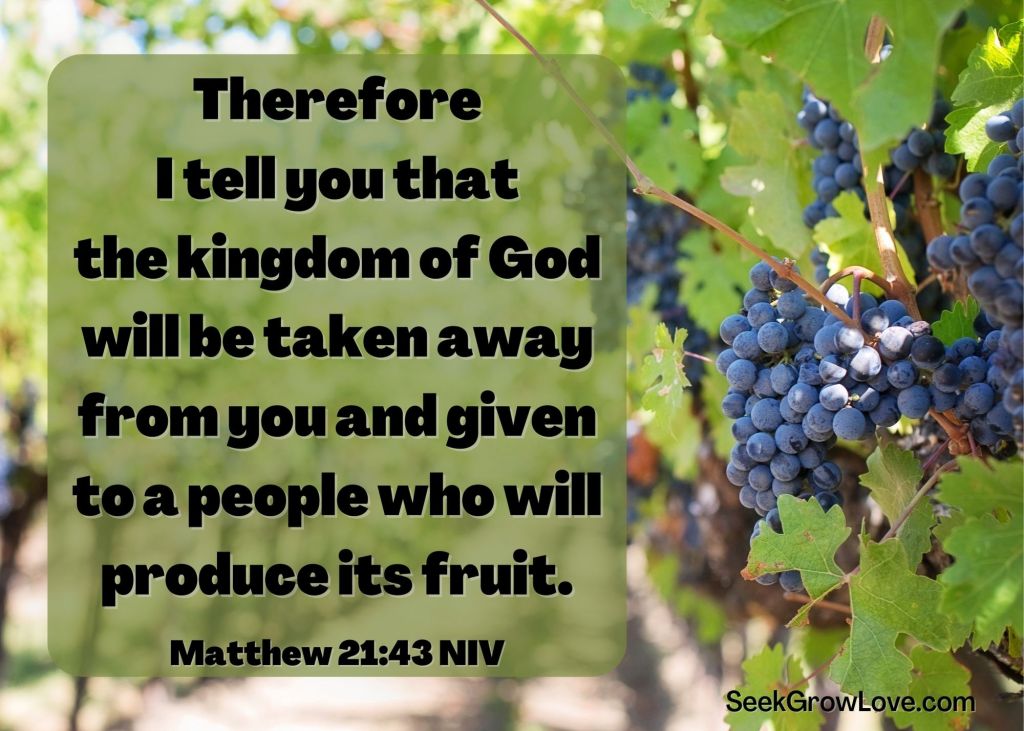
In Matthew 21, we find two sons who were supposed to go out and take care of their family vineyard. The first protested, but later regretted it and did as his father said. The second son initially said that he would go out, but wound up avoiding his chores. Jesus tells us in this story that the one who, at first, grumbled and complained about it, but still followed through, was the one who “did the father’s will”. This may seem obvious to us, but that’s the point Jesus is making; talk is cheap. Very few things are as disappointing as when someone doesn’t follow through on what they say.


This is true of our lives as Christians; we need to “walk the walk”, not just “talk the talk”. The book of James tells us that “faith without works is dead” (James 2:17). If we are not willing to do something with what we believe, it is useless. We can say that we “believe in God”, or even that we are a “Christian”, but unless that translates into action, we are only fooling ourselves. Jesus says that those who will inherit God’s Kingdom are those who “produce the fruit of it” (Matthew 21:43). Does your faith stir you and make you move? Or are you just all talk?


The Christian life isn’t always exciting and can seem boring at times; there are weeks where we don’t want to go to church or read our Bibles yet again. But just like cutting the grass, unless we are willing to go out and put the work in, even if we don’t “want to”, it will get out of control. Our lives need constant, consistent maintenance, just like a garden or a lawn. Every week is not going to be exciting, but it’s still necessary; fight past your initial protest and do what you’re supposed to do anyway. It will be better for you in the long run.

-Talon Paul

Reflection Questions

  1. Which of the two sons are you more often like? In what area(s), do you need more “walk the walk” (perhaps even without protesting first) in order to do the will of the Father?
  2. What is the danger in not producing fruit? What fruit does God want to see you producing now?
  3. What do we learn about God from the teachings of His Son? What does God want us to learn about His Son?

A Gross Chapter in History

Old Testament Reading: Genesis 37 & 38

Psalm Reading: Psalm 21

New Testament Reading: Matthew 20

Not everything in the Bible is what we would call “child-friendly”; there are numerous accounts of despicable things taking place at the hands of people who are supposed to be God’s chosen ones. Betrayal, murder, inappropriate relationships, and more; I guess you could say that the Bible isn’t designed to be a Disney sitcom, but instead, tells the story of real people in real situations. Unfortunately, thanks to sin in our world, those real situations are often bleak,
strange, and sometimes down-right gross. That’s what we find in Genesis 38, and I’ll warn you ahead of time, it is not for the faint of heart.


In this story, we have an account of Judah, the man who is later promised to have the Messiah come from his family line (Genesis 49:10), caught up in a dramatic sequence of events with his daughter-in-law, Tamar. Unfortunately for Tamar, everyone she married, quickly died; even though we may not understand the cultural practices of a brother marrying his ex-sister-in-law to
preserve their family line, we can understand the grief, disappointment, and the feeling of guilt she must have been under. Even though it wasn’t her fault, it would be difficult not to blame yourself when this happens over and over again.


Skipping ahead and not going into all the gross details about her tricking Judah into giving her a son (what?!), we find out that Tamar finally does bear children and can breathe a sigh of relief. What isn’t immediately obvious to us in this story is how significant these children would later be in the biblical story. Her children are named Perez and Zerah (v. 29-30); and if you skip ahead to the New Testament in Matthew 1:3, Perez is found in the genealogy of Jesus himself! It is through this gross, bleak, and very strange story that God brings about the Savior of the world! This is just one example among many of what the entire book of Genesis is trying to communicate to us: “you meant evil against me, but God meant it for good” (Genesis 50:20).


Just like Judah and Tamar, God can turn our most difficult, strange, and sometimes gross situations into something wonderful and life-changing. Paul tells us in Romans 8:28 that “God causes all things to work together for good to those who love God”. How true this is: God can use anything in your life, no matter how dark and disappointing it may be, and turn it into something great, if you will simply love and trust Him with it.

-Talon Paul

Reflection Questions

  1. What do we learn of Er, Onan, Judah and Tamar in Genesis 38? What sins are they guilty of? We are not given all the details of what God is thinking, but from what we do know, why do you think some of these characters are struck dead and others become part of Jesus’ genealogy? (There might be a clue in verse 26)?
  2. What do we learn of God in our reading today? Does He take sin lightly? Does He only work with perfect people? What type of heart and actions is He looking for?

God’s Message for You

1 Samuel 3

March 5

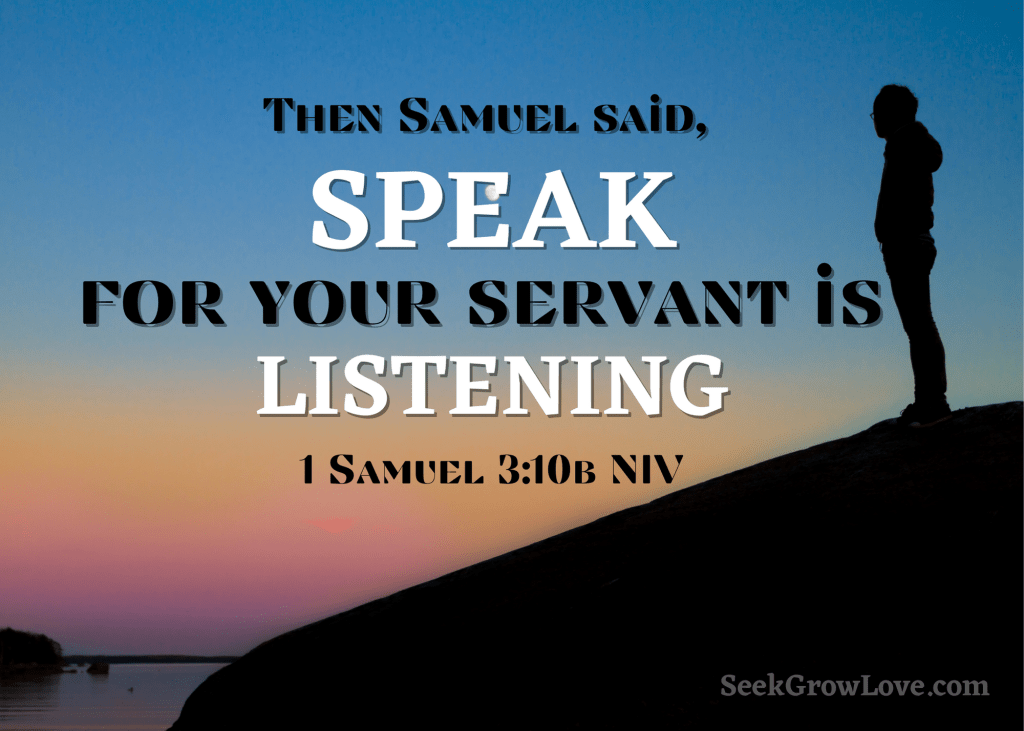
We have an amazing story in 1 Samuel 3, of God speaking directly to the young Samuel while he is in the Temple. Now, throughout the Bible, God only speaks directly a handful of times, so when He does, we need to make sure we pay attention, because it is important. Not only did God call out to Samuel, He did it three times! Now, Samuel was confused for the first two times, but on the third, thanks to some direction from the priest Eli, God reveals what He is about to do to Eli’s family. How many of us would love to have God verbally tell us what He is going to do, or tell us what He wants us to do? Wouldn’t that make life so much easier?

What if I told you that He already has spoken to us? In Hebrews 1:1-2, it says, “God, after He spoke long ago to the fathers in the prophets in many portions and in many ways, in these last days has spoken to us in His son, whom He appointed heir of all things, through whom also He made the world.” God is still speaking to us through His son, Jesus. Everything that Jesus says is the direct message of the Father (John 12:49). This is a powerful reminder for us to constantly be learning at the feet of Christ; if you want to hear the voice of God, Jesus is the place to turn. Do you have questions about what to do in your life? Go listen to Jesus. Do you want to know the purpose of your situation? Go listen to Jesus. Jesus is the answer that you need, because he speaks on behalf of God.

-Talon Paul

Questions to Consider

  1. Do you have questions for God? Have you looked at what Jesus says about those questions? He has the answers you are searching for.
  1. Sometimes we need the help and guidance of another believer to help us understand God’s message for our lives. Do you have another believer in your life that is available for guidance? Do you feel comfortable turning to your church for help?
  1. How much time do you spend learning at the feet of Jesus? Could you spend more time there, since it is the most important place to be? (see Luke 10:38-42)

Pouring Out Your Soul

1 Samuel 1

March 4

My wife, Rebbecca, and I had difficulty conceiving our son. We had to go through multiple doctors, multiple medications, and years of heartache before Elijah came into the world. We were grateful to learn that we were not alone in this, as we quickly found out many people we knew also had difficulties in this area of life. If this is your story too, I encourage you to reach out to someone close to you. You never know if they may have been through it too until you ask. We are also available to talk about the struggles we faced during these years.

In 1 Samuel, Hannah was also struggling with this issue. She simply could not conceive a child. This was long before there was medication available to address possible medical complications, so she was completely at God’s mercy to give her a child. Not only was she unable to conceive, she also had another woman in the picture to deal with, causing a lot of jealousy, anger, and issues for her in her marriage. I remember from our time struggling with this that almost everyone else around us was getting pregnant at the same time, and the pain that Rebbecca felt during this was very intense. I was trying to be the optimist, like Hannah’s husband, when he said, “Why is your heart sad? Am I not better to you than ten sons?” (v. 8)  Men who are reading this, a word of advice is needed here: just stay quiet and be there for your wife. I learned the hard way multiple times.

Hannah prayed from the heart through many tears for a child, and God finally blessed her with a son named Samuel. Although the priest couldn’t hear the words she was saying, God did, and He answered. She also followed through on her promise to God, to allow her son to live his life in service to God in the Temple. I can’t imagine what this mother must have been feeling, to hand over her only son in thanks to God! What an example of faith she is.

-Talon Paul

Questions to Consider

  1. God hears all prayer, both verbal and non-verbal, as long as it is from the heart (1 Samuel 16:7). Whatever you have been praying for, is it something that you deeply desire and would do anything for?
  1. Hannah’s story is not a guarantee that you will receive what you want from God; sometimes the answer is no. Despite this possibility, will you choose to remain faithful to God even if He doesn’t give you what you want? Sometimes He has something better in store.
  1. You are valuable, not because of your ability to have children or contribute to God in a specific way, but because you are created in His image (Genesis 1:27). You don’t need anything else to be significant and valuable in God’s eyes. Do you see yourself the way God does?

Beauty in the Midst of Chaos

Ruth 1

March 3

One of the major themes of the entire Bible is God blessing the entire world through His people, not just taking care of His own in one particular land. This was part of the original promise to Abraham, that he would be a father of many nations, not just one (Genesis 17:4). It was also the original mission of Israel, to be a “light to the nations” and bring God’s glory to other lands outside of their own (Isaiah 49:6). That mission has now extended to the Church, as we proclaim salvation to the ends of the earth, not to just one people-group or nation (Matthew 5:14-16). With this in mind, we come to the story of Ruth, a non-Israelite who was blessed by God for her faithfulness to her mother-in-law.

Ruth’s mother-in-law, Naomi, had just lost her husband and both of her sons. I can’t even imagine the pain that she must have been feeling; no parent should ever have to bury their child (let alone two!). She was wanting to go back to Judah amongst her native people, but Ruth refused to let her go alone. Ruth followed her into a country that she didn’t know, and put herself at the mercy of Naomi’s God, YHWH, to take care of her. Because of her radical faithfulness and trust, she eventually meets the man of her dreams, Boaz, and the two live happily ever after. In fact, their family line is the one that Jesus would eventually come through (see Matthew 1:5). What’s even more impressive about this love story is that all this was happening during the tragic reign of Israel’s judges, just one book before this one. In one of the darkest times in Israel’s history, God was still working behind-the-scenes, creating beauty in the midst of chaos.

-Talon Paul

Questions to Consider

  1. Do you trust that God is doing wonders outside of your native country? Do you consider believers of other countries to be brothers and sisters? Will you pray for them today?
  1. When people are going through a difficult time, sometimes the best thing we can do is simply be there for them and walk with them through it. Have you ever had a friend be there for you when you needed them most? Are you willing to be that friend to someone else? Sometimes people don’t need advice; they just need a shoulder to cry on.
  1. If you are in a dark season of life, God is still working out something beautiful, even if you can’t see it yet. Will you continue to trust God when life seems bleak? Will you remain faithful to Him, even when it seems like nothing is going right?

A Bad Relationship

Judges 16

March 2

If you have been in the dating world for any amount of time, there is a high chance that you have had a bad relationship at some point. We’ve all probably had a date go wrong, had someone cheat on us, or had a relationship just not go where we thought it would. This is so common that it shouldn’t surprise us to find an example (among many) within the Bible itself, and that’s what we see with Samson. Blessed with incredible strength by God, Samson sacrificed that gift because he thought he loved someone and paid for it with his life. However, as we look at the story, we see that this was avoidable, and it is a powerful lesson for all of us that bad relationships in general are usually avoidable too.

Looking at Samson’s life, we see that, although he was blessed by God from an early age, he was driven by passion and lust (v. 1). He was so driven by his lustful passions that he fell in love with a woman from the Philistines, who did not worship the same God as him. Not only that, but we learn nothing about how they related to each other’s families, or how quickly they got involved together (although, it can be assumed by his track record that they jumped into things quicker than most). Samson wasn’t aware that Delilah planned on betraying him and didn’t really love him back. Perhaps he would have known if he spent more time thinking it over before getting involved? 

How often do you hear stories about people who “loved” someone else, only to find out later that they weren’t the person they thought? How many of you, or people that you know, have stories about rushing into relationships too quickly, only to have it hurt you in the end? Have you ever been involved with someone else who didn’t share the same beliefs as you, causing you to sacrifice your morals and convictions to please them? This happens all the time, but God doesn’t want this for us. He has given us clear instructions to have healthy relationships in the Scriptures, because as our Father, He wants what is best for us. Patiently consider what God says about dating and marriage before you get too deep with someone else.

-Talon Paul

Questions to Consider

  1. If you are considering dating someone right now, have you taken your family’s and your church’s opinions to heart? Dating is intended to bring you towards marriage, and your family’s view of the person could be life-altering in the future.
  1. The apostle Paul encourages us to not be “unequally yoked” to unbelievers (2 Corinthians 6:14). Their morals and views of the world do not always match up with your own. How important is your potential date’s faith to you, and is it a deciding factor in your relationship? Should it be?
  1. What guard-rails or boundaries have you set up in your relationship to maintain your faithfulness to God? Breaking these barriers can have life-defining consequences in the future.

When You Feel Inadequate and Overwhelmed

Judges 7

March 1

If you’re like me, you can definitely relate to the story of Gideon. He feels completely inadequate to carry out the commission that God has given him, to defeat the invading Midianites. He constantly asks God for a sign that He has really chosen him for this task (6:17, 36-40), and God responds each time. Then, the moment finally arrives for Gideon to do what God has commanded him, and God tests his faith even more. He takes the Israelite army and shrinks it from 32,000 men to 10,000, and then to just 300… and they didn’t even have real weapons! (v. 16) Gideon literally has no shot of destroying the large army of Midianites, about 120,000 men, at least from a human’s perspective. Yet, God does what He says He is going to do, and Gideon and his 300 men are successful in delivering the people from the Midianites.

How many of you have felt like Gideon did? God has called you to a pretty monumental task, one that you feel ill-prepared for, and yet He was faithful to get you through it? Especially as a pastor, I feel this deeply on a daily basis, as almost all pastors do. I feel this as a husband and father, called to take care of my family without much clear guidance on how to do just that. I feel this just as a Christian, called to bring the gospel of Jesus Christ to the whole world, but not always knowing how that works. If you’ve ever felt overwhelmed by what God has called you to do, you’re not alone; and God is faithful to work with us.

-Talon Paul

Questions to Consider

  1. Is God calling you to something bigger that you think is impossible? Take a moment to pray for peace and the faith to believe that your Father will get you through it. Follow through with His plan and He will be with you.
  1. Are you overwhelmed by what is going on around you right now? Take comfort in Gideon’s story. God always takes care of His people, even if the answers aren’t immediately available.
  1. Do you feel inadequate? You’re not alone. Over and over again, God chooses the most inadequate people in the Bible for His mission, so that He gets all the glory. You are exactly the right person that God wants.

Tell the Next Generation

Judges 2

February 27

As the book of Judges opens, we are very hopeful for the future of Israel. Joshua came after Moses and brought them into the Promised Land. The Israelites had become strong and were beginning to drive out the other nations from the land, a punishment from God on their deeds (see Genesis 15:6 and Deuteronomy 20:17-18). Unfortunately, as the generation after Joshua dies off, we find out that the Israelites are in serious trouble: they have not been listening to their God, and are doing things that were evil in His eyes, just like the people they were supposed to drive out.

One of the major reasons why they didn’t obey God is that this new generation did not know God or His ways (v. 10). How would an entire generation of Israelites not know the stories of the exodus from Egypt, the parting of the Red Sea, or God’s faithfulness through the wilderness? This is probably baffling to us looking back on it; surely these stories from the past would have been enough to convince anyone to believe and obey God, right? But what if this story is the same as our own? What if we have forgotten God’s faithfulness and mercies over the years, or not talked about them with the next generation like we are commanded to do? (Deuteronomy 6:4-9)

Things around us in the United States and in our churches have changed dramatically over the last few decades. There are many who have been raised without any knowledge of God or Jesus, and one of the major reasons why is the lack of people passing down their stories and beliefs to the next generation (not the only reason, but a big one). In fact, I had a friend who didn’t know that we celebrate Christmas as the birthday of Jesus until he was 21 years old! Former missionary fields, like Africa, are now sending their own missionaries back here because we have fallen so far away from the faith. Maybe the writer of Ecclesiastes had it right: “there is nothing new under the sun.” (Ecclesiastes 1:9)

-Talon Paul

Questions to Consider

  1. Think about your life and story; are there ways that God has moved and worked to bring you to the place where you are now? Don’t forget these stories, like the Israelites before us. I encourage you to take time this week and reflect on how God has been faithful to you.
  1. To those who have been in the faith for many years: have you been telling your stories and testimonies to those who are younger? What can you pass along to the next generation to help them trust in God more?
  1. To this current, young generation: Israel was punished for their disobedience, but we don’t have to be. We can make a decision right now to be different from them and choose to worship the one true God with all of our hearts, souls, minds, and strength. Will you make that decision today? Will you forsake the gods you have set up in your hearts and trust in the only One who can truly save?

Be Different

Leviticus 11-12

According to Leviticus 11, there are plenty of animals that are forbidden for God’s people to eat: pigs, rabbits, and bats are all in this list (who would want to eat a bat anyways?), along with plenty of other animals. However, if you are like me, you enjoy a side a bacon with your eggs in the morning, or enjoy a nice, grilled pork chop for dinner. For those of you who are concerned about breaking God’s food laws today, I will encourage you to look at Mark 7:19 and Acts 10, where these commands are no longer applicable for God’s people (Christians).

However, beneath the surface of these food laws is an important concept that does still apply to us today. The reason God gave these laws for His people is put simply in Leviticus 11:44: “For I am YHWH your God. You must consecrate yourselves and be holy, because I am holy.” The whole point of these food laws, and others in Leviticus, is to be holy for God. The word “holy” simply means “separate” or “different”, as God wanted His people to look, live, and behave differently than the rest of the sinful world that they found themselves in. Of course, this obligation to “be holy” still applies to Christians today (see Matthew 5:48).

What does it mean for Christians to be “holy” in 2021? At a simple level, it means that we follow God’s commands that were given through Jesus Christ, even when nobody else does. Specifically, it means that we do not pursue the sinful decisions and pride that we find all around us. Christians cannot sinfully enjoy the same things that the non-believing world does, like pornography, homosexuality, sex before marriage, drunkenness, drug abuse, gluttony, or any other form of behavior that goes against the commands in the Bible. Put simply, Christians must look, live, and behave differently than the rest of the sinful world that we find ourselves in. Although there is forgiveness when we fail in any sinful area, we cannot ignore the fact that it is sinful; we must seek repentance. You may face verbal or physical abuse, lose friends, or other forms of persecution for living differently, but our obligation is to please God and Jesus Christ above all else; that is the only thing that matters to Christians.

Fellow Christians, we need to stand out as a light in this world (Matthew 5:14), being different than everybody else. We can do this by pursuing holiness and purity, serving the poorest in our communities, and sharing the gospel message with those we love. We have our instructions: we need to be faithful to God and Jesus Christ in everything that we do. Let’s be holy; let’s be different.

-Talon Paul

Links to today’s Bible reading – Leviticus 11-12 and Psalm 18

Contrary to His Command

Leviticus 9-10

After all the instructions that God gave to the priests, and after all the preparations were in place, now the priests at the Tabernacle can finally begin their work of atoning for Israel’s sins! Chapters 9 and 10 of Leviticus are monumental and we should not miss this; this is where the rubber meets the road as the priests are finally going to act on their instructions… and it doesn’t go well from the start. Aaron’s sons, Nadab and Abihu, carelessly neglected to follow all the specific commands of God and were punished with death. It is an obscure and confusing passage, but overall, the story carries the same meaning: punishment comes from not following God’s clear instruction.

If we can say anything about Leviticus, it is detail-oriented; there was no room for the priests to make up their own minds about how to perform sacrifices. God was very specific and very clear about what He wanted to be done. The same is true for us: God is not a god of confusion, but of clarity and precise direction (1 Corinthians 14:33). He has specifically told us what He wants us to do as Christians in the New Testament through Jesus Christ; to stray away from His command brings relational and spiritual death, where we suffer to recover from our mistakes (Romans 6:22-23).

There are two challenges for all of us in the New Testament, and they are quite clear and precise. The first is to read Jesus’ words daily; you cannot possibly follow his commands if you don’t know what they are. The second challenge is to put his teaching into practice; it does us no good to simply know something, but instead, we must act upon it (James 2:14-17). Jesus tells us specifically that if we do not listen and act upon his teachings, then we are building our lives on sand instead of solid ground, giving us no foundation or stability (Matthew 7:24-27).

Let’s do better than Nadab and Abihu. Let’s follow God’s clear commands, revealed through Jesus Christ, and see the difference that it can make in our lives and the lives of others. It is not complicated; God is specific about what we are supposed to do.

-Talon Paul

Links to today’s Bible reading – Leviticus 9-10 and Psalm 15-17