
Ezekiel 5-9
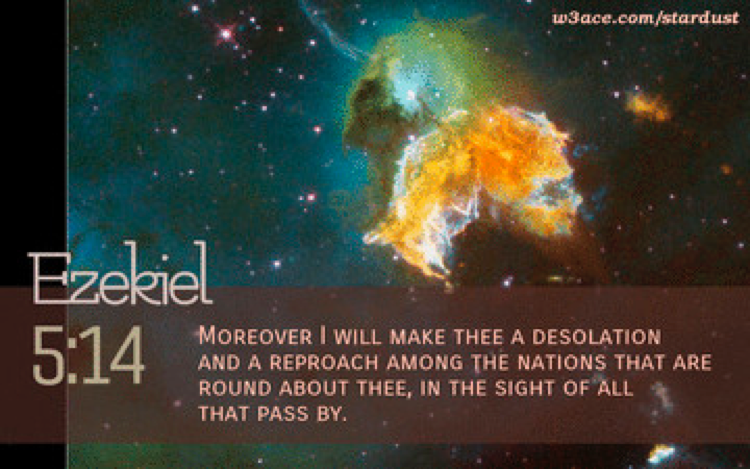
Monday, March 20
This portion of Ezekiel is, admittedly, difficult to read. It’s a pretty graphic account of God impending judgment against the city of Jerusalem and his people, Israel. God tells Ezekiel to shave his head and beard. This would have been an act of mourning for most people, but it was double disturbing for Ezekiel, since he was a priest and normally forbidden from shaving his head or beard. Ezekiel was told to burn, take a sword to, and scatter his cut hair. This was to symbolize what was to happen to Israel. A few hairs were kept back, symbolic of the remnant who would not be destroyed.
God accuses his people, Israel, the chosen nation, of being worse than the other nations. They broke the law more than the nations that did not have the law. God was bringing his judgment against His own people. The description of the siege almost defies comprehension, including cannibalism of both parents and children. This was to serve as a warning to the other nations: if this is how God treats his own people for their idolatry, beware of what he will do to you.
In Ezekiel six God makes it clear that their judgement is upon them because of their idolatry. However, there is a remnant that will be spared and live in captivity and will come to repentance.
In Ezekiel seven, a special emphasis is made regarding their idolatrous attachment to gold and silver. This wealth that they turned to and fashioned into idols will be unable to save them from the coming judgment. All the money in the world can’t save you from judgment.
In Chapter eight Ezekiel has a vision of the temple in Jerusalem. This includes the “Idol of jealousy” which we discover is the pagan god Tammuz. Tammuz was the Sumerian god of food and vegetation. At the summer solstice there was a period of mourning as the people saw the shortening of days and the approaching drought. Sacrifices were made to Tammuz at the door of the Jerusalem Temple. This was an absolute abomination to Israel’s God, YHWH as He made it clear that He alone was to be worshipped as God (see Deuteronomy 6:4-5).
In Chapter Nine an angel is sent out to put a mark on all of the people of the city who did not commit idolatry and worship Tammuz. They would be spared. But then all those who did not receive a mark would be destroyed. This is reminiscent of the story of Exodus, when the doorposts of the Israelites were to be marked with the blood of the sacrificial lamb, and those with the mark were spared their firstborn sons dying when the Angel of Death passed over their houses. It also points to the future (See Revelation 13) when the beast will cause people to have a mark on their forehead or they would not be able to buy or sell. This is contrasted with those in Revelation 14 who have the name of God and of the lamb on their foreheads.
God is a God of love and mercy. God has provided a means for us to be rescued from the consequences of sin. There is a way for each of us to be spared the final judgment of God that is coming. Jesus Christ, the lamb of God is the only means by which we can escape judgment. Along with God’s mercy is His holiness. God will not allow sin and rebellion to continue on earth forever. A day of judgment is coming for all the earth just as it did for the nation of Israel. God tolerated their sin for only so long, and then came the time for judgment. Mercifully, God spared those who repented by placing His mark upon them. God has been tolerating sinful rebellion on earth, but a day is coming when He will destroy sin and sinners who have not repented and turned away from their sins and turned to him through Jesus Christ. Ezekiel’s harsh imagery should remind us that we must not forget that God’s wrath is coming from which we all need to escape, and we need to warn others. This won’t make us popular, but doing God’s will is seldom popular among the rebellious.
-Pastor Jeff Fletcher
(Photo Credit: http://w3ace.com/stardust/)
 Seek Grow Love