When Blessings Become Distractions

1 Kings 9–10

Psalm 60

1 Corinthians 11

-Devotion by Brian Froehlich (IL)

Solomon’s kingdom had reached astonishing heights.

The temple was complete.
The palace was built.
The nation was prosperous.
The surrounding kingdoms were amazed.

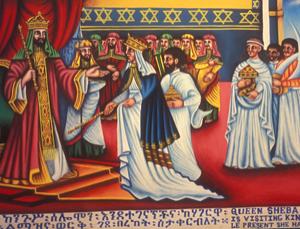
1 Kings chapters 9–10 describe a period of extraordinary success. Solomon’s wisdom became internationally famous. Wealth flowed into Jerusalem. Leaders traveled great distances just to hear him speak. Even the Queen of Sheba came away overwhelmed by what she witnessed.

From the outside, it looked like the golden age of Israel.

And yet, hidden beneath all the glory is a quiet warning.

God appeared to Solomon again and reminded him of something critically important:

“If you or your descendants turn away from me… then I will cut off Israel from the land…”
— 1 Kings 9:6-7

Why would God give such a warning during the kingdom’s greatest moment of success?

Because prosperity can be spiritually dangerous.

Hardship often drives people toward God.
Success often tempts people to slowly forget Him.

When life falls apart, people pray desperately.
When life feels secure, people sometimes begin trusting the blessings more than the One who provided them.

That danger still exists today.

A good career can slowly replace dependence upon God.
A comfortable life can dull spiritual urgency.
Even ministry success can quietly become pride.

And Solomon’s story demonstrates how subtle that drift can be.

These chapters list staggering amounts of gold, military strength, trade networks, luxurious possessions, and political influence. None of those things were automatically sinful by themselves. But together they reveal a king whose attention was gradually shifting from simple devotion toward accumulation, prestige, and earthly security.

The human heart has a dangerous tendency to turn gifts into idols.

The Queen of Sheba recognized that Solomon’s wisdom came from God. Sadly, Solomon himself would eventually begin losing sight of that truth.

That makes these chapters deeply relevant for us.

Sometimes the greatest spiritual threat is not suffering.
Sometimes it is success.

The Bible never teaches that money, achievement, or influence are the ultimate goal. In fact, all earthly kingdoms eventually fade. Solomon’s kingdom — despite all its glory — would soon begin unraveling.

But God’s coming Kingdom will not collapse.

Its foundation will not be gold, military power, or political influence. It will be built upon righteousness, justice, resurrection, and the rule of God’s appointed King.

That is why our hope must never rest primarily in earthly prosperity.

Because even the greatest human kingdoms eventually crack.

Three Things to Remember

  1. Prosperity can distract us from God.

Success often tests the heart more than hardship does.

  1. Blessings should point us back to the Giver.

The Queen of Sheba recognized God’s hand in Solomon’s wisdom.

  1. Earthly kingdoms never last forever.

Only God’s coming Kingdom will endure permanently.

It is easy to assume we are spiritually strong when life is going well.

But sometimes the most dangerous words a person can say are:

“I’ve got this.”

Solomon’s story reminds us that no amount of wisdom, wealth, or success can safely replace humble dependence upon God.

Reflection Questions

  1. Have you seen evidence in your own life or in others that, “prosperity can be spiritually dangerous”?
  2. Focus in on your own life – what blessings have you received that have then stolen some of your time, desire and devotion away from serving God with all your heart?
  3. Do you own too much? Do you value things too much? What is your greatest treasure?
  4. Are you more humble or prideful, thankful or entitled, generous or greedy, kingdom-seeking or self-centered? Is your heart, time and finances more focused on possessions in this life or properly preparing for the one to come?

Prayer

Dear Father – I don’t want any thing that will distract me from doing what You want me to do. I want to keep growing closer and closer to You, not further away. Help me remove excess that gets in the way. Help me be thankful and generous with what You have given me and my family, always focused on You and Your coming kingdom. May my life show that You are my greatest treasure.

Gifts, God and Glory

1 Kings 10-11
2 Chronicles 9

There are simply some things you have to see with your own eyes to understand what all the hype is about. To stand at the edge of the Grand Canyon or to gaze from the helm of a ship in the middle of the ocean are images that have been perpetuated as pinnacle experiences through pop culture. While it’s possible to be in awe while reading a description or gazing at a photo, the real deal—being present in these places—has left me in wonder at the work of the Almighty.

In a similar manner, the stories of Solomon’s wisdom had spread like wildfire, reaching as far as the Horn of Africa—which, in ancient historical terms, was viral. The tale of a singularly wise leader whose work had led Israel into a time of ultimate prosperity made all the hype seem too good to be true. The Queen of Sheba, having received these reports, had to hear and see for herself. What she found was that the blessings were abundant and beyond even what was reported. The sights and sounds of Israel were breathtaking, but none more than the wisdom of King Solomon. After taking it all in, the Queen acknowledged that the sovereign God of Israel had placed Solomon on the throne to rule at such a time.

“Praise be to the Lord your God, who has delighted in you and placed you on the throne of Israel. Because of the Lord’s eternal love for Israel, he has made you king to maintain justice and righteousness.”
—1 Kings 10:9

In contrast, in the very next chapter of 1 Kings, we watch the eyes of Solomon shift—from service of the Most High to service of his own flesh. From my own speculations, taken from the perspective in Ecclesiastes, it seems that for a season Solomon focused more on the gifts of God than on his relationship with Him. Israel began looking more like the king and less like its God under Solomon’s direction. He established altars for the gods of his wives and concubines, reshaping not only the physical locations but also the worship of the people. The evidence was in: the splendor of this kingdom, which once pointed to the protection of an undefeated Most High God, was now showing signs of the waning wisdom of a compromised king calling his own shots.

As we read these contrasting moments in Solomon’s life, we should turn and reflect on our own. We may not have the accolade of being the “-est” of anything, but there are tales that could be reaching far and wide about us. When we are visited, our “place settings inspected,” and people look at our sacrifice, what does all our effort and show point to? Are we encouraged—or offended—by those who look at the catalogue of our life’s work and give God the credit?

When God has His hand upon us, it can be recognized and sought by strangers from a distant land who hunger or thirst for answers to their questions. The truth is, sometimes from the outside looking in, the beauty of God’s hand in our lives is more clearly seen. Conversely, from the inside looking out, we may gaze upon the gifts of the Lord and mistakenly see them as our own handiwork, when it is by God’s glory that we are richly blessed. The warning given to us by Job is that the One who gives and multiplies can also take away and divide.

The hype of God has been—and will continue to be—acknowledged by those who look at it from afar in awe. However, the goodness of God is best experienced firsthand, through encountering Him with every thought and action. Let us not forget that He is the provider of grace and the bestower of the fruits of His Spirit; we could never attain these through our own effort. Don’t be so entangled in the blessing that you forget the intention with which it was given: to demonstrate the glory of our Heavenly Father.

-Aaron Winner

Reflection Questions

  1. What thoughts, feelings, desires, or motives do you think led Solomon astray? Which of these same thoughts, feelings, desires, or motives do you see in yourself?
  2. In what ways would you like to be like Solomon? In what ways will you work at not being like Solomon?
  3. Are there gifts God has given you that you have mistakenly viewed as your own handiwork? What happens when we focus on the gifts rather than the Gifter? How can we better see what God has given and in return give to Him the credit, thanks and glory for all His wonderful gifts.

The Queen of Sheba and Jesus

1 Kings 10-11 & 2 Chronicles 9

2 Chronicles 9 23 NIV

Who is the wisest person to ever live?
Let me tell you why you’re wrong. (Just kidding!)
Most of us answer Solomon, right? We are told that many times in Sunday School, and our teachers weren’t wrong. He was wise… to a point. We look at what he did at the beginning of his life and we see a man who was so dedicated to God that he asked for wisdom instead of riches, power, wealth or fame. For that, God gave him all wisdom and all the other things as well. Solomon was “wise enough to know that we are not wise enough on our own.” But, is Solomon the wisest person to ever live?
I believe our reading today disabuses of that notion quickly. Solomon starts off great, but in the end, his rule falls apart. His wisdom allowed his fame to increase. But as his fame increased, his wealth increased; as his wealth increased, his political connections, in the form of marriages, increased; as his number of marriages increased, the amount of gods he worshipped increased. And there’s our problem, but it doesn’t start there. Solomon, for all his wisdom, lost sight of the end goal. Wisdom is not meant for wealth. Wisdom is not meant for fame.
Wisdom is meant for godliness.
If we want to find the wisest person to ever live, we should look to the man who knew and had insight into the hearts of men and women, the one who even knew “all things.” Jesus, of course, is the wisest man to ever live. He unpacks the wisdom of God found in the Torah Law and applies it in a way that changes more than just behavior, but changes the heart. Jesus knew how to perfectly interpret scripture in wisdom. Most importantly, Jesus lived a life of wisdom by being Godly, doing what God wanted, all day, every day.
When we read about the Queen of Sheba and the wisdom of Solomon in 1 Kings 10 and 2 Chronicles 9, we need to remember that her praise was not only directed at Solomon. 1 Kings 10:9 reads “Blessed be the Lord your God who delighted in you to set you on the throne of Israel; because the Lord loved Israel forever, therefore He made you king, to do justice and righteousness.” The Queen of Sheba was wowed at the power of YHWH to give wisdom to people. The wisdom that Solomon imparted was that God was the giver of wisdom and that God was the blesser of his people; this, sadly, was a lesson Solomon forgot. It should be no surprise that Jesus said “The Queen of the South will rise up with this generation at the judgment and will condemn it, because she came from the ends of the earth to hear the wisdom of Solomon; and behold, something greater than Solomon is here.” (Matthew 12:42, Luke 11:31) Jesus knew that if the Queen of the South, the Queen of Sheba, were alive in his day, she would travel from the ends of the earth to hear the message of wisdom that he preached, because his teaching, his power, his wisdom far exceeds all that Solomon had.
May we my brothers and sisters, stand on the day of judgement found in the wisdom of Jesus, the wisdom that leads to godliness. May we recognize the wisdom of Christ over the wisdom of this world, and choose Christ every time. May you be blessed because you choose to trust and to live your days in the saving grace of the wisest person who ever lived.
Jacob (Jake) Ballard
——————-
Jake Ballard is Pastor at Timberland Bible Church. You can hear more of his thoughts and worship along with the TBC Family on Facebook, live streaming every Sunday at 10am. Reach out to Jake on Facebook, Twitter, or Instagram.
Tomorrow’s reading will be the end of the Proverbs (30-31) as we continue the 2020 Chronological Bible Reading Plan

Kings and Queens Make a Full House

II Chronicles 8-11

queen-of-sheba

Saturday, November 26

Solomon has completed building the Temple and his house and has moved on to building cities. Everything Solomon touched was lavished with beauty and excess. He built one entire city for the purpose of housing his many horses and chariots. That is one way to build a name and gain a reputation. As word of Solomon traveled outward to other nations, interest grew to understand what this king was all about. Solomon shows that his desire to build was for his own pleasure and he enjoyed the benefits that his talents garnered. He was a man on display. He worked hard to share how God had chosen him to bless the nation of Israel and show justice and righteousness to God’s children.

One thing that was lost on Solomon was that God was the creator of all and wanted Israel to be a light to the nations. Instead  he would not allow Israel to do certain jobs he felt beneath them and would take nations as slaves and indentured servants to do the ugly work.

When the Queen of Sheba heard of Solomon she traveled herself to see if what she was hearing was true. And indeed she found him to be a man full of wisdom and in control of vast lands and wealth. After swooning over all his fame and power, she tells King Solomon, “It was a true report that I heard in my own land of your acts and of your wisdom. However I didn’t believe their words until I came, and my eyes had seen it; and behold, the half of the greatness of your wisdom wasn’t told me: you exceed the fame that I heard.” II Chron. 9:5-6

Even though Queen Sheba had heard the truth, it did not resonate with her until she saw it for herself. Others bringing word to her was not enough. King Solomon sounded too good to be true. This is why it is so important to be living out the word of God in our lives so that the message of Christ rings true to those who observe His truth in action. I can write this out using the electronic medium at our disposal today and maybe be a witness to some on God’s behalf; but it is the personal relationships that we create that witness into people’s lives and situations at a much more powerful level.

Solomon understood about God. He even spent an incredible amount of time and resources devoted to sharing Yahweh with others. Solomon was wonderful at telling others what would be best in any given circumstance, but he was not so good at heeding his own lessons. He is like some we witness who gain power and begin to feel they are above the law.

Years ago Brother Billie Kennedy said in a message at Camp Mack (yes, I am going back that far in my memory bank!) “Some people will miss the kingdom of God by 18 inches because that is how far it takes to get from your head to your heart.” That last few feet is the hardest step of all at times, but when we reach that final destination I am hoping for a full house and do not want anyone to miss out by just a few inches.

If the Queen of Sheba thought putting in the effort to check out the truth of who King Solomon was, how much more should we seek out the truth of God’s love and mercy toward all of his children.

-Glennis Walters