
Old Testament: Hosea 3-5
Poetry: Psalm 77
New Testament: Luke 15:1-7
I have a free pizza awaiting me today. I couldn’t be more excited. Every year around my birthday, as a reward for not dying, I redeem a voucher for an entire pie of my choosing at my favorite pizzeria. There is something more satisfying about good food when you haven’t paid for it, although I’m not advocating for dining and dashing, simply making friends with chefs, restaurant owners, or in this case, signing up for an email newsletter. As I read for today, and I think about greasy-cupped pepperonis, I can’t help but think deeper about redemption.
Befriend a realist, and it won’t be long before you hear the wisdom, “nothing is free.” Redemption rings true to this adage because by definition it means that the price or obligation has already been fulfilled. Therefore, you receive the reward without the typical settling of debt. The dough, the cheese, the sauce, and the toppings have already been purchased, but I wasn’t the buyer. In a more significant example, enslaved men and women could be released of bondage, receive paperwork, and be transported to the North due to the fundraising efforts of American abolitionists. In the Old Testament, God’s laws command redemption of property, or giving back land, houses, animals, and freedom, to the impoverished when they sell as a last resort to make ends meet, with the buyer gaining nothing in their return (Lev. 25:25-55). But in a much greater way than any of these examples, we have redemption through Christ.
There is absolutely nothing we can do to deserve the Love of God, yet it is poured out upon us as an abundant gift. God demonstrates His love and redemption in Hosea’s actions in redeeming Gomer in the midst of adultery, “The LORD said to me, ‘Go, show your love to your wife again, though she is loved by another man and is an adulteress. Love her as the LORD loves the Israelites, though they turn to other gods’” These words tell us that God does not simply pine for relationship with us while we are in sin, but that He actively pursues in the midst of our fall. God hates sin, but He is unrelenting. His grace goes farther than the guilt, and hopefully, guides us back to Him.
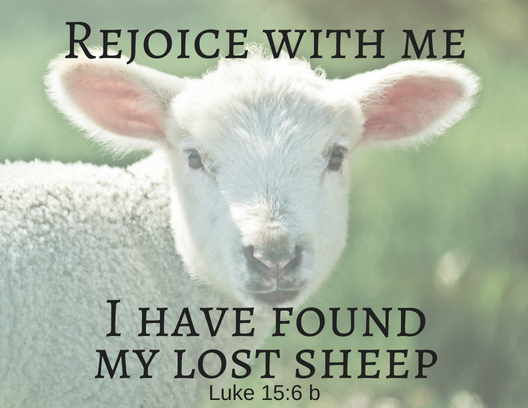
In the same manner, Jesus demonstrates this as the Good Shepherd watching over His flock. “Suppose one of you has a hundred sheep and loses one of them. Doesn’t he leave the ninety-nine in the open country and go after the lost sheep until he finds it? And when he finds it, he joyfully puts it on his shoulders and goes home.” Again, Jesus illustrates the commitment of the Father and His love for all within the body. It says heaven rejoices, but aren’t we too supposed to rejoice in the redemption? As those who already know Christ, we should not be lining up for apologies, but instead extending the hands of grace. If we were robbed by the redeemed of our possessions, our time, or our emotions, they have all become forfeit for the sake of redemption.
Despite our own unfaithfulness and wandering, God’s love has found us and refuses to let go. He has already executed the campaign to offer you an eternal reward far greater than we could ever imagine (and I can imagine quite a bit of pizza). Therefore it is our job to continue the work of Jesus, tending to His sheep. We search the fields for the lost one, giving constant and enduring love to those failing to be victorious over temptation. It is simply put, but the practice is daunting. It is having an awkward conversation at the gas station with someone who hasn’t been to church in a few years. It is offering a listening ear to someone in distress, possibly never knowing if you have heard the truth. It is showing kindness and compassion at business close when all you wanted was to get home to relax. Every act of love is a step toward spiritual restoration, not only for others, but ourselves, because we too have hope in life eternal at the expense of the Creator through His Seeking Shepherd.
-Aaron Winner
Reflection Questions
- What similarities do you find between the lives of Hosea and Gomer and the parable of the lost sheep?
- What lost sheep have you seen restored?
- What sheep do you know who are still lost? What acts of love can you be a part of to demonstrate the Father’s love to them?
 Seek Grow Love