Jesus Announces His Ministry

Isaiah 62-64    

Psalm 121        

Luke 4

-Devotion by Tom Siderius (MI) – Some days are hard…but taking some extra time in God’s Word never hurts..so today – you get to have two devotions – here’s your second one on today’s passages.!

What an extraordinary series of readings we have today.  We read in Isaiah so much revelation showing us the true nature of God.  These chapters give us so many examples of how God relates to his people and how they should respond to Him.  We read in Isaiah 64.

Isaiah 64:4-6(NLT) For since the world began,
no ear has heard
and no eye has seen a God like you,
who works for those who wait for him!
5 You welcome those who gladly do good,
who follow godly ways.
But you have been very angry with us,
for we are not godly.
We are constant sinners;
how can people like us be saved?
6 We are all infected and impure with sin.
When we display our righteous deeds,
they are nothing but filthy rags.
Like autumn leaves, we wither and fall,
  and our sins sweep us away like the wind.

Why does God always have to bring up the problem of sin in our lives?

When we walk with God on the pathway to life, we are constantly faced with the problem of our sins and their consequences on our lives.  As Isaiah says to us our “sins sweep us away like the wind” sweeping away the autumn leaves.  UGH!  Why are the best works that I can do by myself compared to “filthy rags”? I am captured by the ugly thoughts and depression of constantly being less than I know I should be.  Our memories of our sins and shortcomings follow us around like a bad smell keeping us from relationships with God and others. 

However, God doesn’t leave us in the midst of our bad smell and depression.  He has given us an answer in the person of His Son the Lord Jesus Christ.  Read the uplifting verses from Luke about what Jesus does in synagogue when he reads that daily reading.

Luke 4:14-21(NLT) Then Jesus returned to Galilee, filled with the Holy Spirit’s power. Reports about him spread quickly through the whole region. 15 He taught regularly in their synagogues and was praised by everyone.
16 When he came to the village of Nazareth, his boyhood home, he went as usual to the synagogue on the Sabbath and stood up to read the Scriptures. 17 The scroll of Isaiah the prophet was handed to him. He unrolled the scroll and found the place where this was written:
18 “The Spirit of the LORD is upon me,
for he has anointed me to bring Good News to the poor.
He has sent me to proclaim that captives will be released,
that the blind will see,
that the oppressed will be set free,
19 and that the time of the LORD’s favor has come.”
20 He rolled up the scroll, handed it back to the attendant, and sat down. All eyes in the synagogue looked at him intently. 21 Then he began to speak to them. “The Scripture you’ve just heard has been fulfilled this very day!”

God gives us the answer to sin and death, and his name is Jesus Christ.  Jesus reads the daily reading from Isaiah 61 which we looked at yesterday.  God sees the spiritual captivity of people, and their need for help because we are poor in all parts of our lives.  God sends Jesus to open our eyes and unstop our ears that we can see and hear the truth of His Word.  God has not left us in our sins and faced with death.  Jesus reads and then claims the prophetic mantel that Isaiah spoke so long ago. 

Does this section of scripture send your heart to God for help?

Jesus begins his ministry that starts here in his hometown of Nazareth and then proceeds to go about Galilee and then further throughout the land there.  What starts here goes to the uttermost parts of the earth.  Indeed, there is no place where the Word of God has not gone with the record of His love for us and the salvation He has offered to all who obey Him.  God is the author and originator of salvation, and then Jesus is the agent that God uses to bring mankind back to Him.  God desires to save us from captivity, heal our diseases, give us an abundant life, and then save us from death with gift of life eternal with Him.

Isaiah 64:8-9(NLT)  And yet, O LORD, you are our Father.
We are the clay, and you are the potter.
We all are formed by your hand.
9 Don’t be so angry with us, LORD.
Please don’t remember our sins forever.
Look at us, we pray,
and see that we are all your people.

What is the form of the clay of your life that God is shaping you into?

Luke 4:42-43(NLT)  Early the next morning Jesus went out to an isolated place. The crowds searched everywhere for him, and when they finally found him, they begged him not to leave them. 43 But he replied, “I must preach the Good News of the Kingdom of God in other towns, too, because that is why I was sent.”

Jesus is sent by God to preach the good news of the gospel to the children of Israel.  Then  as well to those that heard his words and saw God’s power revealed in Jesus’ life.  This responsibility of speaking these words of life have now been given to us that are the followers of Jesus.  We are now the agents of salvation speaking the words of life to all that will hear.  We are God’s chosen people today.

Acts 1:7-8(NLT) He replied, “The Father alone has the authority to set those dates and times, and they are not for you to know. 8 But you will receive power when the Holy Spirit comes upon you. And you will be my witnesses, telling people about me everywhere—in Jerusalem, throughout Judea, in Samaria, and to the ends of the earth.”

Reflection Questions – and above

What is the message of salvation that we bring to all the world?

Can you give a summary of this to people who ask?

PRAYER

Father God, the God who is like no other, we pray earnestly to You today.  We ask for the reassurance of Your love for us that comes from Your Word.  We thank you for this  forgiveness of sins that You have so freely extended to us.  God shape our lives to Your purposes and direction.  We pray for Your help in all our lives as we strive to find You and obey You.  Thank you for this wonderful gift of life in the person of our Lord Jesus Christ.  In Jesus’ name we pray to You. We love You Father.

Learning from Jesus

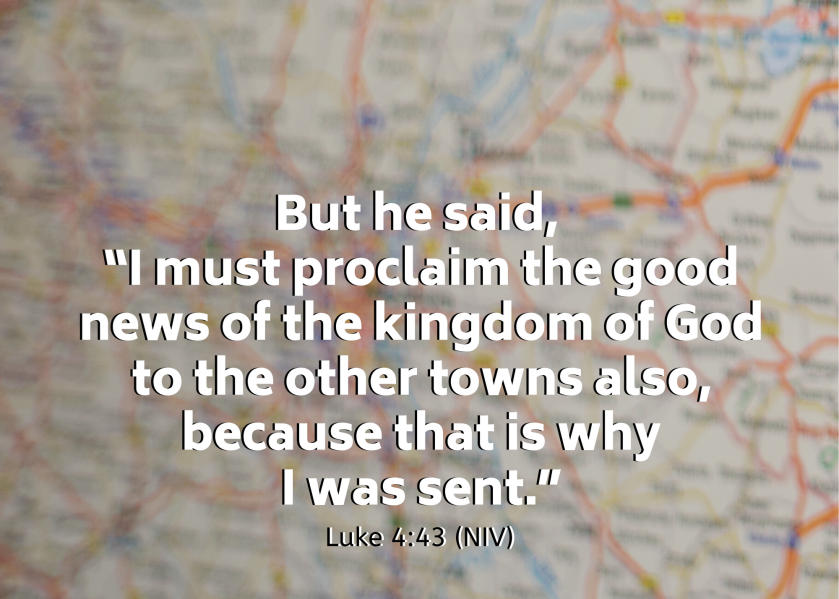
Quote from Luke 4:43 (NIV) on a blurred map background, stating the necessity of proclaiming the good news of God's kingdom.

Isaiah 62-64

Psalm 121

Luke 4

-Devotion by Kyle McClain (originally posted for SeekGrowLove on Dec 5, 2019)

In Luke chapter four, we finally get to see the beginning of Jesus’ ministry.  However, before we get there, Jesus spent forty days and forty nights in the wilderness by himself with no food.  He was led into the wilderness by the Holy Spirit.  We are never told the purpose of the Spirit leading Jesus to the wilderness, but I imagine it served as a great time for Jesus to focus in on God all by himself before he began his earthly ministry.

While Jesus was in the wilderness for forty days, the devil came to tempt Jesus.  Three times the devil tempted Jesus, but he had zero success.  To combat the temptation, Jesus responded each time with scripture (verses 4, 8 and 12).  Scripture offers us a great way to combat temptation, as Jesus demonstrated here.  Psalm 119:11 supports this notion, as it states, “I have stored up your word in my heart, that I might not sin against you.”

Whenever we are confronted with temptation, as we all are, a great way to resist and combat that temptation is by quoting scripture.  Now, this is only possible if you have scripture memorized in the first place.  This is a big reason why it is important to store God’s Word in our hearts.

After Jesus withstood the temptation of the devil in the wilderness, Jesus officially began his earthly ministry in his hometown of Nazareth.  He did not have quite the warm welcoming, as the Jews tried to throw him off of a cliff (Luke 4:29).  This was just the beginning of the Jews seeking to end and kill Jesus.  They were constantly taken back by Jesus’ bold claims that he makes.  In the end, the Jews send him to the Roman government to have him killed because Jesus claimed to be the Son of God (Matthew 26:54).  The Jews seldom got along with Jesus because they did not believe that he was the Christ, the Son of God.

Luke chapter four ends with Jesus telling us his purpose, as Jesus states, “I must proclaim the good news of the kingdom of God to the other towns also, because that is why I was sent,” (Luke 4:43).  Jesus himself stated that his purpose was to preach the good news of the kingdom of God.  From the very beginning of his ministry, he preached all about the Kingdom.  The message of the kingdom was at the heart of Jesus’ ministry, and it should be at the heart of our ministry as well.

Reflection Questions

  1. Why do you think Jesus fought temptation with Scripture? What Scriptures could be most helpful when you are facing temptation?
  2. What Scriptures do you already know and have memorized? When do you bring them to mind? How have they been helpful? What verse would you like to memorize next?
  3. What is your God-given purpose? How will you seek to do that today?

Prayer

Dear Heavenly Father – Thank you for Your Son Jesus who You gave to save the world including me. Help me learn from him and follow in his steps. Show me how to be victorious against temptation. Guide me in fulfilling the purpose You have for me, that I might be faithful to You in all things. Protect me from evil until that glorious day Your Son returns to earth. In his name I pray, Amen.

My Glory I Will Not Give to Another

*Isaiah 48-49

Psalm 119

*Luke 1

-Devotion by Jeremy Martin (TN)

I suppose I should start out by saying: we’re all just humans, and that we should in love and patient understanding bear with each other, particularly those who are fellow servants of God.  I should also state that it is my opinion that even with an imperfect theology or understanding of scripture, it is absolutely possible for someone to gain entry and citizenship into the Kingdom of Heaven because God sees the heart of a man, and knows all of our intents. I still think that (in addition to obedience) an accurate understanding of scripture is important since it’s God’s word that He gave us, so here are some observations about today’s readings that I offer in love.

In Luke 1 in today’s reading, Gabriel makes an appearance, first to Zechariah (John the Baptist’s father) and then to Mary (Jesus’ mom).  You may recall when we were first introduced to Gabriel in scripture, back in Daniel 8:16 (and later again in Dan 9:21).  Gabriel is clearly a high ranking angel, as he has authority to stand before God.  He even quotes this to Zechariah after telling him of the impending (and unexpected) birth of his son, in Luke 1:19 ” 19 And the angel answered and said to him, “I am Gabriel, who stands before God …”.  This makes it pretty important to listen to the particulars that he tells us because this is a heavenly being who stands in the presence of God (a tremendous honor and privilege).

Let’s examine the conversation Gabriel has with the virgin (at the time) Mary, in Luke 1:26-31 (LSB Translation): “26 Now in the sixth month the angel Gabriel was sent from God to a city in Galilee called Nazareth, 27 to a virgin betrothed to a man whose name was Joseph, of the house of David, and the virgin’s name was Mary. 28 And coming in, he said to her, “Greetings, favored one! The Lord is with you.” 29 But she was very perplexed at this statement, and was pondering what kind of greeting this was. 30 And the angel said to her, “Do not be afraid, Mary, for you have found favor with God. 31 And behold, you will conceive in your womb and bear a son, and you shall name Him Jesus.”

Note that like Jesus, like every servant of God, Gabriel was sent by God.  I love that Mary is initially perplexed at the angel’s greeting, and is probably wondering why she is being favored by God.  I also wonder at the translation a little: there is a reference mark in my bible under every instance above where it says “Lord” that says “Yahweh, in the OT” down below at the reference.  I believe that an angel who has the authority to stand before God also has the authority to speak God’s name, and I think that’s what he did here, but that’s just speculation and the actual word used in (the Greek translation of) Luke is “kyrios”.  

This could be a lifetime study on it’s own, but the divine name Yahweh (or its full form YHWH) does not appear in any extant manuscripts of the New Testament.  The New Testament was written in Greek (at least the existing and accepted copies that we are aware of, though Nehemiah Gordon has some counter theories you should check out), and its authors consistently used the Greek title kyrios (“Lord”) to translate the Hebrew Tetragrammaton when quoting the Old Testament, following the tradition of the Septuagint (LXX).  This became extremely confusing when translated into English because the same “kyrios” was also used to translate the word “Master”, referring to any human figure of authority.

Some scholars, such as George Howard, suggest that the original autographs of the New Testament may have contained the Tetragrammaton in Hebrew characters in Old Testament quotations, but these were replaced by kyrios by early copyists.  Few, if any, surviving Greek manuscripts contain the name, but the practice initiated by the copyists to call Yahweh “THE LORD” and also Yeshua “The Lord” has led to a lot of understandable confusion among later believers who may not have understood the distinction between the two, or that there even was one. 

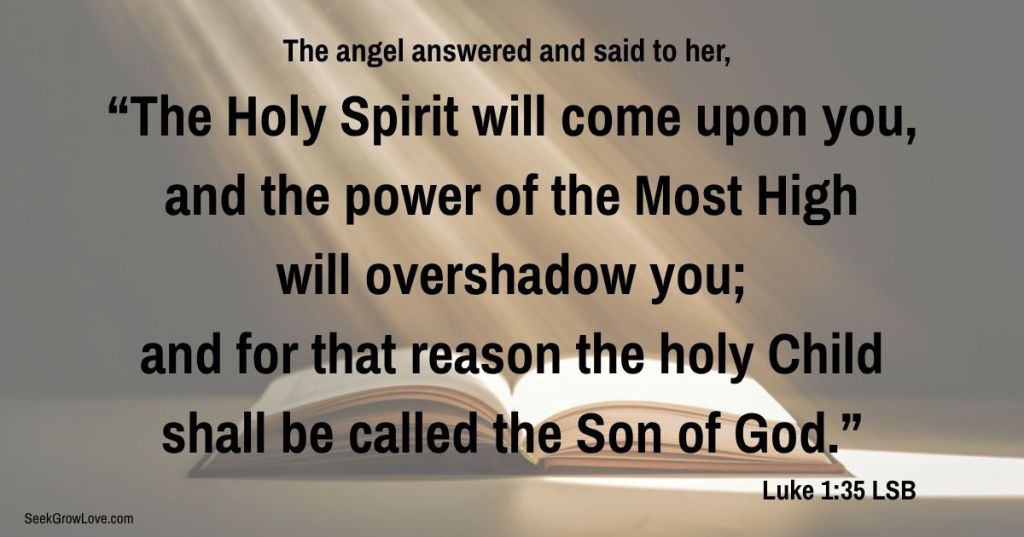
Gabriel goes on to say “32 He will be great and will be called the Son of the Most High, and the Lord God will give Him the throne of His father David, 33 and He will reign over the house of Jacob forever, and there will be no end of His kingdom.” 34 But Mary said to the angel, “How will this be, since I am a virgin?” 35 The angel answered and said to her, “The Holy Spirit will come upon you, and the power of the Most High will overshadow you; and for that reason the holy Child shall be called the Son of God.” (LSB).  (FYI, every capital letter in there that isn’t the beginning of a sentence or a proper name is a translational bias in my translation.  It just goes to show.)

So he will be called the son of God, and God will give him the throne of his father David.  God (the ultimate authority), is going to give him (Jesus, our king) the throne of his ancestor David.   In Luke 1:32, Gabriel confirms all of these prophecies are being fulfilled. 1 Cor 11:3 confirms that while the Christ (Jesus, our king) is the head of man, God is the head of the Christ.  Jesus has a God (see for reference John 20:17), and it’s our God too, the same God according to what Jesus told Mary.  Later on, sadly, these very clear scriptures were slowly distorted and changed.

In another prophecy, in Isa 49 God says: “6 He says, “It is too small a thing that You should be My Servant To raise up the tribes of Jacob and to cause the preserved ones of Israel to return; I will also give You as a light of the nations So that My salvation may reach to the end of the earth.”” (LSB)  The servant of God, the Messiah, the Christ came not only for the tribes of Israel, but as a light to the nations.  God caused it, Jesus the servant of God obediently fulfilled it, the Messiah, the anointed one, the Christ.

The very word “Christ” is greek for “The Anointed One”, which is also what “Messiah” means.  To be anointed, the obvious question follows: well, who anointed him?  It tells us throughout scripture: Yahweh God anoints His servants and grants them authority.  To be the Messiah (or, The Christ) means that Jesus had to be a human to fulfill the mandatory requirements according to prophecy (an Israelite human descended from David, see Gen 3:15, Deut 18:18, and 2 Sam 7:12-16 among many others).  Not to become a human, but to be born one.

Please don’t misunderstand me, Jesus was the very best of us.  The Lamb of God is worthy, and worthy of praise, because he was obedient to God’s will and gave his own life as a ransom for many, but (according to Jesus himself) God is the one who sent him to do so.  This seems to make it pretty critical to get our theology right when God tells us: “… My glory I will not give to another.” ( LSB Isa 48:11).   

REFLECTION QUESTIONS

  1. Why do you believe what you believe, can you find or quote scriptures that support your beliefs? Why is it important?
  2. Have you ever, in patient love and understanding, asked someone who believes differently than you about God to share their beliefs and had a constructive and loving conversation as a result, comparing interpretations while maintaining love and respect?
  3. Do you think what anyone else believes is important? To what degree, to whom, and why?
  4. Which do you feel is more critical toward entering the Kingdom: theological accuracy, humble obedience to God, or a relationship with God?  If you had to assign a percentage to each, where would they fall in your opinion?

PRAYER

Father God, we love you.  Teach us and instruct us, grant us your spirit as a helper, and help us to be humbly obedient to your word.  Thank you for life, breath, and all things.  Please bless all those who seek your favor, and forgive us our shortcomings.  In Jesus name, amen.

Unmet Expectations

Luke 24 & John 20-21

Devotion by Rachel Cain (Ohio)

Unmet expectations are a leading cause of relational conflicts. 

Sometimes the expectations were simply not communicated, so the offending person had no idea what was expected. Other times the expectation was communicated but not met, such as a broken promise. Sometimes it is no fault of anyone, but life and happenstance got in the way of the anticipated outcome. 

In the case of Jesus’ resurrection, multiple prophecies and even Jesus himself foretold what would happen, but still the disciples had their expectations shattered: “We had hoped that he would be the one to liberate Israel!” (Luke 24:21). 

They were disappointed in Jesus because their expectations did not match his reality. The disciples, among others, had believed he was the Messiah, but then they were confused when he didn’t fix their political problem by conquering the Romans and establishing an earthly kingdom – even though he had never promised to do those things. He had a much larger spiritual plan to save all of humanity by conquering the sin within their hearts. Perhaps they didn’t understand God’s big-picture promise of an eternal Kingdom. 

Today we look back with disbelief on their disbelief. DUH! Of course he’s the Messiah! Why couldn’t they just listen to him and recognize him and his plan? But how many of us today fail to recognize Jesus and his mission because it looks different than we expect? 

I think sometimes we expect a clean-cut Jesus, tidy Christians, an easy life. But none of that is promised; in fact, following Jesus guarantees quite the opposite (see John 16:33). How often do we fail to recognize the gifts of God because they don’t come packaged the way we expect? Can we see the blessing of prayers that were not answered the way we asked? Do we see every person – annoying, incarcerated, stinky, unborn, elderly, troubled, or just plain “different” – as God’s precious children, and view every interaction with them as a mission for the Kingdom? 

It’s so easy to be hostile toward fellow Christians over all kinds of unmet expectations – differing doctrines or political views, whether or not Christians should be involved in this activity or celebrate that holiday, etc. We definitely should encourage each other to keep seeking Jesus in these and all areas of our lives, but if we just put half that energy we use fighting one another into uniting to spread the love of Jesus to a hurting world, united we could have a tremendous Kingdom impact. God’s ways are not our ways (Isaiah 55:8-9), so we should always expect the unexpected. 

Reflections:

Listen to this song. How have some trials turned out to be unexpected blessings? 

What are some things that you are waiting for with expectant hope, and how can you share that hope with others around you? 

All In

Matthew 23 & Luke 20-21

When my husband’s younger brother was a preschooler, so the story goes, he had a particularly busy day, playing and being active.  Near bedtime, he declared to his family, “I’m all ‘shampooed’ out”.  Following the ensuing laughter, his parents agreed he was indeed tuckered out; he was “all in.”

The phrase, “I’m all in” can mean a person is exhausted.  But another understanding of that expression is a person’s declaration that he/she is completely devoted, totally committed, to a cause or endeavor.  “I’m all in to lose the weight.”  “I’m all in to win the championship.”  “I’m all in to elect this candidate.”

If you’re all in, you are going to give it your best effort, give it as much time and resources as possible, give it your all.  You are all in! 

A beautiful example of this idea is found in Luke 21:1-4, the familiar account of the widow’s offering.  Jesus had been teaching in the temple.  The scribes, chief priests, and Sadducees had been questioning him, trying to entrap Jesus when he answered, so they could deliver him to the authority of the governor. 

Finally, they realized their trick questions were not going to work. 

“Some of the scribes answered and said, ‘You have spoken well.’ For they did not have courage to question Him any longer about anything.” (Luke 20:39,40)

In response, as all the people listened, Jesus said to his disciples, “Beware of the scribes, who like to walk around in long robes, and love respectful greetings in the marketplaces, and chief seats in the synagogues and places of honor at banquets, who devour widows’ houses, and for appearance’s sake offer long prayers. These will receive greater condemnation.”  (Luke 20: 46,47)

Among the prideful things that the scribes were doing, was robbing widows of their homes and resources.  The New American Standard and New International Bible versions use the word “devour” to describe the scribes’ actions. 

Devour–“eat up greedily”–“prey upon.”  Not a pleasant picture.

The Living Bible vividly describes it this way. “But even while they are praying long prayers with great outward piety, they are planning schemes to cheat widows out of their property.  Therefore, God’s heaviest sentence awaits these men.” (Luke 20: 46,47) 

 Immediately after Jesus’ condemnation of the scribes, he looks up to see rich men depositing large amounts of money into the offering receptacles.  And then Jesus spots the poor widow. Carefully, she placed two copper coins, the smallest class of currency, into the offering box.  Jesus’ reaction?

“Truly I say to you, this poor widow put in more than all of them; for they all out of their SURPLUS put into the offering; but she out of her POVERTY put in ALL that she had to live on.” 

Jesus saw the widow’s humble gift—two coins that equaled a penny.  How miniscule in man’s eyes. How sacrificial in Jesus’ eyes.  The rich still had their fortunes; the widow had nothing left in worldly goods.  Her pure heart and strong faith would sustain her.  God would provide for her needs. 

The poor widow was “all in.”  

“But seek first His kingdom and His righteousness, and all these things will be added to you.  So do not worry about tomorrow; for tomorrow will care for itself.”  (Matt. 6:33,34a)

God desires our time, talents, service—to put Him first in everything we do.  The reward will be great. 

As Paul stated at the end of his ministry, “I have fought the good fight, I have finished the course, I have kept the faith; in the future there is laid up for me the crown of righteousness, which the Lord, the righteous Judge, will award to me on that day; and not only to me, but also to all who have loved His appearing.”  (II Tim. 4:7,8)

But to those who CLAIM allegiance to God, with a half-hearted commitment, Jesus has sharp words.

 “I know your deeds, that you are neither cold nor hot; I wish that you were cold or hot. So, because you are lukewarm, and neither hot nor cold, I will spit you out of My mouth. Because you say, ‘I am rich, and have become wealthy, and have need of nothing,’ and you do not know that you are wretched and miserable and poor and blind and naked” (Revelation 3:15-17)

The pretentious piety of the rich was false—in Jesus’ eyes they were poor and wretched–understandably lukewarm.  The poor widow’s offering, two copper coins, was all she had in the world.  She gave it willingly, trustfully, faithfully. 

She was ALL IN!

Reflection Questions

  1. What does it take to truly see the needs of others?
  2. Reflect on the widow’s offering, and then put yourself in her place.  Would you have given the two coins? 
  3. What can you change in your life to be “all in” for the Lord? 

To See and Be Seen

Luke 18:15-19:48

Devotion by Paula Kirkpatrick (Minnesota)

What do you think, when you hear the name Zacchaeus?  Short man, tax -gather, tree-climber.  All correct.  But there’s more to think and learn about this man, as we consider his conversion in Luke 19:1-10. 

The Bible tells us that Zacchaeus was rich.  This reality seemed to be common among tax-gathers in Jesus’ day, mainly because they consistently cheated people as they collected taxes.  Tax collectors were not only scorned by the Jewish people, but they were often shunned by them as well. 

Would you want to socialize with someone who claimed you owed more money to the government than you actually did, and kept your “stolen” funds for himself?  Of course not!

We can only imagine that Zacchaeus, despite his riches, felt the sting of rejection.  Besides his poor reputation as a “thief” to the masses, the Bible tells us he was short in stature.  His presence may not have been authoritative.  He was small in height, and a “small” man in his business dealings. 

But Zacchaeus was also curious.  The Bible says, “he was trying to see who Jesus was.” 

A multitude was passing through Jericho, following this stranger.  “Who was he?” Zacchaeus wondered. 

Running ahead, he climbed up a sycamore tree for a better view.  And to his utter disbelief, Jesus looked up into the tree and said, “Zacchaeus, hurry and come down, for today I must stay at your house.”

Zacchaeus’ world was turned upside down, and instantly changed.  Hurriedly, he descended from the tree and welcomed Jesus into his home.  Onlookers reacted with disapproval, grumbling that Jesus “has gone to be the guest of a man who is a sinner.”

But Zacchaeus’ transformation was real.  In response to the crowd’s condemning remarks, he stopped in his tracks and declared, “Behold, Lord, half of my possessions I will give to the poor, and if I have defrauded anyone of anything, I will give back four times as much.”

No longer was he a short, scorned tax-gather of Jericho.  Zacchaeus was a fresh follower of the Son of Man. 

“Jesus said to him, ‘Today salvation has come to this house, because this man, too, is a son of Abraham. For the Son of Man came to seek and to save the lost.’”  (Luke 19:9,10)

In Sunday’s reading, the rich young ruler could not commit his entire life to following Jesus.  (Matt. 19:16-30)   How could he give up his lifestyle, his riches?  Sadly, he turned away from Jesus to go back to his opulent life. 

In contrast, Zacchaeus eagerly declared his charitable intentions to the listening crowd, with no prompting from Jesus.  His heart was forever changed.

What is it concerning the account of Zacchaeus that touches us so deeply?  Perhaps, it is that he never expected to be discovered in the sycamore tree that day.  He just wanted to see what all the commotion was about on the streets of Jericho.  Never could he have predicted that the man he was trying to see, would see HIM, would TRULY SEE HIM.  Zacchaeus, once a cheating tax collector, was now a follower of Jesus.

So many people in our world, in our daily personal world, need to be “seen” by us.  They are discouraged and depressed, hurting and hopeless.  They need a friend.  Jesus is waiting to be their friend.  He just needs an introduction.  Will you be the one to make it for him?

Reflection Questions

  1.  Have you ever felt “invisible” in your life or relationships?  Why?
  2. Why do you think Zacchaeus wanted to see Jesus?  Did he feel, even with his riches, something was missing in his life?
  3. Think about someone who needs to be “seen” by Jesus this week.  What can you do?   

Trust, Gratitude and Humble Prayer

Luke 17:11-18:14

Devotion by Jerry Wierwille (New York)

As Jesus continues his journey toward Jerusalem, he encounters people from all walks of life—outcasts, disciples, religious leaders, and ordinary men and women. In Luke 17:11–18:14, there are various stories and teachings involving miracles and parables where Jesus calls people to deeper trust, genuine gratitude, and humble prayer.

Trust and Thankfulness

This section of Scripture opens with Jesus traveling along the border between Samaria and Galilee. Ten men with serious skin diseases (traditionally translated as “lepers”), who were shunned by society and desperately wanted mercy, call out to him from a distance, saying, “Jesus, Master, have mercy on us” (Luke 17:13). Jesus responds not with an immediate healing, but with a command: “Go and show yourselves to the priests.” As they obeyed, they were cleansed. But while all ten were physically healed, one man (the Samaritan) displayed gratitude which brought him a deeper wholeness—spiritual as well as physical. Jesus tells him, “Your trust has made you whole” (Luke 17:19). The passage reveals that faith and thankfulness are both vital to experiencing the fullness of God’s blessing.

One helpful insight here is that trust often requires action before we see results. The lepers had to begin their journey to the priests while still unhealed. Their obedience was an expression of trust, and as they went, God’s power healed them. Trust, even as small as a mustard seed, has the power to move what seems immovable (cf. Luke 17:6).

Reflect: Where is God inviting you to trust him more, even before you see the outcome? How might cultivating a heart of gratitude open the door to God’s work in your life?

Persistence in Prayer

Jesus then tells the parable of The Persistent Widow (Luke 18:1-8), encouraging his followers to “always pray, and not become discouraged.” The widow’s relentless pursuit of justice before an indifferent judge is contrasted with God’s attentive care for his people. If even an unjust judge can be moved by persistence, how much more will God respond to the cries of his beloved children when they persistently come to Him in prayer?

The parable is about the necessity of persistent prayer and unwavering hope, even when answers seem delayed. Jesus asks, “When the Son of Man comes, will he find trust on the earth?” (Luke 18:8). Our perseverance in prayer is an act of trust and also a testimony to our trust in God’s character.

Reflect: In what prayers do you need to be more persistent? What discouragements in your life can you bring honestly before God, trusting that he hears and cares?

Humility Before God

Finally, Jesus tells the parable of The Pharisee And The Tax Collector (Luke 18:9–14). The Pharisee stands confidently, listing his religious achievements and looking down on others. The tax collector, by contrast, stands at a distance, unable even to lift his eyes, but nonetheless, he prays: “God, be merciful to me, a sinner.” Jesus declares that it is the humble tax collector who goes home “righteous,” not the devout Pharisee. The reason Jesus gives is that “everyone who exalts himself will be humbled, but whoever humbles himself will be exalted.”

This parable reveals that one must be humble when coming before God. Humility, openness, and a childlike posture are essential for receiving the kingdom of God (Luke 18:17). Our standing before God is not based on our prowess, devoutness, or accomplishments, but on our honest need for his mercy, because there is nothing we can do to deserve it.

Reflect: In what ways do you find yourself comparing your spiritual life to others? How can you approach God with greater humility and openness in your heart?

Encouragement

As you read these stories and teachings of Jesus, may you be inspired to trust in God more deeply, return thanks for His goodness and blessing, persist in prayer, and humble yourself before Him.

Jerry works on the REV Bible (revbible.com) as the chair of the REV Translation Committee and the lead NT translator. He also has a podcast on the Book of Proverbs called “Words of Wisdom” (stfi.org/podcasts/words-of-wisdom-podcast) that people can find on Spotify, Apple, Pandora, etc.

The Master Teacher at Work

Luke 16:1-17:10

Devotion by Jerry Wierwille (New York)

Jesus was a master teacher, and he used parables to teach and challenge his listeners to reconsider their present attitudes or perspectives. In Luke 16, Jesus teaches on wealth, faithfulness, forgiveness, and humble service, inviting us to consider how our daily choices reflect our commitment to God’s kingdom and to live in light of the age to come.

Wise Stewardship and Eternal Perspective

Jesus begins this section with the Parable of the Wise Manager (Luke 16:1-9). In this story, a house manager is called to give an account of his stewardship after being accused of wasting his master’s possessions. Facing dismissal from his position, he shrewdly reduces the debts of his master’s debtors, hoping to secure their goodwill for his own future. Surprisingly, the master commends the manager—not for his dishonesty, but for his prudence and foresight. Jesus then says, “For the sons of this age are in their own generation more prudent than the sons of the light. And I myself say to you, make friends for yourselves by means of unrighteous wealth, so that when it fails they will receive you into the tents in the age to come” (Luke 16:8-9).

Scripture teaches that our resources—whether money, talents, or opportunities—are temporary and ultimately belong to God. Jesus calls us to use what we have now with a perspective toward the age to come, investing in relationships and acts of generosity that have lasting value in God’s kingdom. Furthermore, our “wealth” includes not only material goods, but also our mental and physical abilities. The challenge is to use all we have to prepare for the future life God promises rather than clinging selfishly to earthly treasures here and now.

Reflect: How can you use your resources today to bless others and honor God? What does it mean for you to “make friends” through your actions and generosity with respect to the age to come?

Faithfulness in Little and Much

Jesus continues on in Luke 16, saying, “The one who is faithful in a very little is also faithful in much” (Luke 16:10). This is such an important point about the need to be mindful of small things before thinking about larger things. In addition, Jesus warns that we cannot serve both God and wealth, for our loyalties will inevitably be divided (Luke 16:13). The religious leaders, who loved money, scoffed at Jesus’ teaching, but he reminded them that God knows the heart (Luke 16:14-15). Jesus’ emphasis is on faithfulness in small things as the foundation for greater areas of responsibility in God’s eyes. Our daily choices, even in seemingly insignificant matters, reveal where our true allegiance lies and where our focus is placed.

Reflect: In what “small” areas of your life is God calling you to be more faithful? How might your attitude toward money or possessions reflect the way you trust in God?

The Rich Man and Lazarus: A Warning and a Promise

Jesus then tells the Parable of the Rich Man and Lazarus (Luke 16:19-31). The rich man lives in luxury, ignoring the suffering of Lazarus, a poor beggar at his gate. After death, their roles are reversed: Lazarus is comforted, while the rich man is in torment. The parable warns that earthly status and comfort are fleeting, and that our response to the needs of others has eternal consequences. This story is a powerful call to compassion and to heed God’s Word, for “if they do not listen to Moses and the prophets, they will not be persuaded if one rises from among the dead” (Luke 16:31).

Reflect: Who are the “Lazarus-es” in your life—those in need whom God is calling you to notice and care for? How does this parable shape your view of justice and mercy?

Forgiveness, Faith, and Humble Service

In Luke 17:1-10, Jesus addresses the challenges of his followers with regard to their life in community with one another. He warns against causing others to stumble and commands a spirit of continual forgiveness: “If your brother sins, rebuke him, and if he repents, forgive him…even if he sins against you seven times in the day” (Luke 17:3-4). Jesus’ disciples, feeling the weight of this command, cry out, “Increase our faith!” Jesus assures them that even faith as small as a mustard seed is powerful when a person trusts in God.

Finally, Jesus reminds his disciples that serving God is not about seeking recognition or reward. “When you have done all that you were commanded, say, ‘We are unworthy servants; we have only done what was our duty’” (Luke 17:10). Even after faithful obedience to God, our attitude should be one of humility, not entitlement. We are to focus on our duty and responsibility as disciples and not be preoccupied thinking about what reward we might receive.

Encouragement

Jesus is calling us to live with wisdom, faithfulness, compassion, and humility as his disciples. As you reflect on these teachings, consider how you can steward your resources for God’s glory, forgive generously, and serve with a humble heart. May you find encouragement in knowing that God sees your faithfulness, values your compassion, and honors your humble service in His kingdom.

With Humility, Carry Your Cross & Find the Lost

Luke 14-15

Devotion by Jerry Wierwille (New York)

Luke 14-15 presents some of Jesus’ most challenging teachings, calling us to embrace humility, count the true cost of discipleship, and rejoice in God’s relentless pursuit of the lost. Also, we find some of Jesus’ most memorable parables and statements that help us to understand what it means to be a servant and call him “Lord,” and the depth of God’s grace for all who turn to Him.

Humility and Hospitality in God’s Kingdom

Luke 14 opens with Jesus at a Sabbath meal in the house of a Pharisee, where he observes how the guests desired to sit in places of honor. Jesus uses this moment to teach about humility, saying, “Everyone who exalts himself will be humbled, and whoever humbles himself will be exalted” (Luke 14:11). In God’s kingdom, Jesus is declaring that status is not measured by one’s social standing, but by a heart that is willing to serve and take the lowest place. Jesus goes further, urging his listeners to invite not just friends and wealthy neighbors to their feasts, but “the poor, the maimed, the lame, the blind” (Luke 14:13). True hospitality, he teaches, is generous and selfless, reflecting God’s own gracious invitation to everyone.

Reflect: In what ways can you practice humility in your daily interactions with others? Who in your life might need an invitation to experience God’s love through your hospitality or kindness?

Counting the Cost

As crowds follow Jesus, he turns to them with sobering words and says, “If anyone comes to me, and does not hate his own father, and mother, and wife, and children, and brothers, and sisters, yes, and his own life also, he is not able to be my disciple. Whoever does not carry his cross and come follow after me is not able to be my disciple” (Luke 14:26-27). This statement would have certainly caused his audience to be taken back, wondering what this stipulation could mean. But Jesus is not commanding hatred or any ill-will toward others. Rather, he is using intentionally strong language to emphasize the supreme loyalty required to follow him. Discipleship means putting Jesus above all other relationships and comforts, and being willing to endure hardship and sacrifice for his sake. He illustrates this with parables about building a tower and a king preparing for war—both which require careful consideration of the cost (Luke 14:28-33). Jesus’ main point is that following him must be a wholehearted commitment and not a partial or casual decision.

Reflect: What does it mean for you to “carry your cross” in your current season? Are there certain comforts or relationships that are impeding your commitment to Christ that you do not want to let go of?

The Joy of God’s Restoration

Luke 15 is a chapter overflowing with God’s heart for the lost. The religious leaders grumble at Jesus because he welcomes and eats with sinners; something which they find repulsive and utterly alarming. In response to their judgmentalism and resistance to seek those who need help, Jesus tells three parables—the lost sheep, the lost coin, and the lost son. Each story highlights God’s relentless pursuit of the lost and the extravagant joy that accompanies when even one sinner repents and is saved (i.e., “found”).

The Parable of the Lost Sheep (Luke 15:4-7) shows a shepherd leaving ninety-nine sheep to find the one that is lost, rejoicing when it is found. “I tell you that in the same way there will be more joy in heaven over one sinner who repents than over ninety-nine righteous people who have no need of repentance.” In like manner, the Parable of the Lost Coin (Luke 15:8-10) and the Parable of the Lost Son (Luke 15:11-32) echo this theme about how God’s love actively seeks, restores, and celebrates the return of those who were lost.

These parables reveal the depth of God’s grace and mercy and the value he places on every individual, no matter how small they might seem. In the parable of the Lost Son, in particular, the father’s embrace of his long-lost son illustrates God’s loving heart and readiness to forgive and restore, no matter how far we have wandered, if we will just turn back to Him in repentance.

Reflect: Where have you experienced God’s restoring grace in your life? Who in your life might need to hear about God’s joy in welcoming the lost home?

Encouragement

This section of Scripture invites us to embrace humility, count the cost of following Jesus, and rejoice in God’s heart for the lost. As you reflect on these teachings of Jesus, consider how you can embody Christ’s humility, make courageous choices to follow him, and join in God’s joy by welcoming others into His grace and forgiveness. May you find encouragement in knowing that every step toward Jesus is met with God’s open arms and heaven’s jubilant celebration, for this is the will of God.

Be Ready, Repent, Choose Jesus

Luke 12-13

Devotion by Jerry Wierwille (New York)

Luke 12–13 contains a series of teachings and parables from Jesus that invite us to reflect deeply on our priorities, our readiness for God’s kingdom, and the call to genuine repentance.

Living with Kingdom Readiness

Jesus’ words in Luke 12:35-40 call his followers to be dressed and ready for service and to “keep your lamps burning.” He uses the image of servants waiting for their master’s return, emphasizing the need for constant readiness. Through the analogy, Jesus emphasizes that life is not just about mundane daily routines, but first and foremost, it is about living in anticipation of God’s purposes and Christ’s return.

This urgency is underscored in Luke 12:54-56, where Jesus rebukes the crowds for being able to interpret the weather but failing to “interpret this [present] time.” Jesus’ ministry marked a pivotal moment in God’s plan, and people were called to recognize the significance of what God was doing through him. The call is to spiritual alertness—to see beyond the surface of daily events and discern God’s activity in our world, especially in and through Jesus the Messiah.

Reflect: Are you living with a sense of spiritual urgency? What might it look like for you to “keep your lamp burning” in your current season of life? How can you cultivate a heart that is attentive to God’s work happening around you?

Unless You Repent…

Luke 13 opens with a sobering reminder of the necessity of repentance: “Unless you repent, you will all perish as well” (Luke 13:3, 5). Jesus refers to recent disasters—the Galileans killed by Pilate and those who died when the tower in Siloam fell—not to explain the tragedies, but to call everyone to carefully examine their own lives.

Jesus’ call to repentance is not meant to instill fear, but to bring attention to the opportunity for repentance. God’s patience gives us time to turn to Him, as illustrated by the parable of the barren fig tree (Luke 13:6-9). The owner seeks fruit, but the gardener pleads for more time to nurture the tree. In the same way, God graciously gives us opportunities to bear fruit in our lives, but there is a time when judgment will happen and the tree that does not bear fruit will be “cut down” (Luke 13:9).

Reflect: Where do you sense God inviting you to repentance and growth? Are there areas in your life that need to be surrendered or renewed? How can you respond to God’s patience and grace today?

Choosing Jesus

One of the more challenging statements of Jesus in this section is, “Do you think that I have come to bring peace on the earth? I tell you, no, but rather division” (Luke 12:51). Jesus explains that following him may even divide families, as people must decide whether to trust in him and align their lives with him, or not.

Division is not Jesus’ desire, and neither is conflict. But rather, it is a recognition that the truth of his message demands a response. The good news confronts every person with a choice: will I follow Jesus, even if it costs me personal relationships or people’s approval? The emphasis is not about the outcome of disagreement between people, but to remain a faithful believer and disciple, even when it is difficult and requires significant sacrifice.

Reflect: Are there relationships or situations where following Jesus has brought tension or misunderstanding? How can you remain faithful and loving, even when it is costly to you? What helps you choose Jesus above all else?

Encouragement

Throughout Luke 12-13, Jesus challenges us to live with spiritual urgency, to embrace repentance, and to follow him wholeheartedly—even when it leads to making hard choices.

Take time today to ask God to open your eyes to His work, to soften your heart toward repentance, and to give you courage to follow Jesus wherever he leads and to endure whatever it takes. As you do, may you experience the fruit that comes from a life marked by readiness, transformation, and hope in God’s kingdom.