Places of Refuge

Numbers 34-36

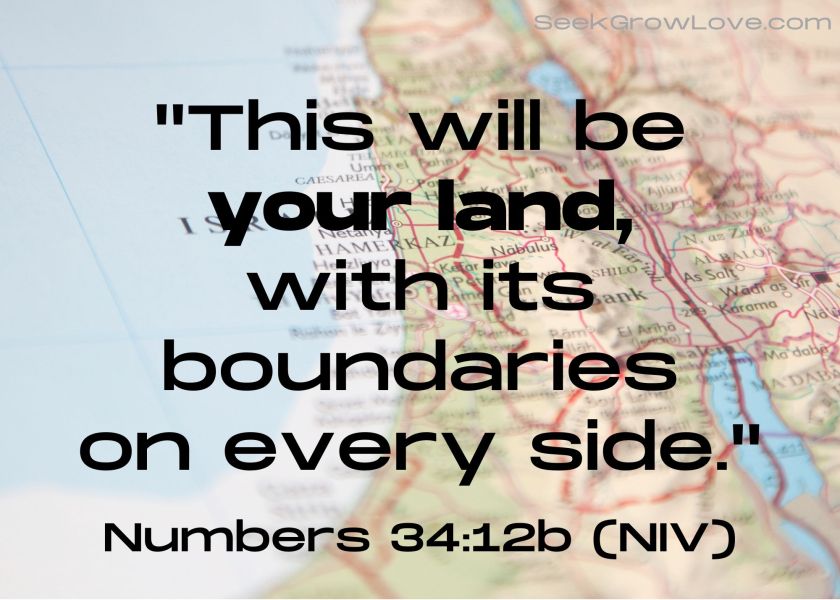
Want to see a map of the borders of the Promised Land?! My husband, Bill Schlegel, wrote the Satellite Bible Atlas (available on Amazon). It’s filled with real photographed maps that he’s added the sites and commentary to.  (Sounds like the way I’m doing these devotionals, but he’s much more articulate;). You can go further in depth to your Bible readings with this atlas to help, especially in the upcoming books of the judges and kings. 🙂 He wrote it for the students to use on field trips and classes in Israel.

In the midst of defining the border, God appointed cities for refuge for within. “These six cities shall be for refuge for the people of Israel, and for the stranger and for the sojourner among them, that anyone who kills any person without intent may flee there. (35:15)  Those must’ve been interesting cities with innocent and guilty persons awaiting judgment. Some probably took advantage of them and for others they found refuge they needed .

Nowadays our homes can be a place of refuge. As a mother of five I can testify to that, receiving family members after long days of work, sporting events, school, and other hard tasks. It’s comforting to find refuge in one’s home and provide that for others too looking for peace.

A hammer can build things up and it can tear things down. “The wisest of women builds her house, but folly with her own hands tears it down.”  Proverbs 14:1 It’s important we use our tools to build and help others rather than tear them down.

Another place we can greatly find refuge is in God. “The name of the LORD is a strong tower;  the righteous man runs into it and is safe.” Proverbs 18:10 Especially after coming to the one God faith this verse means so much more to me. His personal name YHVH/LORD is strong and stable, mentioned some 6,828x in the Old Testament. That’s one out of every four verses making it 25% of the time. It’s powerful just seeing it so many times. Reading the Bible on a regular basis helps one to refocus and gain strength and peace. We can take refuge in God and His Word.

-Stephanie Schlegel

REFLECTION QUESTIONS

1. Where do you find refuge on a daily basis? How has it brought you relief?

2. Is your home a place of refuge for others? Maybe there’s a hurting person you can invite over this weekend to share a meal or coffee with?

3. Is the name of the LORD/YHVH a strong tower for you? What’s a way that could improve that even more?
Lessons from a 3,400 year old Travel Journal

Numbers 31-33 

Misunderstandings! Ever been misunderstood and frustrated?! It’s what happened to Moses and the people he led. The LORD told Moses to take vengeance on Midian. Among them Balaam was also killed with the sword, but the women were kept alive. This upset Moses! The women through Balaam’s counsel caused the Israelites to sin in baal worship. … Moses worked out a solution.

Then two of the tribes wanted to settle east of the Jordan River with their abundant livestock. This upset Moses again! How could their brothers go to war while they sat there?! After a lengthy response he heard their intended promise to cross over with them to help them fight and after return to their livestock and cities.

It can be frustrating to be misunderstood. That’s why it’s important to listen and be patient with others. “Know this, my beloved brothers: let every person be quick to hear, slow to speak, slow to anger; for the anger of man does not produce the righteousness of God.” James 1:19

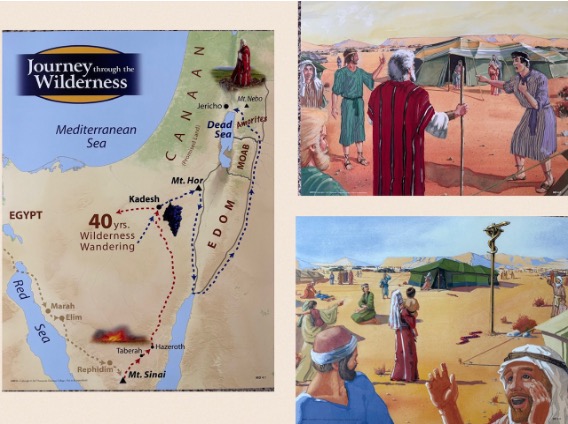
Lastly, let’s not skip over the AMAZING travel journal of chapter 33, and like my Bible geography teacher/husband would say, “It shows these are real places and a real God.” Many of these places are still called that to this day, and it’s from some 3,400 years ago! Pictured above on the left is an aerial view of the Jerusalem/Jericho area looking to the north of Israel with snow capped Mount Hermon on the northern tip.  Did you know that there’s a ski resort up there with 14 ski runs and 5 chair lifts?! YES! One winter on the same weekend one of our boys was skiing up there with friends while the other was snorkeling in the Red Sea (on the southern tip)! Don’t misunderstand Israel, it’s a BEAUTIFUL place! 🙂

-Stephanie Schlegel

REFLECTION QUESTIONS:

1. Do you get angry when you’re misunderstood? How can you be quicker to listen to the person before responding in words and anger?

2. How do you clarify yourself? In anger? With patience? Kindly? Today, try to respond better to a misunderstanding, and ask God’s help to do so.

3. Have you ever kept a travel journal of the places you’ve been? What would people think if they found it 3,400 years later?! :0

Holy Holidays

Numbers 28-30 

The biblical holidays are wonderful and believe me, I knew almost nothing about them growing up in Indiana until I lived in Israel. 🙂 I bite my tongue from saying, “Jewish” holidays as they are biblical holidays. So much meaning behind them, more so than most pagan based American holidays. One of the harder parts about leaving Israel was leaving the holidays.

In our passage today many sacrifices are named with the holidays, which no one is doing now. Also, the holidays were days of rest, set apart from other days. These holidays are still celebrated without sacrifices but with rest, stores close down!! I’m going to briefly give you a taste of these biblical holidays and how they’re celebrated today.

Shabbat: Late every Friday afternoon public transportation, sport games, and stores CEASE, yes, the MALL included, to usher in the shabbat a day of REST. Families eat a nice meal together having leftovers for the next day so no one has to cook/work.

Passover: Feast of Unleavened bread is the first month of the biblical year, which makes sense the new year starts in the spring with new growth blooming. It’s the oldest holiday still celebrated in the world, over 3,400 years! And it’s the BIGGEST holiday, (like Christmas is in America).

Feast of Weeks: Seven weeks after Passover the firstfruits are celebrated. Kids wear white and carry a small decorated basket of fruit to share with others.

Day of Blowing: People blow shofars (ram horns) throughout the day. It’s a warning to repent for the next 10 days before the Day of Atonement.

Day of Atonement: A day of repentance with fasting. The whole country SHUTS DOWN, no flights, vehicles on the highway, EVERYTHING is CLOSED… to REPENT. It’s quite amazing to experience such a national “holiday.”

Feast of Booths: A week long holiday of eating and sleeping in a booth outside. Kids often decorate them with paper chains and pictures.

God appointed these holidays for a reason and for our good. Take a moment to reflect on them. It’s hard to implement them in a society that doesn’t acknowledge them, but it’s still good to be aware of these biblical holidays and their meaning. Maybe the modern sacrifice would be to take time out and rest on these holidays and think about and thank God for what He has done. The first three have been fulfilled in the first coming of Jesus, and the last three with his second coming!

“For the Lord himself will descend from heaven with a cry of command, with the voice of an archangel, and with the sound of the trumpet of God.” 1 Thes. 4:16

-Stephanie Schlegel

REFLECTION QUESTIONS:

1. Which holiday do you like the best? Which one would you like to celebrate?

2. What’s one way your Shabbat rest day could be changed/improved to make it more restful?

3. A holiday of repentance and fasting?! Maybe pick a day within the next week that you could fast a meal and pray for forgiveness to God and others possibly offended.

Names

Numbers 26-27 

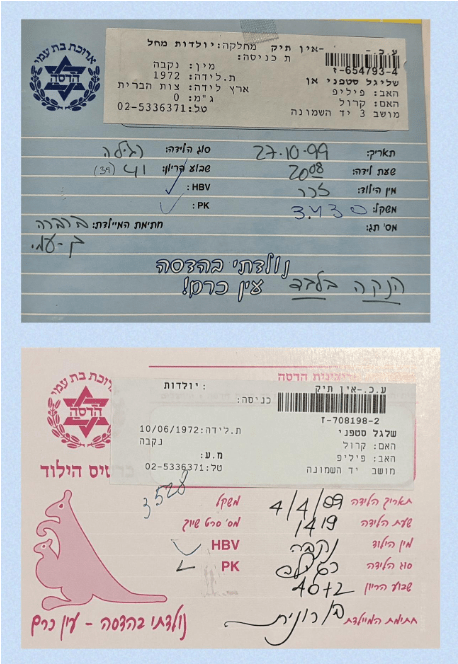
A census, a bunch of Hebrew names… seems difficult right?! More so in English, it’s easier in Hebrew, and the names have so much meaning! 🙂  When I first lived in Israel and learned Hebrew, names were difficult… Achinoam, Yonatan, Shaked! Hebrew names have meaning seen in the letters themselves, unlike English, so that makes it easier! It’s surprising how many adults I meet in America that don’t know what their name means.  In the Israeli hospitals where our children were born NO ONE ever asked what the new baby’s name was! The baby was identified by the mother’s first name and her mother and father. Then later named within 30 days after they were born according to their personality/character. They don’t measure the length of the baby either so as to not stretch it out after being curled up inside the womb.

Moses wasn’t allowed to lead these new people into the Promised Land. So he asked that God pick a new leader over the people. “Let the LORD, the God of the spirits of all flesh, appoint a man over the congregation who shall go out before them and come in before them, who shall lead them out and bring them in, that the congregation of the LORD may not be as sheep that have no shepherd.” (27:16,17)

The LORD chose Joshua, “a man in whom is the Spirit.”(27:18) Interestingly, the Hebrew name of Joshua is basically Jesus/Yeshua. They have the same meaning, the LORD saves. Like Joshua was chosen by God to lead the Israelites into the Promised Land, so Yeshua was chosen by God to lead all people into the Promised Kingdom to those who trust in him. Both were chosen to shepherd and lead the people.

“I am the good shepherd. The good shepherd lays down his life for the sheep.”  John 10:11

-Stephanie Schlegel

REFLECTION QUESTIONS

1. What does your name mean?! Have you seen any special connections in your name over your life span?

2. How can calling someone a bad name be hurtful? What effect does it have on people to call them a good name?!

3. What are we known for? Isn’t it a great compliment of Joshua that he was filled with the Spirit? May we be filled with the fullness of God and walk in His Spirit like Joshua did.

The LORD God: Past, Present & Future

Numbers 23-25 

Today’s chapters 23-25 (and 22) are like an action movie with a lot of suspense! Balak, King of Moab, looked out at the numerous Israelites camped nearby and was greatly afraid. He called upon a sorcerer to come and curse them, which God didn’t allow him to curse but blessed them! 

Interestingly, Balaam (sorcerer) was confronted three times to go, three times his donkey refused to proceed and was hit, and three times he built seven altars and sacrificed a bull and ram on each (21x). Not sure of the significance of the tresome repeats but does show the intensity of the situation!

The Spirit of God came upon Balaam and he blessed Israel three times. In the three different oracles a meaningful phrase struck me with each one.

  1. How can I curse whom God has not cursed? How can I denounce whom the LORD has not denounced?” (23:8)
  2. God is not man, that he should lie, or a son of man, that he should change his mind.”  (23:19)
  3. A star shall come out of Jacob, and a scepter shall rise out of Israel.” (24:17)

These biblical accounts are written in past, present, and future. God has not cursed or denounced the Israalites. God is not a man, nor past nor will be! Lastly, God will have a future dynasty in Israel.

This is not what Balak wanted to hear, but Balaam obeyed God’s command to only say what he was told to say. Unfortunately, he advised Balak further on how he could bring harm to Israel, and his advice unfortunately worked. The Israelite men were seduced by the foreign women to worship their gods, which brought great anger to the God of Israel. Sadly, more than 20,000 were killed in the plague as a result.

Do you have God’s number on speed dial? It’s easy to remember …Jeremiah 33:3

Call to me and I will answer you, and will tell you great and hidden things that you have not known.For thus says the LORD, the God of Israel.” 

He’s ALWAYS available, never sleeping anytime of the day.

-Stephanie Schlegel

REFLECTION QUESTIONS

1. Who do you call upon for help? Depends what kind of help we need, right?

2. What’s God’s “phone number?”  Do we go to the throne or phone when we need help?

3. Is there something today that you’re afraid of? What care needs to be cast upon Him today because He cares for you?

The Cure for Complaining?

Numbers 21-22 

Shalom from Tennessee! This is Stephanie Schlegel writing this week as we continue through the Bible. We lived in Israel for 25+ years where our five children were born and raised. So I’ll be adding in some extra thoughts and pictures from and about Israel. 🙂   

The first verse of Numbers 21 caught my attention as it still relates to today! The king of Arad fought against Israel and took some captives! :0 I’ve been reading the news of the current captives slowly being released and talk of what to do with Gaza. Surprisingly, three times in chapter 21 Israel fought against their enemies and destroyed their cities and took possession of them. For a LONG time Israel has had to contend with those against them, including up to today!

In their travels they got thirsty, hungry, and cursed the manna God provided for them! It also says they spoke against God and Moses, their leaders. Thus, God sent fiery serpents among them, in which many were bitten and killed. So they asked forgiveness, and that Moses would pray to God to remove them. 

Included is a picture from the ABEKA Bible Flash-a-Card Series 3 of the life of Moses. These sets have many great pictures of Bible stories not normally seen in children’s books. We used them in our congregation’s children classes in Israel as they were taught in Hebrew. They’re great for home use as well for children and grandchildren. 

Complaining about what one eats is a good lesson for all ages! Bites from deadly snakes is a rough punishment in the desert. There was a period of time while raising our children that if they complained about the food I made for dinner then they’d be doing the dishes afterwards! The complaining stopped quickly! Actually, I wasn’t even sure if they liked what I made or not as they ate it with no comments. Haha! Occasionally, after a new recipe I’d let them vote after dinner on the count of three with a thumbs up or down (or sometimes in the middle), so I could get some feedback. 🙂

One of the teachers/moms in our children’s class in Israel made a “bronze serpent” on an upside down mop with paper twisted around the top of it and then covered with duct tape and spray painted it bronze.  It was a good visual aid for the kids! (I couldn’t find a picture of it since it was before the days of cell phones).

Jesus recalled this incident in John 3:14,15, “And as Moses lifted up the serpent in the wilderness, so must the Son of Man be lifted up,that whoever believes in him may have eternal life.” Thankfully, we can look to Jesus during troubled times and after we’ve failed and need forgiveness. May God help us not to complain but to repent and give thanks.

“So, whether you eat or drink, or whatever you do, do all to the glory of God.” 1 Cor. 10:31

-Stephanie Schlegel

REFLECTION QUESTIONS

1. What was the Israelites punishment for complaining? Did the punishment seem just or too harsh? What are some things that you’re complaining about that perhaps need to be addressed?

2. How does complaining against God, leaders, and food hurt us? What’s something we can do to change that?

3. The bronze serpent that they looked at to be saved eventually became an idol! Is there something in your life that has helped you that now has turned into a negative effect that maybe you should break away from? We can pray and ask God to show us and help us to turn from it.

Clean, Holy, Set Apart

Numbers 18-20


Back in 1847 a doctor named Ignaz Semmelweis noticed that, through several events, women who had died of postnatal fever had been attended during the birth by doctors who had just done autopsies. Semmelweis came up with the idea that doctors should wash their hands between autopsies and births. And all of us collectively think… well yeah! Of course! But this was not part of the course of a doctor’s day at the time. In fact, many doctors were offended at the suggestion they weren’t clean. Semmelweis was absolutely ridiculed and eventually driven mad. He was placed in an asylum where he died within two weeks, ironically from an infection, after being beaten by prison guards.
Perhaps these doctors should have referred to today’s reading. After discussing the duties of the Levites in Numbers 18, Numbers 19 discusses being “unclean” for 7 days after touching a corpse for any reason. Definitely something these doctors should have taken note of.


Much is said about what is clean and unclean in the Pentateuch. The Israelites certainly benefited physically from not touching dead bodies or eating pork. Some issues of cleanliness could not be helped, such as touching the dead or having a monthly period. In these cases, people were unclean for a time and then had to wash themselves in special ceremonies and offer sacrifices.
But God did not delineate what was clean and unclean just for hygiene’s sake. God also wanted the Israelites to be set apart, different than the rest of the world, holy.


We are to come before Him with clean hands and pure hearts (Psalm 24: 4). But there are times when we become unclean and need someone who can wash us white as snow. Praise God for providing the sacrifice that completely cleans us, His Son, Jesus Christ.


We’ve come a long way since 1847. Hand washing is the first skill nurses have to demonstrate before moving on to other skills. As you wash your hands today, keep in mind the One who cleans you completely!

-Maria Knowlton

Reflection Questions

  1. What can we learn from Ignaz? What can we learn from the doctors who ridiculed Ignaz, believing that they themselves were clean?
  2. Does God still want His people today, the church, to be clean, holy and set apart? What does that look like? What does it look like to have a church that is dirty/stained, unholy and blending in with the world?
  3. Are there any common practices today that you think might be making many Christians unclean before the Lord?
  4. What is the only way you can come before God clean? If you accept Jesus as Lord of your life, are there still things you do that make you clean and unclean? How might Numbers have been preparing God’s people for Jesus?

God’s Chosen Leaders

Numbers 15-17

So things are not going well for the Israelites. In yesterday’s reading, we see that distrust in God led to the destruction of many and the curse of roaming around the desert – which would eventually lead to the death of everyone over 20 years old when they grumbled against the Lord. In today’s reading, God first curses the people by demanding offerings brought in fractions.  Frankly, I would have found this worse than being stuck in the desert. 2/10, ⅓, 3/10, ¼ , WOW! This would definitely be a sacrifice of praise for me! 

Now you would think that having seen God’s miracles and blessings, people would accept Moses as their human leader and do what was required of them. But in Numbers 16, a man named Korah, a Levite,  decides he’s had enough. I don’t know if he blames Moses for the things that have gone wrong on this journey or he just liked picking fights with those in leadership. But long story short, God decides He’s not even going to mess around and swallows Korah, along with his cronies who sided with him and all their households and all that they owned. 

In Numbers 17 God uses the familiar rod (the same rod He turned into a snake, sent a few plagues and split the Red Sea)  to prove that Moses and Aaron are the leaders He anointed. God had Moses collect a rod from each of the 12 tribes of Israel, and write the name of each tribe on the rods, Aaron representing the Levites. He would then cause one to bloom and the one that blooms was the rightful leader.  I don’t think it’s a spoiler to tell you which one bloomed… to the point of producing almonds! I would think that seeing the ground opening up and swallowing a lot of people who had been complaining against Moses and Aaron would have been enough for me to keep my thoughts to myself. However, apparently, there was still some complaining but after the budding of the rod, no one questioned Aaron’s position after that,  Yeah…I kind of think that’s weird too!

Today’s reading ends with, “Behold, we parish, we are dying, we are all dying! Everyone who comes near the tabernacle of the LORD, must die. Are we to perish completely?” Cheery. Even cheerier… WE are all dying. The people of Israel (at that moment) finally realized they were one mistake away from death. They needed a savior. WE need a savior.  I am so grateful this is not the end of the story.

-Maria Knowlton

Reflection Questions

  1. What was Korah’s (and those who aligned with him) sin, or sins?
  2. How did Moses handle this rebellion?
  3. How do you tell who God has chosen as Christian leaders?

Fear or Faith? Panic or Peace?

Numbers 13 & 14 and Psalm 90

Some of you may be old enough to remember the old Sunday School song, “12 Men Went to Canaan Land” and you held up your ten fingers and then gave the double thumbs down when you sang “10 were bad.” Then you held up two fingers and gave two thumbs up while you sang “and 2 were good!


In today’s reading we see the stark difference between fear and faith and why 10 were bad and two were good.


In chapter 13, twelve spies, one from each tribe in Israel, came to scope out the land of Canaan, the land flowing with milk and honey, the land God had promised.


In his commentary, David Guzik, reminds readers that there was no need for this reconnaissance mission. According to Ezekiel 20:6, God had already searched this land and promised it to them. So some people were already distrusting God from the beginning.


Some saw giants big and strong,” 10 of the Israelite spies came back with scary accounts of many giants in the land that made the spy’s look like grasshoppers. One theologian stated that “fear performed the miracle of adding a cubit to the stature.” 😉 and on top of that, the city is heavily guarded! Obviously, there was NO way to defeat them!


Some saw grapes in clusters long.” All of the spies agreed that the land was made of fertile soil and it would be easy to grow wonderful food there. This was definitely the place God had promised them!


Some saw God was in it all,” But only two spies, Joshua and Caleb, had unshakable faith that God would deliver what He had promised and bring them into this land.


I love how F.B. Meyer put it, “ They saw the same spectacles in their survey of the land; but the result in one case was panic, in the other confidence and peace. What made the difference? It lay in this, that the 10 spies compared themselves with the giants, whilst the two compared the giants with God.” WOW! Did that statement convict you?!? It sure convicted me!


It’s easy for us to figure out who was good and bad back in the Old Testament. Hindsight from over 3000 years ago is 20/20. But what about you? When troubles come your way, which spy describes your response? Are you comparing you to your troubles, or your troubles to God?


10 Were Bad and 2 Were Good!” Which one are you?

-Maria Knowlton

Reflection Questions

  1. How is Caleb described in Numbers 14:24? is there anyone you know today who could also wear that description well?
  2. 10 Were Bad and 2 Were Good!” Which one are you? Do you generally compare yourself to your troubles and experience fear and panic? Or, do you more often compare your troubles to your God and rest in faith and peace?
  3. What was the reward for Caleb and Joshua? What was the punishment for the 10 spies? What was the punishment for all those who listened to and trusted the report of the spies? Who are you listening to today? How does who you listen to today determine whether you will receive a reward or punishment?

Lead Us in the Ways of the Lord

Numbers 10-12

The first time I ever set up a tent without my husband was when I took my  just about to be 10 year old son to Cub Scout camp.  Unfortunately, both of us were a little too short to reach all the parts we needed to secure the tent. BUT! Luckily, another parent came over and helped us out. He also gave us some tips about tent camping.  However, he forgot one small detail, or maybe he thought it was common sense. He didn’t mention that we should sweep the ground before setting up the tent so there would be no rocks underneath.  The first night was very uncomfortable (the next few nights we were so exhausted that we didn’t care)!

I suspect that the people of Israel were getting pretty good at setting up tents by the end of Numbers 10.  This chapter lays out the order in which the tribes of Israel were to move when God would lift the cloud. It is interesting to note that Moses asks his brother-in-law for assistance since he was from around those parts.  My Bible footnote states that “Divine guidance does not exclude using human help.” I think that could apply to so many areas of our life! God often puts just the right person into our lives at just the right time to carry out His will! 

But sometimes the people in our lives can bring us down. In chapters 11 and 12, we find that the people are complaining, a lot, so much that some of them want to go back to Egypt! I don’t know for sure but I think it’s reasonable to guess that it probably started with a few people and soon others followed. Of course, this caused God to get a bit aggravated, sending fire and plagues against those who complained. Even Miriam, Moses’s sister, got a plague of her own, developing an acute case of leprosy. Fortunately for her, God forgave her and healed her. 

Today’s reading really reminds me that while God does send people into our lives to better us and for His glory, there are those who will pull us away from God. When deciding who is who, look at the overall life of the person. What does their life look like? What does their relationship with God look like? If they are a mess and far from God, I guess you could learn what NOT to do! However, we would be wise to listen to the ones who will lead us in the ways of the LORD (and will remind you to sweep before setting up a tent)! 

-Maria Knowlton

Reflection Questions

  1. Does your circle of influencers include more helpful people who will help lead you in the way of the Lord, or more complainers who will arouse the Lord’s anger? Who specifically do you know who could be beneficial to spend more time with?
  2. What would others say about you? Are you more known for your complaining or for leading in the way of the Lord?
  3. When you do complain, what are you more likely to be complaining about? and to whom? Would there be a better use of your time and words?