
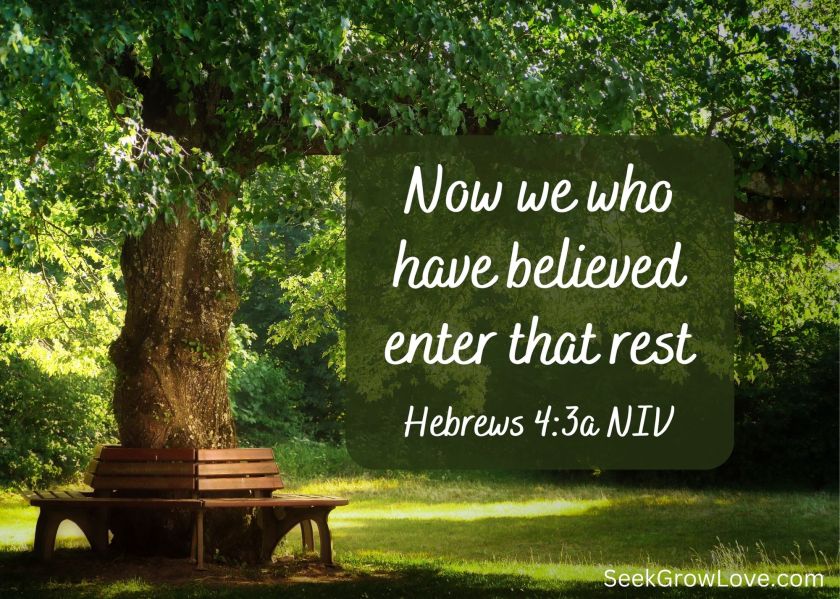
-Devotion by Jeremy Martin (TN)
Today I’d like to challenge you a bit, and ask you to examine some things that you believe traditionally. I think tradition is a fine thing, for the most part, and helps to give a certain amount of structure in our worship and daily routines in general. I think scripture is an even finer thing, and should be the guidebook of our life: the word of God given to men as a template by which we should structure ourselves. Both are important, I just give more weight when comparing them to scripture (since the traditions of men are rather flexible and change constantly); but the word of God is “living and active, sharper than any 2 edged sword” (Hebrews 4:12). Out of love I’m going to do my best not to be too passionate, so I’m touching this very lightly, but please check it out for yourself.
The thing is; sometimes our traditions can be good, and sometimes our traditions can be silly. For instance: when we’re crossing the street here in America, the “tradition” is to stop and look both ways to make sure the way is clear. This isn’t a “law” as such, but is what is considered a “rule” of tradition, and it’s a good one: countless injuries have been avoided by following this simple tradition. It just makes sense. There are hundreds of these in play every day that we don’t even stop to consider anymore because, well, it’s tradition and it just works, so there has to be a good reason, right?
Here are some rather interesting traditions that are still active in our world, and some of them raised my eyebrow a bit when I researched them. In Madagascar, the Malagasy people exhume the bodies of their ancestors every 5-7 years, wrap them in silk shrouds, and dance with the corpses around the tomb to live music (this is called “Famadihana”). In Brazil, young men of the Satere-Mawe tribe wear woven gloves filled with live “bullet ants” for 10 minutes, 20 times (200 minutes total), as a coming-of-age ceremony, enduring stings that are compared to being shot by a bullet. In Cooper’s Hill, England, a 7-9 pound cheese wheel is rolled down a steep uneven hill and chased frantically by participants in the event, frequently breaking bones and incurring serious injuries (there are videos of this that are…quite educational, incidentally). In the Karnataka region of India, infants born after the parents vow devotion to the Sri Santeswar temple are thrown from the roof of the temple into the waiting arms of their parents below, who believe the ritual brings good luck (as long as you can catch).
In the church, we have some fine traditions as well, some of which have been handed down for hundreds or thousands of years: the longer a group is around, the more traditions they come up with. Some of these are very useful for organization and structure, and some of these could possibly be considered a little bit silly when compared with scripture. The problem is, as humans, we tend to just keep on doing what’s familiar. It’s interesting to note historically that moving the day of worship from Saturday to Sunday (the “glorious day of the Sun”) occured around the same time (Mar 7, 321 AD, look up the “Edict of Constantine”) for the purpose of unifying the empire and from the same source that we got other popular traditions, like the theory of the trinity for instance. Remember that the Bereans were commended because they questioned what they had been told, and sought out and compared the teachings with scripture to come to a conclusion.
Today I’d like to offer you the opportunity to re-examine the Sabbath. This can be a very polarizing and divisive thing, and I know for a fact that churches have split over the topic. Let’s establish some ground rules before you dig: this is for your personal edification, not a call to revise corporate worship. I live in Knoxville TN and I am here to tell you, if you are blessed enough by God to have found a group of mostly like-minded worshippers who believe even 80% like you do, praise God and thank Him every day for such a blessing. We need to focus on unity, not necessarily uniformity (we don’t always have to believe the same exact thing, but we should be united in our focus and our purpose). I’m a member of the Unitarian Christian Alliance for that reason (among others): there are a great number of folks in that group who have slightly different beliefs on some various things than I do, but we share a common understanding of the important bits and agree that this is more important than pushing any specific particular. Let’s embrace that mindset, in humility.
I grew up going to church every Sunday with my parents. Statistically, you probably did too. I still go to church every Sunday, but I’ve also started honoring the Sabbath. I came to this on my own, by reading scripture. When I compared verses like Gen 2:3, Ex 20:8-11, Matt 5:17, and then today’s reading of Heb 4:9, and then read the frequency of the topic throughout scripture, it convicted me in my heart that I should also honor the Sabbath. So, on Saturdays now I don’t do any work, don’t buy stuff, and try to read the bible and focus on God for the entire day. On Sabbath, I rest. I still go to church every Sunday too, that’s my “corporate” time with God, but the Sabbath is my personal time with God: not a burden but a gift.
Do I think that everybody needs to believe the exact same thing as I do? Nope, not even close. We must each with fear and trembling work out our own salvation (Phil 2:12). Am I saying that if you come to a different understanding that you should march up to your pastor and demand that worship be done on Saturdays now instead of Sunday? May the God in heaven forbid it, no, that’s not even close to what I’m saying. What I want you to do is simply this: examine what you believe and why, and compare it to scripture. If you still believe the same way, great! If you believe differently, that’s fine too. This is a personal journey, I don’t want to change the corporate structure of worship, but I would like us each to strive to change our hearts towards God.
Look at it this way: irregardless of your specific belief in the topic of the Sabbath, if you were to take a specific day (Saturday) and devote it to seeking to get personally closer to God, what’s the downside? At worst you lose some productivity/shopping/garage sale time; compare that against potential gain. Cost vs Value, that seems to me to be a positive net outcome. Conversely, what if you’ve been wrong about the importance of the Sabbath?
I have had people who are better than me, some of my former professors and current relatives, that have argued (sometimes passionately) with me about my belief. There have been some very good arguments made, but here’s the thing: it’s my belief, and I came to it through reading scripture and praying. I don’t mind if you disagree, but I feel as if God has led me in a specific direction and if you disagree, should I listen to men or to God? (Acts 5:29).
I absolutely and certainly do not wish to cause division within the body of Christ, there’s already been enough of that. What I do want (and want you to do as well) is to seek God with my whole heart. I want to please God, and I acknowledge with great humility that I’m a very imperfect being, doing the best I can to worship and please a perfect God. “So there remains a Sabbath rest for the people of God” (Heb 4:9, LSB), and as people of God, I invite you to join me in it.
REFLECTION QUESTIONS
- Have you ever given this much thought? Why or why not?
- Are there any traditions in your church that are different than other groups? What are they, and how did they come about?
- The Sabbath is listed as one of the 10 commandments. Why do you think that is, and do you think it applies to Christians today? Why or why not?
PRAYER
Father God, please lead us and grant us wisdom. Forgive us of our many shortcomings, and help us to be servants who please you. Thank you for the many blessings that you have given us. Place a deep love for all of our brothers and sisters in our heart. In Jesus name, Amen.

