Children’s Church and the Lions’ Den

OLD TESTAMENT: Daniel 6

POETRY: Psalm 136

NEW TESTAMENT: John 9

I am not going to try and convince you that working in the nursery is comparable to being thrown into a den of vicious, destructive predators. Children’s church is much, much worse than that. 

Today, I want to talk about the “mis-picturing” that can happen if we have grown up in the church. Quick: what image do you see when you think about Noah’s flood? For me, it was, for most of my childhood, an impossibly small ark floating on top of bright blue waters with impossibly large creatures sticking their heads out of the top of the ark with a rainbow above. Now: what is actually said about the flood and Noah? All life, besides those who got brought aboard the ark, were judged in rain from the sky and flood from the ground. It is darkness, judgement, sin, and death. When we teach this story to our youngest kids in nursery, there is a reason that we leave out these obviously darker parts of the story. 

In our reading today, we have another story that gets mispictured: Daniel, a young lad, is thrown into a den of lions because he believes in God, but the lions are more like kitty cats, and then he gets pulled out the next day and everyone forgives everyone and we move on. 

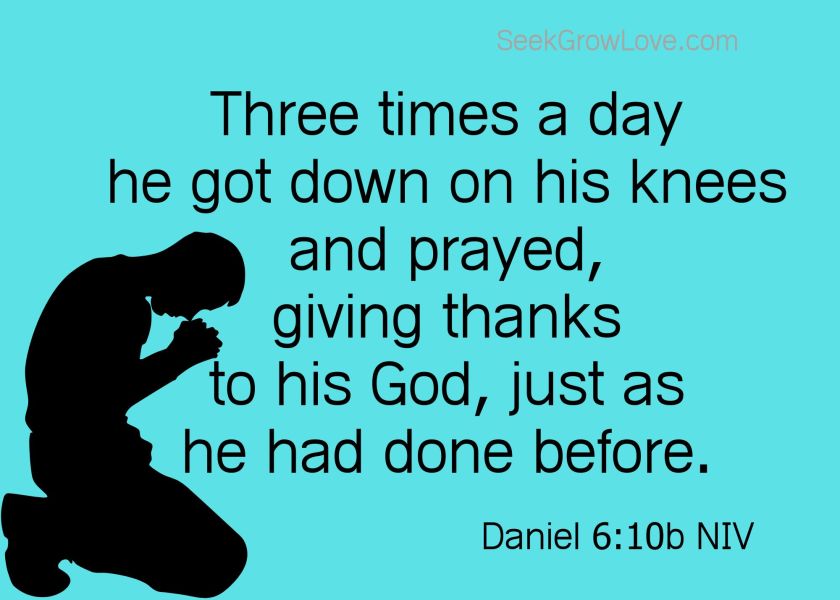
But, the story in scripture is much more important: Daniel, an old man who has been faithful, knows about a command from the King to stop praying, and in direct violation of this imperial edict with life and death hanging in the balance, he prays just the same, trusting in the God who got him this far to protect him from the lions, but even he doesn’t… Yet the lions, the ravenous king of beasts, the symbol of power of rulership, are shut up by the God who is above all. And when Daniel is rescued those who set him up are themselves thrown into the den and torn to shreds before they reach the ground. 

Notice, faith is not a practice that finds fulfillment because of a “great event” that happens once in youth, but is the choice of decades, of the daily decision to follow God in the most boring business of daily life. It is only in following in the mundane, that we are prepared to follow in the momentous, it is by praying daily in our normal life that we are ready to pray daily when the King says “stop or you die.” Daniel, knowing the King will be bound to kill him, fearlessly bucks the system of power, knowing God is bigger. But even if there is no rescue, Daniel trusts in the God of his fathers. Instead of the lions devouring Daniel, judgement is given to those who thought they would harm God’s man.

But why say more important? Shouldn’t we teach kids at age appropriate levels? Of course we should; the problem happens when we think we know, or, when I think I know the Bible and I don’t take seriously the call of this passage or others on our life. The story of the flood of Noah is about the seriousness of sin and about the totality of the judgment of God; if we think it’s about cute animals, rainbows, and God’s love, we miss the depth of the story. The story of Daniel and the Den of Lions is about the developed faith of a man who had been faithful and successful because of his trust in God and who would allow nothing, not even the threat of death, to come between him and his worship. It’s about overcoming the Imperial powers of this world not by swords and warfare but by turning our face to God and trusting in him. 

Starting today, I would encourage you to focus on picturing correctly the stories you read in scripture. God inspired them in the way he did so that we would learn from his actual words, rather than the interpretation of his words from our pastor, our teacher, or even our parents. Some people have given us better or worse interpretations, but nothing compares to reading God’s words ourselves, and understanding how God is speaking through the Bible to us today. 

-Jake Ballard

Questions:

  1. Is mis-picturing a problem for you? If you grew up in church, how much did your Sunday School help or hinder you from seeing the Bible as it really is? If you are new to faith or don’t yet believe, do you have any preconceived pictures of the Bible stories, or are they all fresh to you?
  2. Are there other stories that you can think of when mis-picturing might lead us to miss the important points of the story? 
  3. “It’s beginning to look a lot like Christmas.” If you read the opening chapters of Matthew and Luke, try and see if there are any mis-picturing in our understanding of Jesus at his nativity. Is Mary a scared unwed mother? Is Joseph a clueless, hapless husband? Is Jesus surrounded by wisemen and shepherds and camels and sheep and laying in the straw without making a sound? Think about the reality of stories, rather than our built up theological and social pictures around Jesus. 
Thanksgiving and Giving Thanks

OLD TESTAMENT: Daniel 5

Poetry: Psalm 136

NEW TESTAMENT: John 8:48-59

Can I tell you a secret? I *loathe* the nickname “Turkey Day” for Thanksgiving. 

Sure, the big bird is special to the day and to the success of the first colonist. Sure, Ben Franklin thought the bird was “a Bird of Courage.” But there is much more to Thanksgiving than the protein. 

In a world of many gods, like Babylon, feasting and reveling for the glory of a deity was common. Sometimes, in the ancient world, the Kings would claim to be gods, or children of the gods, and would show their superiority over “other” gods and people by belittling the symbols of those gods. Belshazzar, the final king of Babylon, showed his contempt for Almighty God and God’s people by allowing his guests at his drunken feasts to eat and drink out of the Temple treasures that were in Babylon. In Daniel 5:4, we read “They drank wine and praised the gods of gold and silver, bronze, iron, wood, and stone.” 

However, God does not take kindly when the glory due him is given to another. Therefore, because they are using God’s Temple’s treasures while worshipping other gods, God decides to give Belshazzar and his kingdom and his treasures to others, the Medes and the Persians. Daniel tells Belshazzar, “the Most High God rules over the kingdom of mankind, and sets over it whom he will.” 

Thanksgiving was instituted by George Washington on October 3rd, 1789. Read this declaration to see why he instituted it : “Now therefore I do recommend and assign Thursday the 26th day of November next to be devoted by the People of these States to the service of that great and glorious Being [i.e., Almighty God], who is the beneficent Author of all the good that was, that is, or that will be—That we may then all unite in rendering unto him our sincere and humble thanks—for his kind care and protection of the People of this Country previous to their becoming a Nation—for the signal and manifold mercies, and the favorable interpositions of his Providence which we experienced in the course and conclusion of the late war—for the great degree of tranquillity, union, and plenty, which we have since enjoyed—for the peaceable and rational manner, in which we have been enabled to establish constitutions of government for our safety and happiness, and particularly the national One now lately instituted—for the civil and religious liberty with which we are blessed; and the means we have of acquiring and diffusing useful knowledge; and in general for all the great and various favors which he hath been pleased to confer upon us. 

and also that we may then unite in most humbly offering our prayers and supplications to the great Lord and Ruler of Nations and beseech him to pardon our national and other transgressions—to enable us all, whether in public or private stations, to perform our several and relative duties properly and punctually—to render our national government a blessing to all the people, by constantly being a Government of wise, just, and constitutional laws, discreetly and faithfully executed and obeyed—to protect and guide all Sovereigns and Nations (especially such as have shewn kindness unto us) and to bless them with good government, peace, and concord—To promote the knowledge and practice of true religion and virtue, and the encrease of science among them and us—and generally to grant unto all Mankind such a degree of temporal prosperity as he alone knows to be best.”

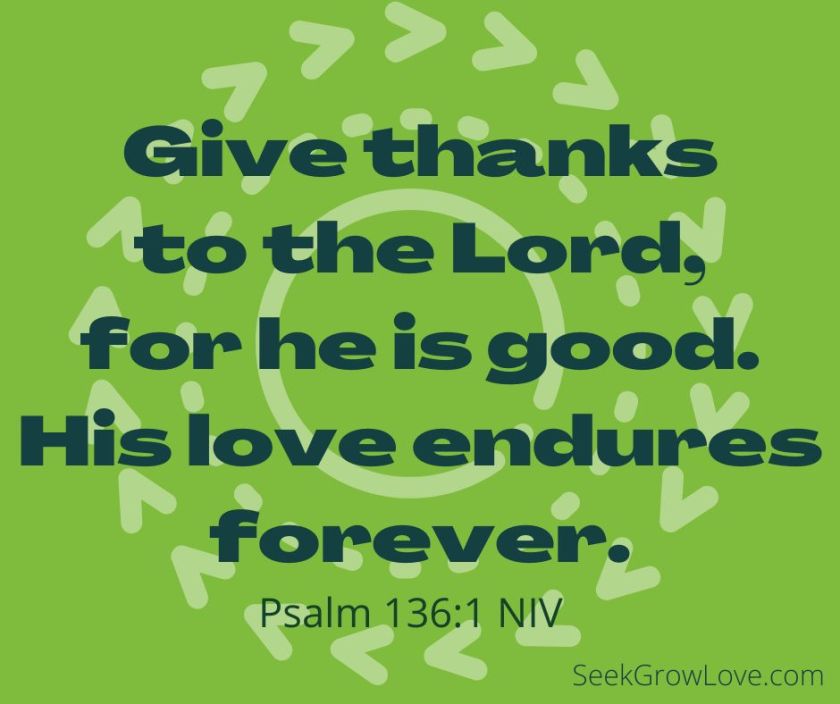
President Washington desired for his Nation to thank the true God, not the gods of this world, but the “glorious Being,” the subject of “true religion and virtue”. Thanksgiving was instituted, not just to feel grateful but to give thanks to the only God, the God who is there, the God who is present in the affairs of this world and in the life of this nation and in the prosperity and peace of humankind. Today is and should be a day of feasting and merriment for all our many blessings. In the midst of all the joy of this holiday, be sure to give thanks, sincerely and humbly, to the Almighty, the Most High God. 

Happy *Thanksgiving*!

Growing deeper:

Are you thankful for your blessings? If we aren’t conscious, we could miss them. Today, don’t answer questions but make a list and try to think of every blessing in your life. Number them and see how high you can make your list. Don’t forget the blessings that might be too small to consider (aren’t eyelashes amazing?) and the blessings that might be too big to see (you are able to read this, so you have life, a computer or phone, and access to the internet, plus electricity…). The list grows quickly.

-Jake Ballard

Yours Truly…Nebuchadnezzar?

OLD TESTAMENT: Daniel 4

POETRY: Psalm 136

NEW TESTAMENT: John 8:31-47

Daniel is a strange book. It contains narratives like we have been reading over the last couple days. It contains visions that we will read in a few days. Today, however, we are treated to a very different kind of tale. It seems that the author of Daniel decided to insert someone else’s writing into his book. 

In chapter four, King Nebuchadnezzar himself writes about his encounter with the Almighty God. He extols God’s power, God’s virtue, his work through the interpretation of Daniel/Belteshazzar, his giving Nebuchadnezzar madness, and him undoing the madness after Nebuchadnezzar had learned his lesson. 

Now, if you are a regular reader of the Bible, you might think this makes perfect sense. God shows up and changes the lives of people, and it happens to King Nebuchadnezzar. If you are a new reader, you may think, “this is crazy nonsense who can believe it?” I am about to make both camps a little uncomfortable with some history and archaeology: In ancient Babylon, there is a prayer written by a king that reads this way : I “was afflicted [with an evil ulcer] for seven years, and far from [men] I [was driven, until I prayed to the most high God.] And an exorcist pardoned my sins. He was a Jew from [among the children of the exile of Judah, and said:] “Recount this in writing to glorify and exalt the name of [the most high God.”Then I wrote this:] “When I was afflicted for seven years [by the most high God] with an evil ulcer during my stay at Tayma, I prayed [to] the gods of silver and gold, [bronze and iron,] wood, stone and lime, because [I thought and considered] them gods […]”

That last ellipses (the “…”) shows that the rest of the prayer is lost. So nice and easy, case closed right? That sounds very similar to Nebuchadnezzar’s experience, so we have confirmation of the biblical story. It might be, if we hadn’t left off the first few lines. “Words of the prayer, said by Nabonidus, king of Babylonia, [the great] king, [when afflicted] with an ulcer on command of the most high God in Tayma: [“I, Nabonidus,] was afflicted…”

The similarities are striking, of course: afflicted for seven years/times, driven far from people, a Jew from the children of Judah, an exorcist, pardoned his sins and told him to praise the Most High God. But the differences are also clearly apparent: Nabonidus vs. Nebuchadnezzar, an ulcer vs. mental illness, warned of judgement as opposed healed to give glory, and the words of Nabonidus about the types of God are connected to Daniel 5, so bringing in Belshazzar and more questions. 

The Bible, the history of the Bible, and the relationship between the Bible and history are not *simple* questions. There are those who would deny the Bible’s truth based on the prayer of Nabonidus, but there is also reason to believe that the prayer of Nabonidus was written to explain the connection between Daniel 4 and Daniel 5, or maybe both are true accounts with God judging multiple kings of Babylon with seven years/times of judgement. The same kind of questions come up when we think about the anointing of Jesus with oil. Everyone agrees it was an extravagant act of love with costly oil. But was it in Bethany or not? Was it Mary, or a sinful woman? Was the woman being shown love by being forgiven, or was she anointing the body for burial? Did it only happen once, or were there two anointings of Jesus? (It would be weird for it to happen twice.)

This is the part of the devotion where you may expect me to clear up the confusion and say “here is the answer to all your questions.” I am not going to do that. I am going to instead give you four helpful ways to think about the Bible. The Bible is inspired, authoritative, true, and livable. 

  1. The Bible is inspired: Daniel 4 and the anointing(s) of Jesus and everything from Genesis to Revelation is inspired by God for the education, edification, encouragement, and empowerment of his people. The Bible is not just the nice thoughts of noble men and women, but God’s thoughts for God’s people. 
  2. The Bible is authoritative: Because the Bible is God’s word to humans, when the Bible tells God’s people how to live, then that is how we must live. If we are called to pick up our cross daily, if we are called to feed the hungry and clothe the naked, if we are called to live like Jesus (and we are!), then that is what we must do!
  3. The Bible is true: Because the Bible is God’s word to humans, then the Bible is not intending to deceive. Everything in the Bible is intending to lead us to the God of truth. Not everything will be literal (trees don’t have hands, a multiheaded monster won’t come out of the Atlantic) but everything will be true (nature will praise God, there are evil forces that work against God’s goodness). When we understand genre of books and individual stories, we will be able to know whether a story is literally true or figuratively true. 
  4. The Bible is understandable in order to be livable: The Bible TAKES time to understand, and it is deep. Yet, in the essential elements, the Bible is simple. The Bible is like a holiday at sea; children can begin by playing in the shallows, but experienced swimmers can go to depth where their feet do not touch the ground. You can be a new Christian and gain insight, knowledge, and joy from scripture. And when you are ready to go deeper into the Bible, into faith, there is always greater depth to be discovered. 

The author of Daniel 4 was inspired to write about the dream of Nebuchadnezzar and the judgment he faced as the King. It could be true even if the name “Nebuchadnezzar” is used in place of Nabonidus; but I think it makes more sense to see the Prayer of Nabonidus as responding to the book of  Daniel rather than vice versa. BUT, the bigger point than these minor historical notes is that we are called to be humble and praise God for his just and righteous ways. There is no need for us to get archeological degrees and engage in fancy philosophy to recognize that God is bigger than we are, and that we are called to praise and worship him. 

May we all do that together today. 

Questions:

  1. Would you describe the Bible as inspired, authoritative, true, and livable? Do you disagree with any or would you add in any? For example, you might say “the Bible is literally true”, but what do you do with the psalms? You might say “the Bible is simple”, but then what do we do about Revelation and Daniel?
  2. Do you find yourself drawn to disregard the Bible as superstition when archeology or science sounds like they disagree with the Bible? Or do you disregard archeology and science when it sounds like they disagree with the Bible? How can we see that God is the God of all truth, and that truth has nothing to fear?
  3. If you find yourself having a hard time trusting the Bible, or explaining why you trust it, I would encourage you to check out *The Disciple Collective* at https://www.disciplecollective.com/home. This online Christian learning platform offers high-quality self-paced courses for motivated students, and the first course, which is available now, is “Can I trust the Bible?” If you feel like you are leaving today’s devotion with some serious questions, that course may give you some serious, robust answers.

-Jake Ballard

No Other God Can Rescue

OLD TESTAMENT: Daniel 3

POETRY: Psalm 136

NEW TESTAMENT: John 8:1-30

It’s not easy going against the flow. 

If the teacher or professor accidentally leaks the answers for the upcoming final, and EVERYONE (it seems) is going to ace would you look too? Isn’t that cheating?

If EVERYONE at your job takes home free items, like drinks, or food, or sauces, and just call them “perks”, would you also do it? Isn’t that stealing?

If EVERYONE is going to the party, and it would tank your social standing to miss it, but you know there are going to be… less than savory activities, would you go? Is that really wise?

It’s that much harder when these things are encouraged by leadership. If your manager also takes stuff from the store, even encourages it… how wrong can it be?

In today’s story in Daniel 3, King Nebuchadnezzar sets up a statue, and every powerful person is going to participate in worshipping it. Not only that, but all these leaders will lead all peoples, all nations, all languages, to bow down and worship at the command of the King and the music he calls for. And so everyone does. In a world where there are easily too many gods to keep track of (seriously, two- to three-*thousand* gods), what’s the difference if you bow to one more? 

But not so with Hannaniah, Azariah, and Mishael. They have one God and no more; that’s all the God they need and all the worship they give. It makes Nebuchadnezzar hopping mad, with him declaring “Who is the god who will deliver you out of my hands?” He throws them in a super-heated furnace and they are delivered and saved by their faith. 

There are a few things that stand out to me:

1. The King told “the boys” what they must worship. The world and the devil continue to tell people what they must worship. The gods of Babylon and Egypt and Rome all had different names and different stories, but in their core, these gods are really the same. Whether it was Enlil, or Ra, or Jupiter, *power* and *strength* have always been worshipped, and the power of the military or the force of personality of leaders is still worshipped in our day. Beauty is worshipped, and her sister, Lust. Money. Fame. Wealth. All these gods are simply humans worshipping the things we most desire for ourselves. Satan wants you to worship these same gods, and even better if you don’t believe in the supernatural while you do it! How much better to be a person worshipping science, knowledge, and the arrogance they can produce while thinking that gods and angels and demons are all old fables for weak minds; or, a person who worships celebrities and the fame they embody while not thinking at all! And as soon as you tell the devil exactly what you think of his puny fake “gods” that gets *him* and his minions mad. 

2. The King said “what god can deliver you from my hand?” Satan whispers that question into the ear of believers as well, “what god can save you from the consequences of turning your back on…” and then fill in the blank. But what Nebuchadnezzar and Beelzebub mean for intimidation, for those who know their God, it becomes a rather simple question. YHWH, the God of Abraham, Isaac, and Jacob, the God who can do all things, he can. 

3. “BUT EVEN IF HE DOESN’T.” The most amazing thing about this entire encounter, for me, is not necessarily the walking around in the fire and not being singed (though that is really cool) and not the Babylon stamp of approval on God (though that did help out with Daniel and the boys). It is that Rack, Shack, and Benny say, in essence, “God can save us, we trust he will, but even if not, we will not serve other gods.” (3:16-18) This is belief in the power of God, it is trust in the compassion of God, and it is loyalty to the worth of God. They recognize that it would be better for them *to die* than to betray their commitment to the worship of YHWH. THAT is a faith that changes the heart of Kings and can overcome Empires. Which, coincidentally, is exactly what happens. 

4. God sends an angel (3:28) to protect and deliver his people. Not only does God protect them from the harm of the fire, he protects them from even the smell of the smoke, even the smallest amount. God protects his people, even in the midst of chaos, he can and still does, deliver them. 

Praise God for his protection, for his worth and his empowering so we can remain committed and faithful, and for the beautiful truth that he is a saving and powerful God, greater than anyone or anything else that we could worship. 

Questions:

  1. While we live in a world with a growing number of those who do not believe in a god or the supernatural, we are not less worshipful. What are the golden idols of our world today? Who is telling us to “bow down and worship” these different idols? How many are roped into worship, even if they might not see their dedication as worship?
  2. If you are not a believer or are a new believer, does the faith of the boys intimidate you? Could you see yourself ever saying “even if he doesn’t, we will still not bow”?
  3. If you are a long time believer, does the faith of the boys intimidate you? Or does it inspire you? Pray that you won’t have to say something similar, but also pray that in the face of whatever fire you might be thrown into, you will remain faithful
  4. While God sent an angel to help Hananiah, Azariah, and Mishael, God has now sent truly the “son of God”, Jesus, to help God’s people know him, and has sent his spirit into our hearts. Do you believe God will protect his people and send help in the form of angels and the Holy Spirit in this age, in the name of Jesus? How can Jesus help us in those moments when we are called to remain true to God?

-Jake Ballard

More Than You Can Handle

OLD TESTAMENT: Daniel 2

POETRY: Psalm 136 (all week)

NEW TESTAMENT: John 7:25-53

The next time someone asks you to “go above and beyond” at work, or to “give 110%” in a game, just be thankful your boss or coach isn’t Nebuchadnezzar. Nebuchadnezzar, King of Babylon in Daniel 2, had a dream and wanted to know the meaning of the dream. But instead of telling his dream to his wise men, he expected, even demanded, that *they* tell *him* the dream. Notice what the wise guys say to the King. “There is not a man on earth who can meet the king’s demand.” (2:10)  My friends, that’s *exactly* the point. Only “the gods” or more accurately, only God, can make know the contents of the dreams of the King. But the wise men of Babylon don’t know the God who knows all things, they don’t worship the God who sees everything, even into the hearts of people. 

The King even asks Daniel “Are you able to make know to me the dream?” Daniel replies “No… no one can.” But “there is God in heaven who reveals mysteries… This mystery has been revealed to me, not because of any wisdom that I have more than all the living, but in order that the interpretation may be made known to the king.” Over the next few days we will try to understand what is going on with the Kingdoms of the world in Daniel and try to understand this vision better, but today I want to make this very practical. 

Sometimes people tell us ideas that are not entirely Biblical because they are trying to be nice. One such idea is that “God will never give you more than you can handle.” It sounds good; we will never be overwhelmed and we will always succeed. However, as soon as our lives meet the real world, we find out that God consistently “gives us” situations that are overwhelming; try balancing getting good grades, doing extracurriculars, volunteering to pad our college applications, and then getting into and maintaining relationships, not to mention work! It’s overwhelming to write; how much more to live. But beyond the normal chaos of life, there are times when people we love are sick, when we need surgeries, when we have huge doubts about what is happening next. Just like the King demanding that the wise guys explain his dream, the world very often gives us far more than we can handle… *on our own*. 

What God has promised is that we are never on our own. No one can handle this world with joy, hope, peace, and love *by themselves*. But there is a God in heaven who gives the joy, hope, peace and love we are looking for. There is a God in heaven who gives his spirit to his people, not because we are wise or smart, or pretty, or popular, or good. God gives because we trust him, and all of our faults doesn’t stop him from loving us, and he does not leave us on our own. The world often gives us more than we can handle; the world can NEVER give us something God can’t handle. 

-Jake Ballard

Reflection Questions

  1. What differences do you see between Daniel and Nebuchadnezzar? Are you ever more like Nebuchadnezzar than Daniel?
  2. What characteristics of Daniel’s do you admire? Which would you like to work on growing in your own life? How would one go about that?
  3. When has the world given you more than you could handle? In what ways did God provide what you needed? Thank Him!

Of Daniel, Diets, and Defilement

OLD TESTAMENT:Daniel 1

POETRY: Psalm 136

NEW TESTAMENT: John 7:1-24

Over the next two weeks, we are going to spend some time in the book of Daniel. Daniel is a book that has generated a lot of discussion: it has been the subject of at least TWO retellings by our favorite cast of talking vegetables and at least one cookbook based on mostly eating those vegetables. However, we might miss the mighty story of this man of the Almighty when we get too hung up on cucumbers, mushrooms, and other morsels. Is the story of the fiery furnace really about chocolate bunnies? (See “note” below.) Are the health benefits of a  “Daniel-Diet” the point of the refusal to eat the King’s food? But, if not, then what is the point of Daniel?

To be clear, this book is one of the most discussed in scholarship from the Old Testament canon. Any statement made about date, authorship and the rest of the book has been discussed ad nauseum by Jewish rabbis and Christian thinkers since the pen was put to paper. The author, Daniel for our devotions, wrote in Hebrew but also in Aramaic; not common for the Old Testament. Moreover, the genre of the book is more similar in style to Revelation than anything else in the Biblical canon. These two books are full of big, bombastic images, metaphors, poetry, talk of beasts, monsters, dreams, the clash of Empires and the Kingdom of God. But, if we are ready to work, to interpret Daniel on his own terms, and to clearly see what he was writing about and what he was prophesying, we will get much more out of Daniel than we have before. 

For example, in chapter one, Daniel, and his buddies Hananiah, Mishael, and Azariah (rather than Shadrach, Meshach and Abednego), who we will call “the boys” today, decide to not eat the king’s food. The boys decide that they are going to eat vegetables and water. They look better after ten days and they prove that this is the diet everyone should eat and life is good… right? Not quite. First, what are the boys giving up? “Meat and wine and choice foods”. In the ancient world, those who worked with the King were expected to be plump (“fat”) because of the wealth and excess of the King. The steward over the boys was *concerned* that they would lose weight, not hoping for it! At the end of ten days, by a miracle of God, though the boys ate only vegetables and water, they look good and FAT. Not a divine diet, not wisdom-based weight loss; it was a miracle of God to keep them healthy and plump! 

But again, the weight and food was never the real point in the first place. Look back at verse 8, “Daniel resolved that he would not defile himself with the king’s food or with the wine that he drank.” Daniel, as a good Jewish boy, knew that the King’s meat was probably slaughtered in the honor of a god of Babylon (much like the meat in the marketplaces in Greece, see 1 Cor. 10:27) and the wine was probably prepared in much the same way. Daniel’s choice to avoid this food was to honor God. YHWH, the God of Abraham, Isaac and Jacob, would be the only God that Daniel would follow; his law the only commands Daniel would obey, food laws as well as moral laws. Daniel’s obedience is blessed by God. The boys were able to understand the administration of state and Daniel was able to understand dreams and visions from God. 

Chapter one is not a weird story about the diet of Jewish kids in a strange land. It is the story of God’s people, God’s Kingdom, clashing against the Kingdom of this world. Daniel and his buddies had a choice to make, to follow the ways of this world’s Empire, to eat the way everyone else ate, to drink what everyone else drank, to *worship* what everyone else worshipped. The choice they made was to follow God even at personal cost and they realized that resulted in blessing they could not have expected. 

That is a story worth working to understand. 

It’s the story Bob and Larry were trying to tell us all along.

Reflection Questions

  1. I’ve been a little harsh on “The Daniel Diet,” but it’s not just one diet or fast or book that makes this mistake. In fact, many have tried to take parts of Daniel to make a diet, or used Ezekiel 4:9 as a recipe for bread, without reading down to Ezekiel 4:12. Are you ready to use the Bible as it was intended? To work to interpret God’s word in a way that impacts you, not a small change but to lead a life of difference?
  2. In light of the first question, are you willing to make the choices that might cost you personally, if it means you remain faithful to God? Are you willing to look different, act different, eat different, vote different, shop different, wear different, **be different** if it means you can be more like Jesus? What strikes you as the first change you can make today that may cost you sounding or appearing cool, just like everyone else, but will make you more like Jesus?
  3. Are there other sections of scripture (beyond Daniel 1 and Ezekiel 4) where you think we may have missed the point? Talk to your mom, dad, grandparent, pastor, youth pastor, or Sunday School teacher about those ideas. What do they think about those harder sections that seem to be about more than surface level ideas?

Note: The author LOVES VeggieTales. In no way should his words be perceived as mocking or belittling the greatest show about talking vegetables ever made. 

-Jake Ballard

Remembering & Responding

*Old Testament: Daniel 5,6

Poetry: Psalm 116

New Testament: Matthew 2

Last Thursday, my fellow Americans and I demonstrated our gratitude for life’s blessings by stuffing our faces with stuffing, turkey, mashed potatoes, corn, and pie. Thanksgiving Day is a special time to remember not only our national heritage which includes the original Thanksgiving celebration of religious freedom and God’s providence of 400ish years ago, but also to reminisce about our own individual blessings. Sometimes we get so caught up with the ins and outs of life that we fail to remember how far we have come, the blessings that we have, the answered prayers and faithful love of our Father in Heaven. As we’ll see, we are not the first people in history to be so flaky and forgetful. 

In Daniel 5, we see King Nebby’s son, Belshazzar, ruling the kingdom. While drinking with his nobles out of goblets stolen from the Holy Temple, he notices a hand – just a hand – writing words on the wall. Flushed with terror, he promises a reward to whomever can interpret the cryptic message. Daniel, famous for having “power from the gods,” was summoned. Though his true interpretation of the text signified the imminent death and defeat of the current king, he was given a position of power, as promised. 


Daniel remained a leader for the new king, Darius. Because YHWH had blessed Daniel with wisdom and leadership qualities, it was widely assumed among the king’s men that Daniel would soon be given even more power than they had. Consumed with jealousy, they had to find a way to get rid of Daniel, but they could find no fault in him. 

…Except, there was that one thing: Daniel still prayed three times a day to the One True God. Maybe, if they could just get the king to sign a decree that everyone pray only to him, they could trap Daniel and get rid of him for good! 

Approaching the king with flattery to kindle the flame of his pride, the king’s leaders – minus Daniel, of course – recommended that the king enact a 30-day irrevocable law that people could pray only to King Darius. (Finally, a sure-fire way to trap their nemesis, Daniel!) The king signed the law, and the men immediately spied on Daniel. 

It didn’t take much spying, though. The men knew that Daniel always prayed at the window facing Jerusalem, and just as they suspected, his knowledge of the new law did not alter his commitment to this spiritual discipline and his allegiance to the True King. 

Giddy with pride at the simple success of their scheme, the men came back to the king, reminded him of the law, and tattled about Daniel’s offense. Darius, who considered Daniel a friend, was replete with regret. Aware that even he could not change his law, the king ordered Daniel thrust into the den of hungry lions, but offered one last hopeful prayer: “May your God, whom you serve continually, rescue you!” (6:16, NIV).  

Cue the children’s picture Bibles to show cute, cuddling lions purring on Daniel’s lap; maybe Daniel rubbed their bellies (a favorite pastime of my late cat, Maximus) or perhaps the lions just basked calmly in the ray of sunshine, as cats tend to do for the majority of their lives. However, that was not the case. The Bible states that an angel held shut the mouths of lions. Perhaps the angel was even wrestling with the powerful big kitties all night long to keep them from eating Daniel!  

Darius couldn’t sleep at all that night. As soon as dawn broke through, he scurried to the den to find out if Daniel’s God had miraculously saved his friend. The king was overjoyed when he heard Daniel’s voice and found him unharmed! Indignant at their trickery, Darius ordered the accusers to be thrown into the den, along with their families, who were mauled by lions before they even reached the bottom of the cell. Through this miracle, King Darius recognized YHWH as the One True God and decreed that his kingdom would follow YHWH, the God of Daniel. 

As a lover of all cats large and small, this story has always been a favorite of mine. I also noticed that the kings – and other characters – in the Bible have been as wishy-washy as a cat (“Pet me! Now stop or I’ll attack you! I’m hungry again! No, I want beef chunks in gravy, not beef pate!”) in the way they continue to forget or reject YHWH and then turn from their ways when they witness His power. Do they not remember? Did they learn nothing from the kings before them? Surely these events about hangry lions not eating a captive meal and three men (and an angel) walking around in a blazing furnace went down in history as turning points in their culture! It reminds me of the ridiculous cycle of the Israelites wandering in desert who would turn from the One True God, then come running back to Him when He allowed bad things to happen, then promised to always follow Him, and then forgot and worshiped other gods, and then He let their enemies attack them, and on and on and on… I feel no pity for the Israelites because they just keep on forgetting their One True God, but then I realize: how fickle am I sometimes, too. I am human; you are human; we all fail. We all forget to remember the faithfulness of our Father. We cease seeking Him when we need Him most. We, too, are like the amnesiac Israelites and the arrogant kings of the Old Testament. 

Thankfully, our reading from Psalms reminds us that “the LORD is gracious and righteous; our God is full of compassion…” (116:5, NIV). So as we depart today, let us not dwell on our offenses, but, with gratitude, ponder the question posed a few verses later (vs 12):  “What shall I return to the LORD for all His goodness to me?”

Reflection & Application: 

– Make a list of how you have seen the goodness of God, those recorded in the scriptures and in your own life, and pray about how He wants you to serve as a result of his faithfulness and grace, to share His love and joy with others. 

-Write out answered prayers and/or things for which you are grateful. Post it where you can see it. 

-Thank our Father in Heaven for His forgiveness and kindness when we forget and stray. How can you offer His grace to someone in your life today?

Rachel Cain

Even If

*Old Testament: Daniel 3 & 4

Poetry: Psalm 115

New Testament: Matthew 1

Millennials like myself will forever remember being engrossed in the dramatic animated retelling of Daniel chapter 3 in which our favorite anthropomorphic cucumber, tomato, and asparagus are punished for not bowing down to the giant chocolate bunny. While I appreciate the kid-friendly way in which Veggie Tales retold this story, the true account is quite dark and sad.

King Nebuchadnezzar, like many rulers in history, was very narcissistic. In the beginning of this book, we read how King Nebby (as we’ll call him for short) besieged Judah, claiming their strongest, handsomest, smartest young men as prisoners of war. It might sound nice that he ordered them to have the best food and education, but in reality, Nebby was trying to raise up men for his personal service who would be well-trained and informed about religions and philosophies that were contrary to the teachings of the God of Israel. Nebby even went so far as to try to remove their identities by changing their Hebrew names, which were rich with meaning and remembrance of the one true God, to Babylonian names referencing their false gods – Daniel to Belteshazzar, Hananiah to Shadrach, Mishael to Meshach, and Azariah to Abednego. (Fun fact: My oldest son, Azariah, is named after this character, whose name means “he who YHWH (God) helps”). I’ll refer to them with their Hebrew names during these readings. 

In chapter three, we observe Nebby announcing a law that whenever the ceremonial music begins, everyone must immediately bow to the obscenely large statue (idol) of himself. And if they don’t obey? They will be tossed into the furnace! Daniel and his friends had remained faithful to God, even in a foreign land with all kinds of pleasures, and they weren’t about to back down now. And so, when everyone else bowed, they stood. 

King Nebby, upon hearing of their disobedience, summoned Hananiah, Mishael, and Azariah to his presence. He gives them another chance to worship him and spare their lives. “But if you do not worship, you will immediately be cast into the furnace of blazing fire; and what god is there who can deliver you out of my hands?” 

King Nebby obviously didn’t know the One True God but was about to be overwhelmed by His power! The three men wisely replied, “Our God whom we serve is able to deliver us from the furnace of blazing fire; and He will deliver us out of your hand, O king.” (I imagine there was a dramatic pause here as the men looked into each other’s eyes, realized the potential implications of their choice, took a deep breath, and regained their courage.) “But even if He does not, let it be known to you, O king, that we are not going to serve your gods or worship the golden image you have set up.” (Daniel 3:17-18, NIV)

“Even if.” Two tiny words expressing such immense faith. 

“Even if.” Even IF God doesn’t come through in the way we hoped, we wouldn’t do anything differently. Even IF God doesn’t answer my prayers, I will not turn from Him. Even IF He seems absent, we can be confident that God is working behind the scenes. 

Well, if their confident, faith-filled response didn’t just burn the king’s biscuits! And he was about to burn theirs, quite literally! King Nebby, bubbling over with anger, ordered the already-scorching furnace to be made seven times hotter. When the guards threw in Hananiah, Mishael, and Azariah, the guards were consumed with fire and died. The king’s wrath turned to surprise when he noticed four men walking around in the fire. Awestruck, King Nebby ordered them to be removed from the fire. It is noted in the scripture that not a hair was singed, and they did not even smell like smoke. The King, beyond astonished by the miracle, declared their God to be the only one who is worshiped in his kingdom, and the three men prospered in Babylon. 

Even though the king had changed their names, he could NOT change their allegiance; the faithfulness of Hananiah, Mishael, and Azariah during a very fearful time allowed God to demonstrate His power. 

God didn’t save them FROM the fire; he saved them IN the fire. Even if He seems distant or you don’t understand your current struggle, continue being faithful. You might have to face some rain before you see a rainbow or go through the fire before you are refined? Continue seeking Him. He will show up, and your faithfulness will not go unnoticed. 

Reflection & APPLICATION:


-How has God saved you in the past?
-What did you learn from “going through the fire” that you would not have learned if he had saved you from the entire situation at the start?
-Give thanks for His provision! 

-Rachel Cain

Time to Wake Up

Daniel 12

Thursday, November 3, 2022

Daniel played many roles in his life including a great prophet of God. We continue to be blessed, inspired and perhaps warned by the writings of Daniel. Not only did he share God’s insights with the kings and people of his time, but today we also see God’s plan unfold in Daniel’s writings. We see the future for those who faithfully follow God. It states, “many of those who sleep in the dust of the ground will awake, these to everlasting life, but the others to disgrace and everlasting contempt. Those who have insight will shine brightly like the brightness of the expanse of heaven, and those who lead the many to righteousness, like the stars forever and ever”.

We read about deliverance for everyone whose name is found written in the book. King David had written of this book of life in Psalm 69:28 and many years later we see the book mentioned again in Revelation 3:5. It states, “He who overcomes will thus be clothed in white garments; and I will not erase his name from the book of life, and I will confess his name before My Father and before His angels.”

These amazing truths were passed down from one group to the next, sometimes one generation to the next. Daniel faithfully served the LORD at the time and in the place that the LORD set for him. We have that same privilege today. Don’t feel that you are unable or are unqualified to share. You have the message from the LORD through the scriptures and when you walk closely with Our LORD, that is all you need. Share the Good News with those around us. We want to share in the assurance that Daniel had. It states, “then you will enter into rest and rise again for your allotted portion at the end of the age.”

-Rebecca Dauksas

Reflection Questions

  1. When you think of the future do you usually think about tomorrow, 5 years down the road, 25 or 50 years from now, or eternity? What part of the future excites you? What part scares you?
  2. How often do you consider the book of life? What are your thoughts and feelings when you do? How many familiar names do you expect will be found there?
  3. How can you lead many to righteousness by sharing the good news? What has God given you to do so?

Excelling

Facing Lions for God’s Glory

Daniel 6

Wednesday, November 2, 2022

Daniel continues to walk faithfully with God and to serve kings. His abilities are obvious to the new king, King Darius. Daniel excelled above the other leaders. In fact, he was noticed because “he possessed an extraordinary spirit”. The king planned to appoint him over the entire kingdom. Unfortunately, Daniel’s extraordinary abilities gave rise to jealousy from other leaders. They went about investigating Daniel’s character or work, but he was flawless. So then they devised a malicious plan to turn Daniel’s faithfulness to God along with his routine prayer life against him. They appealed to the king’s pride while ensnaring him with his own law. The continued prayer of Daniel was the offense that they used to throw him into the den of Lions.

It is easy to see the jealousy boiling over in this situation. You know that it will not go well for Daniel’s accusers. It reminds us of the leaders who accused Jesus and later the leaders that went after Paul the apostle. Jealousy was present there, too. In fact, the scripture states that where jealousy and selfish ambition exist, there is disorder and every evil thing. As followers of Jesus, when we see other Christians excelling, we should be happy for them. Encourage and rejoice in their success. We should never let jealousy begin in our own lives. And we should also imitate, the actions of Daniel. He stood strong and remained faithful for God’s glory – not for his own. Not only did his devotion to God save him from the Lions, but it also turned the heart of a king. Then Darius made a decree about God to everyone in his kingdom, “He is the living God and enduring forever, And His kingdom is one which will not be destroyed, And His dominion will be forever. He delivers and rescues and performs signs and wonders in heaven and on earth, Who has also delivered Daniel from the power of the lions.” (Daniel 6:26, 27)

-Rebecca Dauksas

Reflection Questions

  1. Has jealousy ever caused a problem for you? What is the best way to combat your own feelings of jealousy?
  2. How would you describe Daniel’s prayer life and his relationship with God? How would you describe your own? Where do you see opportunities for improvement?
  3. Re-reading Daniel 6, what can we learn from Daniel in regards to his relationship with God and with men?