Boundaries for the Sheep

Leviticus 17-18 and Psalm 23-24

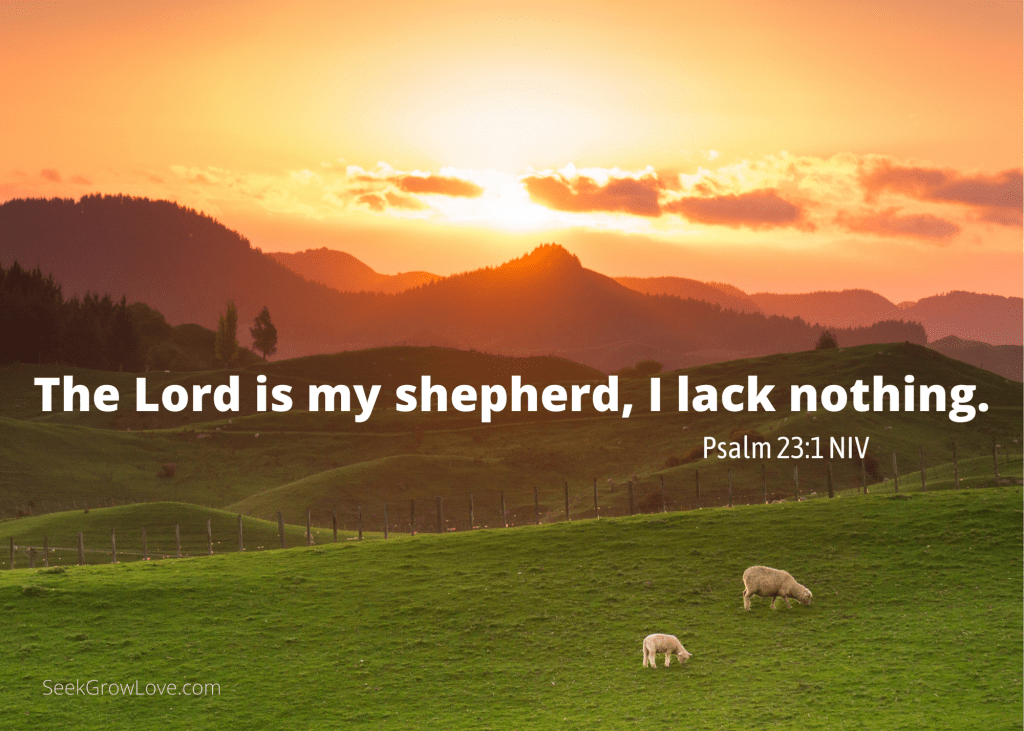
“The LORD is my shepherd, I lack nothing.” These words are so well known that most Christians immediately recognize this first line of Psalm 23. But there are so many truths that we can begin to understand from this simple phrase.

 The LORD is called MY shepherd.

The sheep has accepted the shepherd and as a result the sheep “lack nothing.”  The Psalm goes on to explain the ways that the LORD provides, cares for, and guides His sheep, but all of this is possible because He is Our Shepherd. There has to be a relationship.

We have to have trust in the shepherd and we need to stay in the Shepherd’s boundaries. From Leviticus 18 we are learning that God is establishing decrees and laws to govern the Israelites’ behavior including sexual relations. If we truly accept our relationship with God as the director of our lives and the overseer of our well-being, we can trust Him with all areas of our lives including our sexuality. We can trust that His commands on sexuality are right. We can personally follow them. For instance, he placed restrictions on certain sexual activity like incest. No sexual relations between relatives. This makes perfect sense.  God has designed the marriage relationship as the place where sex is one expression of love. Other family relationships need to be cultivated in nonsexual ways. We love through acceptance, encouragement, kindness, patience, …and so many other actions. This creates a safe, nurturing and sound family atmosphere.

God’s commands are given to keep us healthy physically and whole relationally while He nourishes us to produce spiritual fruit.  So as we read through Leviticus, we are learning that God’s commands are life-giving boundaries for us-His sheep. Our shepherd guides us so we are nourished, safe and loved.  

-Rebecca Dauksas

Links to today’s Bible reading – Leviticus 17-18 and Psalm 23-24

The Scriptures Are for All Generations

Leviticus 15-16 and Psalm 21-22

One huge benefit of living in our day and time is having an extensive body of God’s scriptures available to us. We can see scriptures that clearly confirm God’s plan has been actively unfolding throughout all ages and to each generation. Leviticus 16 explains the event that we refer to as the Day of Atonement.

The High Priest would follow the ordinances on one special day once a year to cleanse all the members of the community from their sins. The people would observe a Sabbath rest because on that day atonement would be made for them, to cleanse them. “Then, before the Lord, you will be clean from all your sins.” (Lev. 16:30)

Of course, as Christians we can see that these offerings were pointing to the ultimate sacrifice of Jesus Christ. We know that he is our great high priest (Heb. 4:14) who offers us the opportunity to be forgiven of sin.  He sacrificed his own blood for our forgiveness. He wanted us to be cleansed from all of our sins and to be reconciled to God.

That was carried out through his sacrificial death on the cross and amazingly Psalm 22 reveals what this experience was like for Jesus Christ.  David may be writing about personal experiences and yet he miraculously described the crucifixion. He wrote this event about 1,000 years before it occurred. This Psalm begins with the words spoken by Jesus on the cross, “My God, my God, why have you forsaken me?” Yet the Psalm ends in praise to God. It states that all future generations will serve Him and be told about the Lord. “They will proclaim his righteousness, declaring to a people yet unborn: He has done it! (Psalm 22:31)

We have the benefit of seeing the results and rewards that Christ accomplished for himself and for all his followers. Praise God that we have the scriptures that explain this to us. Scriptures that were written through many centuries and passed on to the next generations. We have a bird’s eye view of how beautifully God works through His faithful followers. Be faithful to share the scriptures with others because all that God has spoken through them will be accomplished.

-Rebecca Dauksas

Links to today’s Bible reading – Leviticus 15-16 and Psalm 21-22

Be Different

Leviticus 11-12

According to Leviticus 11, there are plenty of animals that are forbidden for God’s people to eat: pigs, rabbits, and bats are all in this list (who would want to eat a bat anyways?), along with plenty of other animals. However, if you are like me, you enjoy a side a bacon with your eggs in the morning, or enjoy a nice, grilled pork chop for dinner. For those of you who are concerned about breaking God’s food laws today, I will encourage you to look at Mark 7:19 and Acts 10, where these commands are no longer applicable for God’s people (Christians).

However, beneath the surface of these food laws is an important concept that does still apply to us today. The reason God gave these laws for His people is put simply in Leviticus 11:44: “For I am YHWH your God. You must consecrate yourselves and be holy, because I am holy.” The whole point of these food laws, and others in Leviticus, is to be holy for God. The word “holy” simply means “separate” or “different”, as God wanted His people to look, live, and behave differently than the rest of the sinful world that they found themselves in. Of course, this obligation to “be holy” still applies to Christians today (see Matthew 5:48).

What does it mean for Christians to be “holy” in 2021? At a simple level, it means that we follow God’s commands that were given through Jesus Christ, even when nobody else does. Specifically, it means that we do not pursue the sinful decisions and pride that we find all around us. Christians cannot sinfully enjoy the same things that the non-believing world does, like pornography, homosexuality, sex before marriage, drunkenness, drug abuse, gluttony, or any other form of behavior that goes against the commands in the Bible. Put simply, Christians must look, live, and behave differently than the rest of the sinful world that we find ourselves in. Although there is forgiveness when we fail in any sinful area, we cannot ignore the fact that it is sinful; we must seek repentance. You may face verbal or physical abuse, lose friends, or other forms of persecution for living differently, but our obligation is to please God and Jesus Christ above all else; that is the only thing that matters to Christians.

Fellow Christians, we need to stand out as a light in this world (Matthew 5:14), being different than everybody else. We can do this by pursuing holiness and purity, serving the poorest in our communities, and sharing the gospel message with those we love. We have our instructions: we need to be faithful to God and Jesus Christ in everything that we do. Let’s be holy; let’s be different.

-Talon Paul

Links to today’s Bible reading – Leviticus 11-12 and Psalm 18

Contrary to His Command

Leviticus 9-10

After all the instructions that God gave to the priests, and after all the preparations were in place, now the priests at the Tabernacle can finally begin their work of atoning for Israel’s sins! Chapters 9 and 10 of Leviticus are monumental and we should not miss this; this is where the rubber meets the road as the priests are finally going to act on their instructions… and it doesn’t go well from the start. Aaron’s sons, Nadab and Abihu, carelessly neglected to follow all the specific commands of God and were punished with death. It is an obscure and confusing passage, but overall, the story carries the same meaning: punishment comes from not following God’s clear instruction.

If we can say anything about Leviticus, it is detail-oriented; there was no room for the priests to make up their own minds about how to perform sacrifices. God was very specific and very clear about what He wanted to be done. The same is true for us: God is not a god of confusion, but of clarity and precise direction (1 Corinthians 14:33). He has specifically told us what He wants us to do as Christians in the New Testament through Jesus Christ; to stray away from His command brings relational and spiritual death, where we suffer to recover from our mistakes (Romans 6:22-23).

There are two challenges for all of us in the New Testament, and they are quite clear and precise. The first is to read Jesus’ words daily; you cannot possibly follow his commands if you don’t know what they are. The second challenge is to put his teaching into practice; it does us no good to simply know something, but instead, we must act upon it (James 2:14-17). Jesus tells us specifically that if we do not listen and act upon his teachings, then we are building our lives on sand instead of solid ground, giving us no foundation or stability (Matthew 7:24-27).

Let’s do better than Nadab and Abihu. Let’s follow God’s clear commands, revealed through Jesus Christ, and see the difference that it can make in our lives and the lives of others. It is not complicated; God is specific about what we are supposed to do.

-Talon Paul

Links to today’s Bible reading – Leviticus 9-10 and Psalm 15-17

Fellow Priests of God

Leviticus 7-8

If you have been following along with the reading through Leviticus so far, things are getting pretty intense, as we learn descriptions about the specific ways that animals are butchered, what to do with their blood, and their fat being burned up; hopefully you’ve had a strong stomach for this section. Although most of us have probably breezed through this section in order to move forward from the apparent horror scene that has been painted, there is a relevant message for us in the midst of it all, and it deals with the priests. All of chapter eight is dedicated to preparing the priests for their work of service in the Tabernacle, getting them ready to minister to God and on behalf of God’s people.

If you have ever had a job or career before, you understand that there is a period of preparation that you must go through. When I worked at Burger King in college, we had one week of video training modules that we had to complete before we even touched a food preparation station. If even Burger King requires this period of preparation for the job, how much more for those who are going to act as priests and mediators for God and God’s people? Relating this back to today, how much more do those who are leading God’s people in churches need to spend time in preparation? Just as Aaron and his sons had to spend time in ritual planning and preparation, so too must Christians who are serving in various ways in individual churches.

1 Peter 2:9 states that Christians are “a royal priesthood, a holy nation, and a people for God’s own possession.” This is a passage that sparked the Protestant Reformation in the 1500’s, as the late Martin Luther began teaching that all Christians are entrusted with God’s Holy Spirit, God’s message for humanity, and God’s grace, not just the officials of the church. If we are called “priests” now, that means that we have work to do in preparing ourselves for service to God also. We are not called to just accept God’s forgiveness and sit around; we are called to use the gift of God’s Spirit to bring about real change in other people’s lives (see 1 Corinthians 12).

Fellow Christian, the challenge for us today is three-fold. We must first understand what Jesus has done for us in his death and resurrection, truly having faith in his work. Secondly, we need to figure out how God has blessed us to serve others with His Spirit; you must have a solid grasp of what gifts God has given you. Finally, we need to do the necessary preparation work to be fully useful to our God, by getting trained in the ways God has called us. Whether you are pastoring a church, singing worship music on Sundays, evangelizing in the streets, serving food in the homeless shelter, or any other form of service to God, we all must prepare ourselves for that service. Fellow priests of God, let us prepare ourselves today and thank God for the opportunity.

-Talon Paul

Links to today’s Bible reading – Leviticus 7-8 and Psalm 12-14

Rich and Poor

Leviticus 5-6

One thing that absolutely amazes me about God is that He desires that everyone would turn to Him and be saved (Ezekiel 18:23; 1 Timothy 2:4-5). Although we know that not everyone will make this decision, this is a description of God’s heart; He earnestly wants all of us to join Him in the Kingdom of God! Since we know this to be true, it makes sense that God would provide a way for anyone to come and have their sins wiped clean, regardless of their circumstances. Within the descriptions of the sacrifices in Leviticus 5-6, we find that God does not only look out for the rich, but also for those who are poor and are struggling. God does not favor those who make more money, but provides for everybody, regardless of their wealth.

In describing the guilt offering in Leviticus 5, God commands that a lamb or goat be offered to Him to cover whatever sin that the person is guilty of (Leviticus 5:6). However, the next few verses are revealing of God’s nature and heart; if they cannot afford a lamb or goat (which were expensive in their time), there are other ways of offering the sacrifice to be forgiven. Even the poorest individual, who can only afford a small amount of flour (Leviticus 5:11) has the opportunity to be forgiven and come into God’s presence to be cleansed.

There are two revealing truths within these chapters of Leviticus. The first is that God does not favor the rich, but looks out for the poor as well. This truth is continued in the New Testament, even declaring that it is the poor who will inherit the Kingdom of God (Matthew 5:3; James 2:5). Those who do not have much to offer are still able to come before the throne of God, through the sacrifices back then and through the sacrifice of Jesus Christ now. In fact, Jesus teaches that those who sacrifice when they have little are giving more than those who have much, but choose to give little (Luke 21:1-4).

The second lesson is for those who are rich; you are expected to sacrifice more. Jesus stated that “everyone who has been given much, much will be required…” (Luke 12:48) God has entrusted you with more resources, but not just for your own benefit. You are expected to sacrifice more for God, which means giving more to those who are in need today (Matthew 25:31-40; Ephesians 4:28). You must also not think more highly of yourself, simply because you have more money than others. God does not look at financial well-being as a sign of blessing, since the poor will inherit the Kingdom of God (James 2:5), but is simply a means for you to test your faith. What are you doing with your vast resources?

Every believer is expected to sacrifice something, whether great or small. What are you willing to sacrifice to follow Jesus Christ fully, and what is holding you back?

-Talon Paul

Links to today’s Bible reading – Leviticus 5-6 and Psalm 10-11

Confessing & Confronting

Leviticus 3-4

Yesterday, we looked at the seriousness of sin and the reason why the Israelites were expected to offer sacrifices for those sins. Before we continue on, I want to offer some helpful advice for reading the first few chapters of this book, so that you don’t become overwhelmed. There are only five sacrifices listed here: the burnt offering (ch. 1), the grain/cereal offering (ch. 2), the peace/fellowship offering (ch. 3), the sin offering (ch. 4-5), and the guilt offering (ch. 5-6). Each of these sacrifices are included for different purposes, not always for sin, and all of them have their own process of being offered. Usually a good study Bible will point this out, but just in case you don’t have one, I wanted to offer this to help you along the way.

Have you ever considered how your sins have affected someone else, whether in your family or in your church? When you act out in a sinful way, you are not only affecting yourself, but are infecting the entire community that you are involved in. Leviticus is very strong in chapter 4 on this point, and calls out the leaders and the congregation in the same breath. For those leading churches, homes, or any other area of life, you are responsible for those whom God has put under your care, and when you sin, you are affecting everyone. In Leviticus 4:3, it states that when the anointed priest (i.e. the leader) sins, he brings guilt on the entire congregation. What a responsibility! Maybe that is why the New Testament is so strong on the moral qualifications of those who want to be leaders in the church (see 1 Timothy 3).

It is not just the leader who affects the whole congregation, but the people that are being led also. Leviticus 4:13-21 discusses how the whole congregation is responsible for the sin that takes place within their midst. This truth still carries on today; whatever you do in sin affects those within your community. From “minor” sins like lying and gossipping, to “major” sins like being sexually immoral; these all have results and those results are deadly. The whole congregation of people has an obligation to confront the sin in their midst (in a loving way) and remove that practice from their group (see 1 Corinthians 5).

Church, we need to do better about both confessing sin and confronting it within our midst. When we allow sin to continue unchecked in our churches and homes, we are allowing a deadly cancer to affect everyone within. Leaders, you are responsible for making sure that the people you are leading are taken care of and being as holy as possible for God’s presence. Those of you who are being led, you have a responsibility for keeping your leaders accountable and for doing everything you can to personally confess and deal with your sin. We can all improve in this area, as difficult and awkward as it can be to admit to our faults. However, there is much peace and healing that comes from confessing and confronting the sins in our lives (James 5:16).

-Talon Paul

Links to today’s Bible reading – Leviticus 3-4 and Psalm 7-9

A Way was Made

Leviticus 1-2

At the end of Exodus, after the Tabernacle has been finally built, God’s glory comes to rest in it, but Moses is unable to enter (Exodus 40:35). However, at the beginning of the next book, Numbers, Moses is speaking with God in the Tabernacle (Numbers 1:1). This middle book, Leviticus, is the explanation about what is necessary to come into God’s presence and enjoy His fellowship. Since God is so holy and separate from us, there are things that we are expected to do in order to come into His presence. Thankfully, out of His love, mercy, and desire to be with us, God provided a way for us to come before Him, both for the Israelites back then and for Christians today.

Immediately in Leviticus 1 and 2, we find descriptions of different animal sacrifices and what is necessary to perform certain rituals in God’s presence. Since we don’t have a Tabernacle or Temple to worship in, and we don’t perform animal sacrifices anymore, how is this really relevant for us?

In Leviticus 1:4, we are told that these animals are dying in the place of the person who is offering it to God. The truth of these sacrifices is simple: sin is serious and deserves death. Whenever you do something that is contrary to God’s laws, both minor and major, it is offensive to the One who gave you life in the first place, and we deserve death for it. The mantra of our age that “everyone is naturally good in their own way” is simply not true; we are all broken, sinful, and corrupt human beings in need of God’s saving grace. For the Israelites back then, the answer to the problem was an animal sacrifice to cover their offense against God; for us today, it is the one sacrifice of Jesus Christ that is sufficient.

The New Testament continues the teaching that sin is serious, offensive to God, and deserves death: “For the wages of sin is death…” (Romans 6:23a) We cannot forget the seriousness of our situation, because when we do, we lose the power of the gospel. The good news for us is that we don’t have to die for the things that we did; Jesus died in our place, like the animal sacrifices in Leviticus. “… but the free gift of God is eternal life through Christ Jesus our Lord.” (Romans 6:23b) The sacrifice of Jesus was sufficient to cover over every sin that we have ever committed or will commit (Hebrews 10:10). We need to thank God for providing a way out for our sinfulness, both in Leviticus and today through Jesus Christ. Through this sacrifice, we can enter the presence of God and enjoy fellowship with our heavenly Father (Hebrews 4:16).

-Talon Paul

Links to today’s Bible reading – Leviticus 1-2 and Psalm 4-6

Making a Different People : Blessings and Curses

Leviticus 26-27

Leviticus 26 12 NIV
Chapters 26 and 27 of Leviticus makes it seem like the book ends twice. While the valuations of 27 help us understand tithes and how giving to the Lord means more than money, indeed EVERYTHING we have, it seems like 26 was the “original” ending. The author, editors, and priests who God inspired to write and work in this text ended, first, with a powerful section on blessing and curses.(See note below)
The narrative of the Exodus, that is, God crushing the Egyptians and their gods, leading his people out to worship him, and then bringing them into the promised land, is the climax of the Torah, and arguably the CENTRAL NARRATIVE of the Old Testament. That is why God has repeated something over and over and over again. I hope you caught it, as I noted that when something is repeated, God wants you to pay attention. Here it is in 26:13 “I am the LORD your God, who brought you out of the land of Egypt so that you would not be their slaves, and I broke the bars of your yoke and made you walk erect.” Think about how many times you have heard something like this in the commands of Leviticus. God keeps grounding his commands in the beautiful reality that he has brought this people, the children of Abraham, Isaac and Jacob, out of the land of Egypt. He has redeemed them from slavery. Because he has done that, he wants them to walk in a way that is different and better than the nations around them. If they don’t walk that way but turn away, then he will allow the trouble of this world to overtake them, in order that they might cry out to him. However, if they do obey, then he will give them unending blessings and he promises, “I will also walk among you and be your God, and you shall be My people.” (26:12)
I hope you see the parallel to our lives as we follow Christ. The CENTRAL NARRATIVE of creation is the Exodus led by Jesus, who broke us all out of the bondage and slavery to sin and has set us free. As Jesus brings us into the Canaan of the Kingdom of God, not just the future Kingdom on the Earth, but the present rule and reign of God, he looks to us and says, “there is a better way to live.” He gives us a holy way of life, grounded in his love and his sacrifice. But, better than before, we are able to become changed from the inside out because of the power of God flowing through us. No longer must we simply keep outward laws and regulations, but our hearts can become pure. God can change our desires and our destiny.  We are able to become children of Abraham, Isaac, and Jacob and heirs according to the promise of God. If we follow the way of God, through the power of the Spirit of God, all the while redeemed through the Son of God, then one day we will see God. The metaphor of Leviticus, God saying “I will also walk among you” will become reality. We will be in the full, unmitigated glorious presence of God, in the Land of Promise, His Kingdom.
May you, my brothers and sisters, become a different people.
May the principles and practices of Leviticus shape you into a holy people.
May the mercy and justice of God be made evident to you in all of scripture, and especially in Leviticus.
May the blood of Jesus, a perfect lamb, without spot or blemish, cover you, redeem you, cleanse you of all sins.
May God, my brothers and sisters, bless you!
Jake Ballard
————————————
Note : To be fair, this is a hunch, not a statement of fact or even a solid belief. If you disagree and believe that Moses, or whoever authored this book, wrote it this way on purpose as directed by God, then that is certainly an acceptable view. I just want to point out the fun, interesting quirks of books. This is similar to how John 20:30-31 is a good ending to the book, as well as John 21:24-25. Just some fun food for thought, but not the focus of the devotion. Keep reading above.
————————————
(Jake Ballard is Pastor at Timberland Bible Church in South Bend, IN. He lives in the Michiana Area with his wife, daughter, and in the summer, two more little ones. If you’d like to say hi you can find him on Facebook at https://www.facebook.com/jacob.ballard.336  You can also hear more teachings at https://www.youtube.com/channel/UCs_awyI1LyPZ4QEZVN7HqKQ  If you want to have an interesting conversation with him, just say “I don’t like the ninth guy in a blue police box.” God bless!)
Today’s Bible reading can be read or listened to at https://www.biblegateway.com/passage/?search=Leviticus+26-27&version=NIV
We made it through the book of Leviticus and learned about God on the way.
Keep reading!  Tomorrow we begin the book of Numbers (chapters 1 & 2) as we continue on our 2020 Chronological Bible Reading Plan

Making a Differing People : Lex Talionis and the God of Justice.

Leviticus 24-25

Leviticus 25 55 NIV
Depending on your source, Mahatma Ghandi and Martin Luther King, Jr. both believed that “an eye for an eye leaves the whole world blind.”
While we know from our reading and devotions that Jesus completes the laws of the Old Testament, and specifically changes the interaction of Lex Talionis, or the Law of Retribution, in Matthew 5:38-42, we must also not pass over the laws given in Leviticus 24 and 25 too quickly.
For example, the year of jubilee is fascinating, not least because we don’t have any concrete evidence ANYONE EVER practiced it! The idea was that the poor who sold themselves into slavery should be freed. I want to be very clear : SLAVERY IS WRONG. Morally, it is repugnant, and praise God it is outlawed around the world and being fought against by many organizations. However, in the time of the Israelites, slavery was practiced, especially as a way to pay off massive debts owed for any and all reasons. While we should be rightfully repulsed, in Leviticus 25, God drags humanity forward in the midst of their issues by giving some fascinating commands : If your countryman becomes so poor and has to sell himself, treat him as a hired man. (25:39-40) And no matter what is sold or bought, it all goes back in the year of Jubilee, (25:13) so you may all be equal, and in that year the slave must be set free. (25:54)


God takes a terrible institution, and begins to create boundaries around it. Remember, if this law had not been given, ALL slavery would be morally justifiable and ALL treatment of slaves would be unimpeded. But starting in Leviticus, God begins to prune this terrible human sin, begins to eradicate it among his people. God is taking barbarous humanity and forcing it to be graceful and merciful, to a degree.
Add to that the law of ‘an eye for an eye’ and we begin to see where God directly challenges the law codes of other nations.
In Leviticus 24:19-20, we read, “If a man injures his neighbor, just as he has done, so it shall be done to him: fracture for fracture, eye for eye, tooth for tooth; just as he has injured a man, so it shall be inflicted upon him.” Of course, Christ changes this law, but in the day it was given this was REVOLUTIONARY.
First, God is trying to stop something: exactly what happens in the life of Samson, specifically in chapter 15. Samson wants to go to his wife, but her father gave her to another man. Samson, in a rage, ties 300 foxes together in pairs, puts torches on their tails, and they burn the crops. Then the Philistines learn who Samson’s family is and burn his family. And then he slaughters the Philistines… OK, so God wasn’t trying to stop EXACTLY that scenario, but trying to stop the PRINCIPLE of that scenario. In our world, before the Law of God or without Law, violence is cyclical and escalating. Samson gets ticked off, so he burns crops, so the Philistines burn his wife, so he slaughters Philistines. It’s not pretty but it is the pattern of humanity. You attack my tribe and kill one person, we attack back and kill five people and you attack back… until we are all dead. Among the Israelites, God was saying, “when someone harms you, you only get to harm them back to a certain degree; namely, the way in which they harmed you.” This is a massive leap forward in our cultural and social interactions.
Of course, other national law codes were doing this at the time of the Jews, such as the ancient Babylonians (and possibly the Ancient Egyptians). But, while they may have grasped a portion of God’s truth, the Babylonians specifically missed a small but crucial detail. Leviticus 24:22 says, “there shall be one standard for you; it shall be for the stranger as well as the native.” In the Babylonian Law code, punishment was meted out based on the different classes of people involved. Men who owned land were above free men who were above slaves. If a man who owned land harmed a slave, financial compensation may have been owed, but if a slave harmed a landed man, then the slave could lose his hands or his life.
Not so with the people of God. Men were respected across socio-economic lines or boundaries. If a priest killed a peasant, the priest would die. In a law about punishment, God actually gives one of the strongest cases for the equality of all men (and women!) in Old Testament scripture. Whether or not the law was followed perfectly is quite beside the point; in principle, all people were equal.
This is why taking our time with the texts of Leviticus is so important. As you have seen this week, instead of getting stuck in “boring” and “confusing” laws, we are seeing God create a different people, a better people, a holy people. Praise God that we don’t have to follow all the Old Testament codes, but praise God even more that in these laws, he began to create a people who were BETTER, who were more CIVILIZED, more mature, more conscious of their place before each other and before God.
In Leviticus, God creates a people who are differentequal and free. As all people should be.
Jake Ballard
Today’s Bible reading can be read or listened to at https://www.biblegateway.com/passage/?search=Leviticus+24-25&version=NIV
Tomorrow’s Bible reading will be the final two chapters of the book of Leviticus as we progress through the 2020 Chronological Bible Reading Plan