In Mark chapter 6, Jesus summons his disciples to go on a boat to Bethsaida, while he stays behind on land to pray. Their boat got to the middle of the lake, and Jesus, seeing them, started walking towards them. Little did they know, he was walking on water towards the boat. After seeing him, they immediately thought he was a ghost and were terrified. Seeing them frightened, he immediately said, “Take courage! It is I. Don’t be afraid.”
Jesus, with the power of His Father God, walked on water, which is not normal in any way, but Jesus told them to not be afraid. Do you sometimes find it hard to trust in God? It might be during a hard test, you might be in a difficult situation with your family or friends, or maybe you’re a new brother or sister of Christ who is struggling to find their purpose in the world. Trusting in God can lift a heavy weight off your shoulders. Faith is a lot like a muscle. The more we exercise our faith, the stronger our trust in God becomes. When we practice and train ourselves to have more faith, it becomes easier to have trust, and to rely on God. So ask yourself, are you willing to practice trusting in him?
-Hannah Bormes
Reflection Questions
When was the last time you exercised your faith muscle? How did it work out for you?
In what current situation would Jesus tell you to not be afraid? Why? How can exercising your faith muscles help you lessen your fear?
What might God be asking you to do with His power?
This will be a shorter one and something to reflect on throughout the day. Something that can be applied to everyone’s life in a different way. In this chapter there is a great windstorm. Personally, I hate storms, ask anyone who’s been near me when one happens, I tense up and want to just get away from it, they terrify me. And it terrified the disciples too. They proceed to wake Jesus up who calmed the storm. He asks them after “Why are you so afraid? Have you still no faith?”.
If we look at our own lives, we also have storms. Most of them won’t be actual storms that can shake a house or uproot a tree, but things in our own lives that cause worry and doubt. They will differ from person to person and even day to day. I’m also sure some of my storms would look like little spouts of rain compared to the hurricanes others face. But look at what Jesus said, “Why are you so afraid?”. I can’t pretend to know what everyone who reads this is going through. But ask yourself – why are you so afraid? Is what you’re afraid of that important in the grand scheme? Take a step back and look at it.
And the second thing Jesus asks them, “Have you still no faith?”. Have you no faith that you can prevail? Have you no faith that there is one greater than us who cares for each one of us personally, one who loves each of us? Have you no faith there is a Kingdom coming that will put an end to every storm you face? You can prevail. Have faith in that, and have faith there is and always will be one stronger than you that you can always trust to be there.
As you go through your day reflect on your own storms and ask yourself “Why are you so afraid? Have you still no faith?”
-Philip Kirkpatrick
Reflection Questions
What do you find yourself afraid of? Why? What causes you to worry or doubt? Why? Is there a better way to look at what causes you fear, worry and doubt?
Do you know “someone” larger than your fears that you can always trust? How has he proven he is trustworthy?
How can we each work at growing our faith so it is stronger in the storms?
Who do you know who has a strong faith you can learn from?
My dad had polio. Polio is an illness caused by a virus. It can sometimes lead to paralysis. Polio reached pandemic levels throughout the world in the first half of the 20th century.
My dad was diagnosed as a teenager in the early 1940’s, and he spent weeks and weeks in St Anthony Hospital in Rockford, IL. I don’t know much more about that challenging time in his life, because he did not talk about it to my brother and me. It didn’t occur to us to ask him about it. We were kids. We simply knew our dad had had polio and he walked with a limp. One of his legs had been severely affected by the disease.
My dad was a carpenter, and he was usually dressed in a gray work shirt and jeans, or occasionally in dress pants and shirt. But NEVER in shorts.
One day when I was a teenager, my dad injured his affected leg. My mom needed to render first aid and dad’s pant leg was rolled up above his knee. For the first time, I saw my dad’s leg that caused him to limp. I was shocked! It looked thin, wrinkled, shriveled. How could the sight before me be a man’s leg? My dad was strong, rugged, tough, a working man who did hard physical labor. I turned away, sensing I had seen something I shouldn’t. At that moment, I began to “see” my dad differently, I began to slowly understand, he had endured pain and sacrifice to provide for his family. His shriveled leg was a testament to that.
In the beginning verses of Mark 3, Jesus enters the synagogue and encounters a man with a withered hand. The hand is useless. One Commentary says the hand muscles were shrunken and the limb shorter than normal—the cause may have been infantile paralysis. In any event, the man was unable to work for his living.
Jesus sees his need. He has compassion for him. He also sees the Pharisees watching, waiting for his next move.
In recent days, Jesus had healed a paralytic man, and dined with tax gatherers and sinners. In both instances, the scribes of the Pharisees questioned Jesus’ words and actions.
Now it is the Sabbath. Jesus and his disciples had just passed through a grainfield and picked and eaten some heads of grain. (Mark 2:23-28) The Pharisees had called him out on it, saying Jesus was doing work on the Sabbath, the day of rest. By the time of Jesus’ ministry, the Mosaic law of Sabbath rest, (Exodus 20:9-11) had been “enhanced” by the religious leaders through the years to include countless petty regulations and rules. Jesus had deflected the Pharisees in the grainfield encounter, citing David’s eating of the shewbread (I Samuel 21:1-6) and declaring, “The Sabbath was made for man, and not man for the Sabbath. Consequently, the Son of Man is Lord even of the Sabbath.”
Perhaps minutes to hours later, the Pharisees are now ready to pounce again with a new Sabbath challenge. Jesus is prepared. He asks the disabled man to step forward, so all the crowd can see him. (verse 3). And then Jesus addresses the Pharisees.
“Is it lawful on the Sabbath to do good or to do harm, to save a life or to kill?” (verse 4)
We can imagine the silence was deafening. Because, indeed, the Pharisees did not respond. And then we come to verse 5, filled with emotions, drama and action.
“After looking around at them with anger, grieved at their hardness of heart, He said to the man, “Stretch out your hand.” And he stretched it out, and his hand was restored.”
Jesus looks deep into each Pharisee’s eyes, face, inner feelings. He is angry at their lack of compassion, at their challenges to his God-given authority, at their unhearing, unseeing judgement. The anger turns to grief as Jesus witnesses the hardness of their hearts to his ministry. The Pharisees choose their “enhanced” laws over a poor man’s plight, choose their power OVER him, instead of a blessing FOR him.
Then brilliantly, Jesus asks the disabled man to stretch out his hand. The hand is cured without any labor, but simply by Jesus’ voice. Jesus does not break the Sabbath labor laws, and neither does the man. Surely the Pharisees will approve. Their reaction is recorded in verse 6.
“The Pharisees went out and immediately began conspiring with the Herodians against Him, as to how they might put Him to death.”
The Pharisees’ reputation with the people has been thwarted. They will not accept this outcome. Immediately their plans for Jesus’ destruction begin.
Only the man with the withered hand was rewarded. Healed, restored, able to work and enjoy his life. Forever blessed by the Savior.
My father awaits that blessing too. At Jesus’ return, he will rise up from the grave, his withered, diseased leg fully restored. No more limping, no more pain. Oh, what a day that will be. I can’t wait to see him. I can’t wait to see my coming King.
Paula Kirkpatrick
Reflection Questions
Think about a person you know who will be healed when Jesus returns. How does that motivate you to share the good news of salvation in Jesus?
Jewish law had “evolved” to extreme regulations about what was considered work on the Sabbath. How do you feel about businesses that stay closed on Sunday, to honor the Lord?
Are we ever guilty of “following the rules” instead of having compassion for people in a difficult situation? What example can you think of?
When I was a young pastor’s wife in my 20’s and 30’s, I had many older role models in our congregations. These special saints had been faithful through the years despite the challenges and sorrows of our present world. They trusted God’s direction and His goodness, and they were still devotedly serving Him at church and in their everyday lives.
I, (and my pastor-husband), valued and yes, cherished the encouragement and support they lovingly gave us. How I long to see them again!
Various dear ones come to mind—the balding Wisconsin farmer, cracking jokes, yet tender-hearted; the precious old Indiana couple who held hands in church, except when they held my year-old son while I played the piano for the worship service; dear Missouri ladies who “loved” on my children and us; the welcoming Minnesota saint who hugged me at our first meeting, and could outwork women thirty years younger!
Psalm 71, one of our readings for today, has brought to mind these beloved individuals, as well as many others, who we were blessed to know and love in the pastorates we served. An apt title for this Psalm could be “Prayer of an Aged Saint.”
The writer of this Psalm begins by saying he has taken refuge in God, and he asks for deliverance. He turns to God to rescue him, basing his trust on the help he has received from Him down through the years.
“For You are my hope; Lord God, You are my confidence from my youth. I have leaned on you since my birth; You are He who took me from my mother’s womb; My praise is continually of You.” Verses 5 and 6
Then, the Psalmist confirms he is no longer a youth.
“Do not cast me away at the time of my old age; Do not abandon me when my strength fails.” Verse 9
Even at his advanced age, our writer once again faces an enemy. “Wrong doer, ruthless man”, (verse 4); “adversaries” (verse 13) are some of the words used to describe this enemy.
And yet his ultimate trust in God’s intervention in his life is evident.
“But as for me, I will wait continually, And will praise You yet more and more. My mouth shall tell of Your righteousness And of Your salvation all day long; For I do not know the art of writing. I will come with the mighty deeds of the Lord God; I will make mention of Your righteousness, Yours alone.” Verses 14-16
The Psalmist’s worship turns into a declaration, a witness of the greatness of God. And it doesn’t end there.
“God, You have taught me from my youth, And I still declare Your wondrous deeds.
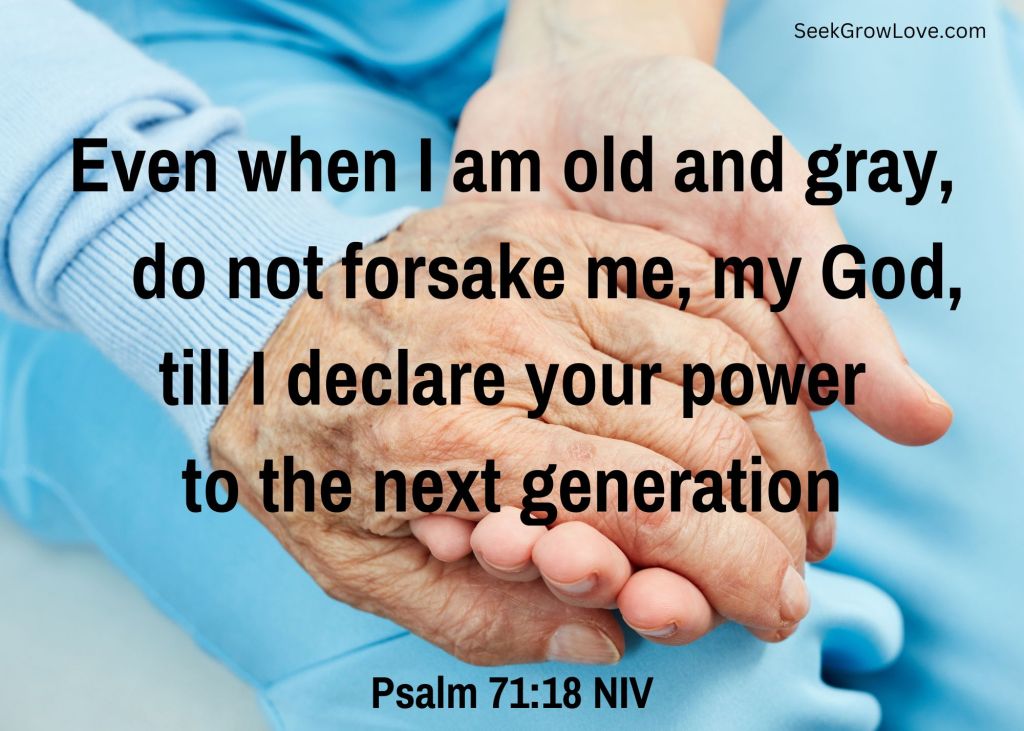
And even when I am old and gray, God, do not abandon me, Until I declare Your strength to this generation, Your power to all who are to come.” Verses 17 and 18
Throughout the writer’s entire life, from his youth to his old age, God has been present and working in his life. And now, as he nears the end of that life, his firm desire is to declare God’s strength and faithfulness to succeeding generations. He wants the younger individuals that are part of his life, or simply have observed his life, to understand the ultimate “goodness of God.”
Once, I too, was young. Now, I can identify with the writer of this Psalm. How good and faithful our mighty God has been to me. He has rescued me from troubles. He has daily strengthened me. He has been my Rock (verse 3) when all else failed.
The dear saints in our pastorates that I grew to love, left a legacy of faith for me and others. I pray my life is also “declaring God’s strength to this generation.”
Paula Kirkpatrick
Reflection Questions
Do you have an older Christian who is a role model to you?
Have you told those role models what they mean to you?
The Psalmist says he doesn’t know the art of writing, so he needs to make mention, to declare, God’s righteousness and strength. Think about ways you can talk about and show your friends and loved ones what God has done in your life.
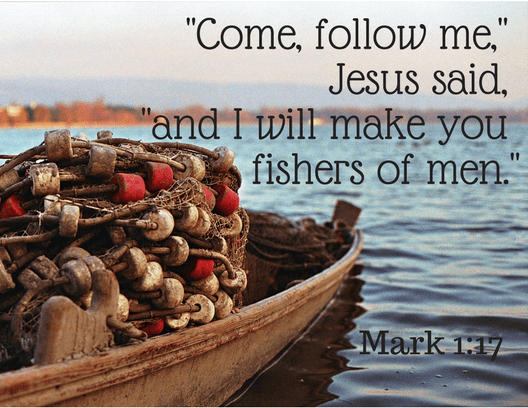
In Mark 1 Jesus calls his first disciples. He calls four people. Now these four are all fisherman with jobs and lives. But they leave those lives and jobs to follow Jesus. Take a second to really think about how much they’re giving up there. They’re losing their job, their lifestyle and leaving their own homes. All to follow someone after he says just one thing to them. Now it doesn’t say that they stopped ,thought about it, and followed Jesus, but that “At once they left their nets and followed him” (Mark 1:18 NIV) and “Without delay he called them, and they left their father Zebedee in the boat with the hired men and follow him” (Mark 1:20 NIV). They left immediately to follow Jesus; they were willing to give up their own lives which they had plans for. They gave that all up to follow Jesus. They did it quickly and without hesitation. Now they could have had insight like in Matthew 16:17, “Jesus replied, ‘Blessed are you, Simon son of Jonah, for this was not revealed to you by flesh and blood, but by my Father in heaven’”. I would think that they did but we can still learn from their example here.
Another thing to notice here is that Jesus is not calling scribes or priests who might know the old testament the best and who are the most well educated. There is plenty of reasons for this. He is calling fishermen as his first. The first time something is done it’s setting a precedent. Everything Jesus did set a precedent for us to follow. But he’s showing us here that you don’t need to be the most educated, or the smartest to follow and serve him. That is the precedent he is setting for us. The precedent that continues even to this day. And he took these fishermen and made them into the vessels he would use to spread the gospel even after he was gone, when they were no longer fishermen, but fishers of men.
Now we can apply this to our own lives as well. We’ve all been called to follow Jesus just as the first disciples were. Yet so many times we hesitate, because we don’t want to give up things, or we’re too scared. Take a page from these disciples, they left their lives and their homes to follow. We should be willing to do what is asked of us as well. Most of the time what we are called to give up isn’t even as much as they gave up. Not only that, but when we are called to do something, we should be doing it right away. They didn’t have the full picture of who he was and were willing to follow, we should be able to as well. Let me qualify all that by saying we should give thought and prayer if we’re going to do something, and if we are called to do something that doesn’t mean you have to give up everything you know like the disciples, they were after all in a different situation than most of us.
And if you’re stuck thinking that “I’m not qualified” or “Someone else better can do it because I’m not good enough” you should forget those thoughts. Because Jesus set the precedent that we all, no matter how skilled or unskilled, can serve. Just like the disciples he equips us for what we are called to do. You don’t need to be the best to serve. Moses who is famous for leading the Israelites out of Egypt was a flawed person. And if you’re saying “I’m not ready yet because I’m too young, not good enough, etc yet” then when do you become ready. Setting a random age where you say that you know enough now? We are called to serve, not called to serve in 20 years.
Don’t be afraid to serve in what way you are called and do it without delay when you are called.
-Philip Kirkpatrick
Reflection Questions
What do you feel the Lord has called you to do? How are you being called to follow Jesus? If you are unsure, pray to hear directions more clearly.
What excuses have you given in the past for not following the calling right away?
Would Jesus think any of these excuses are valid?
What are you willing to give up in order to follow Jesus well?
The Minnesota Church of God General Conference has campgrounds located on a peninsula. It’s the setting for various church events throughout the year including baptisms and conferences. One of those has been a summer camp. I have fond memories of that camp, and since it’s on a lake there’s always some swimming involved. If you end up touching the bottom of the lake while swimming, you’ll find it’s very muddy. Once it grabs on it doesn’t want to let go.
When reading Psalm 69, this is what came to my mind regarding the first few verses. David is talking about muck and deep waters. In this case, David is relating the waters and the muck where there is no foothold to his enemies and those who hate him, how he is surrounded by them. He goes on throughout the passage to illustrate this over and over again. There is powerful imagery used, like in verse 21, “They also gave me gall for my food And for my thirst they gave me vinegar to drink.” He’s talking about how he feels surrounded and just how bad it is for him, tribulation after tribulation.
Yet in the midst of this, the last part of the Psalm is about praising God. Verse 29 marks the change, “But I am afflicted and in pain; May Your salvation, O God, set me securely on high.” He even thanks God. He sets a great example here of being thankful in the bad times, not just the good, as it’s so easy to do. And to bring it back to the mud and water, it can be easy to drown in this sludge. To be overwhelmed. That moment when it all hits and you almost feel lost. But let’s take a page from David here and turn to God in those situations. God should be the rock upon which you build your life so when the water is all around, you have a foundation.
So, to wrap this up: when you’re in a spot like David, and that could be right now, you may be be afflicted, hurting and overwhelmed, but God will secure you.
-Philip Kirkpatrick
Reflection Questions
When have you felt the most stuck? Did you turn to God for salvation? If so, how – and how did God respond?
What can we learn from David in this psalm?
What will you do next time you are feeling overwhelmed or stuck in the muck?
Mark Introduction
The gospel of Mark is thought to have been written by John Mark, a companion of Paul and Barnabas on their first missionary journey (Acts 12:25), and a close associate of Peter (1 Peter 5:13). Mark’s testimony about Peter is especially vivid, supporting the belief that Mark wrote Peter’s account of Jesus’ ministry.
Mark is the shortest gospel. It contains less of Jesus’ teachings than do either Matthew or Luke, focusing on what Jesus did rather than what He said. It is speculated that Mark wrote his gospel while in Rome to encourage Christians persecuted in Rome under Nero.
Mark starts his gospel by saying this is the beginning of the gospel (good news) about Jesus the Messiah, the son of GOD. But several times in Mark’s gospel, Jesus tells his disciples to not tell who he is (or tell about some of the miracles he did). Also, Mark repeatedly pointed out that the disciples didn’t understand many of Jesus’ teachings – which helps us relate to the disciples.
Chapter 13 closes out the book of Hebrews. Here Herb (my name for the author of Hebrews, for simplicity) states concerns for his audience, along with a blessing. Without this last section it would be difficult to see Hebrews as a letter, rather than a sermon. But he comments about the needs of the people he is writing to, and gives a benediction, as is the normal pattern for New Testament letters. Herb’s comments show that false teachings were affecting the people the letter went to, “varied and strange teachings” that must not be allowed to carry them away (v. 9). The specifics are not made very clear for us.
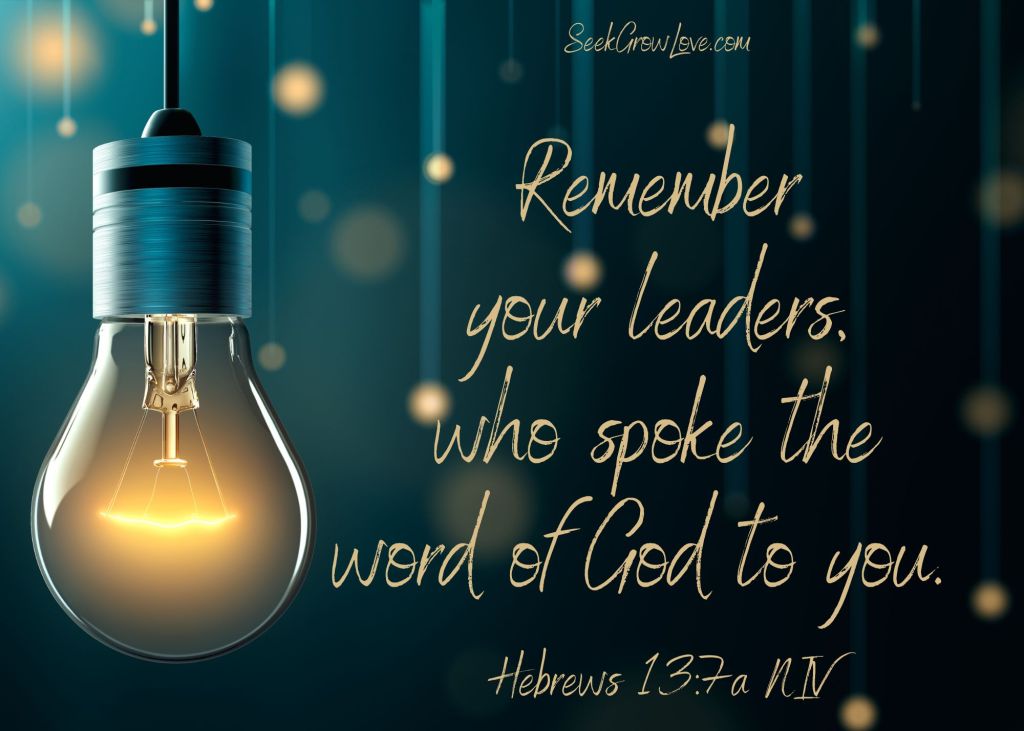
Before Herb raised the issue of false teaching he advised: “Remember those who led you, who spoke the word of God to you; and considering the result of their conduct, imitate their faith.” (v. 7). We aren’t told the roles of these leaders, they could be everyone these people ever encountered who guided them and have died, whether apostles, traveling missionaries, disciples in their own congregations, etc. (The term “led” here is a different form of the Greek word translated “leaders” in 13:17 and 24.) They spoke the word of God to them. They told them the truth. So now the idea is to consider the outcome of these people’s conduct – the end of each one’s life – and based on that imitate their faith. In a way Herb is asking for his audience to work out Hebrews 11 on a small scale, thinking about the faithful of the recent past who they have known. We can do the same with people we have known, evaluating if they held true to the end, which was a big concern expressed by Herb in his book, and if they did hold true we should imitate their faith.
“Jesus Christ is the same yesterday and today and forever.” (v. 8). Jesus Christ doesn’t change. The truth about him doesn’t change. Those who were trustworthy about him before would be trustworthy now, were they alive to still be saying the same things. The faith they held in Jesus before was well founded before, and it would continue to be well founded if they were still alive to continue advocating it. So, you can take up that belief and take up that faith for yourself and hold firm in it. Jesus Christ doesn’t change. And, to the extent that we have obtained to the Christian maturity we ought to hold, neither should we change.
Lord, let me have proper firmness. Let me care deeply. Let me be willing to give the sacrifices of praise and of doing good. Please help me to be who I ought to be, with faith like that of the loving leaders I have known. Please guide me with your Spirit, and work what is pleasing in your sight. And may your blessings also go to the readers of these words who seek your guidance. In the name of your blessed son Jesus, I pray these things, Amen.
-Daniel Smead
Reflection Questions
1. What do you figure happens if a whole congregation of people take up the faithful attitudes of their leaders (or former leaders)?
2. Perhaps most of us had some familiarity with Hebrews before we read it these last weeks, and anyway we were able to back up and re-read sections if we wished to. Most of Herb’s audience was first exposed to his letter when it was read aloud. Probably it was then repeated so they could go over it again. Perhaps a group of leaders read it first to understand it better so they could address questions for the group. They may have wanted to look at related Old Testament texts, as well. Thinking about these scenarios, how many times through do you think it would take before they “got” the message of Hebrews?
3. Do you expect that Hebrews succeeded with encouraging its first audience and bringing them to a new commitment? Has it succeeded in encouraging you?
On a personal note, I wanted to ask for prayer because I have been suffering from migraine issues for just over 48 months. Basically, a constant migraine began in August 2019. I had suffered from migraines before then, just not so badly. Yes, I’ve been seeing a neurologist. Yes, I’m on drugs for this (several drugs). I’ve made lifestyle changes, including ones to reduce stress and relieve eye strain (like hardly reading from paper books anymore). The pain is not as bad now as it was three years ago, though it fluctuates, but I would appreciate it if the headache stopped at some point. Thank you.
When I read Hebrews 12 I tend to think about how I’d like to see a painting of the Hebrew people gathered in front of Mount Sinai. Something that captures the atmosphere, with the darkness and smoke, the fire and the quaking ground. Maybe someday I will run across a painting like that hanging in a museum and I can marvel at the artist’s impression of the moment. I realize there is no point in my having such an artwork myself. First, I can’t imagine where my wife would let me hang it. Second, I’m not at all sure I would want to look at it for very long. If the painting was done well, I don’t think I would find it that pleasant to see. Impressive, yes. Happy-making, no.
The scene with Mount Zion and the heavenly Jerusalem is quite a different story. You might first think this was meant to illustrate the future kingdom, but recall the phrasing “You have come to” (v. 22), not ‘You will come to.’ The contrast we are being offered is between the tabernacle where it sat at Mount Sinai and the heavenly tabernacle set up by God. Notice that the description includes the heavenly Jerusalem, which we would not expect to be relevant to Jesus’ second coming (there is a thousand-year gap to consider before it comes to earth). We are also told about “the spirits of the righteous made perfect” – that they are perfected implies this is in the future, at the second coming (or after). But the mention of “spirits” helps bring to mind Revelation 6:9-11. There, in a vision, John hears those who had been slain speak from below the altar. This is a description of worship, contrasted with the worship at Mount Sinai. It is not literal, but a presentation of what is involved with the heavenly tabernacle as opposed to the earthly tabernacle.
When my mind has tried to visualize this scene it tends not to work well. For one thing the scale is off, too many millions of angels are present. And my mind balks at a painting showing God, despite the number of painters who have tried to produce just that. I won’t bother telling you more about what my brain came up with, I don’t want to mess up your imaginations if you have a better grasp on this.
Herb (my name for the author of Hebrews, for simplicity) is making another of his arguments for staying firm in the faith. He isn’t trying to get people to say how much nicer the Mount Zion scene is than the Mount Sinai scene, but how much firmer and authoritative the message of the Mount Zion scene is. It represents covenant 2.0, for which Jesus shed his blood. This is another ‘that was good but this is better’ argument. I’m not sure if Herb thought about it quite this way, but while people might have been warned against touching the old mountain, sinners looking at the new mountain would know better than to come anywhere near it. It had myriads of angels, for one thing (don’t forget the Bible reports of how even the presence of a single angel kept making people fall to the ground). And God is right there. When verse 29 says “our God is a consuming fire” the main reference may be Deuteronomy 4:24 or 9:3, etc., but we shouldn’t forget about what first set the tone: “The glory of the Lord rested on Mount Sinai, and the cloud covered it . . . and to the eyes of the sons of Israel the appearance of the glory of the Lord was like a consuming fire on the mountain top.” (Exodus 24:16-17). The people saw God as a consuming fire while God was concealed within a cloud, away on a mountain top. With God less concealed God is brighter, and this is the God who will replace the sun for the New Jerusalem (Revelation 21:23). Yes, potentially very scary to anyone who isn’t certain they are on the Lord’s side.
Herb wanted the people to be fully committed in their decisions for Jesus. He wanted them to endure, not growing weary and losing heart (12:3). He wanted them to strive against sin (v. 4). He wanted them to continue in discipline so that they would be able to share in God’s holiness (v. 10). He wanted them to pursue peace with all men, to pursue sanctification, and one day see the Lord (v. 14). They were to be part of a kingdom that could not be shaken (which may pull in Daniel 2:44, drawing on another mountain reference), but the implication was that everything else would fall away.
I wonder if Herb’s comparison of two mountains in chapter 12 may be behind his pattern of writing about the tabernacle and avoiding references to the temple in this book. It helped him tie the first covenant to Mount Sinai, and the second covenant to Mount Zion. The tabernacle later moved along with the people, and eventually Solomon built the temple at Mount Zion. But mentioning those facts could have complicated the analogy. If that is the case, well played, Herb. And I like your illustration.
Lord, your worthiness for praise is obvious to the angels. Please help us Christians to understand you better. Help us show you an acceptable service with reverence and awe. You have allowed your son to die so that our hearts can be purified, and we could be closer to you. Help us not to lose track of the value and importance of your choice. Please let me serve you, and those you love. Amen.
-Daniel Smead
Reflection Questions
1. Going through difficult experiences can increase our understanding – Hebrews 12:7 refers to having the peaceful fruit of righteousness. Are you prepared to accept support from fellow believers when you struggle in times of endurance? Are you prepared to support fellow believers when it is appropriate?
2. Has a piece of art (painting, sculpture, music, etc.) helped you understand God better? Has a piece of art helped you grow as a person? Do you think God works through artistic beauty?
3. How does it make you feel about God, knowing that He is preparing to set up a kingdom that cannot be shaken, and has invited you to be part of it?
Hebrews chapter 11 is very well known and a powerful and beautiful piece of writing, maybe on a level with 1 Corinthians 13. What Paul wrote in 1 Corinthians 13 about love is more often quoted in wedding services, out of context, than used to discuss the situation at Corinth. Something similar may be true with what Hebrews 11 says regarding faith. Good use is made of the passage to discuss faith, but perhaps comparatively not much of the time in the context of what Hebrews is about. It is extremely easy to break this passage away from the rest of what was written by Herb (my name for the author of Hebrews, for simplicity).
New Testament Greek had no chapter breaks, or even paragraph breaks. When authors of that time wanted to establish a change in topic they needed to do so with their words. Herb does a lot with inclusio, also called bracketing, which used repeated words to emphasize a section of text. The presence of these repetitions helped people who were following along with a work while hearing it out loud – and those attempting to memorize it. For hundreds of years very few people had access to written copies of these works and often they depended on listening to them spoken aloud, perhaps even from memory. (In seminary I had a teacher who assigned students to memorize a Psalm and recite it. Part of the point was to gain some sense of what it was like to hold scripture in your mind and speak it aloud. He was pleased and surprised when a student took up the challenge of learning Psalm 119 and succeeded.) There is an inclusio in Hebrews 11:2 and 39 created with the Greek for “to witness” which sets apart that chapter and shows our chapter break to be reasonable.
But Herb did not discuss “faith” only in chapter 11. The Greek word for “faith” appears in Hebrews a total of 32 times: in 4:2; 6:1, 12; 10:32, 38, 39; then in chapter 11 (24 times); 12:2; and 13:7. Outside chapter 11 the references to faith almost all involve Herb expressing concern about believers having proper faith in Christ. You can also see a cluster of four references around chapter 11 which show how Herb set up that chapter and then picked up from it to move into the next part of the letter.
For these devotions we generally read a single chapter but if you wish after reading this devotion you could reread the text, backing up a few verses to include part of chapter 10 as a lead-in to chapter 11. First, I want to highlight a few more words to pay attention to that appear in both Hebrews 10 and 11.
In Hebrews 10:34 a Greek word for “better” appears which Herb uses 13 times in Hebrews. That is far more than elsewhere in the New Testament, but It obviously fits with the tone of the book, which keeps saying that Jesus is better than one thing or another. The word then gets used in 11:16, 35, and 40.
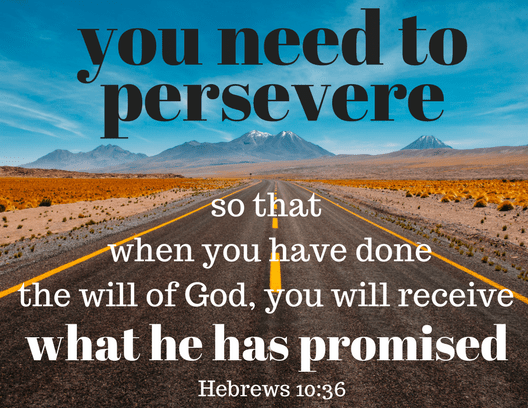
In Hebrews 10:36 a Greek word for “receive” appears for the first time in Hebrews. It will be used twice more, in 11:19 and 39.
Also in Hebrews 10:36, a Greek word for “promise” appears, the eighth of 14 uses. The remaining six times are in 11:9 (twice), 13, 17, 33, 39.
Breaking down the list, “faith” is mentioned in the end of chapter 10, all through chapter 11, and at the start of chapter 12. Three other words connect the end of chapter 10 to chapter 11, suggesting that Herb set up points he was going to make in the faith chapter: “receive,” “better,” “promise.” You could back up to Hebrews 10:32 and read on through 12:2 to see how these words are emphasized together.
If you choose to, you could also do a second exercise, for a different way of looking at things, considering these facts:
In Hebrews 10:32 a Greek word for “endured” / “endure” appears. It is used four times in Hebrews, here and in 12:2, 3, and 7.
In Hebrews 10:36 a Greek word for “patient endurance” or “perseverance” appears. It is used only here and 12:1.
So two words about ‘endurance’ bridge the end of chapter 10 to the start of chapter 12, for a total of six appearances. This suggests that while Herb didn’t choose to emphasize endurance on the part of the Old Testament figures chapter 11 discusses he wanted to emphasize endurance on the part of the Christians he wrote to. This will become very clear if you try another read through starting at Hebrews 10:32 perhaps, but this time skip over chapter 11 entirely and read to 12:7.
Hebrews 11 has a remarkable message about many great examples of faithfulness from the past who trusted God to be reliable and now serve as examples to us. Many people speak of the great acts of faith that these people engaged in, but that is not how the chapter describes them. It says that they “gained approval” from God for their faithfulness (v. 2, 39). In terms of Herb’s actual message these figures from the past are case studies in endurance, people who did not shrink back. Herb finally emphasizes not what they received through faith but what they did not receive, because none of them got what they were waiting for, which is interesting as it shows their common understanding of what to expect and that they did not allow thousands of years of waiting to throw off their patience (v. 39). We also see that the list of named figures stops with David and Samuel, in the time of the tabernacle. Some of the other figures are identifiable as from later times, such as the reference in verse 33 to “shut the mouths of lions,” which is plainly Daniel, but they remain unnamed.
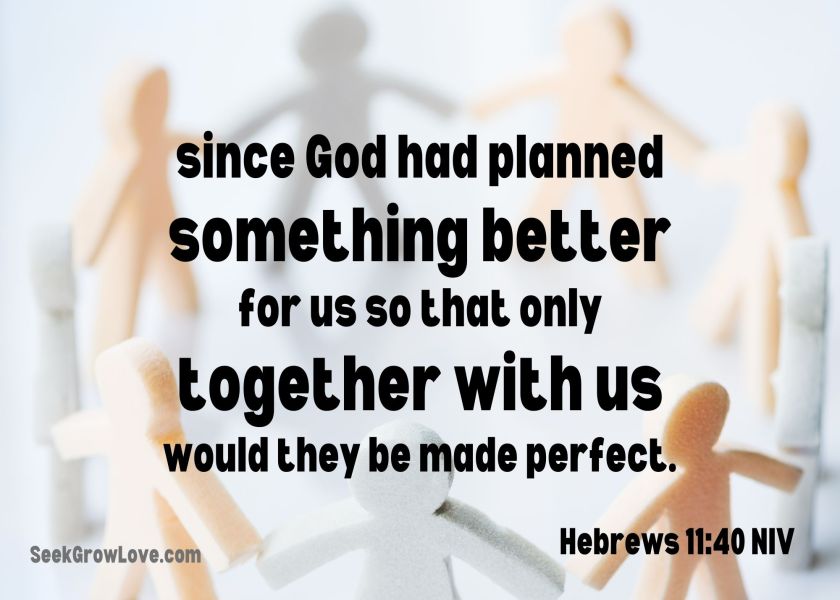
Verse 40 is the kicker for this chapter, of course. “God provided something better for us, so that apart from us they would not be made perfect.” This is now the twelfth of fourteen uses of this language about perfection in Hebrews (the next will be in 12:2, the last in 12:23). It is remarkable the lengths that have been gone to in some interpretations to have this language make sense, without having the return of Christ and the resurrection hope be significant for the Old Testament saints and the church, together. But the repeated (and, in my Bible, underlined) words of the chapter prompt us and we can’t ignore them – receive better promises – there is no reasonable explanation where some part of the Church has already inherited what God planned to give us. We are a body, undivided, faithful, and patient. “Christ the first fruits, after that those who are Christ’s at his coming.” (1 Corinthians 15:23).
Lord, you have made lovely poetry, and remarkable prose. Yours are the greatest inventions, incredible art, the purest flavors, colors and lightning. I praise your creativity, and I await the wonders of the more perfect world that awaits when your son returns to earth. All I know now is the damaged version of what you intended. Some of what you first made still shines through, and it is amazing to me. Let me grow in faith in you always, for you are almighty and perfectly trustworthy. Amen.
-Daniel Smead
Reflection Questions
1. Imagine if chapter 11 really were not in Hebrews. What would we be missing?
3. Have you ever tried to memorize part of Hebrews 11? With its repeated pattern about “faith” it seems set up for that purpose, but modern Americans don’t tend to try memorizing much. What advantages do you see to memorizing scripture? How do you decide what scripture to memorize?
3. Do you expect that faith is easier to hold to if you have people encouraging you to be faithful? How have you tried to be encouraging today? What things do you find encouraging?
“You showed sympathy to the prisoners” (Hebrews 10:34). I don’t know what that phrase brings to your mind. Maybe you see something from a television program or a movie, someone behind a sheet of glass holding a telephone receiver. Perhaps you have visited a prisoner at some point, for a prison ministry, or a relative or friend. You may think of sending letters, or helping prisoners readjust after their release. The issues under discussion in Hebrews were rather different. With the Roman empire it was expected that the relatives and friends of a prisoner would provide their food and other physical needs, though there might be some small rations. Christians became known for taking care of fellow believers who had been arrested for their faith, as well as other prisoners in need. But that meant people helping Christians ran the risk of getting accused of being Christians themselves. That’s probably where the next part of the verse came in, that they “accepted joyfully the seizure” of their property – they continued with their behavior even though it risked them being identified and targeted. They didn’t shy away from risk to guard themselves. It isn’t mentioned here but Christians during the Roman empire also became known for caring for plague victims when others would not, taking in orphans, collecting clothes to give to the poor, and generally being good to others.
In the fourth century the Emperor Julian would become very frustrated about the contrast between the Christians and the pagans. In a letter he wrote: “Why then do we think that this is sufficient and do not observe how the kindness of Christians to strangers, their care for the burial of their dead, and the sobriety of their lifestyle has done the most to advance their cause? Each of these things, I think, ought really to be practiced by us.”
In Hebrews 10 we find that Herb (my choice of a simple name for the book’s author) returned to issues he addressed in chapter six about a person surrendering their faith in Jesus (6:4-8; 10:26-31). These comments are directly paired in both chapters with the statement that Herb’s audience is not like that, which is shown by the fact that they have been ministering to believers (6:9‑12; 10:32-39). For Herb to defend his audience this way should be an obvious route to take. What are Christians told to do? “I am giving you a new commandment, that you love one another; just as I have loved you, that you also love one another. By this all people will know that you are My disciples: if you have love for one another.” (John 13:34‑35). Yes, that isn’t the only thing for Christians to do, but it is a huge example: “This is His commandment, that we believe in the name of His Son Jesus Christ, and love one another, just as He commanded us. The one who keeps His commandments remains in Him, and He in him. We know by this that He remains in us, by the Spirit whom He has given us.” (1 John 3:23-24). And the call to love isn’t necessarily simple or easy, either. The very fact that Jesus said “just as I have loved you” should put this at a high level, for Jesus loves at a high level.
Hebrews 10 began by comparing the priests who stood in the tabernacle day after day offering sacrifices to Jesus and the single sacrifice he offered before he sat at God’s right hand. Herb wants us to understand that what Jesus did is much more powerful than all those earlier sacrifices. And because it is so much more powerful it calls more powerfully for our response. Herb says: “let us draw near with a sincere heart in full assurance of faith, having our hearts sprinkled clean from an evil conscience and our bodies washed with pure water. Let us hold fast the confession of our hope without wavering, for He who promised is faithful; and let us consider how to stimulate one another to love and good deeds” (v. 22-24). Those verses give a complicated image. The idea of being “sprinkled clean” plays off the sprinkling of the blood by the high priest once a year over everything that needed to be cleansed in the Holy of Holies – but Herb says that our hearts are part of what Jesus cleansed. There are no more evil consciences for us, we can have pure consciences and serve wholeheartedly, having been washed with pure water, referring to our baptisms. This is very similar to 1 Peter 3:21-22, “baptism now saves you – not the removal of dirt from the flesh, but an appeal to God for a good conscience – through the resurrection of Jesus Christ, who is at the right hand of God”. We are to hold to the confession of our hope that came with that baptism – because the fact of being baptized, to Herb, doesn’t mean what is so often called baptism today (the sprinkling of a baby, with no knowledge of what it means) but the choice made by a believer to state their understanding in front of at least one other person, confessing hope in the promises of God involving Jesus and the future. He who promised is faithful, so we should not waver in our commitment. By having made that choice each one of us becomes part of the body of Christ, which is a collective group. Recognizing that we are part of that group should remind us that we have support with each other, and also that we have responsibility and commitment for each other, so we need to think about how we can stimulate each other to love and good deeds.
One of my seminary teachers noted that there are two possible interpretations of Hebrews 10:25. It is often used to advocate for attendance at worship services using the phrase “assembling together” to refer to ‘not meeting on a regular basis,’ as a matter of habit. But the Greek word for the assembling or gathering here is the one used in 2 Thessalonians 2:1, and it has been suggested that it could be saying not to forsake our being gathered together with Jesus at his return – so not, by your choices, giving up on being a part of the resurrection with him. More like “Don’t forsake being part of the resurrection gathering, as some are in the manner of, but encourage each other to be there at that day, all the more as you see it drawing near.” Either meaning could work. (The term translated as “habit” also gets translated “manner.”)
Hebrews 10:31, which says “It is a terrifying thing to fall into the hands of the living God,” should be read along with verse 27 that refers to “a terrifying expectation of judgment and the fury of a fire which will consume the adversaries.” We are still speaking of the adversaries of God being consumed, not simply tortured in some ongoing way (as some versions of theology would have it). I see no conflict in this. Notably Hebrews 10:26 references Numbers 15:30, showing that Herb had that part of the book in his mind when he was writing this section about fire and judgment. And Numbers 16 may well be the section he was pointing his readers to for a consideration of how terrifying God could be when passing judgment. God doesn’t need to be a demented torturer to be scary. I don’t think that Korah was complacent when he faced the results of his revolt. Endless suffering is not required for God’s wrath to be respected. If all we were concerned about was what came after this life we would have no concerns about anything in this one. But we have proven ourselves well capable of being concerned about what happens now.
In the last part of the chapter Herb wants his audience to proclaim that they are not giving up on Jesus. He doesn’t want any doubt on that point. He says “do not throw away your confidence, which has a great reward” (v. 35). He quotes God saying:
“My righteous one shall live by faith;
And if he shrinks back, My soul has no pleasure in him.”
But Herb tells his audience “we are not of those who shrink back to destruction, but of those who have faith to the preserving of the soul.” (v. 39).
Lord, it really is a terrible thing to think of anyone giving up on their confidence in your son. I read the book of Hebrews and I think I understand the concern it expresses, the passion which Herb felt about his readers. He didn’t want to say that any of them might turn away, but he didn’t want to stop urging them to remain vigilant. He just really wanted them all to be safe in the end. He wanted to tell them about how dangerous it would be to turn away from the sacrifice that Jesus made, because there is only one sacrifice in the new covenant, but he also wanted to say that it is up to you to judge – because if they thought they might have stepped too far then they might despair and not turn back to Jesus. Everything was a balancing act and the focus was always on getting as many as possible to devote themselves to the Lord. I am glad for your mercy, Lord, because I know so many people who I know need it, including me. Please help us to serve you better. Please help us to grow. Help us to love. Thank you again. Amen.
-Daniel Smead
Reflection Questions
1. Do you value being at church services with other believers? Do you feel that you are a part of the worship? Are you growing? Are you open to others? If not, how could that change?
2. Herb wants his audience to be revived in their faith, to be passionate about Jesus against the risk of persecution. What if they weren’t warned about the risk of persecution when they first became Christians, and meeting opposition took them off guard, how might that affect their attitudes?
3. Are you open to challenging yourself to a Love Like Jesus Day? Of course we are always supposed to do that. But how about consciously checking your actions for one day, all your thoughts, words, deeds, measuring yourself against Jesus and trying to amp your love to Jesus-levels? What do you think it will look like?





 Seek Grow Love